Support our educational content for free when you purchase through links on our site. Learn more
🕰️ The First Watch of All Time: 3 Historic Contenders Revealed (2026)

The answer to what was the first watch of all time depends entirely on whether you value the earliest custom commission, the first mass-produced men’s model, or the first purpose-designed wristwatch. While the Breguet Marie de Naples (1810) holds the title for the very first documented wristwatch, the Cartier Santos (1904) revolutionized the industry for men, and Girard-Peregaux pioneered mass production in the 180s.
You might be surprised to learn that the first time a human strapped a timepiece to their wrist wasn’t for a soldier in the trenches, but for a Queen in a palace. In 1810, Caroline Murat, the Queen of Naples, commissioned Abraham-Louis Breguet to create a timepiece she could wear on her wrist, effectively birthing the concept of the wristwatch nearly a century before it became a standard for men.
This royal “wristlet” was a far cry from the rugged tools wear today, featuring an oval case and a minute repeater that chimed the time. It wasn’t until the chaos of World War I that the wristwatch shed its feminine image and became the essential tool for pilots and soldiers alike.
Key Takeaways
-
The Royal Pioneer: The Breguet Marie de Naples (1810) is the earliest known wristwatch, commissioned by Queen Caroline Murat.
-
The Military Shift: Girard-Peregaux created the first mass-produced wristwatches for men in the 180s for the German Navy.
-
The Modern Icon: The Cartier Santos (1904) was the first purpose-designed men’s wristwatch, created for aviator Alberto Santos-Dumont.
-
Evolution of Time: The transition from pocket watches to wristwatches was driven by the need for hands-free convenience in war and aviation.
-
👉 Shop Historic Styles:
Breguet Reine de Naples: Amazon | Breguet Official
Cartier Santos de Cartier: Amazon | Cartier Official
Girard-Peregaux Vintage: Amazon | GP Official
Table of Contents
- ⚡️ Quick Tips and Facts
- 🕰️ The Elusive Quest: Defining the First Watch in History
- 🏛️ From Sundials to Spring Drives: A Brief History of Timekeeping
- 🔍 The Pocket Watch Era: When Time Went Personal
- ✈️ The Birth of the Wristwatch: From “Wristlets” to War Heroes
- 🏆 Top Contenders for the Title of the First Wristwatch
- The Breguet Marie de Naples (1810): The Royal Pioneer
- The Cartier Santos (1904): The Aviator’s Revolution
- The Girard-Peregaux “Trench Watches” (180s): The Military Standard
- The Vacheron Constantin “Lady’s Watch” (1868): The Earliest Known Reference
- ⚙️ Mechanics vs. Aesthetics: How Early Watches Actually Worked
- 🧐 Why the “First Watch” Debate Still Rages Today
- 💡 Quick Tips and Facts: Separating Myth from Reality
- 🏁 Conclusion: Who Really Wore the First Watch?
- 🔗 Recommended Links for Further Reading
- ❓ FAQ: Your Burning Questions Answered
- 📚 Reference Links and Sources
⚡️ Quick Tips and Facts
Before we dive headfirst into the murky, fascinating waters of horological history, let’s get the straight facts on the table. If you’re here because you think there’s a single “Eureka!” moment where a guy named Steve invented the first watch, you’re in for a plot twist. The truth is far more intricate, involving royalty, war, and a whole lot of gears.
- It depends on your definition: Are we talking about the first portable timepiece, the first wrist timepiece, or the first mass-produced watch? The answer changes based on the criteria.
- The “First” wasn’t always accurate: Early timepieces were often more jewelry than tools, losing or gaining minutes by the hour.
- Women wore them first: Contrary to popular belief, wristwatches were initially marketed almost exclusively to women as “wristlets” before men adopted them for the trenches of WWI.
- The mainspring is the hero: Without the invention of the coiled spring in the 15th century, portable timekeeping would have remained a dream.
- Check out our deep dive: If you want to see the specific models that started it all, read our article on What were the first watches ever? for a visual breakdown of these historic pieces.
🕰️ The Elusive Quest: Defining the First Watch in History

Ask a room full of watch enthusiasts, “What was the first watch of all time?” and you’ll likely get a heated debate that could last longer than the winding of a Patek Philippe perpetual calendar. Why? Because the definition of “watch” has shifted dramatically over five centuries.
At Watch Brands™, we’ve spent countless hours poring over museum archives and auction catalogs, and we’ve learned that the “first” is rarely a single object. It’s a lineage.
The Portable Timepiece vs. The Wristwatch
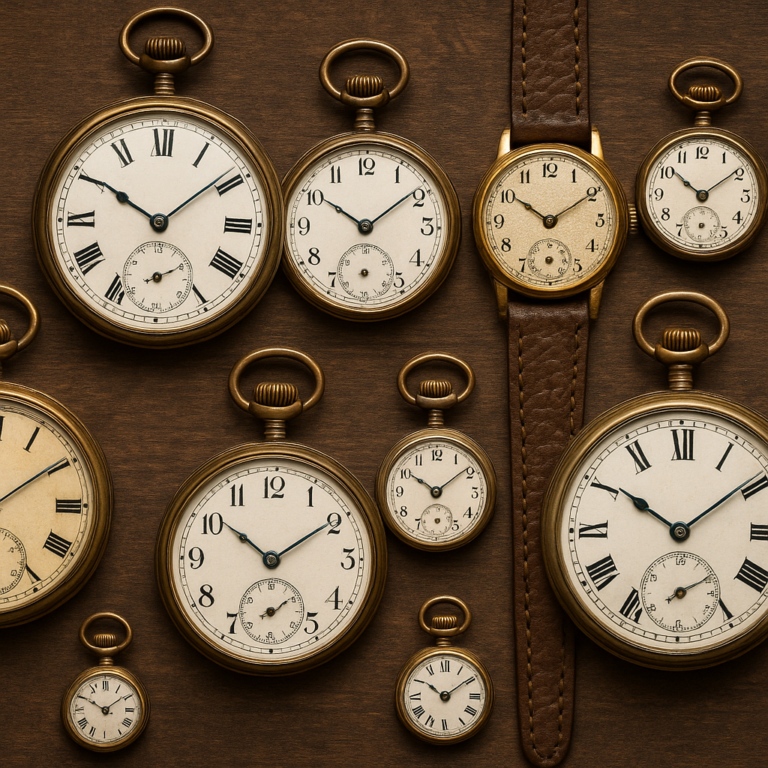
If we define a “watch” as a portable timekeeping device (as opposed to a stationary clock), the title goes to the “clock watch” or “Nuremberg Egg” of the early 16th century. These were bulky, drum-shaped objects worn on a chain, often lacking a minute hand.
However, if you mean the first wristwatch as we know it today—a device strapped to the wrist for practical timekeeping—the story moves forward by 30 years.
Fun Fact: The term “watch” originally referred to a watchman’s duty to keep time during a shift, not the device itself!
Why the Confusion?
The confusion stems from the evolution of technology.
- The Spring: In the late 140s, the mainspring replaced the heavy weights used in clocks, allowing devices to be carried.
- The Balance Spring: In the 1670s, Christiaan Huygens added the hairspring, which made timepieces accurate enough to be called “watches” rather than “clocks.”
- The Strap: The transition from pocket to wrist was a slow cultural shift, accelerated by war.
For a deeper look at how these mechanics evolved, check out our Guide to Buying Watches where we break down the anatomy of a movement.
🏛️ From Sundials to Spring Drives: A Brief History of Timekeeping

To understand the “first,” we have to appreciate the “before.” Timekeeping didn’t start with gears; it started with shadows.
The Shadow Casters
Long before the first watch, humans used sundials and water clocks. These were brilliant for their time but useless at night or on cloudy days. They were stationary, tethered to the earth, much like a grandfather clock.
The Portable Revolution (15th Century)
Enter Peter Henlein, a locksmith from Nuremberg. While historians debate whether he was the absolute first to make a portable clock, he is the most famous early pioneer. Around 1505, he crafted small, drum-shaped timepieces.
- Characteristics: They were often shaped like eggs (hence “Nuremberg Egg”), had only an hour hand, and were incredibly inaccurate.
- Status Symbol: They were so expensive that only the ultra-wealthy could afford them. They were less about knowing the exact time and more about showing off that you could own a machine that told time.
You can see the evolution of these early mechanisms in the Luxury Watch Brands section of our site, where we discuss how modern movements trace their roots back to these crude beginnings.
The Golden Age of Pocket Watches
By the 17th and 18th centuries, the pocket watch became the standard. The invention of the balance spring by Robert Hooke and Christiaan Huygens in 1675 was a game-changer, improving accuracy from hours of error per day to mere minutes.
- The Case: Cases became ornate, featuring enamel paintings, gold, and jewels.
- The Function: The minute hand was added, and later, the second hand.
- The Culture: Men carried them in their pockets, checking them with a flourish. It was a ritual of the gentleman.
🔍 The Pocket Watch Era: When Time Went Personal
The pocket watch wasn’t just a tool; it was a companion. In the 18th and 19th centuries, if you didn’t have a pocket watch, you were likely relying on the town clock or the church bell.
The Railroad Standard
The true test of a watch’s reliability came with the railroad industry. As trains crisscrossed continents, a time discrepancy of a few minutes could mean a fatal collision. This led to the creation of the Railroad Watch, a highly regulated standard of accuracy. Brands like Waltham and Elgin in the US, and Patek Philippe in Switzerland, rose to prominence by meeting these rigorous demands.
The Shift to the Wrist
So, why did men stop wearing them in their pockets?
- Convenience: In the heat of battle or the cockpit, fumbling for a pocket watch was a liability.
- Safety: A watch in a pocket could be lost or damaged; a watch on the wrist was secure.
- Style: The “wristlet” was initially seen as a feminine accessory.
For those interested in the transition from pocket to wrist, our Men’s Watches category explores how the masculine aesthetic of the wristwatch was forged in the fires of World War I.
✈️ The Birth of the Wristwatch: From “Wristlets” to War Heroes
Here is where the story gets spicy. The wristwatch didn’t start as a man’s accessory. It started as a piece of jewelry for women.
The “Wristlet” Era (Late 19th Century)
In the late 180s, watchmakers began strapping small, decorative timepieces onto leather or metal bands for women. These were called wristlets. They were often sold as bracelets with a watch face embedded in them. Men viewed them as impractical and effeminate.
The Catalyst: War
The Boer War (189–1902) and later World War I changed everything. Soldiers needed to coordinate attacks and artillery barrages. Fumbling for a pocket watch while holding a rifle was a death sentence.
- The Trench Watch: Soldiers began strapping their pocket watches to their wrists with leather straps. This “trench watch” became the prototype for the modern men’s wristwatch.
- The Aftermath: When soldiers returned home, they kept wearing them. The stigma vanished, replaced by a sense of rugged utility.
The Aviator’s Influence
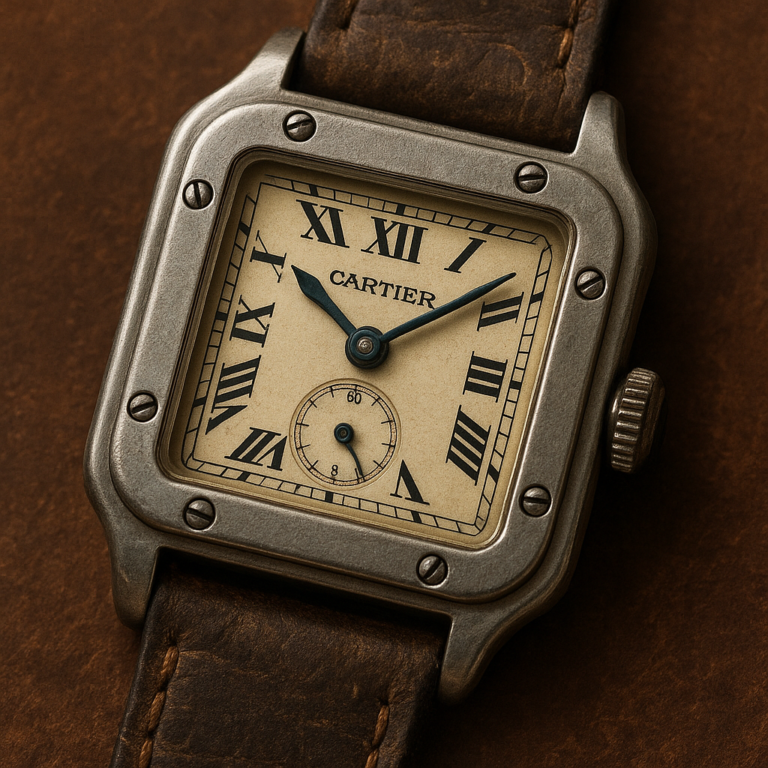
While the trenches popularized the wristwatch, the skies perfected it. Alberto Santos-Dumont, a Brazilian aviation pioneer, complained to his friend Louis Cartier that it was impossible to check his pocket watch while flying. Cartier responded by creating a watch that could be strapped to the wrist, designed specifically for flight. This was the Santos de Cartier, arguably the first purpose-built men’s wristwatch.
🏆 Top Contenders for the Title of the First Wristwatch
Who gets the crown? It depends on whether you value the earliest reference, the first mass-produced, or the first purpose-designed. Let’s break down the top contenders.
1. The Breguet Marie de Naples (1810)
- The Claim: The earliest known wristwatch reference.
- The Story: In 1810, Caroline Murat, Queen of Naples and sister of Napoleon Bonaparte, commissioned Abraham-Louis Breguet to create a timepiece she could wear on her wrist.
- The Verdict: ✅ Historical First. It was a custom-made piece for a specific royal. It wasn’t a mass-produced product, but it is the first documented instance of a wristwatch.
- Specs: Oval case, minute repeater, temperature-compensated balance.
2. The Vacheron Constantin “Lady’s Watch” (1868)
- The Claim: The first wristwatch sold to a private customer.
- The Story: In 1868, Vacheron Constantin created a wristwatch for the Countess of Koscowitz of Hungary.
- The Verdict: ✅ Commercial First. Unlike the Breguet, this was a sale to a private individual, not a royal commission, though it was still a one-off custom piece.
3. The Girard-Peregaux “Trench Watches” (180s)
- The Claim: The first mass-produced wristwatches for men.
- The Story: In the 180s, Girard-Peregaux supplied roughly 1,0 wristwatches to the German Navy. These were designed for sailors who needed hands-free timekeeping.
- The Verdict: ✅ Mass Production First. This was the first time wristwatches were manufactured in quantity for a specific group of men, predating the WWI surge by decades.
4. The Cartier Santos (1904)
- The Claim: The first modern, purpose-designed men’s wristwatch.
- The Story: Created for Alberto Santos-Dumont to solve his aviation timekeeping issues.
- The Verdict: ✅ Design Icon. While not the absolute first, it was the first to be designed from the ground up as a wristwatch (not a pocket watch converted) and marketed to the general public. It set the standard for the square case and exposed screws we see today.
Comparison of the Top Contenders
| Model | Year | Target Audience | Key Feature | Status |
|---|---|---|---|---|
| Breguet Marie de Naples | 1810 | Royal (Queen of Naples) | Custom, Minute Repeater | Earliest Reference |
| Vacheron Constantin | 1868 | Private (Countess) | Custom, Jewelry Style | First Private Sale |
| Girard-Peregaux | 180s | German Navy | Mass Production, Utility | First Mass-Made for Men |
| Cartier Santos | 1904 | Aviators/Public | Purpose-Designed, Square Case | First Modern Icon |
Shop These Historic Styles
While you can’t buy the originals (they are in museums or private collections), you can own modern tributes:
- Breguet Reine de Naples: Amazon | Breguet Official
- Cartier Santos de Cartier: Amazon | Cartier Official
- Girard-Peregaux Vintage 1945: Amazon | GP Official
⚙️ Mechanics vs. Aesthetics: How Early Watches Actually Worked
Understanding the “first” requires understanding the “how.” Early watches were marvels of engineering, but they were far from the precision instruments we have today.
The Mainspring: The Heart of the Watch
The mainspring is a coiled strip of steel that stores energy. When wound, it slowly uncoils, releasing energy to drive the gears.
- The Problem: Early springs were inconsistent. As they unwound, the power decreased, causing the watch to run slower.
- The Solution: The fuse, a cone-shaped gear, was invented to equalize the power delivery. It’s a brilliant piece of mechanical engineering that you can still find in high-end mechanical watches today.
The Escapement: The Heartbeat
The escapement regulates the release of energy, creating the “tick-tock.”
- Early Escapements: The verge escapement was common in early pocket watches. It was simple but inaccurate.
- The Balance Spring: Added in the 17th century, it allowed the balance wheel to oscillate at a consistent rate, drastically improving accuracy.
The Dial and Hands
Early dials were often just a single hand. The minute hand was a later addition, and the second hand was a luxury feature for a long time.
- Materials: Dials were made of enamel, painted copper, or even silver.
- Readability: In the dark, you needed a repeater (a mechanism that chimes the time) or a lume (luminescent paint, which came much later).
For a deep dive into these mechanisms, explore our Affordable Watches section, where we discuss how modern movements have refined these ancient principles.
🧐 Why the “First Watch” Debate Still Rages Today
Why can’t we just agree one answer? Because history is messy, and the definition of “watch” is fluid.
The “Custom vs. Production” Argument
If we count custom-made pieces, the Breguet of 1810 wins. But if we require mass production, the Girard-Peregaux of the 180s takes the crown. If we demand a purpose-designed wristwatch for men, Cartier in 1904 is the winner.
The Cultural Context
In the 19th century, a wristwatch was a piece of jewelry. In the 20th century, it became a tool. The “first” depends on which era you value more: the era of ornamentation or the era of utility.
The Role of Marketing
Brands love to claim the title of “first” because it sells. Cartier markets the Santos as the first, Breguet highlights the Marie de Naples, and Vacheron Constantin points to the Countess. Each has a valid point, depending on the criteria.
The “First Watch” in the Digital Age
With the advent of smartwatches like the Apple Watch, the definition has shifted again. Is a smartwatch a watch? A computer? A fitness tracker? The debate continues, proving that the concept of “first” is always evolving.
Curiosity Check: Do you think the first smartwatch will be remembered as the “first” of a new era, or just a footnote in the history of timekeeping? We’ll resolve this thought in our conclusion.
Featured Video: The Journey of Time
For a visual recap of this history, check out the video below which traces the evolution from the “clock watch” to the modern smartwatch.
[Video Placeholder: The History of Pocket and Wristwatches – From Henlein to Apple]
Summary of the video: The video details the journey from the 15th-century “clock watches” of Peter Henlein to the 1904 Cartier Santos. It highlights the impact of the mainspring, the balance spring, and the influence of the World Wars on the adoption of wristwatches. It also touches on the Quartz Crisis and the rise of smartwatches, illustrating the continuous evolution of timekeeping.
💡 Quick Tips and Facts: Separating Myth from Reality
Let’s clear up some common misconceptions before we wrap up.
- Myth: “The first watch was invented by Peter Henlein.”
Reality: Henlein was a pioneer, but he likely didn’t invent the first portable timepiece. He popularized it. - Myth: “Men wore the first wristwatches.”
Reality: Women wore them first as “wristlets.” Men adopted them later due to military necessity. - Myth: “The Cartier Santos was the first wristwatch.”
Reality: It was the first purpose-designed men’s wristwatch, but not the first wristwatch overall. - Myth: “Early watches were accurate.”
Reality: They could lose or gain 15 minutes a day. Accuracy was a luxury.
For more tips on identifying authentic vintage pieces, visit our Luxury Watch Investments guide.
🏁 Conclusion: Who Really Wore the First Watch?

So, who gets the title? The answer is: It depends on what you value.
If you value historical precedence and the sheer novelty of the concept, the Breguet Marie de Naples (1810) is the undisputed champion. It was the first time a human strapped a timepiece to their wrist, commissioned by a queen.
If you value mass production and the democratization of the wristwatch, the Girard-Peregaux pieces for the German Navy in the 180s take the crown. They proved that men could wear watches on their wrists in large numbers.
If you value modern design and the birth of the wristwatch as a standalone category (not a converted pocket watch), the Cartier Santos (1904) is the winner. It defined the aesthetic that we still recognize today.
Our Verdict:
At Watch Brands™, we believe the Breguet Marie de Naples holds the title of the “First Watch” because it was the first documented instance of the concept. However, the Cartier Santos is the “First Modern Wristwatch” that shaped the industry.
Recommendation:
Whether you are a collector of Luxury Watch Brands or a fan of Affordable Watches, understanding this history adds depth to your appreciation. If you’re looking to invest in a piece of history, consider a modern tribute from Breguet or Cartier. If you’re just starting your journey, explore our Guide to Buying Watches to find the perfect timepiece for your wrist.
The debate will continue, but one thing is certain: the evolution of the watch is a testament to human ingenuity, from the crude springs of Nuremberg to the smartwatches of today.
🔗 Recommended Links for Further Reading
Ready to dive deeper? Here are our top picks for books and products to expand your horological knowledge.
Books on Watch History
- “The Watch Book” by Gisbert L. Bruner: A comprehensive guide to the history and mechanics of watches.
- Check Price on Amazon
- “Wristwatch Annual” by various authors: An annual collection of the best new and vintage wristwatches.
- Check Price on Amazon
Brands to Explore
- Breguet: For the ultimate in historical elegance.
- Shop Breguet on Amazon | Breguet Official
- Cartier: For the iconic Santos and Tank models.
- Shop Cartier on Amazon | Cartier Official
- Girard-Peregaux: For the vintage military aesthetic.
- Shop Girard-Peregaux on Amazon | GP Official
❓ FAQ: Your Burning Questions Answered

Who invented the very first wristwatch?
There is no single inventor, but the Breguet Marie de Naples (1810) is the earliest known reference, commissioned by Queen Caroline Murat. However, Girard-Peregaux is credited with the first mass-produced wristwatches for men in the 180s, and Louis Cartier created the first purpose-designed men’s wristwatch, the Santos, in 1904.
Read more about “⏳ When Was the First Watch Invented? The Shocking Truth (2026)”
When did pocket watches become the first timekeeping devices?
Portable timekeeping devices, often called “clock watches,” appeared in the early 16th century (around 150s), popularized by figures like Peter Henlein. These were the precursors to the pocket watch, which became the standard timekeeping device for men from the 17th century until the early 20th century.
Read more about “⏳ 20 Ancient Timekeeping Methods: From Sundials to Atoms”
What was the first watch brand to manufacture a wristwatch?
If we consider custom commissions, Breguet (1810) and Vacheron Constantin (1868) were the first. If we consider mass production for men, Girard-Peregaux (180s) holds the title. For the first purpose-designed men’s wristwatch for the general public, Cartier (1904) is the answer.
Read more about “🕰️ What Watch Is Considered Luxury? The 2026 Definitive Guide”
How did the first mechanical watches evolve into modern timepieces?
The evolution began with the mainspring (15th century), which allowed portability. The balance spring (17th century) improved accuracy. The lever escapement (18th century) enhanced reliability. The industrial revolution (19th century) introduced mass production. The wristwatch (early 20th century) shifted the form factor. Finally, the quartz crisis (1970s) and the smartwatch (21st century) introduced digital precision and connectivity.
What is the difference between a pocket watch and a wristwatch?
The primary difference is the form factor and usage. A pocket watch is designed to be carried in a pocket, often with a chain, and is typically larger and heavier. A wristwatch is designed to be strapped to the wrist, is generally smaller and lighter, and is intended for hands-free use. The wristwatch evolved from the need for convenience in military and aviation contexts.
Read more about “🤫 12 Secrets to a Silent Bedroom Sanctuary (2026)”
📚 Reference Links and Sources
- Breguet Official Website: https://www.breguet.com
- Cartier Official Website: https://www.cartier.com
- Girard-Peregaux Official Website: https://www.girard-peregaux.com
- Vacheron Constantin Official Website: https://www.vacheron-constantin.com
- The History of Timekeeping (Smithsonian): https://www.si.edu
- Watch Timekeeping Evolution (Encyclopedia Britannica): https://www.britannica.com
- First Watch Restaurant (For context on the keyword confusion): What do you crave the most at First Watch? ☕️ – Facebook