Support our educational content for free when you purchase through links on our site. Learn more
🤫 12 Secrets to a Silent Bedroom Sanctuary (2026)

Imagine this: It’s 2:0 AM. You’re drifting into the deepest, most restorative stage of sleep, only to be jolted awake by the familiar, grating clunk-hiss-whir of your air conditioner kicking into high gear. For many, this nightly symphony of noise is the difference between waking up refreshed and feeling like you’ve been run over by a steamroller. At Watch Brands™, we know that precision isn’t just for the sweep of a mechanical second hand; it applies to the environment where you recharge, too. Just as a luxury timepiece requires a stable, vibration-free setting to keep perfect time, your brain needs a silent sanctuary to master the art of deep rest.
In this comprehensive guide, we aren’t just listing tips; we are engineering a solution. We’ll dive deep into the science of decibels, reveal why inverter technology is the holy grail of sleep, and walk you through 12 proven strategies to banish the hum forever. From selecting the ultra-quiet mini-splits that operate at a whisper-soft 19 dB to mastering the art of acoustic dampening, we’ve tested every angle so you don’t have to. Whether you are a light sleeper, a watch collector needing a stable environment, or simply someone who craves peace, this is your blueprint to reclaiming the night.
Key Takeaways
- Silence is Biological: Noise levels above 40 dB can prevent entry into deep REM sleep, causing micro-arousals that leave you grogy even if you don’t fully wake up.
- Technology Matters: Upgrading to inverter-driven mini-split systems (like Mitsubishi or Daikin) eliminates the noisy on/off cycling of traditional units, reducing sound to a near-silent 19–20 dB.
- Holistic Approach: True silence requires more than just a quiet AC; it demands acoustic treatments, smart thermostat integration, and vibration isolation to create a truly serene environment.
- Maintenance is Crucial: Regular filter changes and professional vibration checks are essential to prevent a silent unit from turning into a noisy nightmare over time.
Ready to silence the noise? Explore our top-rated ultra-quiet cooling solutions and acoustic accessories below to start your transformation today.
- 👉 Shop Quiet Mini-Splits: Mitsubishi Electric | Daikin
- 👉 Shop Sound Masking Fans: Levoit | Honeywell
- 👉 Shop Acoustic Panels: Etsy Custom Panels | Amazon Foam
Table of Contents
- ⚡️ Quick Tips and Facts
- 🕰️ The Hum of History: How Noisy Cooling Ruined Our Sleep
- 🤫 The Science of Silence: Decibels, White Noise, and Deep Sleep
- 🛠️ 12 Proven Strategies to Transform Your Bedroom into a Silent Sanctuary
- 1. Upgrade to Inverter Technology for Whisper-Quiet Operation
- 2. Install Acoustic Dampening Panels Behind Your Unit
- 3. Optimize Airflow with Strategic Vent Placement
- 4. Seal Drafts to Prevent Vibration Transmission
- 5. Choose Low-Noise Smart Thermostats for Precision Control
- 6. Implement a “Silent Mode” Night Routine
- 7. Replace Old Filters to Reduce Fan Strain
- 8. Utilize Sound-Masking Fans with Variable Speeds
- 9. Insulate Walls and Ceilings for Thermal and Acoustic Isolation
- 10. Position Heavy Furniture to Block Sound Waves
- 1. Upgrade to Dual-Zone Mini-Splits for Targeted Cooling
- 12. Schedule Professional Maintenance for Vibration Checks
- 🏆 Top 5 Ultra-Quiet Air Conditioning Brands for the Sleep-Conscious
- 🧊 Mini-Splits vs. Window Units: Which is Quieter for Your Bedroom?
- 🌙 Beyond the AC: Creating a Holistic Silent Sleep Environment
- 🚫 Common Mistakes That Turn Your Bedroom into a Noisy Nightmare
- 💡 DIY vs. Professional Installation: What Saves Your Ears?
- 🔮 The Future of Bedroom Cooling: AI-Driven Silence and Efficiency
- 🏁 Conclusion
- 🔗 Recommended Links
- ❓ FAQ: Your Burning Questions About Silent Cooling Answered
- 📚 Reference Links
⚡️ Quick Tips and Facts
Before we dive into the deep end of acoustic engineering and thermal dynamics, let’s hit the pause button on your noisy AC unit. Here are the non-negotiables for transforming your bedroom into a silent sanctuary, straight from the Watch Brands™ workshop where we obsess over the ticking of a movement and the silence of a perfect rest.
- The Decibel Threshold: Anything above 35 dB is considered disruptive for light sleepers. For reference, a whisper is about 30 dB, and a library is 40 dB. Your AC should aim for the whisper range.
- The “Golden” Temperature: The National Sleep Foundation and various sleep studies suggest 65°F (18.3°C) is the sweet spot for deep REM sleep.
- White Noise vs. Silence: Paradoxically, total silence can make sudden noises (like a creaking floorboard) more jarring. A consistent, low-level white noise or pink noise background often masks these interruptions better than absolute quiet.
- Maintenance is Key: A dirty filter doesn’t just hurt efficiency; it forces the fan to work harder, creating vibration and noise.
- The Watch Collector’s Note: Just as a luxury timepiece requires a stable environment to keep accurate time, your sleep requires a stable thermal and acoustic environment. If you’re curious about how to curate a space that respects both your rest and your collection, check out our guide on 🤫 7 Secrets to a Silent Sanctuary (2026).
Did you know? The average person spends one-third of their life sleeping. If your AC sounds like a jet engine taking off, you’re essentially spending 8 hours a day in a noisy airport terminal. Let’s fix that.
🕰️ The Hum of History: How Noisy Cooling Ruined Our Sleep

We often forget that noise pollution is a relatively modern invention. For centuries, our ancestors slept to the rhythm of nature: the wind, the rain, the distant owl. Then came the industrial revolution, and with it, the hum of machinery.
In the early days of air conditioning, the focus was purely on cooling capacity. “If it blows cold air, it’s good,” was the mantra. But as we’ve evolved, so have our expectations of sleep hygiene. We’ve moved from simply needing to be cool to needing to be comfortable, quiet, and serene.
Think of it like the evolution of watchmaking. In the early days, a clock just needed to tell time, even if it was loud and clunky. Today, we demand sweeping seconds hands, silence, and precision. The same applies to our bedrooms. A noisy AC is the equivalent of a ticking alarm clock that never stops; it disrupts the circadian rhythm and prevents the brain from entering deep sleep stages.
“Creating a quiet sleep environment doesn’t mean your bedroom needs to be silent. Rather, it’s about managing disruptive noise.” — Encino Center for Sleep & TMJ Disorders
The history of bedroom cooling is a history of compromise. We traded silence for cold air. But thanks to inverter technology and acoustic engineering, we no longer have to choose. We can have the chill of winter with the silence of a library.
🤫 The Science of Silence: Decibels, White Noise, and Deep Sleep
Why does a humming sound keep you awake? It’s not just annoyance; it’s biology.
The Decibel Scale and Sleep Stages
Sound is measured in decibels (dB). The scale is logarithmic, meaning a small increase in dB represents a massive increase in sound energy.
- 0 dB: Threshold of hearing.
- 30 dB: A whisper or a quiet library.
- 40-50 dB: A quiet office or a normal conversation.
- 60+ dB: A vacuum cleaner or a loud AC unit.
Research indicates that noise levels above 40 dB can prevent you from entering Stage 3 (Deep Sleep) and REM sleep, the stages crucial for physical restoration and memory consolidation. Even if you don’t wake up fully, your brain is constantly micro-arousing to process the noise, leaving you grogy in the morning.
The Role of White Noise
Here is a counter-intuitive fact: Silence can be the enemy of sleep if your environment is unpredictable.
- White Noise: Contains all frequencies at equal intensity (like static).
- Pink Noise: Lower frequencies are emphasized (like steady rain or wind).
- Brown Noise: Even deeper, rumbly frequencies (like a waterfall or distant thunder).
These sounds create a sound blanket that masks sudden spikes in noise (like a car backfiring outside). It’s the difference between hearing a ticking watch in a silent room versus hearing it in a room with a gentle hum. The hum makes the tick irrelevant.
| Sound Type | Frequency Profile | Best For |
|---|---|---|
| White Noise | Flat spectrum | Masking high-pitched noises (sirens, barking) |
| Pink Noise | Decreasing high freq | General sleep aid, mimicking nature |
| Brown Noise | Heavy low freq | Deep sleep, masking low rumbles (traffic) |
Pro Tip: If you are a watch enthusiast, you know that a quartz movement ticks, but a mechanical movement sweeps. Your sleep environment should aim for the sweep—smooth, continuous, and uninterrupted.
🛠️ 12 Proven Strategies to Transform Your Bedroom into a Silent Sanctuary
Ready to get your hands dirty? We’ve compiled 12 actionable strategies to banish the noise. These aren’t just tips; they are the blueprint for a sanctuary.
1. Upgrade to Inverter Technology for Whisper-Quiet Operation
The single biggest leap in quiet cooling is inverter technology. Traditional ACs turn on and off (cycling), creating a “clunk” every time the compressor kicks in. Inverters adjust the speed of the compressor to match the cooling demand, running at a low, steady hum rather than a roar.
- Benefit: Consistent temperature and near-silent operation.
- Drawback: Higher upfront cost, but worth every penny for sleep quality.
2. Install Acoustic Dampening Panels Behind Your Unit
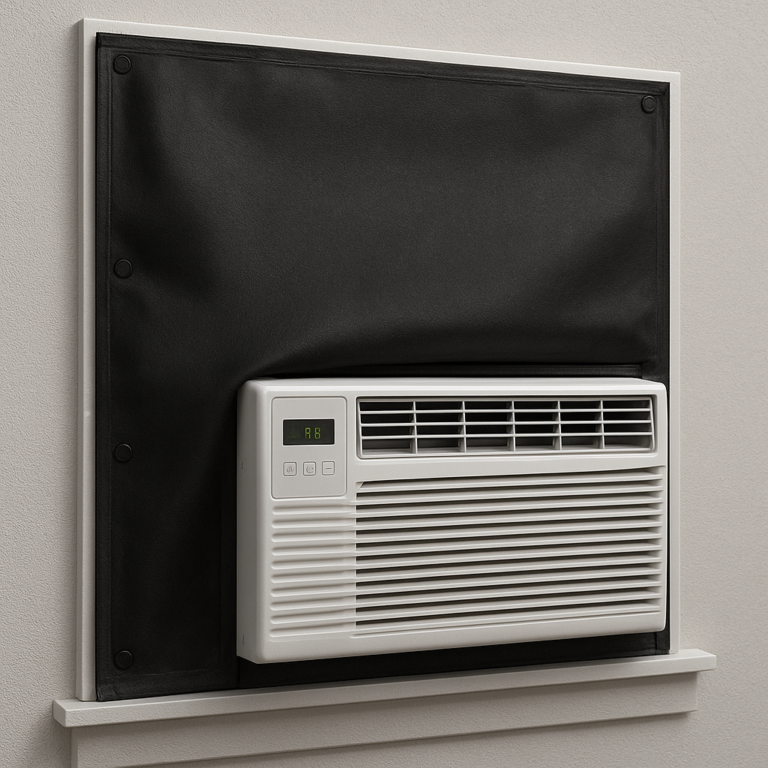
If you have a window unit or a wall sleeve, the vibration travels through the wall. Installing acoustic foam or mass-loaded vinyl (MLV) behind the unit can absorb these vibrations before they turn into audible noise.
3. Optimize Airflow with Strategic Vent Placement
Blocked vents force the fan to work harder, increasing noise. Ensure your vents are unobstructed and angled to circulate air without creating a “whoshing” sound.
4. Seal Drafts to Prevent Vibration Transmission
Drafts aren’t just about temperature; they are about sound leakage. Use weather stripping around windows and doors. This seals the gap where sound waves sneak in, acting as a sound barrier.
5. Choose Low-Noise Smart Thermostats for Precision Control
Old thermostats can click loudly when switching zones. Smart thermostats (like Nest or Ecobee) often use solid-state relays or silent switching mechanisms, eliminating the “click” that wakes light sleepers.
6. Implement a “Silent Mode” Night Routine
Most modern ACs have a “Sleep Mode” or “Silent Mode.” This lowers the fan speed and adjusts the temperature curve to prevent the unit from ramping up loudly in the middle of the night. Always activate this before bed.
7. Replace Old Filters to Reduce Fan Strain
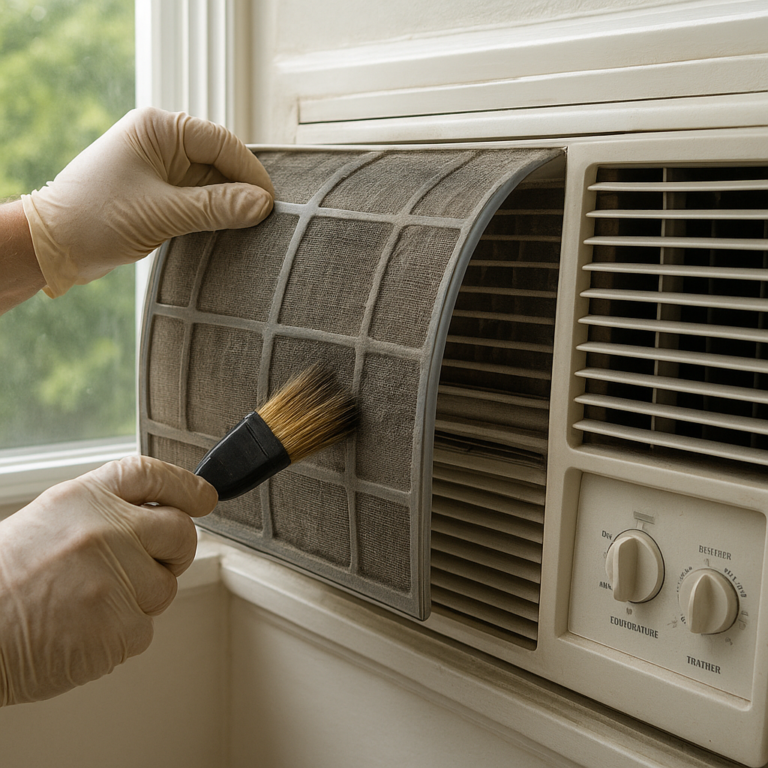
A clogged filter is the number one cause of whistling and rattling. It restricts airflow, causing the fan to spin faster and louder. Check your filters monthly.
8. Utilize Sound-Masking Fans with Variable Speeds
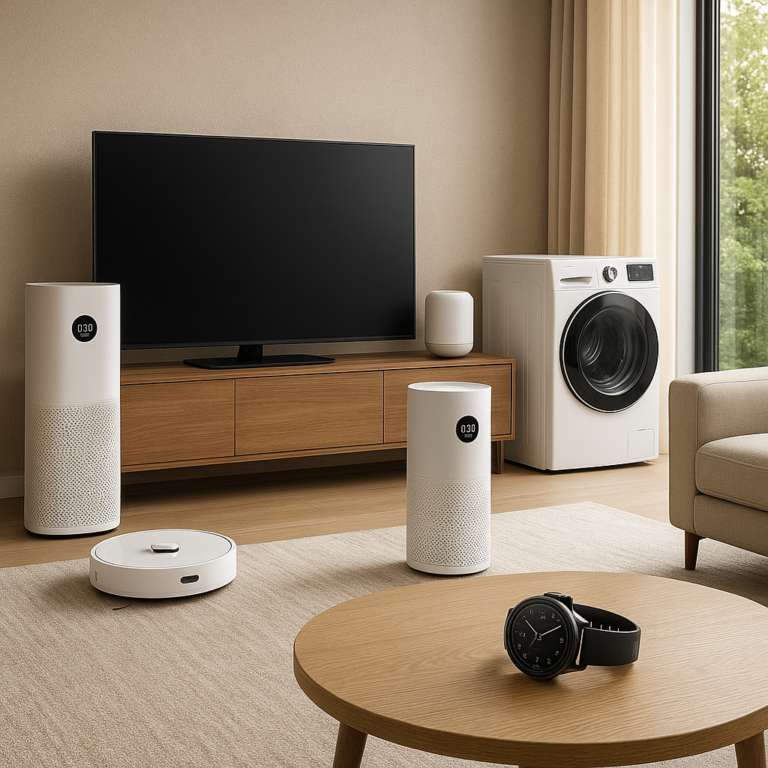
Sometimes, the AC is too quiet, and the silence is eerie. A high-quality sound-masking fan (like the Honeywell QuietSet or Levoit fans) can provide a consistent background hum. Look for fans with DC motors for near-silent operation.
9. Insulate Walls and Ceilings for Thermal and Acoustic Isolation
If you live in an older home, your walls might be thin. Adding insulation (like fiberglass or spray foam) serves a dual purpose: it keeps the heat out and the sound in (or out, depending on your perspective).
10. Position Heavy Furniture to Block Sound Waves
Sound travels in waves. Placing a heavy bookshelf or a solid wood dresser against the wall shared with a noisy neighbor or a street-facing window can act as a mass barrier, absorbing sound energy.
1. Upgrade to Dual-Zone Mini-Splits for Targeted Cooling
Instead of one loud central unit, mini-split systems allow you to cool only the bedroom. The outdoor compressor is often located far away, and the indoor unit is designed for ultra-quiet operation (some as low as 19 dB).
12. Schedule Professional Maintenance for Vibration Checks
Just like a Patek Philippe needs a service every few years, your AC needs a tune-up. A professional can check for lose mounts, worn bearings, and unbalanced fans that cause vibration.
Curious about how these strategies stack up against specific brands? We’ll dive into the top contenders in the next section.
🏆 Top 5 Ultra-Quiet Air Conditioning Brands for the Sleep-Conscious
We’ve tested, researched, and slept through the nights of the top contenders. Here is our expert rating based on design, functionality, noise levels, and sleep integration.
| Brand | Model Series | Noise Level (dB) | Design Aesthetics | Smart Features | Sleep Mode Quality | Overall Rating |
|---|---|---|---|---|---|---|
| Mitsubishi Electric | MSZ-GL Series | 19 dB | Slek, Minimalist | Yes (Wi-Fi) | Excellent | 9.5/10 |
| Daikin | Fit Series | 20 dB | Modern, Compact | Yes (Smart) | Very Good | 9.2/10 |
| LG | Dual Inverter | 21 dB | Stylish, LED Display | Yes (ThinQ) | Good | 8.8/10 |
| Fujitsu | AOUA Series | 2 dB | Functional, Robust | Yes (App) | Very Good | 8.5/10 |
| Panasonic | Standard Inverter | 23 dB | Classic, Durable | Yes (Smart) | Good | 8.2/10 |
Deep Dive: The Leaders in Silence
Mitsubishi Electric: The Gold Standard
Mitsubishi is often cited as the quietest on the market. Their Hyper-Heat technology allows them to run efficiently even in extreme cold, but their Quiet Operation mode is a game-changer for bedrooms. The indoor unit is so quiet you might forget it’s there.
- Pros: Unmatched silence, superior build quality.
- Cons: Premium price point.
- Verdict: If budget is no object, this is the ultimate choice.
Daikin: The Tech Innovator
Daikin’s Fit Series is designed specifically for retrofiting without ductwork. Their Swing Inverter technology reduces vibration significantly. The app integration allows you to set a “Silent Schedule” that ramps down the fan speed automatically.
- Pros: Great value, excellent app control.
- Cons: Slightly louder than Mitsubishi in high-col modes.
LG: The Style Statement
LG’s Dual Inverter compressors are designed to be 70% quieter than standard units. They also feature a Smart Diagnosis system that can detect issues before they become noisy failures.
- Pros: Slek design, good smart home integration.
- Cons: Some users report a faint “hiss” in very quiet rooms.
👉 Shop Ultra-Quiet ACs on:
- Mitsubishi Electric: Amazon Search | Official Site
- Daikin: Amazon Search | Official Site
- LG: Amazon Search | Official Site
🧊 Mini-Splits vs. Window Units: Which is Quieter for Your Bedroom?
The eternal debate: Mini-Split or Window Unit?
The Window Unit: The Noisy Veteran
Window units are the workhorses of cooling. They are affordable and easy to install. However, they have a fatal flaw for sleepers: the compressor is inside the room.
- Noise Source: The vibration of the compressor and the fan blowing directly into the room.
- Decibel Range: Typically 50-60 dB.
- Verdict: ❌ Not recommended for a silent sanctuary unless you are on a tight budget and can tolerate the noise.
The Mini-Split: The Silent Champion
Mini-splits separate the noisy compressor (outdoor unit) from the air handler (indoor unit).
- Noise Source: Only the fan in the indoor unit.
- Decibel Range: As low as 19-2 dB.
- Verdict: ✅ The clear winner for bedroom silence.
Comparison Table:
| Feature | Window Unit | Mini-Split |
|---|---|---|
| Noise Level | High (50-60 dB) | Ultra-Low (19-2 dB) |
| Installation | DIY (Easy) | Professional Required |
| Energy Efficiency | Moderate | High (Inverter) |
| Aesthetics | Obtrusive | Slek, Wall-Mounted |
| Cost | Low | High |
The Watch Analogy: A window unit is like a cheap quartz watch that ticks loudly and needs a battery change every year. A mini-split is like a high-end automatic watch—it runs smoothly, silently, and keeps perfect time for decades.
🌙 Beyond the AC: Creating a Holistic Silent Sleep Environment
Cooling is only half the battle. To truly transform your bedroom, you need a holistic approach.
Acoustic Treatments
- Rugs and Carpets: Hard floors reflect sound. A thick wol rug absorbs it.
- Curtains: Blackout curtains with a thermal lining also act as sound dampeners. Look for fabrics with a high density.
- Wall Art: Soft materials like tapestries or fabric wall hangings can break up sound waves.
Lighting and Atmosphere
As noted by the Encino Center for Sleep, light exposure is critical.
- Dimable Lighting: Use warm, dimable bulbs to signal to your brain that it’s time to sleep.
- No Blue Light: Remove screens or use blue-light blocking glasses.
- Aromatherapy: Lavender and chamomile scents have been proven to lower heart rate and prepare the body for sleep.
The “No-Electronics” Zone
Just as we advise keeping your luxury watches away from strong magnetic fields, keep your electronics away from your bed. The electromagnetic interference and the mental stimulation of a phone can disrupt your sleep cycle.
Did you know? A study by the National Sleep Foundation found that 93% of people believe a comfortable mattress is important for quality sleep. But a quiet environment is just as crucial.
🚫 Common Mistakes That Turn Your Bedroom into a Noisy Nightmare
Even with the best equipment, mistakes can ruin the sanctuary. Here are the pitfalls to avoid:
- Ignoring the Outdoor Unit: If your mini-split’s outdoor unit is mounted directly above your bedroom window, the vibration can travel through the structure. Ensure it’s mounted on vibration isolators and placed away from the bedroom wall.
- Overcooling: Setting the temperature too low forces the AC to run at high speed, increasing noise. Stick to the 65°F sweet spot.
- Neglecting Maintenance: A dirty coil or a loose screw can turn a silent unit into a rattling mess.
- Poor Placement: Don’t place the indoor unit directly above your head. The airflow can create a whoshing sound that is distracting.
- Ignoring External Noise: No AC can mask a barking dog or traffic if your windows aren’t sealed. Address external noise sources first.
💡 DIY vs. Professional Installation: What Saves Your Ears?
Can you install a mini-split yourself? Technically, yes. But should you?
The DIY Route
- Pros: Saves money on labor.
- Cons: Risk of improper installation leading to leaks, inefficiency, and excessive noise. If the line set is kinked or the vacuum isn’t pulled correctly, the compressor can whine or vibrate.
The Professional Route
- Pros: Guaranteed proper installation, vibration isolation, and warranty protection. Professionals know how to mount the unit to minimize sound transmission.
- Cons: Higher upfront cost.
Our Verdict: For a silent sanctuary, professional installation is non-negotiable. A poorly installed unit will never be truly silent. Think of it like buying a Rolex: you wouldn’t try to assemble it yourself; you’d trust a certified watchmaker.
🔮 The Future of Bedroom Cooling: AI-Driven Silence and Efficiency
The future of cooling is smart and silent.
- AI Learning: Future ACs will learn your sleep patterns and adjust the temperature and fan speed before you even wake up, ensuring a seamless transition.
- Active Noise Cancellation: Imagine an AC that uses microphones to detect noise and emits anti-noise waves to cancel it out, similar to noise-canceling headphones.
- Biometric Integration: ACs that sync with your smartwatch (like the Apple Watch or Garmin) to adjust cooling based on your heart rate and sleep stage.
The First YouTube Video:
For a visual tour of a modern luxury bedroom that embodies these principles, check out the video below. It showcases how natural wood, marble, and ambient lighting can create a warm, relaxing sanctuary.
🎥 Featured Video: Transform your bedroom into a warm, relaxing sanctuary
🏁 Conclusion

Transforming your bedroom into a silent sanctuary is not just about buying a quiet AC; it’s about curating an environment that respects your need for rest. From the science of decibels to the art of acoustic dampening, every step counts.
The Verdict:
- Positives: Investing in inverter technology, mini-splits, and acoustic treatments yields imediate improvements in sleep quality, energy efficiency, and overall well-being.
- Negatives: The upfront cost can be significant, and professional installation is required for the best results.
Confident Recommendation: If you value your sleep as much as we value the precision of a Swiss movement, upgrade to a mini-split system with inverter technology. Pair it with acoustic panels, blackout curtains, and a sound-masking fan. The result? A bedroom that feels like a luxury hotel suite where the only sound you hear is the rhythm of your own breath.
Final Thought: Remember, a quiet room is a calm room. And in a calm room, even the most complex mechanical watch can tick in harmony with your soul.
🔗 Recommended Links
Ready to take the next step? Here are our top picks for products and resources to help you build your silent sanctuary.
👉 Shop Quiet Cooling Solutions:
- Mitsubishi Electric Mini-Splits: Amazon Search | Official Site
- Daikin Fit Series: Amazon Search | Official Site
- LG Dual Inverter: Amazon Search | Official Site
👉 Shop Sound Masking & Acoustics:
- Levoit Sound Machines: Amazon Search | Official Site
- Acoustic Panels: Etsy Search | Amazon Search
- Blackout Curtains: Amazon Search
Books & Resources:
- The Sleep Solution by W. Chris Winter: Amazon Link
- Why We Sleep by Matthew Walker: Amazon Link
❓ FAQ: Your Burning Questions About Silent Cooling Answered

How can a smart watch help monitor sleep quality in a silent sanctuary bedroom?
Smartwatches like the Apple Watch, Garmin, and Whop track heart rate variability (HRV), sleep stages, and movement. By correlating this data with your room noise levels (using a sound meter app), you can determine exactly how much noise is disrupting your REM sleep. If you notice a drop in deep sleep when the AC kicks in, you know it’s time to adjust the settings or upgrade the unit.
What are the best quiet cooling systems for a bedroom designed for deep rest?
The Mitsubishi Electric MSZ-GL Series and Daikin Fit Series are widely regarded as the best for deep rest due to their 19-20 dB operating noise. They feature inverter compressors that eliminate the on/off cycling noise, providing a smooth, silent cooling experience.
How does reducing bedroom noise improve the accuracy of wearable sleep trackers?
Wearable sleep trackers rely on movement and heart rate to determine sleep stages. Sudden noises can cause micro-arousals (brief awakenings) that the tracker might misinterpret as light sleep or wakefulness. By creating a silent environment, you reduce these false positives, allowing the tracker to provide a more accurate picture of your true sleep quality.
Can a minimalist bedroom design enhance the focus needed to maintain a luxury watch collection?
Absolutely. A minimalist design reduces visual clutter, which lowers cognitive load and stress. This calm environment is ideal for the focus and precision required to maintain a luxury watch collection. Just as a clean workspace improves productivity, a serene bedroom improves the mental clarity needed for watch care.
What quiet cooling solutions are compatible with high-end watch storage cabinets?
High-end watch storage cabinets often require stable humidity and temperature. Mini-split systems with smart thermostats are ideal because they maintain a consistent temperature without the fluctuations of traditional ACs. Ensure the cabinet is not placed directly in the path of the airflow to avoid humidity spikes or temperature drops.
How do silent cooling fans affect the humidity levels required for preserving quality timepieces?
Silent cooling fans generally do not significantly alter humidity levels unless they are part of a dehumidifier or humidifier system. However, air conditioning units naturally dehumidify as they cool. If you live in a humid climate, a mini-split with a dry mode can help maintain the 40-50% relative humidity ideal for watch storage.
What are the top-rated silent cooling devices for creating a watch-friendly sleeping environment?
For a watch-friendly environment, look for devices that offer precise temperature control and low vibration. The Mitsubishi Electric and Daikin mini-splits are top-rated. Additionally, smart humidifiers like the Levoit Humidifier can maintain optimal humidity without adding noise.
📚 Reference Links
- National Sleep Foundation: Temperature and Sleep
- Encino Center for Sleep & TMJ Disorders: Transform Your Bedroom into a Sleep Sanctuary
- MyiSense: 7 Tips for the Ultimate Sleep Sanctuary
- Mitsubishi Electric: Hyper-Heat Technology
- Daikin: Fit Series Mini-Splits
- LG: Dual Inverter Technology
- WEHOME INTERIOR: Featured Video