Support our educational content for free when you purchase through links on our site. Learn more
15 Top Watch Brands for Outdoor Adventures 🏕️

The top watch brands for outdoor and adventure use depend on your trip: Garmin leads for GPS navigation, Casio G-Shock for knock-about toughness, and Citizen Eco-Drive for low-maintenance timekeeping. For a classic field watch, Hamilton and Seiko make compelling choices—without asking you to charge your wrist every night.
We’ve learned that the most impressive watch isn’t always the most useful one. A menu-packed GPS watch can be a lifesaver on an unfamiliar trail, but on a familiar day hike, a clear dial and a comfortable strap may be all you need. The trick is choosing the right tool before you’re halfway up the mountain, squinting at a screen and wondering where the compass went.
Key Takeaways
- Choose by adventure, not by feature count: Garmin suits GPS navigation, G-Shock excels at rugged use, and Pro Trek offers useful ABC sensor options.
- Check the exact model’s limits: GPS maps, battery life, water resistance, and sensors vary across a brand’s lineup.
- Keep a backup for serious trips: A watch can support navigation, but it doesn’t replace a map, compass, route planning, or emergency communication.
- For simpler timekeeping: Consider Citizen Eco-Drive, Seiko, Hamilton, or Timex, depending on your style and activity.
- 👉 Shop outdoor watch brands: Garmin | Casio G-Shock | Casio Pro Trek | Citizen Eco-Drive | Seiko Prospex | Hamilton Khaki Field
Table of Contents
- ⚡ Quick Tips and Facts: Outdoor Watch Essentials
- 🏕️ How Outdoor and Adventure Watches Got Here
- 🔎 How We Evaluate the Best Adventure Watch Brands
- Durability, Water Resistance, and Weather Protection
- GPS, Altimeters, Compasses, and Other Navigation Tools
- Battery Life, Solar Charging, and Serviceability
- Comfort, Legibility, and Easy-to-Use Controls
- 🏆 15 Top Watch Brands for Outdoor and Adventure Use
- 1. Garmin: GPS Watches for Hiking, Running, and Backcountry Navigation
- 2. Sunto: Ruged Sports Watches for Trails and Mountains
- 3. COROS: Long Battery Life for Endurance Adventures
- 4. Casio G-Shock: Shock-Resistant Watches for Harsh Conditions
- 5. Casio Pro Trek: ABC Watches for Hiking and Navigation
- 6. Citizen: Eco-Drive Adventure Watches with Solar Power
- 7. Seiko: Dependable Field and Dive Watches
- 8. Hamilton: Classic Field Watches Built for Everyday Wear
- 9. Timex: Affordable Outdoor and Expedition Watches
- 10. Luminox: High-Visibility Watches for Low-Light Conditions
- 11. Victorinox: Swiss Army Watches for Travel and the Outdoors
- 12. Breitling: Premium Tool Watches for Sea and Sky
- 13. Tudor: Robust Dive Watches for Outdoor Wear
- 14. Rolex: Iconic Adventure Watches and All-Terrain Durability
- 15. Apple: Smartwatch Features for Hiking and Everyday Adventures
- 🧭 Choose a Watch for Your Adventure
- Best Watches for Hiking and Backpacking
- Best Watches for Camping and Survival
- Best Watches for Trail Running and Endurance Sports
- Best Watches for Diving, Kayaking, and Water Sports
- Best Watches for Hunting, Fishing, and Cold Weather
- Best Watches for Travel and Everyday Outdoor Wear
- ⚙️ Outdoor Watch Features Explained
- GPS and Offline Maps
- Altimeters, Barometers, and Compasses
- Water Resistance and Dive Ratings
- Solar Power and Battery Life
- Sapphire Crystal, Mineral Glass, and Scratch Resistance
- Case Materials, Straps, and Wearability
- 🔋 GPS Smartwatch vs. Analog Field Watch
- 💰 What to Consider at Different Budget Levels
- 🧰 How to Care for an Adventure Watch
- ❌ Common Outdoor Watch Buying Mistakes
- ✅ Quick Tips for Choosing Your Outdoor Watch
- Conclusion
- Recommended Links
- FAQ
- What is the best watch brand for outdoor adventures?
- Are GPS watches reliable without cell service?
- Is a 100-meter water-resistant watch suitable for swimming?
- Are solar-powered watches worth it for hiking?
- What watch features matter most for backpacking?
- Can I use a smartwatch for wilderness navigation?
- How long should an outdoor watch battery last?
- Reference Links
⚡ Quick Tips and Facts: Outdoor Watch Essentials
We’re the watch enthusiasts at Watch Brands™, where we Keep Time with Quality Watch Brands. Our short answer: match the watch to the adventure, not the adventure to the watch. A GPS smartwatch can be brilliant on a mapped trail; a simple quartz field watch can be the smarter companion when you need reliable timekeeping without a charging routine.
| What matters | A practical starting point | Why it matters |
|---|---|---|
| Navigation | GPS and offline maps for unfamiliar routes; compass and paper map as backup | Batteries can die, screens can break, and coverage may disappear. |
| Durability | Shock resistance, a protected crystal, and a case you’re comfortable scuffing | Outdoor gear is for use, not for keeping pristine. |
| Water | Check the stated rating and the manufacturer’s guidance for swimming or diving | Water resistance is not a universal “safe in water” guarantee. |
| Power | Compare battery life in the mode you’ll actually use | GPS tracking usually consumes power much faster than ordinary timekeeping. |
| Visibility | Clear numerals, backlight or luminous hands, and controls you can use with cold fingers | A feature is only useful if you can read and operate it. |
| Fit | Try the case on your wrist and consider gloves, sleeves, and pack straps | A bulky watch can catch on clothing and become annoying over a long day. |
Quick recommendations: ✅ Garmin for feature-rich GPS navigation; ✅ Casio G-Shock for hard knocks; ✅ Casio Pro Trek for traditional ABC sensors; ✅ Citizen Eco-Drive for light-powered quartz convenience; ✅ Hamilton or Seiko for a more classic field-watch experience.
One caveat before we head into the shortlist: a watch is a useful outdoor tool, not a replacement for route planning, a compass, a map, or emergency communication equipment. Garmin describes its satellite SOS features as requiring an active subscription, and GPS reception and battery performance depend on conditions and settings (Garmin inReach).
For more general buying advice, see our guide to buying watches and browse affordable watches. 🏕️
🏕️ How Outdoor and Adventure Watches Got Here
Outdoor watches grew from a straightforward need: read the time in rough conditions, at a glance, and without fuss. Field watches borrowed practical cues from military timepieces—clear dials, dependable movements, and sturdy cases—while dive watches added rotating timing bezels and stronger water protection.
The modern adventure watch adds another layer. Digital sensors can display altitude, pressure trends, compass headings, and activity data. GPS watches can record routes and, on supported models, show maps. But the older idea still holds: a good tool should be dependable when the weather turns and your attention is elsewhere.
| Watch type | What it does well | Typical trade-off |
|---|---|---|
| Field watch | Simple, legible timekeeping; often comfortable for everyday wear | Usually lacks GPS and electronic navigation tools |
| Digital ABC watch | Altimeter, barometer, compass; robust functionality | Sensor readings need calibration and sensible interpretation |
| GPS multisport watch | Route tracking, training metrics, navigation features | Requires charging; advanced features can add complexity |
| Dive watch | Timing bezel, clear dial, water-oriented construction | Water resistance does not make it a substitute for dive training |
| Solar quartz watch | Low-maintenance timekeeping when it receives adequate light | Solar charging does not mean limitless power in every setting |
The outdoors-magazine reviews in our research lean toward high-capability tools, while HODINKE’s editors’ outdoor-watch picks mix GPS smartwatches with simple field and dive watches. That difference makes sense: a watch chosen for remote navigation solves a different problem from one chosen for a relaxed hike or lake swim.
🔎 How We Evaluate the Best Adventure Watch Brands
We compare brands by what their watches are built to do, then look for trade-offs you’ll notice after the novelty wears off. A sensor list can look impressive on a product page; comfort, legibility, battery life, and trustworthy operation matter more once you’re miles from the car.
| Evaluation area | Questions we ask |
|---|---|
| Reliability | Is the watch suited to the stated activity, and does the brand explain its limits? |
| Functionality | Do GPS, sensors, timing tools, or smart features genuinely help outdoors? |
| Durability | How are the case, crystal, buttons, and strap likely to fare with real use? |
| Legibility | Can you read the time in direct sun, rain, or low light? |
| Power | What happens to battery life with GPS, maps, backlight, and notifications enabled? |
| Wearability | Is the watch comfortable through a full day, and does it fit beneath a jacket cuff? |
| Value | Does the watch offer useful capability without charging you—in money or complexity—for features you won’t use? |
Durability, Water Resistance, and Weather Protection
A rugged case helps, but “ruged” is not one standardized promise. Look for specific construction details: shock-resistant design, a well-protected crystal, secure buttons, and a strap that stays comfortable when wet. Casio explains its G-SHOCK shock-resistant structure, while Victorinox describes testing and materials for its I.N.O.X. collection.
Water resistance also needs context. The U.S. Federal Trade Commission says water-resistance claims should be substantiated and that consumers should follow care instructions; a rating is not permission to ignore the manufacturer’s guidance (FTC guidance). For diving, use a watch intended for the activity and follow recognized training and equipment standards, such as those from PADI.
✅ Good outdoor habit: rinse a watch with fresh water after saltwater or mud exposure, dry it, and check the maker’s care instructions before operating buttons underwater.
GPS, Altimeters, Compasses, and Other Navigation Tools
GPS watches can record a route and help you follow a planned course, but satellite reception varies with terrain, buildings, tree cover, device placement, and settings. Garmin’s GPS accuracy guidance explains factors that can affect positioning.
ABC stands for altimeter, barometer, and compass:
- Altimeter: estimates elevation, commonly using pressure and/or GPS data.
- Barometer: measures atmospheric pressure; changing pressure can help you spot weather trends, but it is not a forecast by itself.
- Compass: shows direction, but may need calibration and can be affected by nearby metal or electronics.
A wrist compass is handy for quick orientation, not a reason to leave your map at home. We like watches that make calibration and sensor modes easy to find, especially when you’re tired, gloved, or trying not to drop a snack in the dirt. 🧭
Battery Life, Solar Charging, and Serviceability
Battery claims need a little detective work. Manufacturers often publish separate figures for ordinary smartwatch use, GPS tracking, navigation, and power-saving modes. Read the mode-specific numbers and remember that screen brightness, temperature, notifications, and satellite settings can change real-world endurance.
Solar watches also vary. Citizen’s Eco-Drive technology converts light into electrical energy, but the watch still stores energy and has operating limits described in the Eco-Drive technology guide. Solar charging is a convenience, not a force field against weeks in a dark pack.
Before a trip:
- Charge or expose the watch to light according to its manual.
- Download maps or routes while you have a connection.
- Check the expected battery life with your planned GPS settings.
- Carry a power bank for long trips if your route depends on a smartwatch.
- Keep a non-electronic navigation backup for consequential routes.
Comfort, Legibility, and Easy-to-Use Controls
A large watch can offer a generous display and big buttons, but it may feel cumbersome under a rain shell. A compact watch can disappear on the wrist, but small text may be harder to read on a moving trail. Try the case with the strap you’ll use, and check whether the controls remain usable with gloves.
Our field-test rule of thumb: if you have to stop, squint, and dig through four menus just to see the time, the watch is not helping as much as it could.
🏆 15 Top Watch Brands for Outdoor and Adventure Use
There’s no single winner for every outing. A mountainer may prize GPS maps and long tracking life; a casual camper may be happier with a tough, simple Casio; someone who swims and commutes may prefer a durable dive-style watch.
The comparison below focuses on brand strengths, not a claim that every model from each brand has the same features. Check the exact model’s specifications and manual before you buy.
| Brand | Strongest outdoor fit | Main strengths | Consider before buying |
|---|---|---|---|
| Garmin | Hiking, navigation, multisport | GPS, maps on select models, extensive activity features | Charging and menu complexity |
| Sunto | Hiking, mountain sports | Outdoor navigation heritage, training and route features | Features and battery life vary widely by model |
| COROS | Endurance and trail sports | GPS training tools and long-use options on select models | Check map and sensor features by model |
| Casio G-Shock | Tough everyday adventure | Shock-resistant designs, broad range of digital and solar models | Some models are large or feature-dense |
| Casio Pro Trek | Hiking and ABC functions | Outdoor-oriented sensor and solar models | Not every model includes GPS mapping |
| Citizen | Everyday wear and water use | Eco-Drive light-powered quartz on applicable models | Solar charging needs exposure to light |
| Seiko | Field and dive-style wear | Broad mechanical, quartz, and solar selection | Features depend strongly on collection |
| Hamilton | Classic field-watch style | Legible, traditional designs with Swiss watchmaking | Most models are timekeeping tools, not GPS navigators |
| Timex | Practical field-watch wear | Accessible, straightforward outdoor-inspired choices | Confirm the exact model’s water and durability specs |
| Luminox | Low-light visibility | Self-powered tritium illumination on applicable models | Tritium illumination does not replace a backlight or GPS |
| Victorinox | Robust everyday use | I.N.O.X. designs focus on durability and practical wear | Often simpler than a multisport GPS watch |
| Breitling | Premium tool-watch territory | Aviation and dive-watch heritage | Premium mechanical watches may be overkill for rough use |
| Tudor | Field and dive watch use | Clear, robust mechanical designs | No smartwatch navigation features |
| Rolex | Luxury sport and explorer watches | Strong brand heritage and robust sport-watch lines | Expensive watches can make owners less relaxed about knocks |
| Apple | Connected outdoor use | GPS, safety and health features on supported models | Battery, cellular, and feature availability vary by model and region |
1. Garmin: GPS Watches for Hiking, Running, and Backcountry Navigation
Garmin is our first stop if you want GPS navigation, activity tracking, route planning, and a deep menu of outdoor features. Its outdoor collections span simpler rugged models and more advanced multisport watches. For hiking, compare the Instinct family and fēnix family.
✅ Best for: hikers and runners who will genuinely use GPS, route tracking, or mapping.
❌ Trade-offs: charging and menus take getting used to; maps and satellite functions vary by model.
We’ve found the biggest practical win is being able to record a route and review it later. The biggest “wait, where is that setting?” moment comes when a watch packs workout metrics, navigation, notifications, and health tracking into one wrist computer. A few practice sessions at home are worth it.
- Garmin Instinct: a rugged GPS option for users who prefer practical outdoor functionality.
- Garmin fēnix: a higher-capability family with mapping and advanced activity options on selected models.
- Garmin inReach-enabled devices: satellite communication and SOS depend on supported hardware, coverage, and an active subscription; read Garmin’s service details.
👉 Shop Garmin: Amazon | Garmin Official Website
2. Sunto: Ruged Sports Watches for Trails and Mountains
Sunto has a long association with outdoor instruments and sports watches. Its current outdoor range is worth considering if you want route guidance, sport tracking, and a watch designed around active use. Explore current models and their exact features on Sunto’s official site.
✅ Best for: trail users looking for a sports-first watch with outdoor tools.
❌ Trade-offs: don’t assume an older model’s battery or navigation specifications apply to a current model—or vice versa.
A video summary supplied for this article praises the older Sunto Traverse for navigation and battery endurance. That is useful historical context, but we wouldn’t transfer those claims wholesale to every Sunto watch. Compare the model’s GPS modes, mapping support, and published battery figures before you set out.
👉 Shop Sunto: Amazon | Sunto Official Website
3. COROS: Long Battery Life for Endurance Adventures
COROS is a strong candidate for endurance-focused users who prioritize GPS activity tracking, training features, and battery-life options. Check the COROS watch lineup and the specifications for the exact model you’re considering.
✅ Best for: trail runners and endurance athletes who want sports data without a large smartwatch ecosystem.
❌ Trade-offs: feature availability differs by model; confirm maps, navigation, and sensor support rather than buying by brand reputation alone.
The Outdoors Magic roundup highlighted the COROS APEX 4 for mapping and GPS endurance. That’s a useful example of the brand’s adventure-sport direction, but advertised endurance figures depend on settings and usage. Use the manufacturer’s current specs as the authority for a specific model.
👉 Shop COROS: Amazon | COROS Official Website
4. Casio G-Shock: Shock-Resistant Watches for Harsh Conditions
G-Shock’s appeal is easy to understand: it’s the brand we reach for when a watch is likely to meet rocks, gear, rain, or a hurried tent setup. The range includes simple digital models, solar watches, and feature-rich analog-digital watches such as the Mudmaster and Rangeman families.
The HODINKE editors call a G-Shock hard to beat for hiking and harsh conditions, while also pointing out that the Mudmaster can be “big.” That is the right balance: toughness is attractive until a bulky case catches on your jacket cuff.
✅ Best for: rough use, camping, and people who want a durable daily watch.
❌ Trade-offs: oversized cases and busy displays can be a poor fit for smaller wrists or minimalists.
- Mudmaster: a feature-rich outdoor line; check each model for sensors, solar charging, and radio timekeeping.
- Rangeman: a rugged digital option with outdoor-focused features on selected versions.
👉 Shop G-Shock: Amazon | Casio G-SHOCK Official Website
5. Casio Pro Trek: ABC Watches for Hiking and Navigation
Pro Trek is Casio’s outdoor-oriented line for users who want sensor functions such as a compass, altimeter, and barometer, with selected models adding solar power and other features. See the Pro Trek collection.
✅ Best for: hikers who want wrist-based environmental tools without requiring a full smartwatch experience.
❌ Trade-offs: ABC readings need calibration and interpretation; Pro Trek is not automatically a GPS mapping watch.
This is a sensible middle ground for someone who likes the G-Shock spirit but wants a more explicitly hiking-oriented feature set. Just remember the barometer is a trend tool, not your personal meteorologist.
👉 Shop Casio Pro Trek: Amazon | Pro Trek Official Website
6. Citizen: Eco-Drive Adventure Watches with Solar Power
Citizen’s Eco-Drive technology gives many models a practical advantage: they convert light into power, reducing the need for routine battery replacement. The Citizen Eco-Drive overview explains how the system works.
✅ Best for: everyday outdoor wearers who want quartz convenience and don’t want to wind a watch.
❌ Trade-offs: light exposure and model-specific power reserves matter; not every Citizen watch is an outdoor tool.
The Citizen Eco-Drive Garrison is one of the straightforward field-watch styles highlighted in the survival-watch video summary. It suits a “put it on and go” approach better than a complex GPS watch, especially if you care more about dependable timekeeping than mapping.
👉 Shop Citizen: Amazon | Citizen Official Website
7. Seiko: Dependable Field and Dive Watches
Seiko covers a wide territory, from practical field watches to dive-inspired and sports models. That range is the draw—and the reason to check specifications carefully. The Seiko Prospex collection includes sport-focused watches, while its broader catalog includes many styles suited to daily wear.
✅ Best for: people who want a traditional watch with a strong range of field and water-oriented designs.
❌ Trade-offs: mechanical watches need winding or wearing and periodic servicing; features differ substantially by model.
A solar chronograph such as the Prospex Speedtimer SSC815 can be appealing to cyclists who want to time a ride without thinking about winding. HODINKE editor Brandon Menancio describes using one to time cycling sections and enjoying the psychological boost. Fair enough: sometimes “cool is fast” is a perfectly good reason to wear a watch.
👉 Shop Seiko: Amazon | Seiko Official Website
8. Hamilton: Classic Field Watches Built for Everyday Wear
Hamilton’s Khaki Field collection is a natural choice for a clear, classic field-watch look. The Khaki Field Mechanical has an uncomplicated dial and hand-wound movement; the brand lists model-specific details on its Khaki Field pages.
✅ Best for: walkers, campers, and everyday wearers who appreciate simple timekeeping and a traditional design.
❌ Trade-offs: a mechanical field watch won’t give you GPS navigation, and water resistance varies by model.
Outdoors Magic highlighted a bronze Khaki Mechanical for wearers who prefer “a good old map and compass to modern GPS.” We agree with the principle: for a marked local trail, a legible watch may be all the wrist tech you need. Bronze also develops a patina, which some owners love and others would rather keep on someone else’s wrist.
👉 Shop Hamilton: Amazon | Hamilton Official Website
9. Timex: Affordable Outdoor and Expedition Watches
Timex is worth a look if you want a practical outdoor-inspired watch without an elaborate feature set. The Expedition collection includes options for field-style wear and everyday use.
✅ Best for: casual hikers and campers seeking readable, straightforward timekeeping.
❌ Trade-offs: verify the exact model’s water resistance and materials; the name “Expedition” alone doesn’t certify a watch for every expedition.
The survival-watch video summary recommends a Timex Expedition Field Chrono for its classic, no-frills approach. That’s the right sort of recommendation for someone who wants an easy-to-wear watch rather than another device to charge. For a broader look, browse our affordable watch guide.
👉 Shop Timex: Amazon | Timex Official Website
10. Luminox: High-Visibility Watches for Low-Light Conditions
Luminox is known for watches using tritium gas tubes for constant low-light visibility on applicable models. Read the brand’s explanation of its illumination technology.
✅ Best for: users who value quick dial visibility in darkness and want a rugged-style watch.
❌ Trade-offs: luminous tubes do not provide GPS, maps, or extra battery power for other functions; compare case size and model specs.
Outdoors Magic praised the Bear Grylls Survival Master for nighttime legibility and robust construction. That’s a useful endorsement of a specific model, not proof that every Luminox watch has the same water rating or build. The survival-watch video summary also highlights the Navy SEAL 3051.BO for its low-light display.
👉 Shop Luminox: Amazon | Luminox Official Website
11. Victorinox: Swiss Army Watches for Travel and the Outdoors
Victorinox’s I.N.O.X. range is aimed at people who want a substantial, robust everyday watch. The brand describes the collection and its testing on the I.N.O.X. collection page.
✅ Best for: travel, camping, and daily wear where a sturdy conventional watch is preferable to a touchscreen.
❌ Trade-offs: it’s a timepiece, not a GPS navigator; a steel or carbon case can still feel large on the wrist.
Outdoors Magic praised the I.N.O.X. Carbon’s tough construction and paracord-strap option. We like the practical spirit, but we wouldn’t treat a strap as a substitute for a purpose-built emergency kit. A watch can earn its place in the pack without being asked to become the pack.
👉 Shop Victorinox: Amazon | Victorinox Official Website
12. Breitling: Premium Tool Watches for Sea and Sky
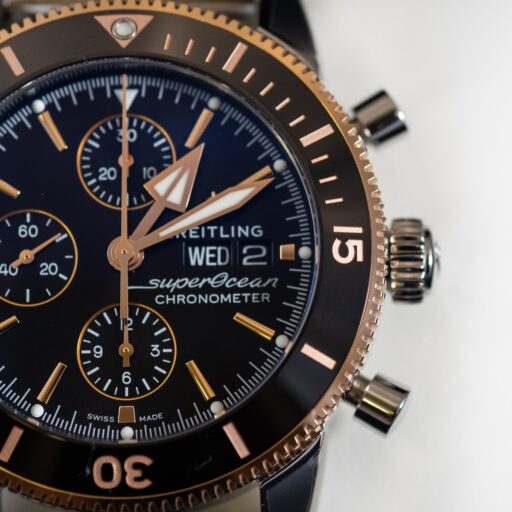
Breitling’s sport-watch lines, including Navitimer and Superocean, bring strong aviation and diving identities. Browse model details on Breitling’s official site.
✅ Best for: watch enthusiasts who want a premium mechanical sports watch with a clear tool-watch heritage.
❌ Trade-offs: many models are costly to own and service, and the extra value is primarily watchmaking, materials, and design—not wilderness GPS.
Breitling belongs in a comprehensive brand guide, but our practical advice is blunt: don’t buy a luxury watch for a trip if worrying about scratches will spoil the trip. If you love watches and are comfortable wearing one hard, that’s a different story. See our luxury watch brands coverage for more.
👉 Shop Breitling: Amazon | Breitling Official Website
13. Tudor: Robust Dive Watches for Outdoor Wear
Tudor’s Ranger is a clean, field-oriented design, while its dive-watch lines suit water-focused wear. Explore the Ranger and Black Bay collections.
✅ Best for: buyers who want a well-made traditional watch that can move from a hike to everyday wear.
❌ Trade-offs: no GPS mapping, digital compass, or training metrics; mechanical watches require appropriate care and service.
In HODINKE’s outdoor-watch feature, Anthony Traina chose the 39 mm Ranger for a hike in Glacier National Park and emphasized its simple three-hand layout and 100 m water resistance. That’s a good reminder that a calm, legible dial can be more useful than a screen full of data when your goal is to enjoy the walk.
👉 Shop Tudor: Amazon | Tudor Official Website
14. Rolex: Iconic Adventure Watches and All-Terrain Durability
Rolex’s Explorer and Oyster Perpetual collections are associated with classic sport-watch durability and legibility. The brand provides model information on the Explorer and Oyster Perpetual pages.
✅ Best for: enthusiasts who want a luxury mechanical watch with an outdoor-inspired heritage and are happy to wear it regularly.
❌ Trade-offs: it won’t replace a GPS watch, and the high-end nature of the purchase may make rough use feel less carefree.
We’d choose a Rolex for its design, ownership experience, and traditional watchmaking—not because it has an altimeter. If your main need is route guidance or emergency messaging, a specialist outdoor device is the more functional tool.
👉 Shop Rolex: Rolex Official Website
15. Apple: Smartwatch Features for Hiking and Everyday Adventures
Apple’s Watch lineup, including the Ultra family, can combine GPS, activity tracking, health features, and smartphone connectivity. Apple lists current capabilities and limitations on its Apple Watch product pages.
✅ Best for: people who want a connected smartwatch that can also support outdoor activities.
❌ Trade-offs: battery life, cellular access, offline navigation, and emergency functions depend on model, settings, region, and connection.
The HODINKE editors’ outdoor feature praises the Apple Watch Ultra’s GPS and outdoor interface, including the Wayfinder watch face. That’s a positive perspective from an editor who uses the watch in the field; it doesn’t mean every hiker needs one. If you prefer a watch that keeps operating for days without charging, compare real-world battery needs before choosing.
👉 Shop Apple Watch: Amazon | Apple Official Website
🧭 Choose a Watch for Your Adventure
Start with what you do most—not the most dramatic trip you might take one day. The right match often becomes obvious when you ask whether you need navigation, durability, water confidence, or simply readable time.
| Activity | Features worth prioritizing | Brands to compare |
|---|---|---|
| Hiking and backpacking | GPS route tracking or offline maps, compass, legibility, battery endurance | Garmin, Sunto, COROS, Casio Pro Trek |
| Camping and survival-style use | Tough case, dependable timekeeping, backlight, simple controls | G-Shock, Pro Trek, Timex, Victorinox |
| Trail running | GPS, lightweight fit, training metrics, battery in GPS mode | Garmin, COROS, Sunto |
| Diving and water sports | Appropriate water rating, timing bezel or dive functions, secure fit | Seiko Prospex, Citizen, Tudor, Breitling |
| Hunting and cold weather | Readable display, glove-friendly controls, low-light visibility | G-Shock, Luminox, Garmin |
| Travel and everyday wear | Comfort, useful timekeeping, serviceability, versatile design | Citizen, Seiko, Hamilton, Tudor |
Best Watches for Hiking and Backpacking
For a remote or unfamiliar route, shortlist a GPS model with the navigation features you’ll use, then check battery performance with those features enabled. If you’re hiking familiar trails, a G-Shock, Pro Trek, or simple field watch may be enough.
- Want mapped navigation? Compare selected Garmin and Sunto models.
- Want a tough watch with sensors? Look at G-Shock Mudmaster or Casio Pro Trek models.
- Prefer simple mechanical timekeeping? Consider a Hamilton Khaki Field or Tudor Ranger, but carry proper navigation tools separately.
The National Park Service recommends preparing for your trip, carrying navigation, and not relying solely on a phone; its hiking safety guidance is a useful reminder that wrist tech is only one part of a plan.
Best Watches for Camping and Survival
Camping rarely demands advanced GPS if you’re staying at a maintained campground. A reliable backlight, comfortable strap, and easy-to-read display may matter more. For rougher trips, choose a model with a case and controls that suit your conditions.
Our practical picks: G-Shock for knocks; Pro Trek for ABC sensors; Citizen Eco-Drive for low-maintenance quartz; Garmin if you need GPS route recording or navigation. None replaces a headlamp, a map, or a communication plan.
Best Watches for Trail Running and Endurance Sports
A trail-running watch should fit securely, remain readable while you’re moving, and offer enough GPS battery for your longest expected outing—with a safety margin. COROS, Garmin, and Sunto all merit comparison; choose by specific model, not logo.
Check:
- GPS endurance in your preferred tracking mode.
- Whether route guidance or maps are available offline.
- Button usability with sweaty or gloved hands.
- Data fields you can read at a glance.
- How the watch fits beneath a running jacket.
Best Watches for Diving, Kayaking, and Water Sports
Water activities call for a watch rated and designed for the activity. A diver’s timing bezel can track elapsed time, while GPS watches can help record surface routes in suitable conditions. Neither a casual water-resistance rating nor a smartwatch app makes you trained for diving.
For diving, follow the watch maker’s instructions and recognized dive-safety training. For kayaking or swimming, confirm the model’s stated water rating and whether buttons or charging contacts have restrictions.
Best Watches for Hunting, Fishing, and Cold Weather
Cold weather makes battery performance, gloves, visibility, and control size more noticeable. Digital watches with large buttons can be easier to use in gloves; analog watches with clear luminous hands are simple to read without switching screens.
- Prioritize a backlight or reliable lume.
- Keep touchscreen dependence in mind when wearing gloves.
- Check the manufacturer’s operating-temperature guidance.
- Test the watch with your outer layers before the trip.
Best Watches for Travel and Everyday Outdoor Wear
If one watch has to cover the commute, a weekend walk, and a swim, balance toughness with comfort. Citizen Eco-Drive, Seiko sport models, field watches from Hamilton, and selected G-Shocks all make sense depending on your style and feature needs.
For an everyday watch you’ll wear often, comfort can beat a spec-sheet victory. Explore our guides to men’s watches and watch fashion trends for more style-focused choices.
⚙️ Outdoor Watch Features Explained
GPS and Offline Maps
GPS uses satellite signals to estimate location; mapping and route features depend on the watch’s hardware, software, and stored data. Before buying, verify that the exact model supports:
- Downloaded maps or offline routes.
- Route navigation rather than only route recording.
- The satellite systems and GPS modes you need.
- Battery life in the mode you plan to use.
Important distinction: a watch that records where you went may not provide detailed offline maps. Check the feature list and test route loading before leaving home.
Altimeters, Barometers, and Compasses
ABC tools are useful when you know how to interpret them. Pressure-based altimeters can drift with changing weather; compasses can need calibration; barometer trends are clues, not a definitive weather service.
For better readings:
- Calibrate the compass outdoors, away from vehicles and large metal objects.
- Set or calibrate elevation when you know your starting altitude.
- Watch barometric trends over time rather than reacting to one reading.
- Cross-check with a map, a reliable forecast, and local conditions.
Water Resistance and Dive Ratings
Water resistance is a tested rating under defined conditions, not a promise that every watch can be used in every water activity. Do not infer diving suitability from a “water resistant” label alone. Confirm the model’s rating and care instructions with the maker, and use equipment intended for your diving activity.
For general consumer guidance, see the FTC Jewelry Guides; for dive equipment and training context, consult PADI’s dive guidance.
Solar Power and Battery Life
Solar charging is most helpful when the watch regularly receives light and you want fewer battery-related chores. It doesn’t make an electronic watch self-sufficient forever. For GPS watches, compare normal smartwatch endurance with GPS and navigation endurance; those figures can be dramatically different.
Citizen explains its light-powered technology in its Eco-Drive overview. For any brand, the model manual is the best source for charging, storage, and battery-care requirements.
Sapphire Crystal, Mineral Glass, and Scratch Resistance
Crystal choice is a trade-off:
| Crystal | Common advantage | Common consideration |
|---|---|---|
| Sapphire | Strong resistance to everyday scratching | Can be more prone to chipping from a hard impact than some users expect |
| Mineral glass | Practical, often used across a wide range of watches | More vulnerable to scratches than sapphire |
| Acrylic | Can be polished and may suit vintage-inspired designs | Scratches more readily |
The case, bezel, and how you wear the watch matter too. A sapphire crystal is not an unbreakable shield, and a scratch-resistant coating on the case doesn’t guarantee the whole watch is scratchproof.
Case Materials, Straps, and Wearability
Resin, steel, titanium, and carbon-based materials each feel different on the wrist. A light watch can be more comfortable on a long hike; steel can feel reassuringly solid; resin may suit knocks and wet conditions; titanium can offer lower weight, depending on the design.
Strap choice matters just as much:
- Ruber or silicone: useful for water and sweat.
- Nylon: light and comfortable, but can stay damp.
- Metal bracelet: durable and versatile, though heavier.
- Leather: attractive for everyday wear, less suited to wet or muddy trips.
🔋 GPS Smartwatch vs. Analog Field Watch
| Type | Choose it if you want | Watch out for |
|---|---|---|
| GPS smartwatch | Location tracking, routes, activity metrics, notifications | Charging, screen dependence, and feature complexity |
| Digital ABC watch | Compass, altitude, and pressure tools in a rugged package | Sensor readings need calibration; maps may be absent |
| Analog field watch | Simple, legible timekeeping and classic wear | No electronic navigation or route recording |
| Solar quartz watch | Low-maintenance timekeeping with light charging | Charging performance depends on exposure and model |
| Mechanical watch | Traditional movement and hands-on watch ownership | Winding, power reserve, and servicing need consideration |
The Outdoors Magic roundup favors highly capable watches for demanding terrain, including G-Shock, Garmin, and COROS. HODINKE’s editors include both electronic tools and simpler watches, such as the Tudor Ranger. These recommendations don’t conflict: one set emphasizes rugged function; the other shows how an outdoor watch can also be a personal, activity-specific choice.
A survival-watch video summary makes a similar point, highlighting Garmin Instinct, Timex Expedition, Citizen Eco-Drive, G-Shock, Luminox, and Sunto for different needs. You can watch the referenced feature here. Its “lifeline” framing is vivid, but we’d keep it grounded: a watch supports outdoor preparedness; it is not a standalone lifeline.
💰 What to Consider at Different Budget Levels
We won’t put watches in rigid price boxes because model availability varies. Instead, shop by capability and ownership needs:
- Simple everyday outdoor use: prioritize clear timekeeping, a reliable strap, and a useful backlight.
- Sensor-focused hiking: compare ABC watches and verify which sensors are included.
- GPS route tracking: compare battery life, route features, and map support.
- Premium watchmaking: decide whether mechanical construction, materials, and finishing justify the extra cost for your use.
- Long-term ownership: factor in charging cables, replacement straps, battery service, and mechanical maintenance.
✅ Spend for features you’ll use. ❌ Don’t pay for mapping, sensors, or luxury finishing just because the spec sheet looks like it packed for Everest.
🧰 How to Care for an Adventure Watch
A little maintenance keeps outdoor grime from becoming an expensive souvenir.
- Rinse after saltwater, sweat, or mud using the method recommended by the manufacturer.
- Dry the watch and strap before putting it away.
- Inspect the strap, buckle, and spring bars for wear, especially before remote trips.
- Check seals and service guidance if the watch is frequently exposed to water.
- Keep charging contacts clean on rechargeable models.
- Update maps and software at home and test your route tools before departure.
- Store solar watches with adequate light exposure as directed in the manual.
For mechanical models, follow the brand’s service recommendations. For GPS watches, practice key functions before you need them. A half-hour at home can prevent a very long, very damp argument with a menu screen.
❌ Common Outdoor Watch Buying Mistakes
- Buying by water-resistance number alone. Match the model to the activity and follow its manual.
- Assuming GPS means offline maps. Check whether it records a track, follows a route, or displays maps.
- Believing advertised battery life applies to every mode. Compare GPS and normal-use figures separately.
- Overlooking case size. A chunky watch may catch on sleeves or feel tiring over a full day.
- Treating an altimeter or barometer as a forecast. Sensor readings are useful context, not certainty.
- Skipping practice. Learn route loading, compass calibration, and emergency features before the trip.
- Relying one device. Carry an appropriate backup for navigation and communication on consequential trips.
✅ Quick Tips for Choosing Your Outdoor Watch
Use this five-step checklist:
- Name your main activity: hiking, running, camping, diving, or everyday wear.
- Choose your must-have tools: GPS, maps, ABC sensors, solar charging, water-oriented features, or simple timekeeping.
- Check the exact model: feature names and ratings vary even within one brand.
- Compare real-use battery life: focus on the mode you’ll use outdoors.
- Try the fit and controls: test readability, buttons, strap comfort, and sleeve clearance.
Still torn between a traditional field watch and a GPS watch? Ask yourself one question: Will route data change what I do on the trip, or do I mainly need a durable way to tell the time? Your answer points to the right watch far more reliably than any top-ten list.