Support our educational content for free when you purchase through links on our site. Learn more
⏳ When Was the First Watch Invented? The Shocking Truth (2026)

The first portable watch was invented in early 16th-century Germany, likely between 1505 and 1510, by the locksmith and clockmaker Peter Henlein. When was the first watch invented? The answer isn’t a single date, but a fascinating evolution from massive tower clocks to the tiny, drum-shaped “Nuremberg Eggs” that revolutionized personal timekeeping.
Most people assume the wristwatch came first, but for centuries, time was carried in the pocket or worn as a pendant. Imagine checking the time in 1520 only to find your watch is three hours fast—that was the reality of early horology! These devices were less about precision and more about status, serving as the ultimate luxury accessory for the wealthy.
We often think of the watch as a tool for accuracy, but the first ones were so unreliable they were practically toys. Yet, they laid the groundwork for the quartz revolution and the smartwatches wear today. From the mainspring to the balance spring, every innovation brought us closer to the seconds-per-day accuracy we expect now.
Key Takeaways
- The Origin: The first portable watch appeared in Nuremberg, Germany, around 1505–1510, credited to Peter Henlein.
- The Reality: Early watches were highly inaccurate, often losing or gaining hours per day, and served primarily as status symbols.
- The Evolution: It took nearly 40 years for timepieces to transition from pocket watches to the wristwatches we use today.
- The Tech: The invention of the mainspring and later the balance spring were the critical breakthroughs that made portable timekeeping possible.
- The Legacy: Understanding this history helps you appreciate the craftsmanship behind modern mechanical and quartz movements.
Table of Contents
- ⚡️ Quick Tips and Facts
- 🕰️ The Origins: When Was the First Watch Actually Invented?
- 📜 A Brief History of Timekeeping: From Sundials to Portable Clocks
- 🎒 The Rise of the Pocket Watch: The First True “Watches”
- 🔧 10 Revolutionary Innovations That Shaped Watch History
- The Invention of the Mainspring
- The Balance Spring: Peter Henlein’s Legacy?
- The Escapement Evolution: From Verge to Lever
- Temperature Compensation and the Marine Chronometer
- The Shift from Pocket to Wrist: The Trench Watch Era
- The Quartz Crisis: When Batteries Beat Gears
- The Birth of the Smartwatch: Digital Timekeeping Reimagined
- Atomic and Radio-Controled Accuracy
- Mass Production and the Democratization of Time
- The Future of Wearable Time: Beyond the Wrist
- 🧐 Debunking Myths: Did Peter Henlein Really Invent the Watch?
- ⌚ Pocket Watch vs. Wristwatch: The Great Transition
- 🔍 How to Identify the Era of Your Vintage Timepiece
- 💡 Expert Tips for Collecting Early Timekeeping Devices
- 🏆 Top 5 Most Influential Watchmakers in History
- 🚀 Conclusion: The Never-Ending Story of Time
- 🔗 Recommended Links
- ❓ Frequently Asked Questions (FAQ)
- 📚 Reference Links
⚡️ Quick Tips and Facts
Before we dive into the dusty archives of horological history, let’s hit the rewind button on some common misconceptions. You might think the first watch was a tiny, golden egg worn on a chain by a 16th-century nobleman, but the reality is far more mechanical and messy.
- The “First” Watch Myth: While Peter Henlein is the famous name, he likely didn’t invent the concept of the portable timepiece single-handedly. He perfected it.
- Accuracy Reality Check: The earliest “watches” were so inaccurate they could lose several hours a day. They were status symbols, not tools for precision.
- The Name Game: The word “watch” likely comes from the Old English woece (watchman) or sailors timing their shifts, not from the act of “watching” the time.
- Pocket Before Wrist: Wristwatches didn’t become the norm until World War I. Before that, wearing a watch on your wrist was considered a bit… feminine or impractical for men.
- The Quartz Shock: In 1969, Seiko changed everything. The Astron didn’t just improve accuracy; it shattered the mechanical watch industry’s dominance for a decade.
If you’re wondering how we got from a drum-shaped brass box to the atomic precision on your wrist today, you’re in the right place. We’ll unravel the timeline, debunk the legends, and show you why the mainspring is the unsung hero of timekeeping.
For a deeper dive into the specific timeline of when watches transitioned from luxury novelties to daily essentials, check out our comprehensive guide on When were watches invented?.
🕰️ The Origins: When Was the First Watch Actually Invented?
So, when was the first watch invented? If you ask a historian, they’ll give you a range. If you ask a watchmaker, they’ll give you a date. If you ask us here at Watch Brands™, we’ll tell you it depends on how you define “watch.”
The story begins in 16th-century Europe, specifically in Nuremberg, Germany. The prevailing narrative credits Peter Henlein (1485–1542) with creating the first portable timepieces. But here’s the twist: Henlein wasn’t the first person to make a small clock. He was the first to make one small enough to be carried on the person and worn as a pendant.
The Henlein Controversy
In 151, a scholar named Johann Cochläus wrote a glowing tribute to Henlein:
“Peter Hele, still a young man, fashions works which even the most learned mathematicians admire. He shapes many-wheled clocks out of small bits of iron, which run and chime the hours without weights forty hours, whether carried at the breast or in a handbag.”
This quote is the smoking gun for Henlein’s fame. However, other German clockmakers were experimenting with miniature timepieces around the same time. There is no definitive proof Henlein was the absolute first. He was simply the most successful at marketing them.
Why does this matter to you?
Because understanding that the “first watch” was a collaborative evolution rather than a singular “Eureka!” moment helps you appreciate the craftsmanship of early timepieces. It wasn’t just about invention; it was about miniaturization.
📜 A Brief History of Timekeeping: From Sundials to Portable Clocks

To understand the watch, we have to look at what came before. Humans have been tracking time for millennia, but the journey from the sun to the wrist is a long one.
1. The Solar Era (Pre-140s)
For thousands of years, we relied on sundials, water clocks, and candle clocks. These were stationary. If you wanted to know the time while traveling, you were out of luck.
2. The Mechanical Revolution (130s–140s)
The invention of the verge escapement in the 13th century allowed for mechanical clocks. These were massive, tower-sized beasts found in cathedrals. They were accurate to about 15 minutes a day—a huge improvement over sundials, but still not portable.
3. The Mainspring Breakthrough (140s)
The game-changer was the mainspring. Before this, clocks needed weights to drive the gears. You can’t carry a 50-pound weight in your pocket. The mainspring, a coiled strip of metal that unwinds to provide power, made portability possible.
Did you know? The first portable clocks were often called “clock-watches” because they were essentially small clocks that you wore.
🎒 The Rise of the Pocket Watch: The First True “Watches”
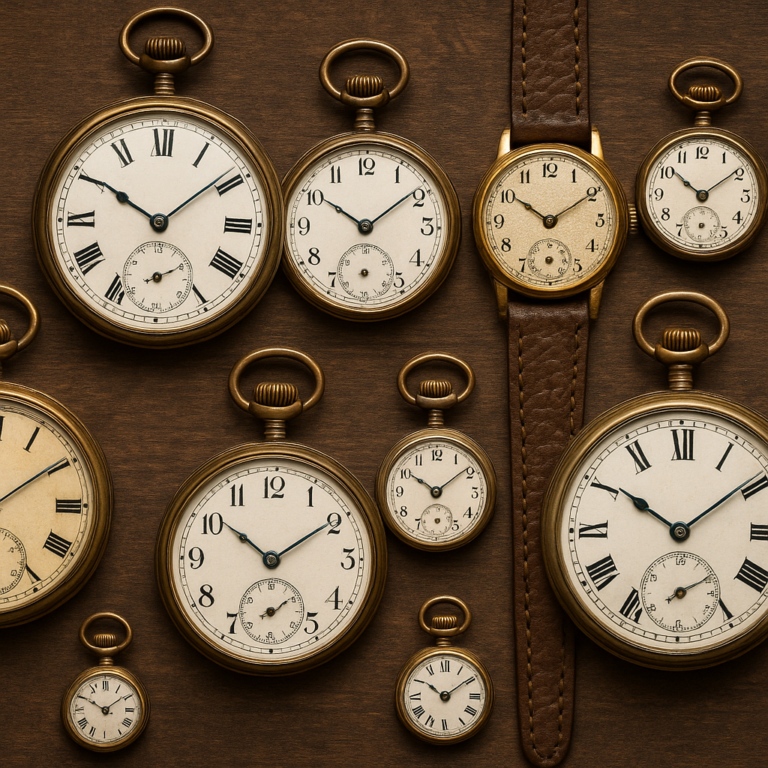
By the early 150s, the Nuremberg Egg had arrived. These were the first true “watches” in the sense of being portable personal timepieces.
What Was a Nuremberg Egg?
- Shape: Drum-shaped or oval, made of brass or iron.
- Mechanism: Powered by a mainspring with a verge and foliot escapement.
- Features: Usually only an hour hand. No minute hand!
- Accuracy: Terible. They could gain or lose several hours per day.
- Usage: Worn on a chain around the neck or carried in a pouch.
These weren’t tools for precision; they were jewelry. They were for the wealthy who wanted to show off their wealth and their connection to the latest technology.
The Transition to the Pocket
For a long time, these timepieces were worn as pendants. But in 1675, King Charles II of England introduced the waistcoat (vest). Suddenly, men had a convenient pocket to put things in. The trend shifted: watches moved from the neck to the pocket.
This era also saw the introduction of glass over the dial (around 1610) and the addition of the minute hand (around 1680), thanks to the invention of the balance spring.
🔧 10 Revolutionary Innovations That Shaped Watch History

How did we go from a device that loses hours a day to one that keeps time within seconds? It took centuries of tinkering. Here are the 10 innovations that changed everything.
1. The Invention of the Mainspring
Without the mainspring, there is no watch. This coiled spring replaced the heavy weights, allowing timepieces to be small and portable. It was the foundation of the entire industry.
2. The Balance Spring: Peter Henlein’s Legacy?
Wait, didn’t we say Henlein invented the watch? Yes, but the balance spring (or hairspring) was a later invention, credited to Robert Hooke and Christiaan Huygens in the 1650s.
- Impact: It regulated the speed of the balance wheel, reducing error from hours to minutes.
- Result: This is what made the watch a useful tool, not just a toy.
3. The Escapement Evolution: From Verge to Lever
The verge escapement was the original, but it was inefficient. In 1754, Thomas Mudge invented the lever escapement.
- Why it matters: It allowed the balance wheel to swing freely, improving accuracy and durability. It remains the standard in mechanical watches today.
4. Temperature Compensation and the Marine Chronometer
Temperature changes cause metal to expand or contract, throwing off timekeeping. In 1765, Pierre Le Roy invented the bimetalic balance wheel to compensate for this.
- Marine Chronometers: These were crucial for navigation at sea. John Harrison is the famous name here, but many others contributed to making timekeeping reliable on rolling ships.
5. The Shift from Pocket to Wrist: The Trench Watch Era
For centuries, men wore pocket watches. Women wore wristwatches (as jewelry). But World War I changed everything.
- The Problem: Soldiers couldn’t fumble with a pocket watch while aiming a rifle.
- The Solution: They strapped their pocket watches to their wrists using leather straps. These “trench watches” became the prototype for the modern wristwatch.
6. The Quartz Crisis: When Batteries Beat Gears
In 1969, Seiko released the 35 SQ Astron, the first quartz watch.
- The Tech: It used a quartz crystal vibrating at 8,192 Hz.
- The Impact: It was accurate to within 5 seconds a month. Mechanical watches, accurate to seconds a day, suddenly looked obsolete. This triggered the “Quartz Crisis,” wiping out many Swiss manufacturers.
7. The Birth of the Smartwatch: Digital Timekeeping Reimagined
The first digital watch with an LED display came from Pulsar in 1972. But the real revolution came with the Apple Watch in 2015, turning the watch into a computer on your wrist.
8. Atomic and Radio-Controled Accuracy
In the 190s, Junghans released the MEGA 1, the first radio-controlled watch. It syncs with atomic clocks via radio waves.
- The Future: In 2013, Bathys Hawaii introduced the Cesium 13 Atomic Watch, which has an internal atomic clock accurate to one second in 10 million years.
9. Mass Production and the Democratization of Time
In 1851, Aaron Lufkin Dennison started the Waltham Watch Company in Massachusetts. They used interchangeable parts, making watches affordable for the masses. No longer just for the rich.
10. The Future of Wearable Time: Beyond the Wrist
Where do we go from here? Biometric sensors, augmented reality, and perhaps implants? The watch is evolving from a timekeeper to a health monitor and communication hub.
🧐 Debunking Myths: Did Peter Henlein Really Invent the Watch?
Let’s settle this once and for all. Did Peter Henlein invent the watch?
The Short Answer: No, not entirely.
The Long Answer: He popularized the portable timepiece, but he didn’t invent the concept of a spring-driven clock.
The Evidence
- Pre-Henlein Clocks: There are records of small, spring-driven clocks in Germany and Italy before Henlein’s time.
- The “Nuremberg Egg” Myth: The term “Nuremberg Egg” was coined much later, in the 19th century. Henlein’s watches were likely just called “clocks” or “timepieces.”
- The Cochläus Quote: While it praises Henlein, it doesn’t claim he was the first. It says he “fashions works which… even the most learned mathematicians admire.” This implies he was a master craftsman, not necessarily the inventor.
Why the confusion?
Henlein’s work was so influential that history lumped him into the “inventor” role. It’s similar to how Thomas Edison is often credited with inventing the lightbulb, even though he improved upon existing designs.
⌚ Pocket Watch vs. Wristwatch: The Great Transition
The shift from pocket to wrist wasn’t immediate. It took a war to make it happen.
The Pocket Watch Era (160s–190s)
- Status Symbol: A gold pocket watch was a sign of wealth.
- Usage: Men checked the time by pulling it out of their vest pocket.
- Design: Often featured elaborate engravings and chains.
The Wristwatch Revolution (190s–1920s)
- The Catalyst: World War I. Soldiers needed hands-free timekeeping.
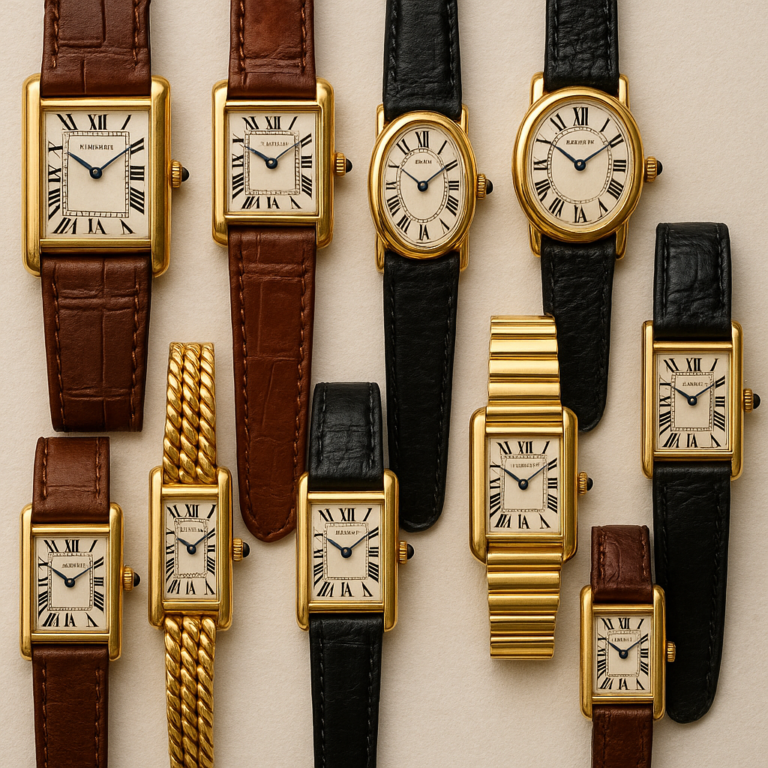
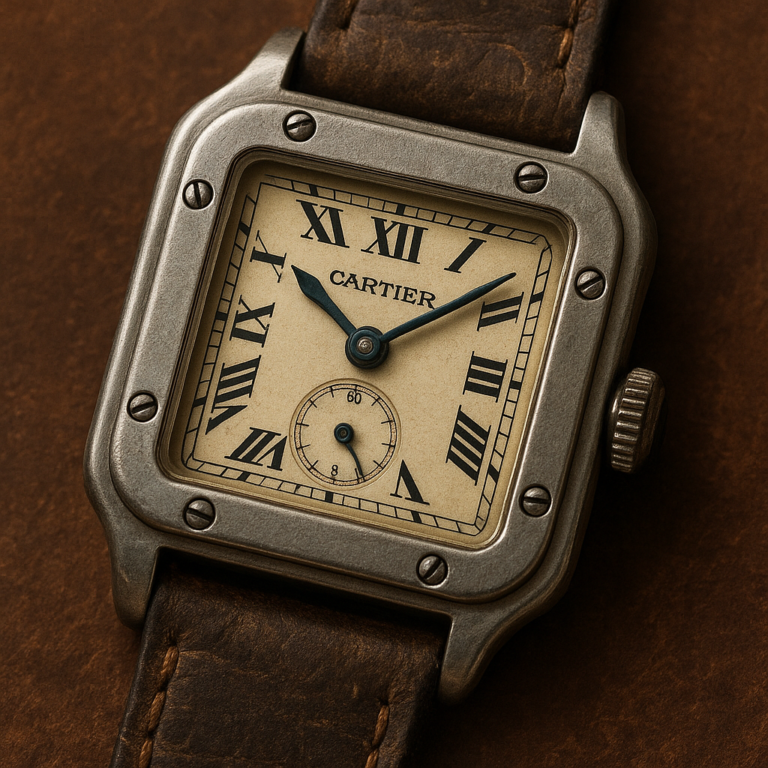
- The Catalyst 2: Aviation. In 1904, Louis Cartier designed the Santos watch for his friend, aviator Alberto Santos-Dumont, who needed to check the time while flying.
- The Result: By the 1920s, the wristwatch was the standard for men. The pocket watch became a relic.
Fun Fact: The Rolex Oyster, introduced in 1926, was the first waterproof wristwatch, further cementing the wristwatch’s dominance.
🔍 How to Identify the Era of Your Vintage Timepiece
Found an old watch in your attic? Here’s how to date it.
| Feature | Era | Characteristics |
|---|---|---|
| No Minute Hand | 150s–1670s | Only an hour hand; drum shape. |
| Glass Cover | 1610s+ | First glass crystals appear. |
| Minute Hand | 1680s+ | Balance spring allows minute tracking. |
| Waistcoat Pocket | 1675–190s | Watches designed for pockets. |
| Lanyard/Strap | 190s–1910s | Early “trench watches” with leather straps. |
| Waterproof Case | 1926+ | Rolex Oyster and similar designs. |
| Quartz Movement | 1969+ | Battery compartment, no winding crown. |
Tip: Look for the maker’s mark on the case. Many early watches were signed by the case maker, not the movement maker.
💡 Expert Tips for Collecting Early Timekeeping Devices
Collecting vintage timepieces is thrilling, but risky. Here’s our advice from the Watch Brands™ team:
- Verify the Movement: The case might be original, but the movement could be a replacement. Always check the serial numbers.
- Beware of “Frankenwatches”: These are watches assembled from parts of different watches. They have no historical value.
- Understand the Value of Accuracy: Early watches were not accurate. Don’t judge a 16th-century watch by modern standards.
- Service Regularly: Even if you don’t wear it, a vintage watch needs service every 5–7 years to prevent oil from drying out.
- Buy from Reputable Dealers: The market is full of fakes. Stick to established dealers or auctions with provenance.
Looking for a modern alternative? Check out our guide on Affordable Watches for reliable timepieces that won’t break the bank.
🏆 Top 5 Most Influential Watchmakers in History

Who shaped the world of timekeeping? Here are the titans.
- Peter Henlein (Germany): Popularized the portable timepiece.
- Christiaan Huygens (Netherlands): Invented the balance spring.
- Abraham-Louis Breguet (Switzerland): The “father of modern watchmaking.” Invented the tourbillon and improved the escapement.
- John Harrison (England): Solved the longitude problem with his marine chronometers.
- Hans Wilsdorf (Switzerland/UK): Founded Rolex and championed the wristwatch.
Want to invest in a piece of history? Explore our Luxury Watch Investments section for tips on buying collectible timepieces.
🚀 Conclusion: The Never-Ending Story of Time

So, when was the first watch invented? The answer is a journey, not a date. It started with Peter Henlein’s portable clocks in the 150s, evolved through the balance spring and lever escapement, survived the Quartz Crisis, and now lives on in our wrists as smartwatches and atomic timekeepers.
We began this article wondering if Henlein was the sole inventor. We’ve learned that history is rarely that simple. It’s a tapestry of innovation, where each generation builds on the last. From the Nuremberg Egg to the Apple Watch, the story of the watch is the story of human ingenuity.
The Final Question:
As we move toward a future where time might be tracked by implants or AI, will the mechanical watch survive? We believe it will. Just as the pocket watch didn’t disappear completely, the mechanical watch will remain a symbol of craftsmanship and artistry, even in a digital world.
What do you think? Will the next great innovation come from a Swiss workshop or a Silicon Valley lab? Let us know in the comments!
🔗 Recommended Links
Ready to start your own timekeeping journey? Here are some top picks and resources.
👉 Shop Vintage Timepieces:
- Vintage Pocket Watches: Amazon Search | Etsy Search
- Antique Wristwatches: Amazon Search | Chrono24
👉 Shop Modern Classics:
- Seiko Astron (Quartz Legacy): Amazon Search | Seiko Official
- Rolex Oyster (Wristwatch Pioneer): Amazon Search | Rolex Official
- Junghans MEGA (Radio-Controled): Amazon Search | Junghans Official
Books for the Enthusiast:
- The Watch Book by Gisbert L. Bruner: Amazon Link
- Wristwatch Annual by various authors: Amazon Link
❓ Frequently Asked Questions (FAQ)

Who invented the first wristwatch?
While Abraham-Louis Breguet created the first known wristwatch for Caroline Murat (Queen of Naples) in 1810, it was a one-off piece. The first mass-produced purpose-designed wristwatch for men is often attributed to Louis Cartier for Alberto Santos-Dumont in 1904. However, it was World War I that truly popularized the wristwatch for the general public.
Read more about “🕰️ Who Invented the First Watch and When? (2026)”
When did pocket watches become popular?
Pocket watches became the standard for men in the 17th century, particularly after King Charles II introduced the waistcoat in 1675. They remained the dominant form of personal timekeeping until the early 20th century, when the wristwatch took over.
Read more about “🕰️ The First Wristwatch in the World: Was It Really Cartier? (2026)”
What was the first mechanical watch made of?
The earliest portable timepieces, like the Nuremberg Eggs, were made of brass and iron. They featured a verge escapement and a mainspring. The cases were often drum-shaped and covered with a hinged brass grillwork instead of glass.
Read more about “🌱 15 Best Sustainable Watch Brands for 2026: Timeless & Ethical”
How has watch technology evolved since the first invention?
The evolution has been staggering:
- Accuracy: From losing hours a day to gaining/losing seconds a year.
- Power: From mainsprings to quartz crystals and atomic clocks.
- Function: From telling time to tracking health, making calls, and navigating the globe.
- Accessibility: From luxury items for the wealthy to affordable devices for everyone.
📚 Reference Links
- Wikipedia: History of watches
- Oxford English Dictionary: Etymology of “Watch”
- Seiko: Seiko 35 SQ Astron History
- Rolex: Rolex Oyster History
- Cartier: Santos de Cartier History
- Serket Watch: When Were Wristwatches Invented?
- Junghans: MEGA 1 History
- Bathys Hawaii: Cesium 13 Atomic Watch