Support our educational content for free when you purchase through links on our site. Learn more
⏳ What is the History of Time Watches? A 5,0-Year Journey (2026)

The history of time watches is a 5,0-year saga of human ingenuity, evolving from sundials and water clocks to the atomic precision of modern timepieces. If you’ve ever wondered what is the history of time watches, the answer lies in our relentless drive to conquer the sun, the stars, and eventually, the atom itself.
Imagine a 16th-century merchant in Nuremberg fumbling with a heavy, drum-shaped “Nuremberg Egg” that loses two hours every single day. Now, compare that to your wrist today, where a mechanical marvel ticks within four seconds of accuracy, or a digital device syncs with a satellite orbiting the Earth.
This transformation wasn’t just about better gears; it was about survival, exploration, and the very definition of a second. From the mercury-filled water clocks of ancient China to the quartz crisis that nearly wiped out Swiss watchmaking, the story is filled with drama, genius, and a few very expensive mistakes.
Key Takeaways
- Evolution of Precision: Timekeeping accuracy has improved from hours of error per day in the 150s to nanoseconds with modern atomic clocks.
- The Wristwatch Revolution: What began as a feminine accessory became a military necessity in WWI, permanently shifting time from the pocket to the wrist.
- The Quartz Crisis: The 1970s introduction of battery-powered quartz watches nearly destroyed the mechanical industry but ultimately forced a renaissance in luxury craftsmanship.
- Future Horizons: While smartwatches dominate daily utility, mechanical watches have secured their place as artistic investments and symbols of heritage.
Ready to dive deeper into the gears that changed the world? Let’s explore the timeline.
Table of Contents
- ⚡️ Quick Tips and Facts
- 🕰️ From Sun Shadows to Atomic Beats: The Evolution of Timekeeping
- 🌞 Ancient Sundials and Shadow Clocks: When the Sun Was the Only Clock
- 💧 Water Clocks and Clepsydra: Measuring Time by the Flow
- 🕯️ Candle Clocks, Hourglasses, and Incense Sticks: Fire and Sand
- 🌌 Astrolabes and Chinese Incense Clocks: Celestial and Sensory Time
- ⚙️ The Birth of the Portable Watch: From Tower Clocks to Pocket Pendants
- 🔩 Early Spring-Driven Mechanisms and the “Nuremberg Egg” Myth
- 🔧 The Development of the Escapement and Balance Wheel
- 🎩 The Transition from Pocket Watch to Wristwatch: A Fashion Revolution
- 🌊 Mastering the Seas: The Marine Chronometer and Longitude
- 🔬 The Era of Precision: Pendulums, Quartz, and Atomic Clocks
- 🕰️ The Pendulum Revolution: Galileo and Huygens
- ⚡️ Electric Clocks and the Quartz Crisis: When Batteries Changed Everything
- 🧬 Atomic Clocks and the Definition of the Second: The Ultimate Timekeeper
- ⌚️ Modern Horology: Smartwatches, Mechanical Revival, and Future Trends
- 🎖️ Military Timekeeping: From Trenches to Spacewalks
- 💡 Quick Tips and Facts: Did You Know?
- 🏁 Conclusion
- 🔗 Recommended Links
- ❓ FAQ: Your Timekeeping Questions Answered
- 📚 Reference Links
⚡️ Quick Tips and Facts
Before we dive into the dusty archives of horological history, let’s hit the rewind button on some mind-bending facts that might just make you look at your wrist (or the sun) differently.
- The “Day” is Arbitrary: Why 24 hours? It wasn’t a divine decree. The ancient Egyptians and Babylonians used a base-12 system (counting on finger joints), which eventually merged with their base-60 math to give us 24 hours, 60 minutes, and 60 seconds.
- Accuracy Evolution: The first mechanical watches in the 150s could be off by two hours a day. Today, a standard mechanical watch is considered “chronometer” certified if it loses no more than 4 seconds a day.
- The Nuremberg Egg Myth: While Peter Henlein is often credited with inventing the first watch, the term “Nuremberg Egg” is a 19th-century invention. Henlein’s creations were actually drum-shaped, not egg-shaped!
- Mercury in Time: In 108 AD, Chinese inventor Su Song built a massive water clock tower that used liquid mercury instead of water to prevent freezing in winter. Talk about thinking outside the box (or the clepsydra).
- The Cheapside Hoard: In 1912, a construction crew in London stumbled upon a time capsule of 42 watches and jewelry buried in the 17th century. One of them, a gold watch with a diamond-set case, is now estimated to be worth £45–75 million.
For a deeper visual journey into how we tell time, check out our guide on ⏳ The Evolution of Watch Dials and Hands: A Visual History.
🕰️ From Sun Shadows to Atomic Beats: The Evolution of Timekeeping
How did humanity go from squinting at the sun to counting the vibrations of a cesium atom? The story of timekeeping isn’t just about gears and springs; it’s a saga of human ingenuity, survival, and the relentless pursuit of precision.
🌞 Ancient Sundials and Shadow Clocks: When the Sun Was the Only Clock
Long before the first gear turned, our ancestors looked up. The earliest timekeepers were the sky itself.
- The Shadow Stick: The simplest form of a sundial. A vertical stick (gnomon) casts a shadow that moves as the sun travels.
- The Obelisks: Ancient Egyptians didn’t just build monuments; they built giant sundials. The shadow of an obelisk could mark the solstices and equinoxes with terrifying accuracy.
- The Limitation: If it’s cloudy, you’re blind. If it’s night, you’re lost. As the Roman playwright Plautus famously complained: “My belly was my sun-dial: one more sure, truer, and more exact than any of them.”
The Jantar Mantar in Jaipur, India, built in 1727, features the Vrihat Samrat Yantra, a 27-meter tall sundial that can tell time to within two seconds. It’s a testament to how far shadow-casting technology could go when you have unlimited stone and a very patient architect.
💧 Water Clocks and Clepsydra: Measuring Time by the Flow
When the sun set, the water clock (clepsydra) took over. These devices measured time by the regulated flow of water.
- The Mechanics: Water dripped from a container into a second vessel. The rising water level indicated the time.
- The Problem: Water viscosity changes with temperature. Cold water flows slower; hot water flows faster.
- The Fix: The Chinese genius Zhang Sixun solved this in 976 AD by replacing water with liquid mercury, which maintains a more consistent flow regardless of temperature.
- The Alarm: Some water clocks were so advanced they had mechanical figures that would drop balls into gongs to signal the hours.
🕯️ Candle Clocks, Hourglasses, and Incense Sticks: Fire and Sand
Fire and sand were the next great innovators in the race against the clock.
- Candle Clocks: King Alfred the Great (9th century) used six candles, each 12 cm tall, marked at 1-inch intervals. As the candle burned down, he knew what time it was. Simple, but smoky.
- Incense Clocks: Popular in China and Japan, these used scented sticks that burned at a predictable rate. Some were shaped like spirals to last for 12 hours. The smell of sandalwood became the smell of time.
- Hourglasses: The only reliable method for measuring time at sea. Unlike sundials, they worked at night and in overcast weather. When Ferdinand Magellan circumnavigated the globe in 152, his fleet carried 18 hourglasses per ship.
🌌 Astrolabes and Chinese Incense Clocks: Celestial and Sensory Time
Timekeeping wasn’t just about the hours; it was about the stars.
- The Astrolabe: A complex brass instrument used by astronomers and navigators to calculate the position of the sun and stars. It was the smartphone of the medieval world, solving problems in astronomy, navigation, and timekeeping.
- Sensory Time: The incense clock wasn’t just a timer; it was an experience. Different scents marked different times of the day, turning timekeeping into a multi-sensory ritual.
⚙️ The Birth of the Portable Watch: From Tower Clocks to Pocket Pendants
The leap from stationary tower clocks to something you could carry in your pocket is one of the greatest engineering feats in history.
🔩 Early Spring-Driven Mechanisms and the “Nuremberg Egg” Myth
In the 15th century, clockmakers discovered that a coiled spring could power a mechanism. This was the mainspring, the heart of the portable watch.
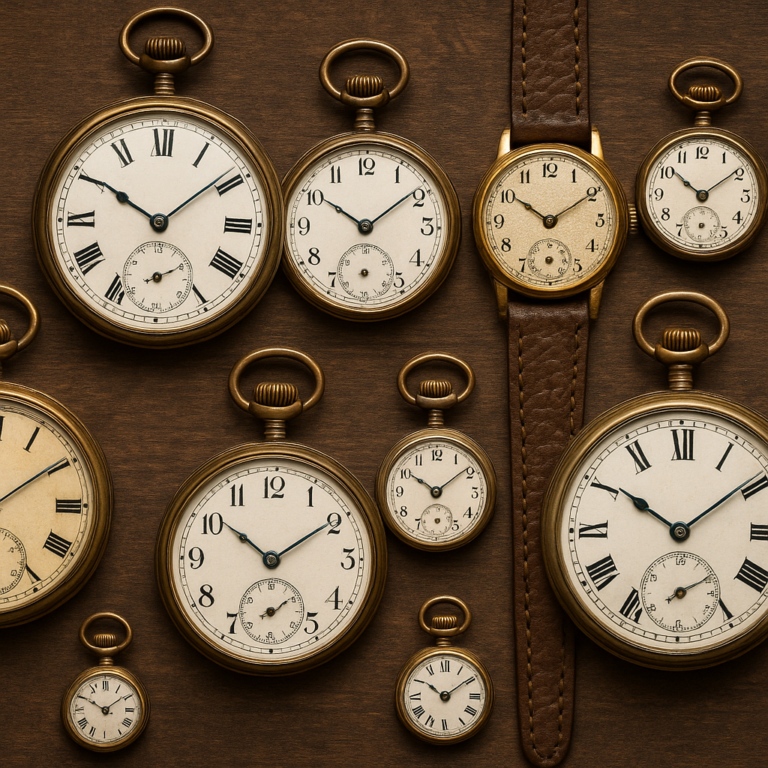
- Peter Henlein: A locksmith from Nuremberg, Henlein is often cited as the “inventor” of the watch. In 1524, he was paid for making a “small clock” that ran for 40 hours without winding.
- The Shape: Contrary to the popular “egg” myth, these early watches were cylindrical, heavy, and often worn as pendants. They were more jewelry than tool.
- Accuracy: These early timepieces were notoriously inaccurate, losing or gaining several hours a day. They were status symbols, not precision instruments.
🔧 The Development of the Escapement and Balance Wheel
The real revolution came with the balance spring (or hairspring).
- The Breakthrough: In 1675, Christiaan Huygens and Robert Hooke independently invented the balance spring. This turned the balance wheel into a harmonic oscillator, regulating the speed of the watch.
- The Result: Accuracy jumped from “several hours a day” to “a few minutes a day.”
- The Minute Hand: Before this, watches only had an hour hand. The minute hand was added around 1680 in Britain, finally allowing us to measure time in minutes.
🎩 The Transition from Pocket Watch to Wristwatch: A Fashion Revolution
For centuries, men wore pocket watches. Wristwatches were considered feminine jewelry.
- The Shift: The transition began in the late 19th century but exploded during World War I.
- Trench Warfare: Soldiers needed to coordinate attacks and artillery barrages. Fumbling for a pocket watch was a death sentence. They strapped watches to their wrists with leather straps.
- The Result: By 1930, the ratio of wristwatches to pocket watches was 50 to 1. The pocket watch became a relic of the past.
🌊 Mastering the Seas: The Marine Chronometer and Longitude
If you’ve ever wondered why ships got lost for centuries, it’s because they couldn’t measure longitude. Latitude was easy (look at the stars); longitude required knowing the exact time at a reference point.
- The Longitude Prize: In 1714, the British government offered a £20,0 prize (a fortune) for a method to determine longitude within 50 km.
- John Harrison: A self-taught carpenter and clockmaker, Harrison spent his life building marine chronometers.
H1, H2, H3: His early attempts were massive and heavy, but they worked.
H4: Completed in 1759, this was a watch-sized device. During its trials in 1761, it lost only 5 seconds over a voyage to Jamaica, far exceeding the prize requirements. - The Impact: Harrison’s chronometer allowed sailors to navigate the open ocean with precision, changing the course of global trade and exploration.
🔬 The Era of Precision: Pendulums, Quartz, and Atomic Clocks
Once we got the mechanics down, we started pushing the limits of physics.
🕰️ The Pendulum Revolution: Galileo and Huygens
- Galileo’s Discovery: Galileo Galilei noticed that the period of a pendulum’s swing is constant, regardless of the amplitude.
- Huygens’ Invention: In 1656, Christiaan Huygens built the first pendulum clock. It was accurate to within one minute a day, a massive leap forward.
- Temperature Compensation: Later, George Graham and John Harrison invented ways to compensate for temperature changes (using mercury or gridiron pendulums), pushing accuracy to 10 seconds a day.
⚡️ Electric Clocks and the Quartz Crisis: When Batteries Changed Everything
- Electric Clocks: Invented by Alexander Bain in 1840, these used electricity to drive the mechanism.
- Quartz Technology: In 1927, Bell Labs created the first quartz clock. Quartz crystals vibrate at a precise frequency when electricity is applied.
- The Seiko Astron: In 1969, Seiko released the 35 SQ Astron, the first quartz wristwatch. It was accurate to ±5 seconds per month, compared to the mechanical watch’s ±15 seconds per day.
- The Quartz Crisis: This technology decimated the Swiss mechanical watch industry in the 1970s and 80s. Thousands of jobs were lost, and many brands went bankrupt. But it also forced the industry to reinvent itself, focusing on luxury and craftsmanship.
🧬 Atomic Clocks and the Definition of the Second: The Ultimate Timekeeper
We’ve reached the pinnacle of timekeeping.
- The Definition: In 1967, the second was redefined based on the vibration of the caesium-13 atom. One second is exactly 9,192,631,70 cycles of radiation.
- The Accuracy: The NIST caesium clock is accurate to 30 billionths of a second per year.
- The Future: Next-generation clocks may use nuclear transitions in the Thorium-29 nucleus, promising even greater precision.
⌚️ Modern Horology: Smartwatches, Mechanical Revival, and Future Trends
Where do we go from here? The answer is: everywhere.
- The Mechanical Revival: Despite the dominance of quartz and smartwatches, mechanical watches have seen a massive resurgence. Brands like Patek Philippe, Rolex, and A. Lange & Söhne are more popular than ever. People crave the artistry and history of a mechanical movement.
- Smartwatches: The Apple Watch and others have turned the watch into a wearable computer. They track health, send messages, and connect to the internet.
- Hybrid Watches: Brands like Withings and Moto are creating watches that look mechanical but have smart features underneath.
🎖️ Military Timekeeping: From Trenches to Spacewalks
The military has always been a driving force in watch innovation.
- Trench Watches: During WWI, the “trench watch” became standard issue. It featured a protective cage and a luminous dial for night operations.
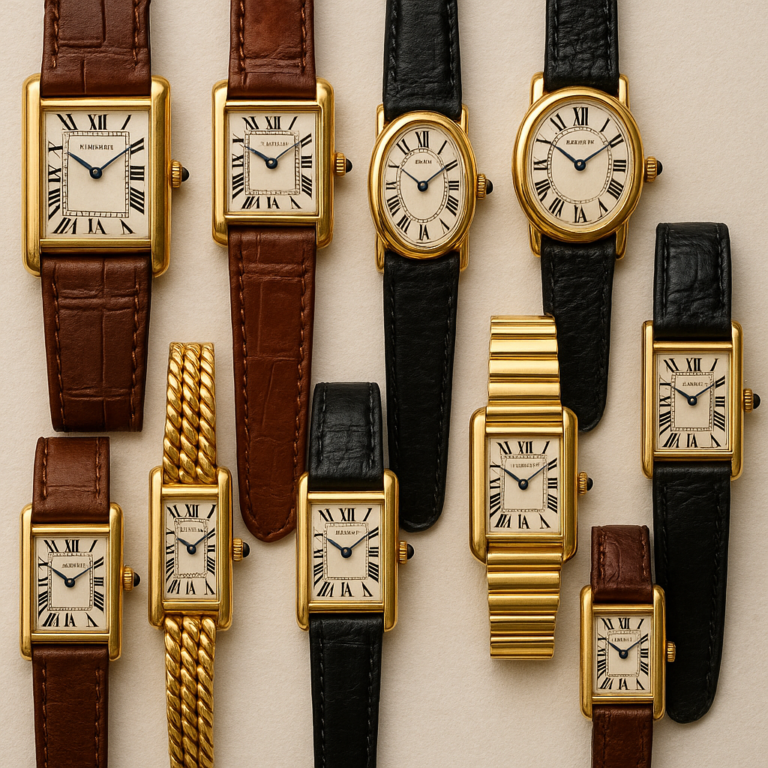
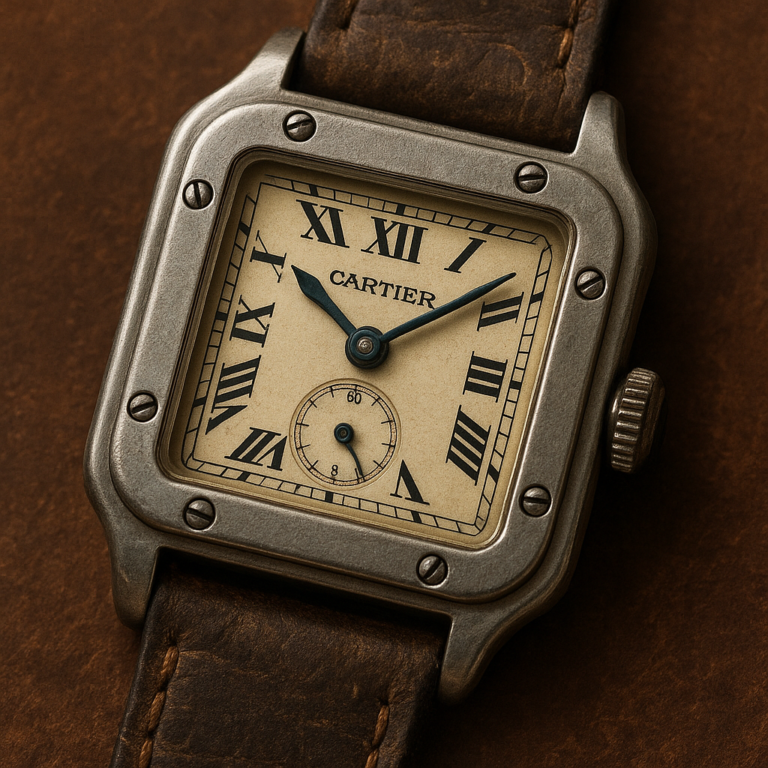
- The Cartier Tank: Designed by Louis Cartier in 1917, inspired by the shape of WWI tanks. It became an icon of style and function.
- Space Exploration: In 1961, Yuri Gagarin wore a wristwatch on Vostok 1. In 1965, the Omega Speedmaster Professional became the first watch worn during a spacewalk (Gemini 4) and later on the Moon (Apollo 1). It’s still the only watch certified by NASA for all manned space missions.
💡 Quick Tips and Facts: Did You Know?
Let’s recap some of the most fascinating tidbits from our journey through time:
- The First “Tick Tock”: The first clock to make a “tick tock” sound was a mechanical clock in the 14th century. Before that, clocks were silent or chimed.
- The Cheapside Hoard: As mentioned earlier, this 17th-century time capsule contained a watch now worth millions. It was buried to hide it from Cromwell’s troops.
- The World’s Oldest Watch: A watch purchased for £10 at a flea market in 1987 is now estimated to be worth £45–75 million.
- The Most Accurate Watch: The Citizen Eco-Drive with its AT-cut crystal is accurate to ±1 second per year.
- The Future: Scientists are working on nuclear clocks that could be accurate to within 1 second in 30 billion years.
🏁 Conclusion

So, what is the history of time watches? It’s a story of humanity’s relentless drive to measure the unmeasurable. From the shadow of a stick in the desert to the vibration of a cesium atom in a lab, we have come a long way.
We started with the sun, moved to water and fire, then to springs and gears, and finally to atoms and electrons. But despite all this technological progress, the mechanical watch remains a beloved symbol of human craftsmanship. It’s a reminder that in a world of digital precision, there is still something magical about a machine that ticks with the rhythm of a heartbeat.
Our Recommendation: Whether you’re a fan of the rugged reliability of a Seiko quartz watch, the timeless elegance of a Rolex mechanical, or the futuristic tech of an Apple Watch, there is a timepiece for everyone. The key is to choose a watch that tells your story, not just the time.
🔗 Recommended Links
- 👉 Shop Mechanical Watches on: Amazon | Walmart | Brand Official
- 👉 Shop Quartz Watches on: Amazon | Etsy | Brand Official
- 👉 Shop Smartwatches on: Amazon | Best Buy | Brand Official
- Books on Watch History:
- Hands of Time: A Watchmaker’s History of Time by Rebecca Struthers
- The Watch Book by Gisbert L. Bruner
❓ FAQ: Your Timekeeping Questions Answered

How did the invention of the pocket watch change timekeeping?
The invention of the pocket watch in the 16th century democratized timekeeping. Before this, only churches and public buildings had clocks. The pocket watch allowed individuals to carry time with them, changing how people scheduled their lives, conducted business, and navigated the world. It shifted time from a communal concept to a personal one.
Read more about “⏳ The Evolution of Watches: From Sundials to Smartwatches (2026)”
When did wristwatches become popular for everyday use?
While wristwatches existed as jewelry for women in the 19th century, they became popular for everyday use by men during World War I (1914–1918). The need for precise coordination in trench warfare made wristwatches a practical necessity. By the 1930s, they had completely replaced pocket watches for the average person.
Read more about “⏳ Were Watches a Thing in the 180s? The Pocket Watch Revolution”
What are the most significant milestones in watchmaking history?
- 15th Century: Invention of the mainspring, enabling portable timepieces.
- 1675: Invention of the balance spring, drastically improving accuracy.
- 1761: John Harrison’s H4 chronometer solves the longitude problem.
- 1969: Release of the Seiko Astron, the first quartz watch.
- 1969: First human on the Moon wearing an Omega Speedmaster.
Read more about “⌚ The Wristwatch Revolution: From Trenches to Timeless Icons (2026)”
How have luxury watch brands evolved over the last century?
Luxury watch brands have evolved from functional timekeepers to symbols of status, art, and investment. In the 20th century, they focused on precision and durability (e.g., Rolex, Omega). In the 21st century, they have embraced complications, limited editions, and storytelling. Brands like Patek Philippe and Audemars Piguet have become investment vehicles, with some models appreciating in value over time.
Read more about “⏳ Did They Have Watches in the 170s? The Shocking Truth Revealed”
📚 Reference Links