Support our educational content for free when you purchase through links on our site. Learn more
⏳ The Evolution of Watches: From Sundials to Smartwatches (2026)


The evolution of watches proves that while accuracy has become cheap, the artistry of mechanical craftsmanship has become more valuable than ever. We’ve traced the journey from heavy, inaccurate pocket clocks to the microscopic precision of atomic timekeeping and the digital dominance of smartwatches.
Imagine holding a “Nuremberg Egg” in 1510, a brass drum that lost hours every day, yet was worn as a status symbol by kings. Fast forward to 1969, when Seiko’s quartz Astron made that same level of inaccuracy unthinkable, nearly wiping out the Swiss industry in a single decade.
Today, your wrist might hold a device that tracks your heart rate, syncs with satellites, and tells time within a second per year. Yet, millions still pay thousands for a mechanical watch that loses seconds a day, driven by the human desire for connection to history.
Key Takeaways
- Mechanical vs. Digital: The evolution of watches shifted from mechanical ingenuity to quartz precision, but the market now values mechanical heritage as a luxury investment.
- The Quartz Shock: The 1970s Quartz Crisis democratized accuracy, forcing traditional brands to pivot toward craftsmanship and emotional value.
- Future of Wearables: Smartwatches have redefined timekeeping as a health and connectivity tool, while hybrid models bridge the gap between analog aesthetics and digital utility.
- Accuracy Evolution: We moved from losing hours a day to gaining atomic precision, yet the “perfect” watch is now defined by its story, not just its specs.
👉 Shop the Evolution:
- Classic Mechanical: Seiko 5 Sports | Hamilton Khaki
- Quartz Precision: Citizen Eco-Drive | Bulova Precisionist
- Smart Innovation: Apple Watch | Garmin Fenix
Table of Contents
- ⚡️ Quick Tips and Facts
- ⏳ From Sundials to Gears: The Dawn of Timekeeping
- 🎒 The Golden Age of the Pocket Watch and Portable Horology
- 🔧 The Mechanics of Mastery: Escapements, Springs, and Precision
- 🌡️ Taming the Elements: Temperature Compensation and Marine Chronometers
- ⚙️ The Industrial Revolution and the Rise of Mass Production
- ✈️ The Great Shift: How War and Aviation Birthed the Wristwatch
- ⚡️ The Electric Spark: Batteries, Transistors, and the First Digital Dreams
- 💎 The Quartz Crisis: How a Tiny Crystal Shook the Swiss Empire
- 📡 The Quest for Perfection: Radio-Controled and Atomic Timekeeping
- 🤖 The Digital Renaissance: Smartwatches and the Future of Wearables
- 🏆 10 Iconic Milestones That Defined Watch Evolution
- 🧐 Why Mechanical Watches Still Matter in a Digital Age
- 🛠️ How to Choose Your Perfect Piece of History
- 🎓 Conclusion
- 🔗 Recommended Links
- ❓ FAQ
- 📚 Reference Links
⚡️ Quick Tips and Facts
Before we dive into the gears, springs, and silicon chips that define our obsession with time, let’s hit the rewind button on some common misconceptions. You might think the wristwatch has always been the king of the wrist, but history tells a very different story.
- The “First” Wristwatch Myth: While many credit the 1904 Cartier Santos, the first wristwatch was actually commissioned by Abraham-Louis Breguet in 1810 for the Queen of Naples. It was a bespoke piece of jewelry, not a tool for men. Learn more about when watches were invented.
- Accuracy Evolution: Early pocket watches were notoriously inaccurate, often losing hours per day. By the late 19th century, a well-adjusted chronometer could keep time within a few seconds per day.
- The Quartz Shock: The invention of the quartz movement didn’t just improve accuracy; it nearly destroyed the Swiss industry. In the 1970s, Swiss watch exports plummeted by over 50% as cheap, accurate quartz watches flooded the market.
- WWI Catalyst: The transition from pocket to wrist wasn’t a fashion choice; it was a military necessity. Soldiers needed hands-free timekeeping to coordinate artillery barrages and troop movements.
- Smartwatch Dominance: Today, smartwatches account for a massive chunk of the global wristwear market, yet mechanical watches have seen a resurgence as luxury investment pieces.
⏳ From Sundials to Gears: The Dawn of Timekeeping
Our story begins long before the first spring was wound. Ancient civilizations didn’t have a “watch” in the modern sense, but they had a desperate need to measure time for agriculture, religion, and governance.
The Sun and the Water
The Egyptians were the first to use sundials, casting shadows to mark the hours. But what happened when the clouds rolled in? The Babylonians and Greeks invented the clepsydra (water clock), which measured time by the regulated flow of water. These were the first steps toward understanding time, but they were stationary, fragile, and useless on a battlefield.
“Our story begins in ancient civilizations, where the need to measure time first arose.” — Featured Video Summary
The Mechanical Revolution
Fast forward to the 14th century in Europe. This is where the magic of mechanical clocks began. Installed in church towers, these massive beasts introduced the verge escapement, a mechanism that allowed gears to move in controlled, rhythmic steps rather than spinning freely.
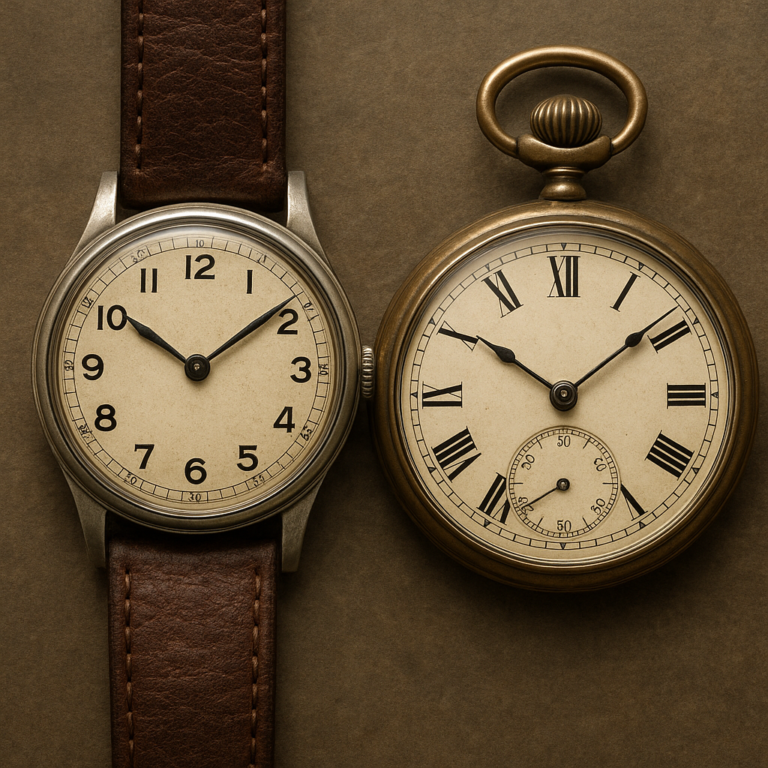
By the end of this period, the concept of portability was born. Craftsmen began shrinking these mechanisms into “clock-watches.” These weren’t the sleek timepieces we know today; they were heavy, drum-shaped brass boxes, often worn as pendants. They were symbols of status and wealth, combining function with artistry.
- Peter Henlein: Often credited as the inventor of the watch, this Nuremberg locksmith created “Nuremberg Eggs” in the early 16th century. As Johann Cochläus wrote in 151: “Peter Hele… shapes many-wheled clocks out of small bits of iron, which run and chime the hours without weights forty hours, whether carried at the breast or in a handbag.”
- The Limitations: These early devices had only an hour hand and were incredibly inaccurate, losing several hours a day. They were more jewelry than tools.
🎒 The Golden Age of the Pocket Watch and Portable Horology
If the 14th century was the dawn, the 17th and 18th centuries were the Golden Age of the Pocket Watch. This era transformed timekeeping from a novelty into an essential accessory for the elite.
The Waistcoat Effect
In 1675, King Charles II of England introduced the waistcoat. Suddenly, men needed a place to put their watches. The pendant style fell out of favor, and the pocket watch was born. Cases became rounded and flattened to fit snugly in a pocket, and glass covers were introduced around 1610 to protect the dial.
The Balance Spring: A Game-Changer
The single most important invention in horological history occurred in 1657: the balance spring (or hairspring). Disputed between Robert Hooke and Christiaan Huygens, this tiny spiral spring turned the balance wheel into a harmonic oscillator.
- Before: Accuracy was off by hours.
- After: Accuracy improved to roughly 10 minutes per day.
- Result: This precision allowed for the addition of the minute hand (around 1680 in Britain).
Escapement Innovations
As accuracy improved, so did the mechanisms that controlled it:
- Cylinder Escapement: Invented by Thomas Tompion (1695) and refined by George Graham.
- Lever Escapement: Invented by Thomas Mudge in 1754. By 190, this was the standard for almost every watch, offering superior reliability and ease of maintenance.
Keyless Winding
Until 1860, you needed a separate key to wind your watch. The invention of the crown (keyless winding) revolutionized usability, allowing owners to wind and set their timepieces with a simple twist of their finger.
🔧 The Mechanics of Mastery: Escapements, Springs, and Precision
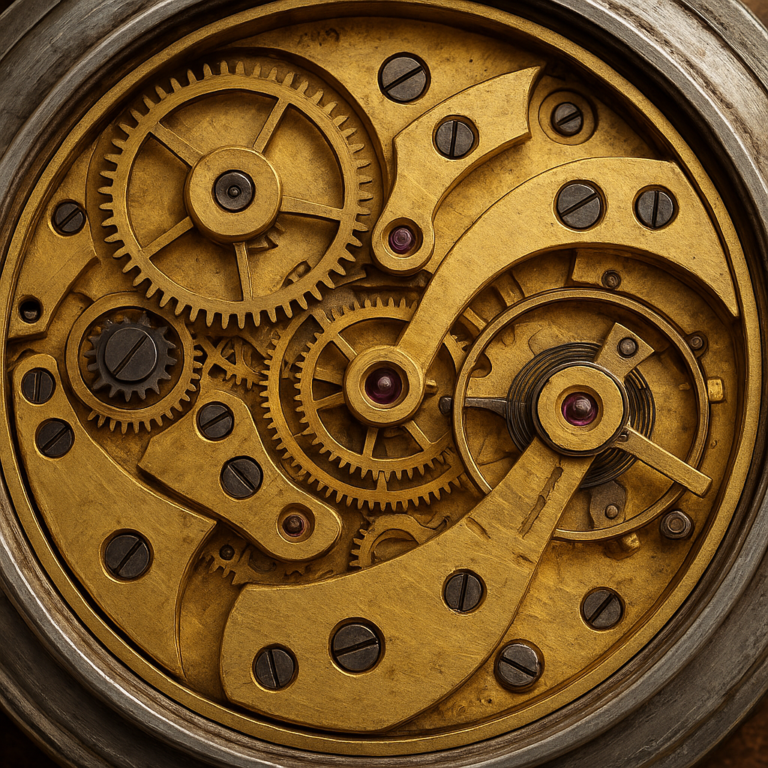
Why do we still obsess over mechanical watches in an age of atomic precision? Because the mechanics of mastery are a marvel of human engineering. Let’s break down the heart of a mechanical watch.
The Mainspring: The Heartbeat
The mainspring is the power source. Wound tightly, it stores potential energy. As it slowly unwinds, it releases energy to drive the gear train.
- Drawback: As the spring unwinds, the power delivery becomes weaker, potentially affecting accuracy (isochronism).
- Solution: The going barrel and fuse (in older watches) were designed to equalize this power delivery.
The Escapement: The Brain
The escapement is the most critical component. It does two things:
- Releases energy to the balance wheel in precise increments (the “tick-tock”).
- Counts the oscillations to move the hands.
| Escapement Type | Inventor | Era | Pros | Cons |
|---|---|---|---|---|
| Verge | Unknown | 14th C | Simple, robust | Very inaccurate, high friction |
| Cylinder | Tompion/Graham | 17th C | Better accuracy | Sensitive to dirt, fragile |
| Lever | Mudge | 18th C | Reliable, self-starting | Requires regular servicing |
| Chronometer | Breguet/Arnold | 18th C | Extreme precision | Complex, expensive |
The Balance Wheel: The Metronome
The balance wheel oscillates back and forth. The frequency of this oscillation determines the “beat” of the watch.
- Standard Beat: 28,80 vibrations per hour (4 Hz).
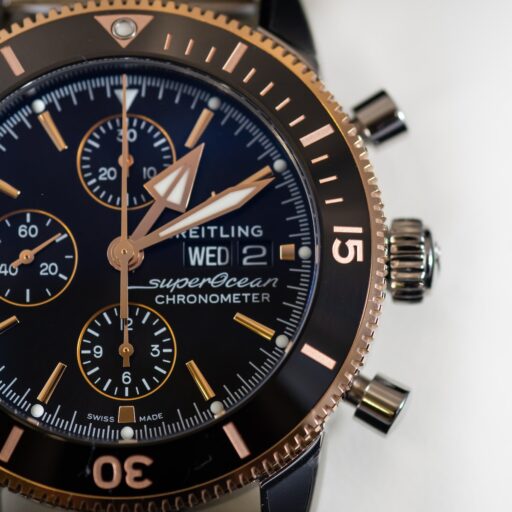
- High Beat: 36,0 vibrations per hour (5 Hz) – found in brands like Zenith (El Primero) and Breitling.
🌡️ Taming the Elements: Temperature Compensation and Marine Chronometers
Timekeeping wasn’t just about accuracy on a stable table; it was about accuracy on a rocking ship or in a freezing mountain pass.
The Temperature Problem
Metals expand and contract with temperature changes. A balance wheel that expands in heat becomes heavier and slows down; one that contracts in cold speeds up. This was a nightmare for navigators.
The Bimetalic Solution
In 1765, Pierre Le Roy invented the bimetalic temperature-compensated balance wheel. By using two metals with different expansion rates, the wheel could automatically adjust its diameter to counteract temperature changes. Later improved by Thomas Earnshaw, this innovation reduced temperature-induced errors to a few seconds per day.
The Marine Chronometer
For the British Navy, knowing the exact time was a matter of life and death. Determing longitude required precise timekeeping.
- John Harrison: His H4 marine chronometer (1761) was a masterpiece that could keep time within seconds over months at sea.
- Impact: This allowed ships to navigate the open ocean with unprecedented safety, cementing the watch as a tool of empire.
⚙️ The Industrial Revolution and the Rise of Mass Production
For centuries, watches were handcrafted by a single artisan. The Industrial Revolution changed everything, introducing interchangeable parts and mass production.
The American System
In the mid-19th century, American manufacturers like Aaron Lufkin Dennison and the Waltham Watch Company pioneered the use of machine tools to create identical parts.
- Interchangeability: A spring from one watch could fit another. This drastically reduced repair costs and manufacturing time.
- The Philadelphia Centennial (1876): In a stunning display of precision, the top 4 winning watches in a precision contest were randomly selected from a mass-production line, proving that machines could rival hand-craftsmanship.
The Pin Pallet Escapement
Invented by Georges Frederic Roskopf in 1876, the pin pallet escapement allowed for the creation of the “dollar watch.” These were cheap, durable, and accurate enough for the average worker, democratizing timekeeping for the first time in history.
✈️ The Great Shift: How War and Aviation Birthed the Wristwatch
If the pocket watch was the king, the wristwatch was the usurper. But how did a piece of jewelry for women become the standard for men?
The Military Catalyst
During the Boer War and World War I, soldiers found pocket watches cumbersome. They needed to check the time while holding a rifle or coordinating an artillery barrage.
- Trench Watches: Soldiers began strapping pocket watches to their wrists with leather straps.
- The “Silly Ass Fad” No More: In 1916, The New York Times declared the wristwatch a permanent fixture, no longer a “silly ass fad.”
The Aviator’s Influence
In 1904, Louis Cartier designed the Santos for his friend, the Brazilian aviator Alberto Santos-Dumont. Santos needed a watch he could check while flying without letting go of the controls. The Santos became the first true pilot’s watch and a fashion icon.
The Rise of Automatic Winding
In 1923, John Harwood invented the first successful self-winding (automatic) mechanism. This eliminated the need to wind the watch daily, making wristwatches even more convenient.
Did you know? By 1930, the ratio of wristwatches to pocket watches was 50 to 1. The pocket watch was effectively dead for daily use.
⚡️ The Electric Spark: Batteries, Transistors, and the First Digital Dreams
The mid-20th century saw the first cracks in the mechanical monopoly. The electric watch was the bridge between the mechanical and the digital.
The First Electric Watches
In the 1950s, brands like Hamilton and Bulova introduced electric watches. These used a battery to power a small electromagnetic coil that kept the balance wheel oscillating.
- Benefit: More consistent amplitude than a mainspring.
- Drawback: Still relied on a mechanical balance wheel, so accuracy wasn’t a massive leap forward.
The LED Revolution
In 1970, Pulsar (a brand later acquired by Hamilton) released the first digital electronic watch with an LED display.
- The Look: A red digital readout that only lit up when you pressed a button (to save battery).
- The Hype: It was the future! But the battery life was short, and the red LED was hard to read in daylight.
💎 The Quartz Crisis: How a Tiny Crystal Shook the Swiss Empire
If the electric watch was a tremor, the Quartz Revolution was an earthquake.
The Seiko Astron
On Christmas Day, 1969, Seiko released the 35 SQ Astron, the first quartz wristwatch.
- Technology: It used a quartz crystal resonator vibrating at 8,192 Hz (compared to the mechanical 5 Hz).
- Accuracy: It was accurate to within 5 seconds per month, compared to the mechanical watch’s minutes per month.
- Cost: It was expensive at first, but the technology quickly became cheap to manufacture.
The Crisis
The impact was devastating for the Swiss industry.
- Market Shift: By the 1980s, quartz watches dominated the market. Swiss watch exports plummeted.
- The “Swiss” Brand: Many Swiss brands went bankrupt or were bought out. The industry had to reinvent itself, focusing on luxury, craftsmanship, and heritage rather than just accuracy.
The Modern Quartz Renaissance
Today, quartz is the standard for accuracy and affordability.
- Miyota (Citizen): In 2010, they introduced a movement accurate to ±10 seconds a year.
- Citizen: In 2019, they achieved ±1 second per year using an AT-cut crystal.
- Bulova Precisionist: Uses a high-frequency quartz movement (262.14 kHz) for a sweeping second hand and extreme accuracy.
📡 The Quest for Perfection: Radio-Controled and Atomic Timekeeping
Can we do better than quartz? Yes, by syncing with the universe itself.
Radio-Controled Watches
In 191, Junghans released the Mega, the first radio-controlled analog wristwatch.
- How it works: The watch receives a time signal from atomic clocks (like DCF7 in Germany or WWVB in the US) and automatically adjusts the time and date.
- Accuracy: It is accurate to within 1 second of the atomic time.
- Limitation: Requires a clear signal and a battery to power the radio receiver.
The Atomic Wristwatch
In 2013, Bathys Hawaii introduced the Cesium 13 Atomic Watch, the first watch with an internal atomic clock.
- Technology: Uses a Chip Scale Atomic Clock (CSAC) based on cesium transitions.
- Accuracy: 1 second in 1,0 years.
- The Catch: The chip is large (1.5 inches) and requires recharging every 30 hours. It’s a marvel of engineering, but not yet practical for daily wear.
🤖 The Digital Renaissance: Smartwatches and the Future of Wearables
The 21st century has brought us the smartwatch, a device that merges traditional timekeeping with the power of a smartphone.
From Peble to Apple
- 2012: Peble raised $10.3 million on Kickstarter, proving there was a market for smartwatches.
- 2014: Apple announced the Apple Watch, which redefined the category with its sleek design and health tracking.
- 2018: The Apple Watch Series 4 introduced an EKG feature, turning the watch into a medical device.
The Hybrid Future
Not everyone wants a screen on their wrist. Brands like Withings and Garmin offer hybrid watches that look traditional but track fitness, sleep, and notifications.
- Benefits: Long battery life (weeks or months), classic aesthetics, and health monitoring.
- Drawbacks: Limited functionality compared to full smartwatches.
🏆 10 Iconic Milestones That Defined Watch Evolution
Let’s recap the journey with the 10 moments that changed everything.
- 14th Century: Invention of the mechanical escapement in European church towers.
- 1510: Peter Henlein creates the first portable “Nuremberg Egg.”
- 1657: Christiaan Huygens (and Hooke) invents the balance spring, revolutionizing accuracy.
- 1675: Charles II popularizes the waistcoat, cementing the pocket watch era.
- 1754: Thomas Mudge invents the lever escapement, the standard for centuries.
- 1810: Abraham-Louis Breguet creates the first wristwatch for the Queen of Naples.
- 1904: Louis Cartier designs the Santos for aviator Alberto Santos-Dumont.
- 1923: John Harwood invents the first successful automatic winding system.
- 1969: Seiko releases the Astron, the first quartz watch, triggering the Quartz Crisis.
- 2014: Apple launches the Apple Watch, ushering in the era of the smartwatch.
🧐 Why Mechanical Watches Still Matter in a Digital Age
If a $20 Casio is more accurate than a $50,0 Patek Philippe, why do we still buy mechanical watches?
The Soul of the Machine
A mechanical watch is a micro-engine that runs on human ingenuity. It doesn’t need a battery or a signal. It runs on the energy you give it (or the motion of your wrist).
- Craftsmanship: The finishing, the decoration, the complexity of the movement—it’s art you can wear.
- Heritage: Owning a mechanical watch connects you to centuries of history. It’s a link to the past.
The Investment Value
While quartz watches depreciate, high-end mechanical watches from brands like Rolex, Patek Philippe, and Audemars Piguet often appreciate in value. They are seen as luxury investments.
The Emotional Connection
There is a tactile satisfaction in winding a watch, hearing the tick, and feeling the sweep of the second hand. It’s a reminder that time is precious and finite.
🛠️ How to Choose Your Perfect Piece of History

Ready to add a piece of history to your collection? Here’s how to navigate the market.
1. Define Your Purpose
- Daily Driver: Look for durability, water resistance, and a robust movement (e.g., Seiko 5, Omega Seamaster).
- Dress Watch: Opt for a slim case, leather strap, and a clean dial (e.g., Cartier Tank, Jaeger-LeCoultre Master).
- Tool Watch: Consider chronographs, dive watches, or pilot watches (e.g., Breitling Navitimer, Blancpain Fifty Fathoms).
2. Choose Your Movement
- Mechanical (Automatic/Manual): For the enthusiast who values tradition and craftsmanship.
- Quartz: For the user who wants accuracy and low maintenance.
- Smart: For the tech-savy user who needs connectivity and health tracking.
3. Set a Budget
- Affordable: Seiko, Citizen, Timex.
- Mid-Range: Tissot, Hamilton, Longines.
- Luxury: Omega, Rolex, Breitling.
- High-End: Patek Philippe, Vacheron Constantin, A. Lange & Söhne.
👉 CHECK PRICE on:
- Seiko 5 Sports: Amazon | Walmart | Seiko Official
- Omega Seamaster: Amazon | Walmart | Omega Official
- Apple Watch Series 9: Amazon | Walmart | Apple Official
👉 Shop
- Rolex: Amazon | Walmart | Rolex Official
- Citizen: Amazon | Walmart | Citizen Official
Conclusion

From the shadow of a sundial to the glow of a smartwatch screen, the evolution of watches is a testament to humanity’s relentless pursuit of precision and convenience. We’ve journeyed through the heavy brass of the Nuremberg Egg, the elegance of the pocket watch, the practicality of the trench watch, and the precision of the quartz revolution.
But here’s the twist: despite the digital dominance, the mechanical watch has not only survived but thrived. Why? Because a watch is more than a tool; it’s a statement. It’s a piece of history on your wrist, a reminder of the craftsmanship that has defined us for centuries. Whether you choose a rugged Seiko, a luxurious Rolex, or a high-tech Apple Watch, you are part of this incredible story.
So, the next time you glance at your wrist, ask yourself: Are you just checking the time, or are you connecting with a legacy that spans 50 years? The answer lies in the tick of the heart you choose to wear.
🔗 Recommended Links
- Books:
- Watchmaking: A Guide to the Art and Craft of Watchmaking
- The Watch Book: The Definitive Guide to the World’s Finest Timepieces
- Brands:
Seiko: Official Website
Rolex: Official Website
Omega: Official Website
Citizen: Official Website
Apple: Official Website
❓ FAQ

How has the watch changed over the years?
The watch has evolved from a bulky, inaccurate pendant to a sleek, precise wristwatch, and finally to a smart device. Key changes include the shift from verge escapements to lever escapements, the introduction of the balance spring for accuracy, the quartz revolution for precision, and the integration of digital technology for connectivity.
Read more about “🏆 The Most Famous Watch in History: The Ultimate Verdict (2026)”
How has the evolution of watches influenced modern timekeeping?
The evolution of watches has made accurate timekeeping accessible to everyone. The quartz revolution democratized precision, while radio-controlled and atomic watches have pushed accuracy to the limits of physics. Today, smartwatches have expanded the definition of timekeeping to include health monitoring, communication, and navigation.
Read more about “⏳ The History of Luxury Watches: From Queens to Space (2026)”
What are the key milestones in the history of watchmaking?
- 14th Century: Invention of the mechanical escapement.
- 1657: Invention of the balance spring.
- 1754: Invention of the lever escapement.
- 1810: Creation of the first wristwatch.
- 1904: Launch of the Cartier Santos.
- 1969: Release of the first quartz watch (Seiko Astron).
- 2014: Launch of the Apple Watch.
Read more about “⏳ History of Watches: The Untold Story (2026)”
How did the invention of the quartz watch change the industry?
The quartz watch triggered the Quartz Crisis, causing a massive shift in the industry. Swiss manufacturers, who relied on mechanical precision, faced a collapse as cheap, accurate quartz watches flooded the market. This forced the industry to pivot towards luxury, craftsmanship, and heritage, redefining the value of a watch beyond mere accuracy.
Read more about “🕰️ The First Watch Ever Made: Who Invented It? (2026)”
What are the most significant technological advancements in watch evolution?
- Balance Spring: Improved accuracy from hours to minutes per day.
- Lever Escapement: Provided reliability and self-starting capability.
- Quartz Movement: Achieved unprecedented accuracy and affordability.
- Radio-Controled/Atomic: Synced with atomic clocks for near-perfect timekeeping.
- Smartwatch Technology: Integrated health tracking, communication, and computing into a wearable device.
📚 Reference Links
- Wikipedia: History of watches
- The 1916 Company: Invention of the Wristwatch
- Vero Watch: History of Watches: Winding Through Time
- Seiko: Seiko Astron History
- Rolex: Rolex History
- Cartier: Cartier Santos History
- Apple: Apple Watch History