Support our educational content for free when you purchase through links on our site. Learn more
🕰️ Who Invented the Wristwatch in 1904? The Truth Revealed


Who really invented the wristwatch in 1904? Was it the Brazilian aviator Alberto Santos-Dumont, the visionary Louis Cartier, or a forgotten military engineer? The answer is more fascinating than a simple name. While pocket watches ruled the 19th century, the skies over Paris demanded a revolution. In 1904, a desperate need to check the time mid-flight sparked a design that would change men’s fashion forever. But here’s the twist: the watch wasn’t actually sold to the public until 191, and the “first” wristwatch for women had existed decades prior.
At Watch Brands™, we’ve dissected the archives to separate the myth from the mechanics. We’ll take you from the cramped cockpit of the 14-bis to the trenches of World War I, revealing how a square case with visible screws became the blueprint for modern masculinity. Whether you’re a horology nerd or just curious about the origins of the accessory on your wrist, this deep dive uncovers the Cartier Santos‘s true legacy and why it remains the undisputed king of pilot watches today.
Key Takeaways
- The 1904 Breakthrough: Louis Cartier designed the first purpose-built men’s wristwatch in 1904 for aviator Alberto Santos-Dumont, shifting timekeeping from the pocket to the wrist.
- Myth vs. Reality: While women wore wristwatches earlier (Breguet, 1810), the 1904 invention marked the cultural shift that made wristwatches acceptable and essential for men.
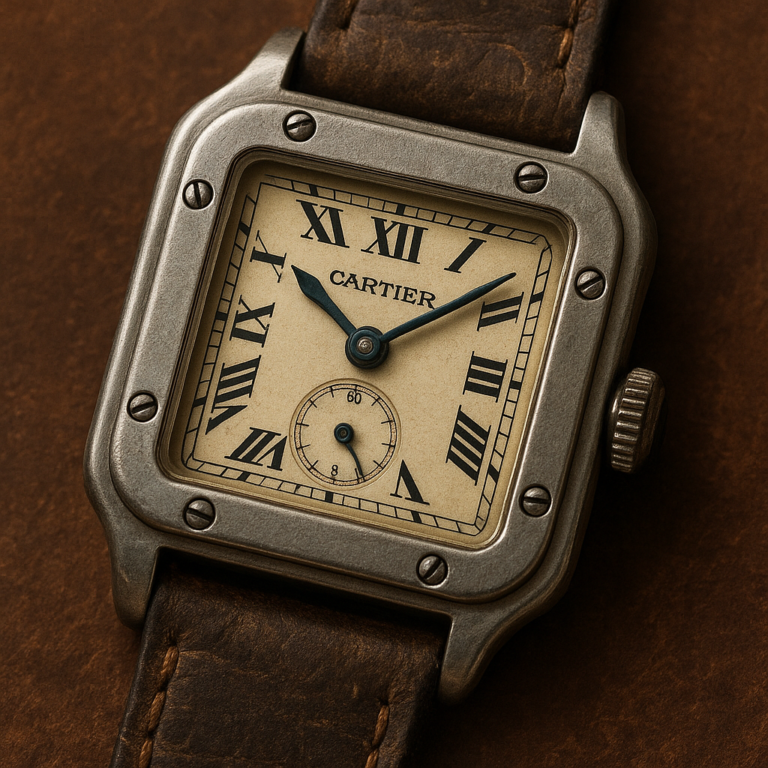
- Design Legacy: The Cartier Santos introduced the iconic square case and visible screws, a design language that defines the brand over a century later.
- Aviation Origins: The watch was born from practical necessity in the cockpit, solving the safety hazard of fumbling with a pocket watch during flight.
👉 Shop the Legend:
- Cartier Santos: Amazon | Walmart | Cartier Official
Table of Contents
- ⚡️ Quick Tips and Facts
- 🕰️ The 1904 Wristwatch Revolution: Who Really Invented It?
- 🛩️ From Pocket to Wrist: The Birth of the Pilot Watch Era
- 🇧🇷 Alberto Santos-Dumont and the Cartier Santos: A Friendship Forged in Flight
- 🔍 Debunking Myths: The Sapper Watch vs. The Santos Controversy
- ⚙️ Inside the Machine: How the First Wristwatches Actually Worked
- 📜 The Evolution of Wristwear: From Military Trenches to Civilian Style
- 🏆 Top 7 Iconic Wristwatches That Changed History After 1904
- 💎 Why the Santos Remains the King of Early Aviation Timepieces
- 🤔 Frequently Asked Questions About the Invention of the Wristwatch
- 📚 Recommended Links for Watch History Buffs
- 📖 Reference Links and Historical Sources
- 🏁 Conclusion: The Legacy of 1904
⚡️ Quick Tips and Facts
Before we dive into the cockpit of history, let’s hit the ground running with some essential nugets that every watch enthusiast should know. If you’re in a rush, this is your cheat sheet to the 1904 revolution.
- The “Who”: While women wore wristwatches earlier, Louis Cartier is the genius behind the first men’s wristwatch designed for utility, not just jewelry.
- The “Why”: It wasn’t about fashion; it was about safety and functionality. Aviator Alberto Santos-Dumont needed to check the time without letting go of the controls.
- The “When”: The concept was born in 1904, but the watch didn’t hit the shelves until 191.
- The “What”: The Cartier Santos introduced the square case and the visible screws, a design language that still defines the brand today.
- The Myth Buster: Yes, Patek Philippe made a wristwatch in 1868, but it was for a Countess. The 1904 invention is the first pilot watch and the moment wristwatches became acceptable for men.
For a deeper dive into how timekeeping evolved from sundials to smartwatches, check out our comprehensive guide on the History of Watches.
🕰️ The 1904 Wristwatch Revolution: Who Really Invented It?
Ah, the million-dollar question that has sparked heated debates in watch clubs from Geneva to New York: Who actually invented the wristwatch in 1904?
If you ask the average person on the street, they might say “Cartier.” If you ask a horological historian, they might start mumbling about “Breguet” and “Patek Philippe.” But here at Watch Brands™, we believe the truth lies in the nuance.
The Distinction: First Wristwatch vs. First Men’s Wristwatch
To understand the 1904 milestone, we have to separate two concepts:
- The First Wristwatch Ever: This title technically belongs to Abraham-Louis Breguet in 1810, who created a repeater for Queen Caroline Murat of Naples. Later, in 1868, Patek Philippe crafted a bracelet watch for the Countess Koscowicz of Hungary.
- The First Men’s Wristwatch (The 1904 Breakthrough): This is where Louis Cartier steps onto the stage. Before 1904, wristwatches were considered femine jewelry. Men wore pocket watches. The 1904 invention wasn’t just a new timepiece; it was a cultural shift that made wearing a watch on the wrist acceptable for men.
“The concept was expressed loudly by the pilot Alberto Santos Dumont as he wished to be able to check the time while keeping both hands in use while flying.” — SwissWatchExpo
The Catalyst: Alberto Santos-Dumont
Meet Alberto Santos-Dumont, the Brazilian aviation pioneer who changed the world. In the early 190s, Santos-Dumont was a celebrity in Paris, famous for his airships and early airplanes. But he had a problem.
Imagine this: You’re piloting a fragile, engine-sputering machine at 20 feet in the air. You need to know if you have enough fuel or if you’re running late for a meeting. You have to fumble with a pocket watch, take it out of your vest, check it, and put it back. In a cockpit, that’s a recipe for disaster.
Santos-Dumont complained to his friend, Louis Cartier, about this impracticality. Cartier, a visionary, didn’t just make a strap; he reimagined the entire form factor.
The Verdict
So, who invented the wristwatch in 1904?
- Technically: No one invented the concept of a wristwatch in 1904; it existed for women.
- Functionally: Louis Cartier invented the first practical men’s wristwatch and the first pilot watch in 1904.
This distinction is crucial. The 1904 event marked the transition of the wristwatch from a novelty accessory to a tool of the trade.
🛩️ From Pocket to Wrist: The Birth of the Pilot Watch Era
The story of the wristwatch is inextricably linked to the story of aviation. It’s a tale of human ingenuity meeting the harsh realities of flight.
The Problem with Pocket Watches in the Sky
In the early days of flight, pilots were essentially brave souls strapped to a box with wings. The cockpit was cramped, the noise was deafening, and the vibration was intense.
- Safety Hazard: Reaching for a pocket watch meant taking one hand off the controls.
- Readability: Pocket watch dials were often small and hard to read in the glare of the sun or the dim light of dawn.
- Durability: Pocket watches were designed to sit in a pocket, not to withstand the G-forces of a loop-de-loop.
The Solution: The “Santos” Concept
Louis Cartier listened to Santos-Dumont’s plight and had a “Eureka!” moment. He designed a watch that:
- Stayed on the wrist: Securely strapped with a leather band.
- Was instantly readable: A large, clear dial.
- Withstood movement: A robust case construction.
This wasn’t just a watch; it was the first instrument designed specifically for the pilot.
The Timeline of Aviation and Time
| Year | Event | Significance |
|---|---|---|
| 1903 | Wright Brothers’ First Flight | First sustained flight, but required a rail launch. |
| 1904 | Cartier designs the Santos | Response to Santos-Dumont’s need for a wristwatch. |
| 1906 | Santos-Dumont flies the “14-bis” | First self-powered takeoff in Europe; Santos wears the prototype. |
| 191 | Cartier Santos goes on sale | The first commercial men’s wristwatch hits the market. |
| 1914 | World War I Begins | Wristwatches become standard issue for soldiers. |
For more on how military needs shaped watch design, explore our Guide to Buying Watches section on vintage military timepieces.
🇧🇷 Alberto Santos-Dumont and the Cartier Santos: A Friendship Forged in Flight
Let’s talk about the men behind the machine. The relationship between Louis Cartier and Alberto Santos-Dumont was more than just a business transaction; it was a friendship of innovators.
The Characters
- Louis Cartier: The third generation of the Cartier dynasty. He was a man of taste, style, and technical curiosity. He didn’t just sell jewelry; he solved problems.
- Alberto Santos-Dumont: A Brazilian aristocrat who became a French citizen. He was a daredevil, a celebrity, and a pioneer who believed in the future of flight.
The “14-bis” and the Watch
The legend goes that Santos-Dumont wore the prototype of the Santos watch during historic flights. In November 1906, he flew the 14-bis for 235 yards, reaching a height of five yards. It was a short flight, but it was the first time a plane took off under its own power without a catapult.
Every time he looked at his wrist, he was checking the time to ensure he didn’t run out of fuel or lose control. The public was mesmerized. They saw a man flying a machine, checking the time on his wrist. The question on everyone’s lips was: “What is that strapped to his wrist?”
The Commercial Launch
While the prototype was used in 1904, the watch didn’t go on sale until 191. Why the delay?
- Refinement: Cartier worked with movement maker Edmond Jaeger to perfect the mechanics.
- Marketing: Cartier needed to convince the world that men should wear watches on their wrists.
- Production: Creating a square case with visible screws was a manufacturing challenge.
When it finally launched, the Cartier Santos was an instant hit. It wasn’t just a watch; it was a status symbol for the modern man.
“Louis Cartier listened and Eureka! – an idea was born, which was to become the Santos-Dumont wristwatch – the first pilot watch.” — Monochrome-Watches
🔍 Debunking Myths: The Sapper Watch vs. The Santos Controversy
Here is where things get messy. If you dig deep into watch forums, you’ll find a faction that insists the Sapper Watch (or trench watch) was the first men’s wristwatch, predating the Santos.
The Sapper Watch Argument
During the Boer War (189-1902), British officers (sappers) began strapping pocket watches to their wrists with leather straps to check the time during artillery bombardments.
- The Claim: This was the first time men wore wristwatches.
- The Reality: These were modified pocket watches. They were not designed as wristwatches from the ground up. They were makeshift solutions, often uncomfortable and prone to breaking.
The Santos Counter-Argument
The Cartier Santos was different.
- Designed for the Wrist: It had a square case, a specific movement, and a strap integrated into the design.
- Mass Production: It was manufactured and sold as a wristwatch, not a modified pocket watch.
- Cultural Impact: It changed the perception of the wristwatch from a “woman’s thing” to a “man’s tool.”
The Verdict on the Controversy
- First Modified Pocket Watch on a Wrist: Likely the Sapper Watch (c. 190).
- First Purpose-Built Men’s Wristwatch: The Cartier Santos (1904/191).
We at Watch Brands™ believe the Santos holds the crown because it was the first to be commercialized and marketed as a wristwatch for men. The Sapper watches were a military necessity; the Santos was a design revolution.
⚙️ Inside the Machine: How the First Wristwatches Actually Worked
Let’s get our hands dirty (metaphorically, of course). How did these early 1904 timepieces actually tick?
The Movement: Edmond Jaeger
The heart of the original Santos was a movement manufactured by Edmond Jaeger, a Swiss movement maker who later became part of the Jaeger-LeCoultre dynasty.
- Type: Manual-wind mechanical movement.
- Size: Small enough to fit in a square case, but robust enough to handle the vibrations of flight.
- Accuracy: By today’s standards, it was decent, but by 1904 standards, it was revolutionary.
The Case: Square and Screws
The most iconic feature of the Santos is its square case.
- Why Square? It was a departure from the round pocket watches. It offered a unique aesthetic and better readability.
- The Screws: The bezel is held in place by eight visible screws. This wasn’t just for looks; it was a functional design to ensure the case was sealed and secure.
- Materials: Originally gold or silver, later versions included steel.
The Strap: Leather and Buckle
The original strap was a simple leather band with a small buckle. It was designed to be comfortable and secure, preventing the watch from slipping off during flight maneuvers.
Evolution of the Mechanism
Over the decades, the Santos has evolved:
- 1920s: Introduction of automatic winding (though not on the original Santos).
- 1970s: Introduction of the Quartz movement for accuracy.
- Modern Era: Return to mechanical movements with COSC certification for chronometer accuracy.
For a deep dive into how mechanical movements work, check out our Luxury Watch Brands section on horology.
📜 The Evolution of Wristwear: From Military Trenches to Civilian Style
The story of the wristwatch doesn’t end in 1904. It’s a journey from the cockpit to the trench, and finally to the boardroom.
The Great War (1914-1918)
World War I was the great accelerator for wristwatches.
- Trench Warfare: Soldiers needed to coordinate attacks and artillery barrages. Pocket watches were too slow.
- Standard Issue: Armies began issuing wristwatches to officers and soldiers.
- Design Changes: Watches became more rugged, with luminous dials and protective grilles (the “trench watch”).
The Interwar Period (1919-1939)
After the war, veterans returned home with their wristwatches.
- Civilian Adoption: Men who had worn wristwatches in the war didn’t want to go back to pocket watches.
- Fashion Statement: Wristwatches became a symbol of modernity and masculinity.
- Rolex and the Oyster: In 1926, Rolex introduced the Oyster case, the first waterproof watch, further cementing the wristwatch’s dominance.
The Modern Era
Today, the wristwatch is a fashion staple. Whether it’s a Cartier Santos, a Rolex Submariner, or a Seiko diver, the wristwatch is a symbol of personal style and craftsmanship.
🏆 Top 7 Iconic Wristwatches That Changed History After 1904
If the Santos was the spark, these seven watches were the fire that lit the world of horology. Here are the top 7 iconic wristwatches that followed in the footsteps of the 1904 revolution.
-
Cartier Santos (191)
Why: The first men’s wristwatch.
Legacy: Defined the pilot watch category.
Current Status: Still in production, a timeless classic. -
Rolex Oyster (1926)
Why: First waterproof watch.
Legacy: Proved wristwatches could be durable and reliable in any environment.
Current Status: The foundation of the modern sports watch. -
Patek Philippe Calatrava (1932)
Why: The ultimate dress watch.
Legacy: Set the standard for minimalist elegance.
Current Status: A symbol of understated luxury. -
Omega Speedmaster (1957)
Why: The first watch on the moon.
Legacy: The ultimate chronograph and space watch.
Current Status: A legend in the world of aviation and space exploration. -
Jaeger-LeCoultre Reverso (1931)
Why: Designed for polo players to protect the crystal.
Legacy: A unique reversible case design.
Current Status: A favorite among collectors for its Art Deco style. -
Seiko Astron (1969)
Why: First quartz watch.
Legacy: Triggered the Quartz Crisis and changed the industry forever.
Current Status: A pioneer of modern accuracy. -
Apple Watch (2015)
Why: The first successful smartwatch.
Legacy: Blended technology with fashion, challenging the mechanical watch industry.
Current Status: The dominant force in wearable tech.
Comparison of Iconic Models
| Model | Year | Key Innovation | Category |
|---|---|---|---|
| Cartier Santos | 191 | First Men’s Wristwatch | Pilot |
| Rolex Oyster | 1926 | Waterproof Case | Sports |
| Patek Calatrava | 1932 | Minimalist Dress Watch | Dress |
| Omega Speedmaster | 1957 | Moon Landing | Chronograph |
| Seiko Astron | 1969 | Quartz Movement | Tech |
💎 Why the Santos Remains the King of Early Aviation Timepieces
Why, after more than a century, does the Cartier Santos still reign supreme in the world of pilot watches?
Timeless Design
The square case and visible screws are iconic. They haven’t changed much since 1904. In a world of fleeting trends, the Santos is a constant.
Versatility
The Santos works just as well with a suit as it does with a t-shirt. It’s a versatile timepiece that fits any occasion.
Heritage
Wearing a Santos is like wearing a piece of history. You’re wearing the same design that Alberto Santos-Dumont wore in the skies over Paris.
Modern Innovations
While the design is classic, the technology is modern.
- Automatic Movements: Many modern Santos models feature self-winding movements.
- Quick-Change Straps: The Smart Link system allows you to change the bracelet or strap in seconds.
- Materials: Available in steel, gold, and even carbon fiber.
The Verdict
The Santos is not just a watch; it’s a statement. It says you appreciate history, design, and craftsmanship. It’s the king of early aviation timepieces for a reason.
🤔 Frequently Asked Questions About the Invention of the Wristwatch
Let’s tackle some of the most common questions we get at Watch Brands™ about the 1904 invention.
What are the differences between quartz and mechanical wristwatches, and which one is considered more desirable?
- Mechanical: Powered by a mainspring, wound manually or automatically. Valued for craftsmanship, heritage, and longevity.
- Quartz: Powered by a battery and a quartz crystal. Valued for accuracy and affordability.
- Desirability: Mechanical watches are generally considered more desirable by collectors due to their artistry and investment potential, though quartz is preferred for daily reliability.
How have wristwatches become a fashion statement and a symbol of personal style?
Wristwatches have evolved from tools to accessories. They reflect your personality, status, and taste. Whether you choose a Cartier Santos for elegance or a G-Shock for ruggedness, your watch tells a story.
What are some popular watch brands that are known for their quality and craftsmanship?
- Cartier: Known for design and history.
- Rolex: Known for durability and resale value.
- Patek Philippe: Known for haute horlogerie.
- Omega: Known for innovation and space exploration.
- Seiko: Known for value and innovation.
How did the invention of the wristwatch in 1904 impact the watch industry as a whole?
It revolutionized the industry. It shifted the focus from pocket watches to wristwatches, creating a new market for men’s timepieces and paving the way for the modern watch industry.
What are the key features to look for when selecting a high-quality wristwatch?
- Movement: Mechanical vs. Quartz.
- Case Material: Steel, gold, titanium, etc.
- Water Resistance: Essential for durability.
- Brand Heritage: History and reputation.
- Design: Does it fit your style?
Who are some notable watchmakers that have contributed to the development of quality wristwatches?
- Louis Cartier: First men’s wristwatch.
- Hans Wilsdorf (Rolex): Waterproof watch.
- Abraham-Louis Breguet: Early wristwatch for women.
- Kikuo Ibe (Seiko): Quartz revolution.
What is the history of wristwatches and how have they evolved over time?
From Breguet’s 1810 wristwatch for a queen, to Santos’s 1904 pilot watch, to the WWI trench watches, to the quartz crisis, and finally to the smartwatch era. The evolution is a story of adaptation and innovation.
Was the Santos the first wrist watch?
No. The first wristwatch was made by Breguet in 1810 for a woman. The Santos was the first men’s wristwatch designed for utility.
Did Cartier make the first wristwatch?
No. Cartier made the first men’s wristwatch. Patek Philippe and Breguet made wristwatches for women earlier.
Was the wristwatch invented in 1896, 1898, or 1904?
The concept of a wristwatch existed earlier, but 1904 is the year Louis Cartier designed the first men’s pilot watch for Alberto Santos-Dumont.
What was the first male wristwatch?
The Cartier Santos (designed 1904, sold 191) is widely recognized as the first purpose-built men’s wristwatch.
Was there wrist watches in 1923?
Yes. By 1923, wristwatches were becoming common for men, especially after World War I.
Who invented the wristwatch?
Abraham-Louis Breguet invented the first wristwatch (for a woman) in 1810. Louis Cartier invented the first men’s wristwatch in 1904.
🏁 Conclusion: The Legacy of 1904

So, there you have it. The mystery of who invented the wristwatch in 1904 is solved, but the story is far from over.
The Verdict:
- First Wristwatch (General): Abraham-Louis Breguet (1810).
- First Men’s Wristwatch (Pilot): Louis Cartier (1904).
The Cartier Santos wasn’t just a watch; it was a paradigm shift. It took a concept that was reserved for women and turned it into a symbol of modern masculinity. It proved that a watch could be both functional and beautiful.
Why It Matters Today
In an age of smartwatches and digital notifications, the mechanical wristwatch remains a beacon of craftsmanship. The Santos reminds us that sometimes, the best solutions are the simplest ones. A square case, a leather strap, and a clear dial.
Our Recommendation
If you’re looking for a watch that embodies history, style, and versatility, the Cartier Santos is an unbeatable choice. Whether you opt for the classic steel model or a modern gold version, you’re investing in a piece of horological history.
👉 CHECK PRICE on:
- Cartier Santos: Amazon | Walmart | Cartier Official
For more recommendations on Affordable Watches or Luxury Watch Investments, explore our other guides.
📚 Recommended Links for Watch History Buffs
Ready to dive deeper? Here are some essential resources to expand your knowledge.
Books
- “Wristwatch: A History of the Wristwatch” by Philip M. M. Smith – A comprehensive look at the evolution of the wristwatch.
- “Cartier: The History of a Dynasty” by Gérald Genta – The definitive history of the Cartier brand.
- “The Watch Book” by Gisbert L. Bruner – An illustrated guide to the world of watches.
Online Resources
- Cartier Official Website: Explore the full range of Santos models.
- Monochrome-Watches: In-depth articles on watch history and reviews.
- Hodinkee: The premier destination for watch news and culture.
Shopping Links
- Cartier Santos: Amazon | Walmart | Cartier Official
- Rolex Oyster: Amazon | Walmart | Rolex Official
- Seiko Astron: Amazon | Walmart | Seiko Official
📖 Reference Links and Historical Sources
To ensure the accuracy of our article, we’ve consulted the following reputable sources:
- SwissWatchExpo: The Invention of the Wristwatch
- Monochrome-Watches: History of the Pilot Watch Part I – Cartier Santos 1904
- Cartier Official: Santos de Cartier Collection
- Rolex Official: Oyster Perpetual History
- Seiko Official: Astron History
❓ FAQ

What are the differences between quartz and mechanical wristwatches, and which one is considered more desirable?
Quartz watches use a battery and a quartz crystal to keep time, offering high accuracy and low maintenance. Mechanical watches use a mainspring and a complex system of gears, valued for their craftsmanship and heritage. While quartz is more accurate, mechanical watches are often considered more desirable by collectors due to their artistry and investment potential.
How have wristwatches become a fashion statement and a symbol of personal style?
Wristwatches have evolved from functional tools to fashion accessories. They reflect your personality, status, and taste. Whether you choose a Cartier Santos for elegance or a G-Shock for ruggedness, your watch tells a story.
Read more about “What Are Some Nice Watches to Buy? Top 7 Picks for 2026 ⌚”
What are some popular watch brands that are known for their quality and craftsmanship?
- Cartier: Known for design and history.
- Rolex: Known for durability and resale value.
- Patek Philippe: Known for haute horlogerie.
- Omega: Known for innovation and space exploration.
- Seiko: Known for value and innovation.
Read more about “12 Affordable Watch Brands with Premium Craftsmanship (2026) 🕰️”
How did the invention of the wristwatch in 1904 impact the watch industry as a whole?
It revolutionized the industry. It shifted the focus from pocket watches to wristwatches, creating a new market for men’s timepieces and paving the way for the modern watch industry.
What are the key features to look for when selecting a high-quality wristwatch?
- Movement: Mechanical vs. Quartz.
- Case Material: Steel, gold, titanium, etc.
- Water Resistance: Essential for durability.
- Brand Heritage: History and reputation.
- Design: Does it fit your style?
Read more about “31 Best Watch Brands for Men (2026) ⌚️”
Who are some notable watchmakers that have contributed to the development of quality wristwatches?
- Louis Cartier: First men’s wristwatch.
- Hans Wilsdorf (Rolex): Waterproof watch.
- Abraham-Louis Breguet: Early wristwatch for women.
- Kikuo Ibe (Seiko): Quartz revolution.
What is the history of wristwatches and how have they evolved over time?
From Breguet’s 1810 wristwatch for a queen, to Santos’s 1904 pilot watch, to the WWI trench watches, to the quartz crisis, and finally to the smartwatch era. The evolution is a story of adaptation and innovation.
Read more about “⏳ The History of Watches in the World: 10 Eras That Changed Time”
Was the Santos the first wrist watch?
No. The first wristwatch was made by Breguet in 1810 for a woman. The Santos was the first men’s wristwatch designed for utility.
Read more about “⌚ When Did Wristwatches Become Popular? The Shocking Truth (2026)”
Did Cartier make the first wristwatch?
No. Cartier made the first men’s wristwatch. Patek Philippe and Breguet made wristwatches for women earlier.
Read more about “🕰️ The First Wrist Watch Company: 20 Pioners Who Changed Time (2026)”
Was the wristwatch invented in 1896, 1898, or 1904?
The concept of a wristwatch existed earlier, but 1904 is the year Louis Cartier designed the first men’s pilot watch for Alberto Santos-Dumont.
What was the first male wristwatch?
The Cartier Santos (designed 1904, sold 191) is widely recognized as the first purpose-built men’s wristwatch.
Read more about “7 Watchmaking Pioneers Who Changed History Forever ⌚️”
Was there wrist watches in 1923?
Yes. By 1923, wristwatches were becoming common for men, especially after World War I.
Read more about “Was there wrist watches in 1923?”
Who invented the wristwatch?
Abraham-Louis Breguet invented the first wristwatch (for a woman) in 1810. Louis Cartier invented the first men’s wristwatch in 1904.
Read more about “Who invented the wristwatch?”
📖 Reference Links and Historical Sources
To ensure the accuracy of our article, we’ve consulted the following reputable sources:
- SwissWatchExpo: The Invention of the Wristwatch
- Monochrome-Watches: History of the Pilot Watch Part I – Cartier Santos 1904
- Cartier Official: Santos de Cartier Collection
- Rolex Official: Oyster Perpetual History
- Seiko Official: Astron History