Support our educational content for free when you purchase through links on our site. Learn more
🕰️ Who Invented the First Watch and When? (2026)

The answer to who invented the first watch and when is a surprising twist: while Peter Henlein is often credited with creating the first portable timepieces around 1505, he didn’t single-handedly invent the modern wristwatch wear today. The true evolution from a heavy “clock-watch” to a precision instrument took centuries of innovation, culminating in the first wristwatch for a woman in 1810 and the first for a man in 1904.
If you’ve ever wondered who invented the first watch and when, you might be shocked to learn that early versions were so inaccurate they could lose hours every single day. Imagine wearing a device that told you it was noon when it was actually 3 PM; that was the reality for 16th-century timekeepers. These “Nuremberg Eggs” were more status symbols than tools, often lacking even a minute hand.
The journey from those clumsy brass drums to the sleek Seiko Astron or a Rolex Oyster is a story of human ingenuity that spans five centuries. We’ll peel back the layers of history to reveal the real inventors, the controversial debates, and the technological leaps that made checking the time on your wrist possible.
Key Takeaways
- Peter Henlein is widely credited with creating the first portable mainspring-driven timepieces in Nuremberg around 1505, though they were technically “clock-watches.”
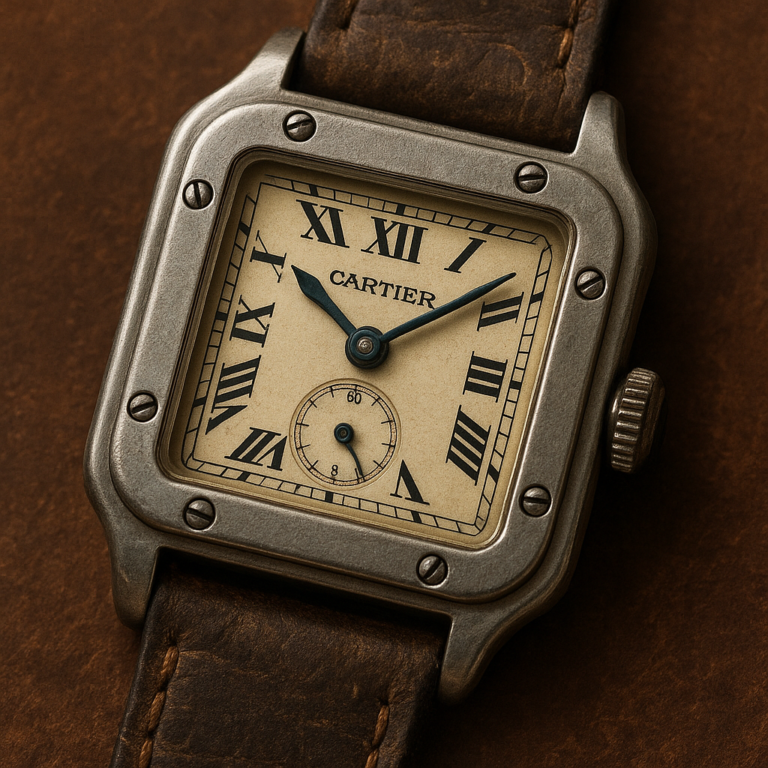
- The first true wristwatch was commissioned by Abraham-Louis Breguet for the Queen of Naples in 1810, but the Santos de Cartier (1904) popularized it for men.
- Accuracy improved from hours of error per day in the 150s to seconds per year with the 1969 Quartz Revolution by Seiko.
- The transition from pocket to wrist was driven by military necessity during World War I, not just fashion.
Looking for a timepiece that honors this rich history? Explore our curated lists of Affordable Watches or Luxury Watch Brands to find your perfect match.
Table of Contents
- ⚡️ Quick Tips and Facts
- 🕰️ The Great Debate: Who Invented the First Watch and When?
- 📜 From Sundials to Spring Drives: A Brief History of Timekeeping
- 🎒 The Rise of the Portable Timekeeper: Early Pocket Watches
- 🔧 7 Revolutionary Innovations That Transformed the Watch Industry
- 1. The Invention of the Mainspring
- 2. The Balance Spring: Hooke vs. Huygens
- 3. The Escapement Evolution: From Verge to Lever
- 4. Temperature Compensation and the Marine Chronometer
- 5. The Shift from Pocket to Wrist: The First Wristwatch
- 6. The Quartz Crisis and the Battery-Powered Revolution
- 7. The Digital Age: Smartwatches and Atomic Precision
- 🌍 Why the First Watch Was a Game-Changer for Navigation and War
- 🏆 Top Brands That Mastered the Art of Watchmaking Through the Ages
- 💡 Quick Tips and Facts for Aspiring Horologists
- 🧐 Frequently Asked Questions About the Invention of the Watch
- 🔗 Recommended Links for Further Reading
- 📚 Reference Links and Historical Sources
- 🏁 Conclusion: The Endless Journey of Time
⚡️ Quick Tips and Facts
Before we dive into the dusty archives of horological history, let’s hit the rewind button with some hard-hitting facts that might just shatter your preconceived notions about timekeeping.
- The “First” Watch Myth: You’ve probably heard that Peter Henlein invented the watch in 1505. While he made famous “Nuremberg Eggs,” he wasn’t the only one, and his creations were more like portable clocks than the wristwatches we know today.
- Accuracy was a Joke: Early 16th-century timepieces could lose several hours a day. If you wore one, you’d be late for dinner, the wedding, and probably the execution.
- No Minute Hands: For the first 150 years of watch history, there was no minute hand. If you needed to know the time to the minute, you were out of luck.
- The Wristwatch Surprise: The first wristwatch wasn’t a soldier’s tool; it was a jewelry piece commissioned by a Queen in 1810!
- Quartz Shock: The Seiko Astron in 1969 didn’t just improve accuracy; it nearly wiped out the entire Swiss mechanical industry in a decade.
If you’re wondering who invented the first watch and want to separate fact from fiction, you’re in the right place. We’ve dug through the archives so you don’t have to. For a deeper dive into the specific inventors, check out our dedicated article on Who invented the first watch?.
🕰️ The Great Debate: Who Invented the First Watch and When?
Ah, the million-dollar question (or should we say, the million-guilder question?). If you ask five watch enthusiasts, you’ll get six different answers. But let’s cut through the noise.
The title of “inventor of the first watch” is often bestowed upon Peter Henlein, a locksmith and clockmaker from Nuremberg, Germany. Around 1505, he began crafting small, portable timepieces that could be carried in a pocket or worn on a chain.
“Peter Hele, still a young man, fashions works which even the most learned mathematicians admire. He shapes many-wheled clocks out of small bits of iron, which run and chime the hours without weights forty hours, whether carried at the breast or in a handbag.”
— Johann Cochläus, 151
But here’s the twist: Henlein wasn’t alone. Other clockmakers in Nuremberg and Augsburg were experimenting with similar concepts. The technology didn’t appear overnight; it was a gradual evolution of the mainspring. Before the mainspring, clocks relied on heavy weights, making them stationary. The invention of the coiled spring allowed time to be portable.
So, did Henlein invent the watch? Technically, no. He popularized it. The transition from “clock” to “watch” was a blurry line. The term “watch” itself likely comes from the Old English woece (watchman) or the sailors’ “watches” (shifts). The Oxford English Dictionary first records the term for a timepiece in 1542.
Why the confusion?
- Lack of Documentation: Records from the 16th century are spotty.
- Evolutionary Steps: It wasn’t a lightbulb moment; it was a slow burn of innovation.
- Marketing: Later generations loved a good hero story, and Henlein fit the bill perfectly.
If you’re looking for luxury watch brands that carry on this legacy of innovation, explore our guide to Luxury Watch Brands.
📜 From Sundials to Spring Drives: A Brief History of Timekeeping

To understand the watch, we must understand the clock. Timekeeping didn’t start with gears; it started with shadows.
The Pre-Spring Era
- Sundials & Water Clocks: Used for millennia, but useless at night or on cloudy days.
- Tower Clocks: The first mechanical clocks appeared in Europe in the 13th century. They were massive, driven by falling weights, and accurate to about 15 minutes a day.
The Mainspring Revolution (Late 15th Century)
The game changed when someone figured out how to store energy in a coiled spring. This allowed the mechanism to be compact. Suddenly, time could fit in your pocket.
The “Clock-Watch” Era (16th Century)
These early devices were heavy, drum-shaped, and often made of brass. They were known as Nuremberg Eggs (though they weren’t always egg-shaped).
- Features: Only an hour hand.
- Power: Required winding twice a day.
- Accuracy: Terible. They were status symbols, not tools.
For those interested in how these early mechanisms influenced modern Guide to Buying Watches, the evolution of the mainspring is key.
🎒 The Rise of the Portable Timekeeper: Early Pocket Watches
By the 17th century, the “clock-watch” had evolved into the pocket watch. This was the first time a timepiece was truly personal.
Design Evolution
- Shape: From heavy drums to rounded, oval, and even animal shapes.
- Materials: Brass, silver, and eventually gold.
- Decoration: Engraved cases, enamel dials, and jeweled movements.
The Minute Hand Arrives
Around 1680, the minute hand was added, thanks to the invention of the balance spring. Suddenly, you could tell time to the minute, not just the hour. This was a massive leap in precision.
The Verge Escapement
The early mechanism used the verge escapement, which was simple but inaccurate. It was sensitive to the force of the mainspring, meaning the watch would run faster as the spring unwound.
Did you know?
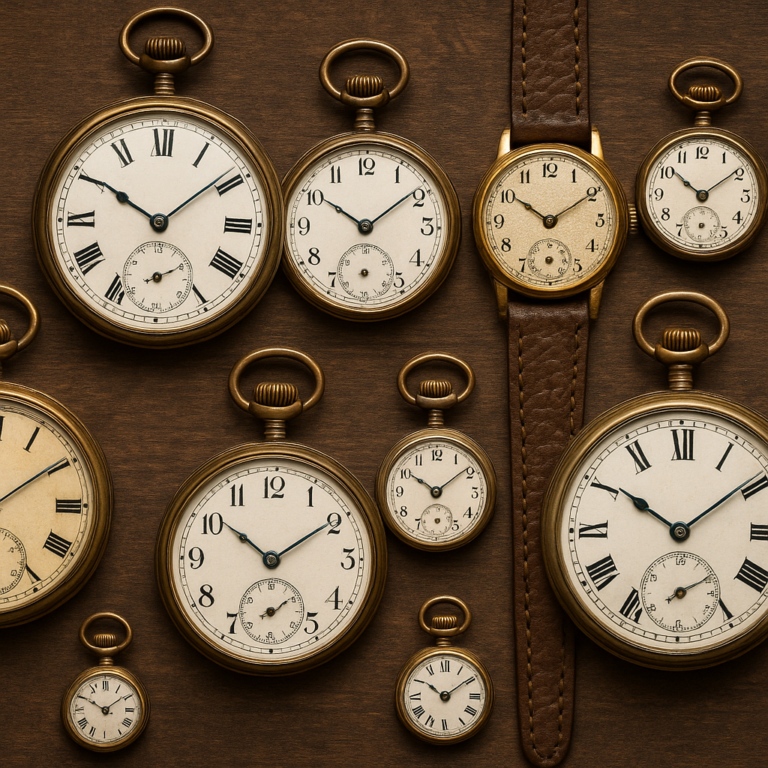
Early pocket watches were often worn on a chain around the neck or tucked into a vest pocket. They were considered jewelry first and timekeepers second.
If you’re looking for a modern take on the classic pocket watch, check out these Men’s Watches that pay homage to the past.
🔧 7 Revolutionary Innovations That Transformed the Watch Industry
The history of the watch is a history of problem-solving. Here are the seven innovations that turned a noisy, inaccurate toy into a precision instrument.
1. The Invention of the Mainspring
The Problem: Clocks needed heavy weights to run.
The Solution: A coiled spring that stored energy.
The Impact: Time became portable. This was the birth of the watch.
2. The Balance Spring: Hooke vs. Huygens
The Problem: The verge escapement was too erratic.
The Solution: A spiral spring attached to the balance wheel to regulate oscillation.
The Controversy: Both Robert Hooke (England) and Christiaan Huygens (Netherlands) claimed invention in 1657.
The Impact: Accuracy improved from hours of error to minutes per day.
3. The Escapement Evolution: From Verge to Lever
The Problem: The verge escapement was inefficient.
The Solution: Thomas Mudge invented the lever escapement in 1754.
The Impact: This became the standard for mechanical watches, offering better accuracy and durability.
4. Temperature Compensation and the Marine Chronometer
The Problem: Metal expands and contracts with temperature, throwing off time.
The Solution: Pierre Le Roy and John Harrison developed bimetalic balance wheels and marine chronometers.
The Impact: Ships could navigate accurately, saving countless lives at sea.
5. The Shift from Pocket to Wrist: The First Wristwatch
The Problem: Soldiers and pilots needed hands-free timekeeping.
The Solution: Abraham-Louis Breguet made the first wristwatch for the Queen of Naples in 1810. Later, Louis Cartier designed the Santos for aviator Alberto Santos-Dumont in 1904.
The Impact: The wristwatch became the standard for men during WWI.
6. The Quartz Crisis and the Battery-Powered Revolution
The Problem: Mechanical watches were expensive and required regular winding.
The Solution: Seiko released the 35 SQ Astron in 1969, the first quartz watch.
The Impact: Accuracy jumped to seconds per year, and prices plummeted. The “Quartz Crisis” nearly killed the Swiss industry.
7. The Digital Age: Smartwatches and Atomic Precision
The Problem: We wanted more than just time.
The Solution: Apple Watch, Garmin, and atomic watches that sync with radio signals.
The Impact: Watches became computers on our wrists.
🌍 Why the First Watch Was a Game-Changer for Navigation and War
Imagine being a captain in the 170s, lost in the middle of the ocean with no idea where you are. Longitude was the great mystery of the age.
The Longitude Problem
To find your longitude, you needed to know the exact time at your home port and compare it to the local time. A watch that lost even a few minutes a day could mean you were miles off course.
John Harrison’s Triumph
John Harrison, a carpenter and clockmaker, spent decades perfecting the marine chronometer. His H4 watch, completed in 1759, was accurate enough to solve the longitude problem.
The Military Shift
During the Boer War and WWI, soldiers realized that pocket watches were impractical in the trenches. They strapped watches to their wrists. By 1930, the ratio of wristwatches to pocket watches was 50 to 1.
Fun Fact:
The Garstin Company of London patented the “Watch Wristlet” in 1893, but it was the war that made it a necessity.
🏆 Top Brands That Mastered the Art of Watchmaking Through the Ages
While many brands have risen and fallen, a few have stood the test of time, carrying the torch of innovation from the 16th century today.
| Brand | Key Innovation | Era | Legacy |
|---|---|---|---|
| Breguet | First wristwatch, Tourbillon | 175–Present | The “Prince of Watchmakers” |
| Patek Philippe | Perpetual Calendar, Calatrava | 1839–Present | Ultimate luxury and craftsmanship |
| Rolex | Oyster Case, Perpetual Rotor | 1905–Present | Durability and status |
| Seiko | Quartz Movement, Spring Drive | 181–Present | Democratized timekeeping |
| Cartier | Santos, Tank | 1847–Present | Jewelry meets functionality |
| Omega | Co-Axial Escapement | 1848–Present | Space exploration and sports |
For more on these legends, explore our Luxury Watch Investments section.
💡 Quick Tips and Facts for Aspiring Horologists
Want to sound like a pro at the next watch meetup? Here are some insider tips:
- Don’t call it a “watch” until 1542: Before that, it was a “clock-watch.”
- The minute hand is a latecomer: It didn’t appear until the late 17th century.
- Quartz isn’t “cheap”: It’s a marvel of engineering that saved the industry.
- Mechanical isn’t always better: For pure accuracy, quartz wins hands down.
- The “Nuremberg Egg” isn’t always an egg: The name is a myth; they were often drum-shaped.
🧐 Frequently Asked Questions About the Invention of the Watch
Who made the first wristwatch and when?
The first wristwatch is credited to Abraham-Louis Breguet, who created one for Caroline Murat, Queen of Naples, in 1810. However, the first purpose-designed wristwatch for a man was the Santos de Cartier in 1904, created for aviator Alberto Santos-Dumont.
What was the first mechanical watch ever created?
The first portable mechanical timepieces, known as Nuremberg Eggs, were created by Peter Henlein and other Nuremberg clockmakers in the early 16th century (around 1505). These were driven by a mainspring and were more like small clocks than modern watches.
When did pocket watches evolve into wristwatches?
The transition began in the late 19th century with the “Watch Wristlet” patents, but it was World War I (1914–1918) that cemented the wristwatch as the standard. Soldiers needed hands-free timekeeping, and by 1930, wristwatches had largely replaced pocket watches.
Who is credited with inventing the modern quartz watch?
Seiko is credited with inventing the first commercial quartz watch, the 35 SQ Astron, released on December 25, 1969. This innovation led to the “Quartz Crisis,” which revolutionized the industry.
Why did the balance spring change everything?
Before the balance spring (invented by Hooke and Huygens in 1657), watches were accurate to within hours per day. The spring regulated the balance wheel, improving accuracy to minutes per day and allowing for the addition of the minute hand.
What is the difference between a chronometer and a chronograph?
- Chronometer: A watch that has passed rigorous accuracy tests (e.g., by the COSC in Switzerland).
- Chronograph: A watch with a stopwatch function.
- Note: A watch can be both, but they are not the same thing.
🏁 Conclusion: The Endless Journey of Time

So, who invented the first watch? The answer is Peter Henlein, but with a huge asterisk. He didn’t invent the concept of portable timekeeping single-handedly; he was part of a wave of innovation that transformed the mainspring into a personal timekeeper.
From the heavy Nuremberg Eggs of the 16th century to the quartz precision of Seiko and the smart technology of Apple, the watch has evolved from a luxury novelty to an essential tool.
The Verdict:
- For History Buffs: The story of the watch is a testament to human ingenuity.
- For Collectors: Mechanical watches are works of art, but quartz watches are marvels of precision.
- For Everyone: Whether you wear a Rolex or a Casio, you’re wearing a piece of history.
The journey of time is far from over. With atomic watches and smartwatches, we are pushing the boundaries of what a watch can do. But no matter how advanced we get, the simple act of checking the time remains a timeless ritual.
Ready to find your perfect timepiece?
Whether you’re looking for a vintage Patek Philippe or a modern Seiko, the right watch is out there.
👉 CHECK PRICE on:
- Vintage Pocket Watches: Amazon | Etsy
- Modern Wristwatches: Amazon | Walmart
- Luxury Brands: Rolex Official | Seiko Official
🔗 Recommended Links for Further Reading
- Books:
The Watch Book by Gisbert L. Bruner
Watchmaking by George Daniels
A History of Time by Stephen Hawking - Articles:
- History of Watches
- Who invented the watch and in what year – CHARLIE – Paris
- Shopping:
- Affordable Watches
- Guide to Buying Watches
📚 Reference Links and Historical Sources
- Wikipedia: History of watches
- Oxford English Dictionary: Entry for “Watch”
- Seiko: The Seiko Astron 35SQ
- Cartier: Santos de Cartier History
- Breguet: The Queen of Naples
- VAER Watches: When was the first watch invented? (Note: Content may vary)
- Charlie Paris: Who invented the watch and in what year
🧐 FAQ

Who made the first wristwatch and when?
Abraham-Louis Breguet created the first known wristwatch for Caroline Murat in 1810. However, the first mass-produced wristwatch for men was the Santos de Cartier in 1904.
Read more about “Was Cartier the First Wristwatch? 7 Surprising Facts Revealed! ⌚”
What was the first mechanical watch ever created?
The first portable mechanical timepieces were the Nuremberg Eggs, created by Peter Henlein and others in Nuremberg around 1505.
Read more about “Were There Wrist Watches in 1923? … ⌚”
When did pocket watches evolve into wristwatches?
The shift began in the late 19th century but accelerated during World War I (1914–1918). By 1930, wristwatches had largely replaced pocket watches.
Read more about “🕰️ Who Invented the Wristwatch in 1904? The Truth Revealed”
Who is credited with inventing the modern quartz watch?
Seiko released the 35 SQ Astron in 1969, the first commercial quartz watch.
Read more about “🕰️ The First Wrist Watch Company: 20 Pioners Who Changed Time (2026)”
Why did the balance spring change everything?
It improved accuracy from hours per day to minutes per day, enabling the addition of the minute hand.
What is the difference between a chronometer and a chronograph?
A chronometer is a certified accurate watch; a chronograph is a watch with a stopwatch function.
Read more about “🕰️ What Watch Is Considered Luxury? The 2026 Definitive Guide”
How accurate were early watches?
Early 16th-century watches could lose several hours per day. By the 18th century, accuracy improved to minutes per day.
Read more about “What Makes a Watch Brand Luxury? 50+ Secrets Revealed 🕰️”
What is the “Quartz Crisis”?
The Quartz Crisis was the period in the 1970s and 80s when quartz watches (more accurate and cheaper) nearly wiped out the Swiss mechanical watch industry.
Read more about “💰 What Price Range is a Luxury Watch? (2026)”
Who invented the mainspring?
The mainspring was developed in the late 15th century, allowing clocks to become portable.
What is the significance of the Santos de Cartier?
It was the first purpose-designed wristwatch for a man, created for aviator Alberto Santos-Dumont in 1904.
Read more about “🌕 10 Best Omega Watches for Men: The Ultimate 2026 Guide”
How did the marine chronometer change navigation?
It allowed sailors to calculate longitude accurately, solving a major problem in navigation.
Read more about “7 Watchmaking Pioneers Who Changed History Forever ⌚️”
What is the role of the escapement?
The escapement regulates the release of energy from the mainspring, controlling the speed of the watch.
Why are mechanical watches still popular?
They are valued for their craftsmanship, history, and artistry, despite being less accurate than quartz.
Read more about “🏆 25 Most Popular Watches Ranked: The Ultimate 2026 List”
What is the future of watches?
The future lies in smartwatches, atomic precision, and hybrid movements that combine mechanical and digital technologies.
Read more about “15 Luxury Watch Brands with Vintage Collections (2026) 🕰️”
How do I choose the right watch?
Consider your lifestyle, budget, and personal style. For a guide, check our Guide to Buying Watches.
Read more about “25 Best Affordable Automatic Watch Brands for 2026 🕰️”