Support our educational content for free when you purchase through links on our site. Learn more
How Wristwatches Went from Pocket to Popular ⌚

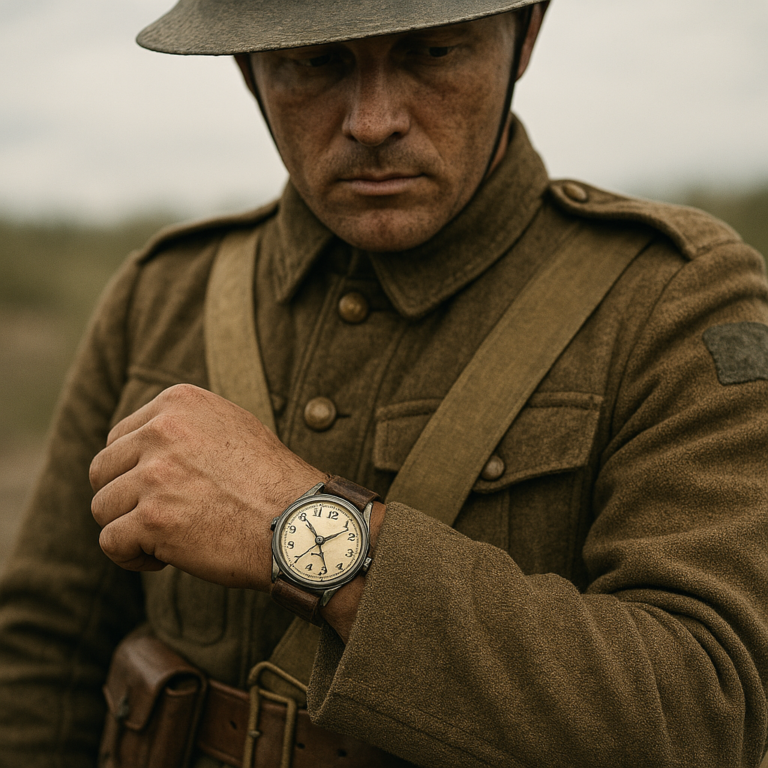
Wristwatches evolved from pocket watches when practical needs—especially military coordination during the First World War—made time easier to check on the wrist than to pull from a waistcoat. Better manufacturing, more accurate movements, and changing fashions then turned the wristwatch from a useful tool into an everyday accessory.
The shift wasn’t instant. Early wristwatches were often seen as delicate or decorative, while pocket watches remained the respectable choice for many men. But in the chaos of coordinating troops, checking the time without fumbling for a chain could be more than convenient—it could be crucial.
That practical advantage sparked a transformation: wristwatches became tougher, more accessible, and increasingly stylish. Here’s how a small change in where we wore a watch reshaped timekeeping.
Key Takeaways
- Pocket watches came first, prized for portability, craftsmanship, and status.
- Wristwatches gained ground through practical use, with military needs helping popularize quick, hands-free time checks.
- Mass production and new technology—including automatic winding and quartz movements—made wristwatches more reliable and widely available.
- Design expanded their appeal: pilot, dive, field, dress, and sports watches each served different needs and tastes.
- Wristwatches remain popular for more than telling time, combining utility, personal style, craftsmanship, and, in smartwatches, digital features.
Table of Contents
- ⚡️ Quick Tips and Facts
- ⌚ From Pocket to Wrist: How Wristwatches Became Everyday Essentials
- Early Timekeeping: From Sundials to Portable Clocks
- The Pocket Watch Era: Precision in Your Waistcoat
- Early Wristwatches: Novelty, Fashion, and Practical Need
- Military Wristwatches and the Shift from Pocket to Wrist
- The First World War and the Wristwatch’s Breakthrough
- How Wristwatches Work: The Mechanics Behind the Movement
- Mechanical Movements, Mainsprings, and Escapements
- Automatic Watches and Self-Winding Technology
- Quartz Accuracy and the Electronic Watch Revolution
- Digital Watches, LCDs, and LED Displays
- Swiss Watchmaking and the Rise of Global Watch Brands
- Why Switzerland Became a Watchmaking Powerhouse
- The Quartz Crisis and Its Lasting Impact
- Japanese Watchmakers and Changing Expectations
- Wristwatch Design: Materials, Straps, and Changing Styles
- From Pocket-Watch Cases to Purpose-Built Wristwatches
- Watch Dials, Hands, Bezels, and Luminous Markers
- Leather, Metal, and Fabric Watch Straps
- Wristwatches as Fashion and Personal Expression
- Special-Purpose Watches: From the Battlefield to the Deep Sea
- Pilot Watches and Aviation Timekeeping
- Dive Watches and Underwater Exploration
- Chronographs, Racing Watches, and Stopwatch Functions
- Field, Dress, and Tool Watches
- The Wristwatch in Everyday Life and Popular Culture
- Watches, Work, and Changing Social Norms
- Celebrity Watches, Film, and Collecting
- Why People Still Wear Watches When Phones Tell Time
- Smartwatches and the Next Chapter of Wearable Timekeeping
- From Calculator Watches to Connected Wearables
- Health Tracking, GPS, and Notifications
- Smartwatches Compared with Mechanical and Quartz Watches
- Watchmaking Craftsmanship, Care, and Collecting
- How a Watch Is Made and Asembled
- Servicing, Water Resistance, and Everyday Maintenance
- Vintage Watches and the Pocket-Watch Revival
- How to Choose a Wristwatch That Suits You
- What’s Next for Wristwatches?
- Conclusion
- Recommended Links
- FAQ
- Reference Links