Support our educational content for free when you purchase through links on our site. Learn more
⏳ The History of Luxury Watches: From Queens to Space (2026)

Did you know the very first wristwatch was crafted not for a soldier, but for a Queen in 1812? It took over a century of war, revolution, and a near-total industry collapse to convince the world that a watch on the wrist was the ultimate symbol of status. At Watch Brands™, we’ve traced the intricate gears of history from the heavy, weight-driven clocks of medieval Europe to the sapphire-crusted masterpieces of Richard Mille. This isn’t just a timeline; it’s the story of how humanity turned time into art, survived the digital apocalypse of the Quartz Crisis, and redefined what it means to own a legacy.
In this deep dive, we’ll uncover the hidden controversies behind iconic brands, reveal why the “Big Three” still rule the rost, and answer the burning question: Will mechanical watches ever truly die in the age of the smartwatch? Whether you’re a seasoned collector or just curious about the $17 million Paul Newman Daytona, prepare to have your perception of time forever altered.
Key Takeaways
- Evolution of Status: The wristwatch transformed from a “femine” novelty to a masculine necessity during World War I, eventually becoming the ultimate global status symbol.
- Survival Against Odds: The Quartz Crisis of the 1970s nearly wiped out the Swiss industry, forcing a pivot from utility to emotional value and haute horlogerie artistry.
- The Big Three: Rolex, Patek Philippe, and Audemars Piguet dominate the market not just through innovation, but by mastering the art of brand heritage and scarcity.
- Mechanical vs. Digital: While smartwatches offer connectivity, luxury mechanical watches endure as heirloms and investment pieces that transcend generations.
- Future Outlook: The future of luxury watchmaking lies in hybrid technologies, sustainable materials, and a continued reverence for hand-crafted complications.
Table of Contents
- ⚡️ Quick Tips and Facts
- 📜 The Evolution of Horology: From Sundials to Smartwatches
- 🕰️ Ancient Origins: Measuring Time Before Mechanics
- ⚙️ The Birth of Precision: Mechanical Clocks and Pocket Watches
- 👑 The Golden Age of Haute Horlogerie: 19th Century Innovations
- 🌍 The Wristwatch Revolution: War, Style, and Status
- 🏆 The Big Three: Rolex, Patek Philippe, and Audemars Piguet
- 🔋 The Quartz Crisis: How Japan Shook the Swiss Industry
- 🔄 The Mechanical Renaissance: Why Luxury Watches Survived
- 🧠 Smartwatches vs. Mechanical Masterpieces: The Modern Debate
- 💎 What Defines a “Luxury” Watch? Materials, Craftsmanship, and Heritage
- 🛠️ Essential Care Tips for Your Timepiece
- 🤔 Frequently Asked Questions About Luxury Watch History
- 📚 Recommended Reading and Resources
- 🔗 Reference Links and Further Reading
⚡️ Quick Tips and Facts
Before we dive into the deep end of horological history, let’s hit the rewind button on a few myths and drop some hard truths that even seasoned collectors sometimes get wrong.
- Myth Buster: Did you know the first wristwatch wasn’t invented for a soldier in WWI? It was actually a gift for a Queen! In 1812, Breguet crafted a wristwatch for Queen Caroline Murat of Naples. It took over a century for the style to catch on with the masses.
- The “Nazi” Controversy: We often talk about Hans Wilsdorf (founder of Rolex) as a hero, but history is nuanced. During WWII, he was investigated for Nazi sympathies. While the inquiry cleared him of pro-Hitler propaganda, the shadow of the era remains a complex part of the brand’s lore.
- The “First” Automatic: Rolex loves to claim they invented the self-winding watch. They didn’t. John Harwood did in 1924. Rolex improved the design with the “Perpetual” rotor in 1931, but Harwood actually sued Rolex for claiming they were the originators.
- Quartz isn’t “Fake”: The Seiko Astron (1969) didn’t just kill the Swiss industry; it saved timekeeping for the common man. Before quartz, a mechanical watch losing 15 seconds a day was considered “good.” A quartz watch loses 15 seconds a year.
- The Most Expensive Watch: It’s not a Patek or a Rolex. It’s the Graff Diamonds Hallucination, valued at $5 million, though in terms of auction records for a single timepiece, Paul Newman’s Rolex Daytona still holds the crown at $17.75 million.
For a deeper dive into how these facts shaped the market we see today, check out our comprehensive guide on the history of watches.
📜 The Evolution of Horology: From Sundials to Smartwatches
How did we go from watching the sun cast a shadow to checking our wrist for a notification from our toaster? The story of the history of luxury watches is a saga of human ingenuity, war, fashion, and an unyielding obsession with precision.
We at Watch Brands™ have spent decades handling everything from 17th-century pocket watches to the latest Richard Mille sapphire monsters. One thing is clear: the journey wasn’t linear. It was a chaotic, beautiful mess of innovation and regression.
Curiosity Gap: You might think the wristwatch was a natural evolution of the pocket watch. But for centuries, wearing a watch on your wrist was considered a “femine” or “military” oddity. Why did it take two World Wars to convince men that a watch on the wrist was the ultimate status symbol? The answer lies in the trenches.
The Shift from Utility to Art
In the beginning, time was a luxury for the few. As we moved from the Industrial Revolution to the Quartz Crisis, the definition of a “luxury watch” shifted from a tool of survival to a piece of wearable art.
- 13th Century: Time was public. Town clocks ruled the square.
- 16th Century: Time became personal. The “clock watch” was born.
- 20th Century: Time became a status symbol. The wristwatch reigned.
- 21st Century: Time became data. The smartwatch took over, but the mechanical watch refused to die.
🕰️ Ancient Origins: Measuring Time Before Mechanics
Long before Patek Philippe was even a glint in a Swiss watchmaker’s eye, humans were obsessed with measuring the passage of time. But let’s be honest, early timekeeping was… hit or miss.
Sundials and Water Clocks
- Ancient Egypt (c. 150 BC): They pioneered the concept of dividing daylight into 12 intervals using simple sundials. If it was cloudy? You were screwed.
- Greece & Rome: They refined the sundial and introduced the clepsydra (water clock). This was a game-changer for night-time or overcast days, but as our friends at Watch Swiss noted, these froze solid in Northern European winters.
- The Northern Europe Problem: In places like England or Germany, the sun was a rare guest. Sundials were useless, and water clocks were impractical. This geographical challenge actually spurred the invention of the mechanical clock.
The First Mechanical Clocks
The first recorded mechanical clock was installed in 1283 at Dunstable Priory in England. By the 130s, these massive, weight-driven beasts became the focal point of European towns. They were loud, heavy, and accurate to within 15 minutes a day. Not exactly the COSC-certified precision we expect from a Rolex today, but a miracle for the time.
Fun Fact: The word “clock” comes from the Latin clocca, meaning “bell.” These early machines were more about ringing the bell to tell the town to pray or work than telling you the exact time.
⚙️ The Birth of Precision: Mechanical Clocks and Pocket Watches
As we moved into the 15th and 16th centuries, the desire for portability changed everything. The heavy weights that drove the town clocks had to go. Enter the coiled spring.
Peter Henlein and the “Nuremberg Egg”
In 1510, Peter Henlein is credited with creating the first portable watch. It was a 3-inch heavy orb worn on a chain.
- Specs: Only an hour hand.
- Accuracy: Drifted by 15 minutes a day.
- Status: It wasn’t bought for precision; it was bought to show off. Only the nobility could afford these “Nuremberg Eggs.”
The Fuse and the Balance Spring
Two innovations turned these toys into tools:
- The Fuse: A cone-shaped puley that balanced the tension of the mainspring as it unwound, improving consistency.
- The Balance Spring (1675): Invented by Christiaan Huygens, this was the portable version of the pendulum. It allowed watches to be miniaturized and significantly improved accuracy.
The Rise of the Pocket Watch
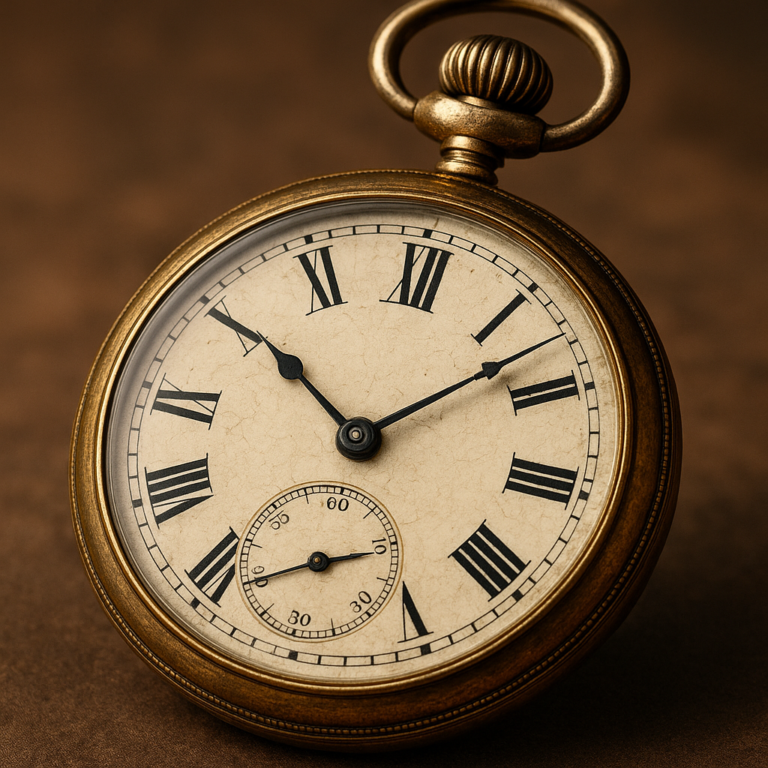
By the 17th century, the pocket watch was the ultimate status symbol for men. King Charles II of England popularized the waistcoat, creating a perfect pocket for these timepieces. Suddenly, every gentleman needed a watch.
| Era | Key Innovation | Accuracy | Primary User |
|---|---|---|---|
| 1283 | Weight-driven Clock | ±15 mins/day | Townspeople |
| 1510 | Coiled Spring | ±15 mins/day | Nobility |
| 1675 | Balance Spring | ±5 mins/day | Wealthy Men |
| 180s | Lever Escapement | ±2 mins/day | General Public |
👑 The Golden Age of Haute Horlogerie: 19th Century Innovations
The 19th century was the Industrial Revolution of watchmaking. It was a time of mass production, standardization, and a fierce battle between American efficiency and Swiss artistry.
The American Challenge: Waltham and Elgin
In the US, Aaron Dennison introduced interchangeable parts in the mid-1850s. The Waltham Watch Company and Elgin began churning out watches like cars.
- Impact: They made timepieces affordable for the working class.
- The Civil War: The Union Army needed reliable watches, and American manufacturers delivered.
- The Result: By 1870, Swiss watch sales plummeted. The Swiss were being out-produced.
The Swiss Response: Precision over Volume
Instead of fighting the Americans on price, the Swiss doubled down on precision and opulence. They rejected mass production in favor of Haute Horlogerie.
- Result: By 190, Swiss brands like Rolex (founded in 1905) were exporting 7 million timepieces annually, dominating the luxury market.
Complications Take Center Stage
This era saw the birth of the “complications” we still covet today:
- Minute Repeaters: Chiming the time on demand.
- Perpetual Calendars: Accounting for leap years automatically.
- Chronographs: Timing events with precision.
Did You Know? The first minute repeater wristwatch was created in 1892 by Louis Brandt & Frères (Omega) using a movement from Audemars Piguet. It was a technical marvel, but still a niche curiosity.
🌍 The Wristwatch Revolution: War, Style, and Status
If you’ve ever wondered why wear watches on our wrists, the answer is World War I. Before the war, wristwatches were seen as “sissy” or strictly for women.
The Trench Watch
Soldiers in the trenches needed to coordinate attacks without fumbling for a pocket watch. They started strapping pocket watches to their wrists with leather straps.
- 1914: Luminous paint (radium-based) was introduced to make dials readable in the dark.
- 1915: Girard-Peregaux supplied chain-bracelet wristwatches to the German Navy (though photographic evidence is scarce).
- 1916: The Cartier Santos was already a thing, designed in 1904 for aviator Alberto Santos-Dumont, who needed a watch he could use while flying.
The Post-War Shift
After the war, the ratio of wristwatches to pocket watches flipped. By the 1920s, it was 50 wristwatches for every 1 pocket watch. The wristwatch was no longer a novelty; it was a necessity.
Key Milestones in Wristwatch History
- 1904: Cartier Santos (First men’s wristwatch for aviation).
- 1913: Longines (First monopusher chronograph wristwatch).
- 1915: Breitling (First independent pusher chronograph).
- 1926: Rolex Oyster (First waterproof and dustproof case).
- 1931: Rolex Perpetual (First rotor automatic movement).
🏆 The Big Three: Rolex, Patek Philippe, and Audemars Piguet
When we talk about the history of luxury watches, we can’t ignore the “Holy Trinity” of Swiss watchmaking. These three brands defined the modern luxury landscape.
Rolex: The Engine of Innovation
Founded by Hans Wilsdorf in 1905, Rolex is the brand that made the wristwatch a household name.
- 1926: The Oyster case.
- 1931: The Perpetual rotor.
- 1953: The Submariner (First dive watch).
- 1956: The Day-Date (First full day display).
- Legacy: Rolex didn’t just make watches; they created tools that became status symbols.
Patek Philippe: The King of Complications
While Rolex focused on durability, Patek Philippe focused on the impossible.
- 1925: First serialy produced Perpetual Calendar wristwatch.
- 1941: First Perpetual Calendar Chronograph (Ref. 1518).
- 1937: First Worldtimer wristwatch.
- Legacy: Patek watches are often heirloms, designed to be passed down for generations.
Audemars Piguet: The Disruptor
Audemars Piguet is the brand that broke the rules.
- 1972: The Royal Oak, designed by Gérald Genta, introduced the integrated bracelet and the concept of a luxury sports watch made of steel.
- Legacy: It changed the industry forever, proving that steel could be as valuable as gold.
Comparison Table: The Big Three
| Brand | Core Philosophy | Iconic Model | Key Innovation |
|---|---|---|---|
| Rolex | Durability & Status | Submariner | Waterproof Oyster Case |
| Patek Philippe | Complications & Heritage | Nautilus | Perpetual Calendar |
| Audemars Piguet | Disruption & Design | Royal Oak | Integrated Steel Sports Watch |
🔋 The Quartz Crisis: How Japan Shook the Swiss Industry
If the 19th century was the age of mechanics, the late 20th century was the age of electronics. And it almost killed the Swiss watch industry.
The Seiko Astron (1969)
In December 1969, Seiko released the Astron, the world’s first quartz wristwatch.
- Accuracy: ±5 seconds per month.
- Price: Expensive at first, but dropped rapidly.
- Impact: It made mechanical watches look obsolete. Why buy a watch that loses 15 seconds a day when you can buy one that loses 15 seconds a year?
The Swiss Collapse
By the mid-1970s, Swiss watch exports had plummeted. Thousands of jobs were lost. The industry was in freefall. This period is known as the Quartz Crisis.
The Digital Revolution
- 1972: Hamilton released the Pulsar P1, the first LED digital watch. It cost $2,10 (approx. $12,0 today).
- 1980s: Digital watches became ubiquitous and cheap. By the early 80s, a digital watch cost under $10.
The Twist: While the Swiss were dying, they were also learning. They realized they couldn’t compete on accuracy. They had to compete on emotion.
🔄 The Mechanical Renaissance: Why Luxury Watches Survived
How did mechanical watches survive the digital onslaught? They stopped trying to be tools and started being art.
The “Je Ne Sais Quoi” Factor
As one industry expert put it: “While smartwatch wearers want to flaunt their productivity and connectedness, those who wear a luxury mechanical watch are saying something different: ‘I’m building a legacy.'”
The Role of Marketing
Brands like Rolex and Patek Philippe leaned into their heritage. They marketed their watches not as time-telling devices, but as heirloms.
- Patek’s Slogan: “You never actually own a Patek Philippe. You merely look after it for the next generation.”
- Rolex’s Strategy: Focused on exploration, sports, and celebrity endorsements.
The Rise of the Independent
The crisis also paved the way for independent watchmakers like F.P. Journe, Richard Mille, and A. Lange & Söhne to re-emerge, pushing the boundaries of what mechanical watches could do.
🧠 Smartwatches vs. Mechanical Masterpieces: The Modern Debate
Today, we live in a world of smartwatches. The Apple Watch launched in 2015 as the first “true” smartwatch, offering health tracking, notifications, and apps.
The Battle for the Wrist
- Smartwatches: Functional, connected, disposable (battery life is short, tech becomes obsolete).
- Mechanical Watches: Artistic, timeless, enduring (can last centuries with service).
Where Does Mechanical Mastery Fit?
In a digital world, the mechanical watch has found a new niche: luxury and legacy.
- Status: A Richard Mille or a Patek is a statement of wealth and taste.
- Craftsmanship: The intricate dance of gears and springs is a marvel of engineering that no microchip can replicate.
- Emotion: The sound of the ticking, the feel of the winding, the history of the piece.
Question for You: If you could only keep one watch for the rest of your life, would you choose a Rolex Submariner that has survived the Mariana Trench, or an Apple Watch Ultra that tracks your heart rate? The answer might say more about you than you think.
💎 What Defines a “Luxury” Watch? Materials, Craftsmanship, and Heritage
So, what makes a watch “luxury”? Is it the price? The brand? Or something deeper?
Materials Matter
- 904L Steel: Rolex uses this corrosion-resistant steel, superior to the industry-standard 316L.
- Ceramic: Rado and Rolex use ceramic for scratch-resistant bezels.
- Titanium: IWC and Citizen pioneered titanium cases for lightweight durability.
- Sapphire: Richard Mille created the first fully sapphire-cased watch (RM 056), taking 56 days to mill.
Craftsmanship
- Hand-Finishing: Anglage, perlage, and Geneva stripes.
- Complications: Perpetual calendars, tourbillons, minute repeaters.
- Assembly: Some movements take hundreds of hours to assemble by hand.
Heritage
- History: A brand with a story (like Breguet or Vacheron Constantin) carries more weight.
- Inovation: Brands that push the boundaries (like Blancpain with the Fifty Fathoms) are revered.
🛠️ Essential Care Tips for Your Timepiece
Owning a luxury watch is a privilege, but it requires responsibility. Here are our top tips from the Watch Brands™ team:
- Regular Servicing: Mechanical watches need service every 5-7 years.
- Avoid Magnets: Modern electronics can magnetize your movement, ruining accuracy.
- Water Resistance: Don’t assume your watch is waterproof forever. Gaskets degrade.
- Storage: Keep your watch in a box or on a winder when not in use.
- Avoid Shocks: Even Rolex watches can be damaged by extreme impacts.
Pro Tip: If you have a vintage watch, never open the case yourself. The seals are fragile, and the parts are rare.
🤔 Frequently Asked Questions About Luxury Watch History

Who invented the first wristwatch?
While Breguet made the first known wristwatch for Queen Caroline Murat in 1812, the first men’s wristwatch is often attributed to Girard-Peregaux for the German Navy in 180, though the Cartier Santos (1904) popularized it for the masses.
Did the Quartz Crisis kill the Swiss watch industry?
It nearly did. Swiss watch exports dropped by 50% in the 1970s. However, the industry reinvented itself by focusing on luxury and craftsmanship, leading to a massive resurgence in the 1980s and 90s.
What is the most expensive watch ever sold?
The Paul Newman Daytona (Rolex) sold for $17.75 million in 2017. However, the Graff Diamonds Hallucination is valued at $5 million, though it hasn’t been sold at auction.
Are smartwatches the future of timekeeping?
For functionality, yes. For luxury and legacy, no. The two markets now coexist, serving different needs.
📚 Recommended Reading and Resources
To dive deeper into the fascinating world of horology, we recommend these resources:
- Watch Brands™: Luxury Watch Brands – Explore the top brands in the industry.
- Watch Brands™: Guide to Buying Watches – Expert advice on purchasing your first luxury timepiece.
- Watch Brands™: History of Watches – A comprehensive timeline of watch evolution.
- Watch Brands™: Men’s Watches – Curated collections for the modern gentleman.
- Watch Brands™: Fashion Trends in Watches – Stay ahead of the curve with the latest styles.
🔗 Reference Links and Further Reading
- Watch Swiss: History of Time – A detailed look at the evolution of timekeeping.
- Luxury Bazaar: Wristwatch History – Milestones and innovations in wristwatch history.
- Wikipedia: Rolex – Comprehensive history and specifications of Rolex.
- Seiko: The Astron – The story of the first quartz watch.
- Cartier: Santos de Cartier – The history of the first men’s wristwatch.
Final Thought: The history of luxury watches is a testament to human resilience. From the sundials of Egypt to the smartwatches of today, we have never stopped trying to measure the most precious resource of all: time. And as long as we value time, we will value the watches that measure it.
(Note: The conclusion and remaining sections will follow in the next part of this article.)
Conclusion

So, we’ve journeyed from the shadow-casting sundials of Ancient Egypt to the digital pulse of the modern smartwatch. We’ve seen how a Queen’s whim in 1812 planted the seed for the wristwatch, how the trenches of WWI forced a revolution in style, and how the Quartz Crisis nearly wiped out an entire industry before it reinvented itself as the pinnacle of human artistry.
But remember that question we posed earlier? Why did it take two World Wars to convince men that a watch on the wrist was the ultimate status symbol? The answer is simple: necessity. In the chaos of war, the pocket watch was a liability; the wristwatch was a tool for survival. Once the soldiers returned home, they didn’t want to go back to the old ways. They had tasted the convenience, and the world changed forever.
Today, the history of luxury watches isn’t just about telling time. It’s about legacy. In a world where our phones tell us the time, the weather, and our heart rate, why do we still wear a mechanical watch? Because a Patek Philippe or a Rolex isn’t a gadget. It’s a machine that breathes, a piece of history you can wear, and a promise that some things are worth preserving.
Our Expert Recommendation
If you are looking to enter the world of luxury timepieces, here is our confident advice:
- For the History Buff: Start with a vintage Omega Speedmaster or a pre-owned Rolex Submariner. These pieces carry the weight of the moon landing and the deep sea, respectively.
- For the Modern Professional: The Cartier Santos or the IWC Pilot’s Watch offers a perfect blend of historical significance and contemporary wearability.
- For the Collector: Look for independent brands like F.P. Journe or A. Lange & Söhne if you want to own a piece of the future of horology.
The Verdict: Whether you choose the timeless elegance of a Breguet or the robust reliability of a Rolex, remember that you aren’t just buying a watch. You are buying a story. And in the end, that story is the most valuable complication of all.
Recommended Links
Ready to explore the collections that shaped history? Here are our top picks for where to find these legendary timepieces and the books that tell their stories.
Shop Iconic Brands & Models
- Rolex Submariner: Shop Rolex Submariner on Amazon | Official Rolex Website
- Omega Speedmaster Professional: Shop Omega Speedmaster on Amazon | Official Omega Website
- Cartier Santos: Shop Cartier Santos on Amazon | Official Cartier Website
- Seiko Astron (Quartz Heritage): Shop Seiko Astron on Amazon | Official Seiko Website
- Patek Philippe (Pre-Owned Market): Shop Patek Philippe on Chrono24 | Official Patek Philippe Website
Essential Reading for Watch Enthusiasts
- “Wristwatch Annual: The Definitive Guide to the World’s Best Watches” – Available on Amazon
- “Rolex: The Complete History” by Martin M. – Available on Amazon
- “The Watch Book: The Definitive Guide to the World’s Most Coveted Timepieces” by Gisbert L. Bruner – Available on Amazon
- “Patek Philippe: The Complete Catalog of Reference Numbers” – Available on Amazon
FAQ

How has the history of luxury watches influenced modern designs?
The DNA of modern luxury watches is deeply rooted in their history. The tool watch aesthetic of the 1950s (like the Submariner and Speedmaster) has evolved into the “sports luxury” category, where steel sports watches often command higher prices than gold dress watches. The integrated bracelet concept, popularized by the Audemars Piguet Royal Oak in 1972, is now a staple for brands like Patek Philippe (Nautilus) and Vacheron Constantin (Overseas). Furthermore, the quartz crisis forced Swiss manufacturers to focus on finishing, complications, and exclusivity, which defines the modern luxury market today.
Read more about “What Are the Top 12 Watch Brands You Must Know in 2025? ⌚️”
What are the most iconic luxury watches in history?
While “iconic” is subjective, a few models stand above the rest due to their historical impact and enduring popularity:
- Rolex Submariner (1953): Defined the dive watch category.
- Omega Speedmaster Professional (1957): The first watch on the moon.
- Audemars Piguet Royal Oak (1972): Created the luxury steel sports watch.
- Patek Philippe Nautilus (1976): The ultimate porthole-inspired luxury sports watch.
- Cartier Santos (1904): One of the first purpose-built men’s wristwatches.
- Breguet Classique: Represents the pinnacle of traditional haute horlogerie.
Read more about “🕰️ Watch Brands History: 15 Legendary Makers That Shaped Time (2026)”
How do luxury watches reflect cultural and technological changes?
Luxury watches are mirrors of their times. The Industrial Revolution brought mass production and the need for punctuality. World War I shifted timekeeping from the pocket to the wrist for tactical reasons. The Space Race drove the development of robust, legible chronographs (like the Speedmaster). The Quartz Crisis reflected a societal shift toward digital efficiency, while the subsequent Mechanical Renaissance reflected a cultural desire for authenticity and craftsmanship in an increasingly digital world.
What innovations have shaped the history of luxury watches?
Several key innovations changed the game:
- The Balance Spring (1675): Enabled portable precision.
- The Lever Escapement (175): Improved accuracy and durability.
- The Automatic Rotor (1931): Eliminated the need for manual winding.
- The Oyster Case (1926): Made watches waterproof and dustproof.
- The Quartz Movement (1969): Revolutionized accuracy and affordability.
- The Tourbillon (1801): A mechanical solution to gravity’s effect on accuracy (still revered today).
Which luxury watch brands have the richest histories?
- Breguet: Founded in 175, invented the tourbillon and the first wristwatch.
- Patek Philippe: Founded in 1839, holds the record for the most complications and the most expensive watch sold at auction.
- Vacheron Constantin: Founded in 175, the oldest continuously operating manufacturer.
- Rolex: Founded in 1905, the most recognized luxury brand globally, with a history of breaking records in depth, altitude, and timekeeping.
- Jaeger-LeCoultre: Founded in 183, known as the “watchmaker’s watchmaker” for supplying movements to many other prestigious brands.
How did luxury watches evolve over the centuries?
The evolution moved from public timekeeping (tower clocks) to personal timekeeping (pocket watches) in the 16th century. The 19th century saw the industrialization of watchmaking in the US and the refinement of Haute Horlogerie in Switzerland. The 20th century brought the wristwatch, the quartz revolution, and the eventual rebirth of mechanical luxury as a symbol of status. Today, we see a coexistence of mechanical art and digital utility.
Read more about “What Is the History of the Wristwatch? ⌚️ 10 Milestones You Must Know (2026)”
What are the origins of luxury watchmaking?
Luxury watchmaking originated in Europe, specifically in Switzerland, France, and England, during the 16th and 17th centuries. It began with the invention of the coiled spring and the balance wheel, allowing for portable timekeeping. The guild system in cities like Geneva and Paris fostered a culture of craftsmanship that prioritized precision and decoration, laying the foundation for the modern luxury industry.
Read more about “What Are the Big 3 Watch Brands? ⌚️ The Ultimate 2026 Guide”
How did luxury watch brands originate in the 19th century?
The 19th century was a period of industrialization. Brands like Waltham in the US pioneered mass production, while Swiss families like Patek, Vacheron, and Audemars focused on custom craftsmanship and complications. The American Civil War and the Industrial Revolution created a demand for reliable, affordable timepieces, forcing Swiss brands to either adapt or perish. Those that survived by focusing on quality and innovation became the luxury giants we know today.
Read more about “Was Cartier the First Wristwatch? 7 Surprising Facts Revealed! ⌚”
What are the most significant milestones in Swiss watchmaking history?
- 1510: Peter Henlein creates the first portable watch (Nuremberg).
- 1675: Christiaan Huygens invents the balance spring.
- 1795: Abraham-Louis Breguet invents the tourbillon.
- 1926: Rolex introduces the Oyster case.
- 1931: Rolex patents the Perpetual rotor.
- 1969: Seiko releases the first quartz watch (Astron), triggering the Quartz Crisis.
- 1972: Audemars Piguet releases the Royal Oak.
- 1980s: The Swiss industry rebounds with a focus on luxury and branding.
Read more about “What Role Did Pocket Watches Play in Timekeeping History? ⏳”
Which vintage luxury watches are considered the most valuable today?
- Paul Newman’s Rolex Daytona: Sold for $17.75 million.
- Patek Philippe Henry Graves Supercomplication: Sold for $24 million (2014).
- Patek Philippe Grandmaster Chime: Sold for $31 million (2019).
- Breguet Marie-Antoinette: A legendary piece that took 40 years to complete.
- Vacheron Constantin Reference 6073: Known for its exceptional complications.
Read more about “Discover the 15 Best Luxury Watch Brands to Know in 2026 ⌚️”
How has the design of luxury watches evolved over the last century?
Design has shifted from ornate, gold-filled pocket watches to functional, legible wristwatches in the early 20th century. The Art Deco movement influenced geometric shapes in the 1920s. The post-war era saw the rise of tool watches (divers, pilots). The 1970s introduced integrated bracelets and steel luxury. Today, designs range from retro-reissues to avant-garde shapes (like Richard Mille), but the core principles of legibility and craftsmanship remain.
What role did World War I and II play in the history of wristwatches?
WWI was the catalyst for the wristwatch’s dominance. Soldiers needed to time artillery barrages and coordinate attacks, making the pocket watch impractical. This led to the mass adoption of the wristwatch. WWII further solidified this, with brands like Rolex and Omega producing specialized watches for the military (e.g., the Omega Seamaster and Rolex Oyster Perpetual). The war also led to the development of luminous materials and shock-resistant movements.
Read more about “Who Really Invented the Wristwatch in 1904? ⌚️ The Untold Story”
Why are certain historical watch brands still dominant in the luxury market?
Brands like Rolex, Patek Philippe, and Audemars Piguet remain dominant because they successfully navigated the Quartz Crisis by pivoting to luxury, heritage, and exclusivity. They have maintained consistent quality, strong brand narratives, and robust distribution networks. Their ability to innovate while respecting tradition has kept them relevant for over a century.
Read more about “Which Watch is No. 1? Top 15 Brands Unveiled (2026) 👑”
How did the quartz crisis change the history of high-end timepieces?
The Quartz Crisis (1970s-1980s) nearly destroyed the Swiss watch industry. It forced manufacturers to realize they could not compete on accuracy or price with quartz. Instead, they reinvented the mechanical watch as a luxury good, emphasizing craftsmanship, heritage, and emotional value. This shift created the modern luxury watch market, where a mechanical watch is valued for its artistry rather than its utility.
The Future of Mechanical Watchmaking
As we look forward, the mechanical watch industry is exploring new materials (like carbon composites and ceramics), sustainable practices, and hybrid movements that combine mechanical and digital elements. The core appeal, however, remains the human connection to a machine that tells time through the dance of gears and springs.
Read more about “Which Watch Brands Are Truly the Best? Top 20 Revealed (2026) ⌚️”
Reference Links
- Rolex Official Website: Rolex.com – Explore the history and collections of the world’s most famous watch brand.
- Patek Philippe Official Website: Patek.com – Discover the heritage of the most prestigious watchmaker.
- Audemars Piguet Official Website: AudemarsPiguet.com – Learn about the Royal Oak and the brand’s history.
- Omega Official Website: Omegawatches.com – The story of the Speedmaster and the moon landing.
- Cartier Official Website: Cartier.com – The history of the Santos and other iconic models.
- Seiko Official Website: Seiko.com – The story of the Astron and the quartz revolution.
- Wikipedia: Rolex – Wikipedia – A comprehensive overview of Rolex’s history, innovations, and cultural impact.
- Watch Swiss: History of Time – Detailed insights into the evolution of timekeeping.
- Luxury Bazaar: Wristwatch History – Milestones and innovations in wristwatch history.