Support our educational content for free when you purchase through links on our site. Learn more
Are Expensive Watch Brands Worth It? ⌚


Are expensive watch brands worth the investment for their quality and durability? Sometimes—but a high price is no guarantee of better accuracy, greater toughness, or a profitable resale. The best luxury watches earn their keep through some combination of craftsmanship, repairability, thoughtful design, reliable support, and the simple pleasure of wearing one.
We’ve watched buyers fall for a famous logo, only to discover that the watch they reach for every morning is the one that fits comfortably and feels right on the wrist. That’s the real test: premium details matter when you value them, but a dependable quartz watch may be the smarter buy if you want accuracy with minimal fuss.
Key Takeaways
- Buy for quality and enjoyment, not promised profits. Most luxury watches are uncertain financial investments.
- Price doesn’t equal durability or accuracy. Compare the exact model’s materials, movement, water resistance, and testing.
- Plan for maintenance. Mechanical watches need servicing; check brand support and ownership requirements before buying.
- Fit and purpose come first. Comfort, legibility, and suitability for your routine matter more than prestige.
- Affordable alternatives can be excellent. Seiko, Citizen, Tissot, and other brands offer compelling watches for practical everyday wear.
Table of Contents
- ⚡️ Quick Tips and Facts: Are Expensive Watches Worth It?
- ⌚ How Luxury Watchmaking Became a Mark of Quality and Durability
- 🔍 What Does “Expensive” Mean in the Watch World?
- ⚙️ What You’re Paying For: Materials, Movement, Finishing, and Testing
- Mechanical, automatic, and quartz movements compared
- Case materials, crystals, water resistance, and bracelets
- Hand-finishing, assembly, quality control, and certifications
- 🛡️ Watch Durability: What Makes a Timepiece Last?
- Service intervals, repairability, and parts availability
- Everyday wear, shocks, water, magnets, and temperature
- Warranty coverage versus long-term ownership costs
- 💎 15 Luxury Watch Brands to Compare for Quality and Longevity
- 1. Rolex: Robust engineering and enduring service support
- 2. Omega: Precision, anti-magnetism, and tool-watch heritage
- 3. Grand Seiko: Precision, finishing, and distinctive movements
- 4. Tudor: Practical durability and strong value
- 5. Cartier: Design icons backed by serious watchmaking
- 6. Breitling: Aviation roots and hard-wearing chronographs
- 7. IWC Schaffhausen: Purpose-built watches and Swiss engineering
- 8. Jaeger-LeCoultre: In-house expertise and refined mechanics
- 9. Longines: Heritage, precision, and accessible Swiss quality
- 10. TAG Heuer: Motorsport design and modern performance
- 11. Patek Philippe: Generational craftsmanship and complex movements
- 12. Vacheron Constantin: Traditional finishing and enduring refinement
- 13. Audemars Piguet: High-end materials and distinctive construction
- 14. A. Lange & Söhne: German precision and exceptional movement finishing
- 15. Citizen and Seiko: Reliable alternatives to luxury mechanical watches
- 📊 Expensive Watches vs. Affordable Watches: What Changes in Practice?
- 💰 Do Luxury Watches Hold Their Value or Appreciate?
- Resale value, depreciation, and market demand
- Why investment potential is different from investment quality
- Factors that affect a watch’s resale value
- 🧭 How to Choose a Luxury Watch for Your Needs
- Best features for daily wear, travel, work, and sport
- Fit, comfort, legibility, and personal style
- New, pre-owned, or vintage: which is right for you?
- ✅ Buying Checklist: How to Avoid Overpaying or Buying a Fake
- Authorized dealers, reputable sellers, and authentication
- Condition, service records, box, papers, and provenance
- 🧼 How to Care for an Expensive Watch and Extend Its Life
- ⚖️ The Downsides of Expensive Watches
- 🎯 Who Should Buy a Luxury Watch—and Who Shouldn’t?
- 🔗 Recommended Links
- ❓ FAQ
- Are expensive watches more accurate than affordable watches?
- Do luxury watches last longer than cheaper watches?
- Is an automatic watch more durable than a quartz watch?
- How often does a luxury watch need servicing?
- Are expensive watches worth the maintenance cost?
- Which luxury watch brands are best for everyday wear?
- Can an expensive watch be a good investment?
- Is buying a pre-owned luxury watch a good idea?
- What should you check before buying a luxury watch?
- 🏁 Conclusion
- 📚 Reference Links
⚡️ Quick Tips and Facts: Are Expensive Watches Worth It?
Sometimes—but “worth it” depends on what you’re buying the watch for. A premium timepiece can offer excellent materials, skilled finishing, repairable mechanical engineering, dependable service support, and the pleasure of wearing something you love. It does not automatically offer better accuracy, greater durability, or a reliable financial return.
For our broader take on choosing a maker, see What is the best brand of watch?, and browse our guides to luxury watch brands and buying watches.
| What you’re evaluating | What a higher-end watch may offer | What it does not guarantee |
|---|---|---|
| Accuracy | Carefully adjusted mechanical movements or certified chronometers | That every luxury watch is more accurate than a quality quartz watch |
| Durability | Sapphire crystal, robust cases, sturdy bracelets, and tested water resistance | Scratch-proofing, shock-proofing, or immunity to neglect |
| Craftsmanship | Better movement finishing, dial work, case finishing, and assembly | That every extra dollar goes into physical construction |
| Longevity | Repairability, parts support, and a long service life | Maintenance-free ownership |
| Resale | Strong demand for some brands and references | Appreciation or an easy, profitable resale |
| Enjoyment | Design, heritage, tactile interaction, and personal meaning | That the watch will suit your life just because it is famous |
Our quick verdict: Buy an expensive watch for its quality, fit, design, and the pleasure of owning it. Treat possible resale value as a bonus, not a business plan. For a no-fuss, accurate daily watch, an affordable quartz model may be the smarter tool. Our affordable watches guide covers that side of the argument.
A useful reality check: a luxury watch can beautifully made and still carry a substantial premium for brand prestige, retail operations, advertising, distribution, and demand. The featured video’s skeptical view is worth hearing: it argues that brand perception and marketing can account for a meaningful part of what buyers pay. That is a perspective on pricing—not proof that every watch has the same manufacturing costs or profit margins. Judge the specific watch, not a sweeping claim about the entire industry.
⌚ How Luxury Watchmaking Became a Mark of Quality and Durability
Luxury watchmaking grew from practical needs: portable timekeeping, precise navigation, reliable military and aviation instruments, and eventually the desire to wear finely crafted objects. Mechanical watches earned their reputation through generations of engineering and skilled craft—but modern watches are not valuable simply because they are mechanical.
The first distinction to keep in mind is heritage versus present-day performance. A brand’s history can make a watch meaningful and collectible; it cannot, on its own, prove that a particular model is well suited to your wrist, work, or weekend plans.
From timekeeping instrument to personal heirloom
Early watchmakers competed to improve precision, durability, and portability. Over time, wristwatches became more practical for pilots, divers, soldiers, and athletes. Brands such as Cartier, Omega, and Rolex built recognizable identities around design and technical milestones.
That history matters in three ways:
- Design continuity: An enduring case shape can stay appealing long after a trend fades.
- Technical know-how: A maker’s accumulated experience can inform movement design, testing, and repair.
- Collector interest: Certain references attract buyers because of their history, rarity, condition, or cultural significance.
But heritage has limits. A storied name does not make a dress watch suitable for diving, and an old model’s reputation does not tell you whether a pre-owned example has been serviced properly.
What the “Swiss Made” label does—and doesn’t—tell you
“Swiss Made” is a regulated origin label with legal criteria; it is not a universal grade for accuracy, durability, finishing, or value. The Swiss Federal Institute of Intellectual Property explains the Swissness rules for watches. A watch’s model specifications and the quality of its construction still deserve separate attention.
The same principle applies to other manufacturing origins. Japanese and German watchmaking each have respected traditions, while individual models vary widely within every country and brand.
Enthusiast note: We’ve seen first-time buyers focus on the logo, then discover that the watch they actually enjoy wearing is the one that fits comfortably, reads clearly, and doesn’t make them nervous around a doorframe.
So what should the name on the dial be worth to you? The answer gets clearer once we unpack what the price actually buys.
🔍 What Does “Expensive” Mean in the Watch World?
There is no single price line separating “affordable,” “premium,” and “luxury.” These are useful shopping categories, not universal technical standards. A useful way to think about cost is to compare what the watch delivers with what it asks from your budget—not just to compare its price with another watch’s.
A practical way to compare watch tiers
| Broad category | Common strengths | Questions to ask |
|---|---|---|
| Affordable | Reliable quartz options, good everyday functionality, low-maintenance choices | Is the movement and case appropriate for how I’ll use it? |
| Premium | More movement choice, stronger finishing, varied materials and designs | Which upgrades are meaningful to me rather than merely impressive on a spec sheet? |
| Luxury | High-end finishing, refined design, prestigious movements, specialist complications, brand heritage | Am I comfortable paying for craftsmanship and brand identity as well as utility? |
| Haute horology | Complex construction, meticulous finishing, specialized complications, limited production | Do I value the technical and artistic work enough to justify the ownership costs? |
These are broad tendencies, not guarantees. A well-made quartz watch can outperform an expensive mechanical watch in everyday accuracy. An entry-level luxury model may have a simpler movement than a premium watch from a brand with a different business model.
The four kinds of value
Before comparing brands, decide which kind of value matters most:
- Practical value: Reliability, readability, comfort, and suitability for daily use.
- Craft value: Movement architecture, hand-finishing, materials, and assembly.
- Emotional value: Personal milestones, design affection, family significance, or simple delight.
- Market value: What another buyer might pay for the watch later.
A watch can score highly in one column and modestly in another. A minimalist Movado Museum Classic may have strong design appeal without offering the complication count of a high-end mechanical watch. A Tissot PRX can deliver a compelling everyday package without being a predictable investment.
That’s the first important tension: the best watch for owning may not be the best watch for reselling.
⚙️ What You’re Paying For: Materials, Movement, Finishing, and Testing
A luxury watch’s cost can reflect tangible construction, technical development, skilled labor, quality checks, distribution, marketing, brand prestige, and demand. The mix changes by maker and model. That is why “luxury watches are all overpriced” and “the price is all craftsmanship” are both too simple.
Mechanical, automatic, and quartz movements compared
| Movement type | How it works | Strengths | Trade-offs |
|---|---|---|---|
| Manual mechanical | A mainspring is wound by hand and releases energy through a mechanical train | Engaging interaction; visible engineering; no battery | Needs regular winding and mechanical servicing |
| Automatic mechanical | A rotor winds the mainspring as the wearer moves | Convenient when worn regularly; traditional mechanical appeal | Can stop when unworn; sensitive to impacts and magnetism; needs service |
| Quartz | A battery powers an electronic circuit regulated by a quartz crystal | Usually accurate, low-maintenance, practical | Battery changes needed; less mechanical interaction |
| Solar quartz | Light charges a rechargeable cell that powers quartz timekeeping | Long intervals between conventional battery changes; convenient daily use | Still needs care, and storage in darkness can affect charge |
| Spring Drive | A mechanical power source is regulated by an electronic control system | Distinctive smooth seconds hand and precise regulation | Specialized technology and servicing; not a conventional quartz or mechanical escapement |
A familiar confusion: mechanical doesn’t automatically mean more accurate. Quartz movements are typically more accurate in ordinary use than traditional mechanical movements, while high-grade mechanical calibers can be tested and regulated to demanding tolerances. COSC explains its chronometer testing standards.
For daily wear, think about your temperament. Do you enjoy winding and setting a watch, or would you rather pick it up and go? A fine automatic can feel like a tiny machine with manners. A solar quartz watch is less romantic, perhaps, but it won’t sulk because it spent the weekend on your dresser.
Case materials, crystals, water resistance, and bracelets
| Feature | Common benefit | Common limitation |
|---|---|---|
| Stainless steel | Tough, versatile, widely serviceable | Scratches and dings with use |
| Titanium | Light on the wrist and useful for larger watches | Can show marks; finishing and scratch behavior vary by grade |
| Ceramic | Very scratch-resistant and color-stable | Can chip or crack under hard impact |
| Gold or platinum | Precious-metal character and substantial material value | Softer than many steel alloys; requires careful handling |
| Sapphire crystal | Strong resistance to everyday scratching | Can crack under a severe impact; not indestructible |
| Acrylic crystal | Can be polished after scratches and offers a vintage look | Scratches more readily |
| Rubber or fabric strap | Comfortable and adaptable for sport or heat | May wear out sooner than a well-made metal bracelet |
| Metal bracelet | Durable and long-lasting when properly sized | Can collect scratches and may need link adjustment |
A material’s reputation only tells part of the story. Case shape, crystal thickness, bezel construction, crown protection, gaskets, and maintenance all affect real-world resilience. A sapphire crystal is a lovely upgrade, but it does not make a watch shockproof.
Water resistance is a specification, not a dare. The ISO 22810 standard for water-resistant watches sets requirements and test methods, while brands provide model-specific guidance. Always check the manual for your exact watch and have seals inspected as recommended.
Hand-finishing, assembly, quality control, and certifications
On higher-end watches, finishing may include carefully polished bevels, brushed and polished surfaces, decorative movement work, precise dial printing, and tightly controlled assembly. These details can require skilled labor and time, though the degree varies by model.
Certifications can help answer specific questions:
- COSC chronometer certification tests the movement’s precision under defined conditions.
- METAS Master Chronometer certification assesses criteria that include accuracy, magnetic resistance, and water resistance; see METAS’s watch certification overview.
- Brand testing may add further checks, but methods are not identical across manufacturers.
A certification is useful evidence, not a promise that your watch will never need regulation or repair. Nor does the absence of a certification automatically mean a watch is poor quality. Ask what is tested, by whom, and for which model.
🛡️ Watch Durability: What Makes a Timepiece Last?
A durable watch is the result of good design, appropriate materials, careful handling, and timely maintenance. Brand prestige alone cannot rescue a watch that is repeatedly banged against hard surfaces, exposed to water with compromised seals, or left unserviced for decades.
Service intervals, repairability, and parts availability
Mechanical watches contain moving parts that need lubrication and inspection. Service schedules differ by caliber, brand, usage, and environment. Rather than applying a universal “every three to five years” rule, check the manufacturer’s guidance for your exact watch. Some brands now recommend longer intervals for certain modern models; service sooner if the watch runs poorly, has suffered damage, or shows signs of moisture.
Before purchasing, consider:
- Can the movement be serviced by the brand or qualified independent watchmakers?
- Are parts available, and does the brand restrict access to them?
- Will the warranty remain valid if an independent shop works on the watch?
- Can you obtain service records for a pre-owned example?
- Does the expected maintenance fit your ownership budget?
For a mechanical watch, serviceability can matter as much as initial toughness. A watch designed to be repaired and supported can stay in use long after a disposable gadget has become obsolete.
Everyday wear, shocks, water, magnets, and temperature
| Everyday hazard | What can happen | Sensible habit |
|---|---|---|
| Hard knocks | Damage to the case, crystal, hands, or movement | Remove the watch for impact-heavy tasks |
| Water exposure | Moisture can enter through worn seals or an unsecured crown | Follow the model’s rating and keep the crown properly closed |
| Magnets | A mechanical movement may gain or lose time | Keep it away from strong magnetic sources; ask a watchmaker if accuracy suddenly changes |
| Heat or cold | Extreme conditions can affect lubricants, seals, battery performance, and accuracy | Avoid leaving it in a hot car, sauna, or freezing environment |
| Dust and grit | Abrasive particles can mark surfaces or interfere with operation | Rinse suitable water-resistant watches after exposure to salt or sand, following the manual |
| Poor storage | Scratches, drained charge, or a stopped watch | Store safely and follow manufacturer guidance for automatic or solar models |
A watch can be “water resistant” without being suitable for swimming, and even a dive watch needs properly maintained seals. Never assume a vintage watch retains its original water resistance. Have it tested before taking it near water.
Warranty coverage versus long-term ownership costs
A warranty generally covers specified manufacturing defects, not ordinary wear, accidental damage, unauthorized repairs, or every possible service expense. Read the actual warranty terms from the manufacturer; Rolex, Omega, and other makers publish brand-specific conditions on their official sites, such as Rolex’s guarantee information.
Build a realistic ownership picture that includes:
- Routine servicing and possible parts replacement
- Bracelet sizing, strap replacement, and polishing decisions
- Insurance or secure storage for a high-value watch
- Shipping and authentication costs for remote purchases
- The possibility of a wait for specialist repairs
A long warranty is welcome. It is not the same thing as lifetime free maintenance.
💎 15 Luxury Watch Brands to Compare for Quality and Longevity
Brand names are shortcuts to reputation, not substitutes for checking the reference number, movement, condition, warranty, and fit. The observations below are broad brand-level impressions; individual models can differ substantially.
| Brand | Notable strengths | Watch out for |
|---|---|---|
| Rolex | Strong service network, durable everyday models, broad collector demand | High prestige premium; market value varies by reference and condition |
| Omega | Technical range, anti-magnetic options, rich tool-watch history | Collection and movement differences make model-by-model research essential |
| Grand Seiko | Dial craft, precise finishing, varied mechanical and Spring Drive technology | Styling and case proportions are distinctive; try one on if possible |
| Tudor | Robust sports watches and practical value within the luxury segment | Popular designs can be common; value is model-dependent |
| Cartier | Iconic design and strong brand recognition | Design-led pieces can cost more than a movement-only comparison suggests |
| Breitling | Chronographs and aviation-inspired functionality | Larger, feature-heavy models may not suit every wrist |
| IWC Schaffhausen | Pilot-watch heritage and refined mechanical collections | Service and complication costs deserve advance consideration |
| Jaeger-LeCoultre | Deep movement expertise and refined complications | Complex models require specialist maintenance |
| Longines | Heritage, versatile collections, and accessible Swiss watchmaking | Strong ownership value does not imply investment performance |
| TAG Heuer | Sport chronographs and motorsport-linked design | Choose based on the specific caliber and construction, not the logo alone |
| Patek Philippe | Exceptional finishing, complications, and collector recognition | Scarcity and demand can make buying and servicing complicated |
| Vacheron Constantin | Traditional craftsmanship and refined high-end watchmaking | A sophisticated purchase requiring careful service planning |
| Audemars Piguet | Distinctive design, high-end materials, and complex work | Pricing and collector demand can be especially sensitive to model |
| A. Lange & Söhne | German movement finishing and technical precision | Highly specialized watches call for specialist aftercare |
| Seiko and Citizen | Broad, proven ranges from practical quartz to sophisticated mechanical watches | Quality, finishing, and features vary across a very large range |
1. Rolex: Robust engineering and enduring service support
Rolex is known for Oyster-case construction, sports models, and widespread brand recognition. The Submariner is a recognizable diver’s watch, while the Datejust is a versatile everyday design.
Why buyers like it: Familiar design language, strong support infrastructure, and broad collector demand.
Trade-offs: Prestige can dominate the purchase decision, and not every model holds or gains value. Buy the watch you want to wear, not a rumor about what the next buyer may pay.
2. Omega: Precision, anti-magnetism, and tool-watch heritage
Omega offers a broad range, from the Speedmaster Moonwatch to the Seamaster Diver 300M. Select Omega models use Master Chronometer-certified movements; confirm the certification on the exact reference rather than assuming every model shares the same specification.
Why buyers like it: Technical variety, recognizable design, and substantial history in sport and exploration.
Trade-offs: The brand spans many collections and movement types, so a comparison based only on the logo can mislead.
3. Grand Seiko: Precision, finishing, and distinctive movements
Grand Seiko is admired for carefully finished cases and dials, mechanical movements, quartz expertise, and Spring Drive technology. Its celebrated Zaratsu polishing creates sharply defined surfaces on select cases.
Why buyers like it: Understated design, finely executed details, and technical diversity.
Trade-offs: The subtle dial and case work can be easier to appreciate in person than in a product photo. Try the watch on and inspect its proportions.
4. Tudor: Practical durability and strong value
Tudor has built a strong following with models such as the Black Bay. Its watches often emphasize robust construction, legibility, and vintage-inspired sport styling.
Why buyers like it: A clear tool-watch identity and strong feature set within the luxury market.
Trade-offs: A model’s popularity may make it less distinctive. Check case thickness, bracelet fit, and the exact movement in the reference you are considering.
5. Cartier: Design icons backed by serious watchmaking
Cartier is a design powerhouse as well as a watchmaker. The Tank and Santos demonstrate how distinctive case shapes can outlast short-lived trends.
Why buyers like it: Instantly recognizable design, elegant proportions, and a strong heritage.
Trade-offs: Some buyers prioritize movement specifications above design; Cartier makes the most sense when the look and wearing experience matter to you.
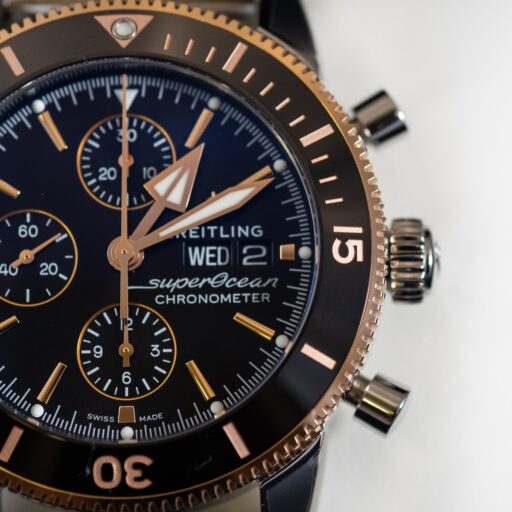
6. Breitling: Aviation roots and hard-wearing chronographs
Breitling is best known for chronographs and aviation-inspired watches. The Navitimer pairs a busy dial with a slide-rule bezel—a charming bit of mechanical aviation history, even if your flight calculations now live on a phone.
Why buyers like it: Strong chronograph identity, bold legibility, and technical styling.
Trade-offs: Some models wear large and visually assertive. Check dimensions and dial readability on your wrist.
7. IWC Schaffhausen: Purpose-built watches and Swiss engineering
IWC Schaffhausen makes aviation-inspired Pilot’s Watches, classic Portugieser models, and watches with varied complications.
Why buyers like it: Coherent design families and a reputation for engineering-focused watchmaking.
Trade-offs: Larger cases are common in some collections, and more complicated watches may bring higher service demands.
8. Jaeger-LeCoultre: In-house expertise and refined mechanics
Jaeger-LeCoultre has a long history of movement production and is closely associated with the Reverso. Its offerings extend well beyond one famous case, with models ranging from refined dress watches to complex complications.
Why buyers like it: Strong technical credentials and distinctive design.
Trade-offs: The more elaborate the mechanism, the more important it is to understand servicing and ownership support before buying.
9. Longines: Heritage, precision, and accessible Swiss quality
Longines offers broad collections including the Master Collection and HydroConquest.
Why buyers like it: Established Swiss heritage, varied styles, and a balanced mix of everyday and sport models.
Trade-offs: Its strength is ownership value and selection—not an automatic promise of resale appreciation.
10. TAG Heuer: Motorsport design and modern performance
TAG Heuer is linked closely to motorsport and chronographs. The Carrera and Monaco collections offer very different wearing experiences.
Why buyers like it: Sporty design, recognizable chronographs, and strong motorsport associations.
Trade-offs: Check the specific movement, case dimensions, and service needs. A famous collection name alone does not tell you the full specification.
11. Patek Philippe: Generational craftsmanship and complex movements
Patek Philippe is associated with refined finishing, complications, and highly sought-after watches. Its own service information is worth reviewing before purchase.
Why buyers like it: Exceptional craft, historical importance, and strong collector interest in select references.
Trade-offs: Scarcity and demand can complicate access and resale expectations. “Rare” does not mean every example is guaranteed to appreciate.
12. Vacheron Constantin: Traditional finishing and enduring refinement
Vacheron Constantin is one of the best-known names in high-end Swiss watchmaking, with collections such as Patrimony and Overseas.
Why buyers like it: Refined finishing and a broad range of classic and contemporary designs.
Trade-offs: This is a purchase to make with a plan for specialist servicing, insurance, and long-term care.
13. Audemars Piguet: High-end materials and distinctive construction
Audemars Piguet is widely associated with the Royal Oak, an influential design with a distinctive integrated bracelet and octagonal bezel.
Why buyers like it: Strong design identity and significant high-end watchmaking.
Trade-offs: Collector enthusiasm can influence demand sharply. Consider the watch on its design and wearability, not just social visibility.
14. A. Lange & Söhne: German precision and exceptional movement finishing
A. Lange & Söhne is known for detailed movement finishing and German watchmaking tradition. Collections such as the Lange 1 have a distinctive visual identity.
Why buyers like it: Beautiful movement architecture and careful finishing.
Trade-offs: Specialized construction means aftercare should be part of the decision, not an afterthought.
15. Citizen and Seiko: Reliable alternatives to luxury mechanical watches
Seiko and Citizen make watches across a wide range of technologies and styles, including practical quartz and solar options. They are compelling choices for buyers who prioritize dependable everyday performance over a luxury label.
Why buyers like them: Broad selection, useful technology, and models built for ordinary wear.
Trade-offs: These brands span many quality levels. Compare the exact model’s movement, materials, water resistance, and warranty rather than treating an entire catalog as one product.
📊 Expensive Watches vs. Affordable Watches: What Changes in Practice?
The differences can be substantial—but they’re not always the differences buyers expect. Higher-end watches may provide more refined finishing, a more complex movement, stronger brand support, or a design with unusual historical importance. Affordable watches can still be accurate, comfortable, and durable.
| What matters in daily life | Affordable watch may do well | Luxury watch may add |
|---|---|---|
| Accuracy | Quartz precision and easy timekeeping | Certified or finely adjusted mechanical performance |
| Durability | Practical construction for ordinary wear | Higher-grade materials and more extensive testing on select models |
| Comfort | Lightweight cases and simple straps | Carefully finished bracelets and case shapes |
| Repair | Replacement may be straightforward | Long-term service support may be available, but costs can be higher |
| Design | Huge variety at accessible tiers | Distinctive signature designs and detailed finishing |
| Emotional appeal | Excellent value for a watch you simply enjoy | Heritage, mechanical interaction, and personal prestige |
A useful comparison is not “cheap versus expensive” but “does this specific upgrade improve my experience?” Sapphire crystal may matter if you dislike scratches. A chronometer certification may matter if you want documented precision. Hand-finished movement details may matter if you enjoy looking through a display back. If none of those things matters to you, paying extra for them may not feel worthwhile.
For everyday alternatives, explore our men’s watches and affordable watches categories. Style is personal too; our watch fashion trends guide can help separate enduring design from passing hype.
“Well-made, durable, stylish, and capable of lasting you a lifetime” is how Bob’s Watches describes Tissot. That’s a useful reminder that a watch need not sit at the top of the luxury ladder to be satisfying and long-lived.
💰 Do Luxury Watches Hold Their Value or Appreciate?
Some luxury watches retain value well; a smaller number appreciate. Most buyers should not assume that a watch will make money. Secondary-market values vary with model, condition, production, demand, purchase channel, service history, and broader economic conditions.
Resale value, depreciation, and market demand
A new watch often faces a gap between its retail price and what a buyer can recover on resale. That gap reflects more than the watch itself: retail margins, taxes, buyer confidence, seller fees, market availability, and the condition of the individual watch all matter.
The W. Kodak Jewelers article says “a well-chosen watch can be a lifetime companion and even a valuable asset.” We agree with the lifetime companion part more readily than the asset part: resale value is uncertain, while the pleasure of a watch you love is immediate.
Why investment potential is different from investment quality
The word investment gets used in two different ways:
- Investment in quality: Paying for materials, workmanship, repairability, or a watch you expect to enjoy for years.
- Financial investment: Buying with the expectation of selling later for a gain.
The first can be reasonable even if the watch depreciates. The second requires research, patience, and a willingness to accept risk. A luxury watch is not a diversified portfolio, and its value can be expensive to realize once service, insurance, authentication, and selling fees enter the picture.
Factors that affect a watch’s resale value
| Factor | Why it matters |
|---|---|
| Exact reference | Demand can vary significantly between models in the same collection |
| Condition | Original parts, honest wear, and quality repairs affect buyer confidence |
| Service history | Records can help establish care and reduce uncertainty |
| Completeness | Box, papers, accessories, and provenance may support buyer confidence, though they don’t guarantee a premium |
| Rarity | Limited production can attract interest, but scarcity alone does not create demand |
| Brand and model reputation | Established collector interest can support a deeper resale market |
| Timing | Market enthusiasm changes; yesterday’s hot watch can cool |
| Selling channel | Dealer offers, private sales, and auction results are not directly interchangeable |
Be cautious of confident claims that a brand or movement type always holds value. A competitor article says “Mechanical and automatic movements often hold greater value than quartz.” That can be true in some collector segments, but it is not a universal rule: model desirability, condition, rarity, and buyer demand can matter more than the movement category.
🧭 How to Choose a Luxury Watch for Your Needs
The best luxury watch is not necessarily the most complicated or the most famous. It is the one that makes sense for your wrist, routine, priorities, and budget for ownership—not just purchase.
Best features for daily wear, travel, work, and sport
| Your routine | Useful features to consider | Possible compromise |
|---|---|---|
| Daily office wear | Comfortable bracelet or strap, clear dial, versatile styling | A dressier watch may not suit rough weekend activities |
| Travel | Strong readability, reliable timekeeping, optional GMT function | More functions can mean a busier dial |
| Swimming or diving | Appropriate water resistance, screw-down crown where specified, legible hands | Water resistance requires seals in good condition |
| Sport or outdoor use | Secure strap, shock-conscious design, easy-to-read display | Mechanical watches still need sensible impact protection |
| Formal wear | Slim case, restrained dial, comfortable fit under a cuff | Less suited to water or heavy daily knocks |
| Low-maintenance ownership | Quartz or solar movement | Less mechanical interaction and traditional movement appeal |
Do not select a watch by water-resistance number alone. A watch intended for swimming should be used within the manufacturer’s instructions and maintained accordingly.
Fit, comfort, legibility, and personal style
Try the watch on if you can. Case diameter is only one part of fit; lug-to-lug length, thickness, bracelet taper, clasp design, and case shape can change how a watch wears.
Our wrist-check routine:
- Put the watch on and fasten it at the right bracelet or strap position.
- Check whether the lugs extend noticeably beyond the edges of your wrist.
- Wear it for several minutes, not just a quick mirror glance.
- Read the dial at a natural arm angle and in the lighting where you’ll use it.
- Move your wrist and check whether the crown digs into your hand.
- Ask whether the style feels like you—not merely like the watch you think you’re meant to buy.
A story from the shop-floor side of watch enthusiasm: many of us have had the “that’s perfect” moment with a watch on the tray, followed by a very different verdict after an hour on the wrist. Comfort is not a minor spec. It is what determines whether your expensive watch becomes a favorite or an occasional guest.
New, pre-owned, or vintage: which is right for you?
| Buying route | Advantages | Risks and checks |
|---|---|---|
| New from an authorized retailer | Clear provenance, manufacturer warranty, current condition | Selection may be limited; retail does not guarantee future resale |
| Pre-owned from a reputable specialist | More model choice; possible access to discontinued references | Verify authenticity, condition, seller reputation, and return policy |
| Vintage | Distinctive design and historical character | Parts, originality, water resistance, and service history can be uncertain |
For pre-owned and vintage watches, request clear photos, the exact reference and serial information where appropriate, service documentation, and a written return policy. Buy the seller as carefully as you buy the watch. A vintage piece can be a joy, but “old” and “rare” are not synonyms for “good investment.”
For more buying guidance, see Watch Brands™’ Guide to Buying Watches. For a collector-focused perspective, Which Vintage Watch Brands Are Worth Collecting? (By Budget) is a related read; confirm claims against current listings and condition-specific evidence.
✅ Buying Checklist: How to Avoid Overpaying or Buying a Fake
A gorgeous watch and a convincing listing can still be a poor purchase if the seller cannot verify what is being sold. Slow down, gather evidence, and give yourself permission to walk away.
Authorized dealers, reputable sellers, and authentication
- Identify the exact reference. Compare the case, dial, movement, and bracelet with official brand materials.
- Check the seller. Look for a real business identity, established history, independent reviews, clear contact details, and a written policy.
- Ask about authentication. Understand who checked the watch, what was examined, and whether the authentication is guaranteed.
- Request detailed photographs. Ask for the dial, case sides, caseback, clasp, movement where appropriate, and any signs of damage.
- Verify the warranty and return terms. Get the conditions in writing before paying.
- Use a secure payment method. Avoid pressure to pay through irreversible or unprotected channels.
- Get an independent inspection when sensible. Especially for a high-value pre-owned or vintage watch.
The Federal Trade Commission’s advice on avoiding scams offers useful general buying safeguards. It won’t authenticate a watch, but its guidance on pressure tactics, payment methods, and seller claims applies.
Condition, service records, box, papers, and provenance
A box and papers can support provenance, but they are not proof that a watch is authentic. Likewise, the absence of paperwork does not automatically make a watch fake; it does mean you need stronger verification from other sources.
Inspect or ask about:
- Case polishing and whether edges remain crisp
- Dial, hands, bezel, and bracelet originality
- Crystal chips, moisture signs, and crown operation
- Service date, repairer, and parts replaced
- Water-resistance testing, if relevant
- Fit, included links, and clasp condition
- Any mismatch between the reference, paperwork, and watch
Do not pay a premium for “investment potential” based on a sales pitch. Buy only when the object, evidence, price context, and seller all make sense to you.
🧼 How to Care for an Expensive Watch and Extend Its Life
Good care is usually simple. The tricky part is consistency—and resisting the temptation to treat a tough-looking sports watch as indestructible.
A practical care routine
- Follow the manufacturer’s manual. Care instructions differ by model, movement, material, and water rating.
- Keep the crown secured according to the instructions, particularly before water exposure.
- Rinse suitable water-resistant watches after salt or chlorine exposure and dry them with a soft cloth; confirm this is allowed for your model.
- Avoid magnets and severe impacts. If a mechanical watch suddenly runs unusually fast or slow, ask a watchmaker to assess it.
- Store the watch safely. Keep it away from hard objects, moisture, extreme temperatures, and strong magnetic sources.
- Don’t polish casually. Polishing removes material and can soften case edges; get advice before doing it.
- Use a qualified service provider. Keep service records and ask what parts will be replaced.
- Have water resistance tested as recommended, particularly before swimming and after repairs or seal work.
For official guidance, consult the relevant brand’s service page: Rolex watch care, Omega customer service, or Seiko support.
A watch can last for decades, but its longevity depends on its movement and care. “Built to last” is not the same as “never needs attention.”
⚖️ The Downsides of Expensive Watches
A balanced recommendation includes the drawbacks. Luxury watches can be wonderful objects, but they are not immune to compromises.
- You may pay heavily for brand identity. Some of the purchase price reflects recognition and demand rather than a proportional increase in function.
- Mechanical watches need maintenance. Servicing can be costly and inconvenient compared with replacing a basic battery or buying a new low-cost watch.
- They can be targets for theft. Wearing a conspicuous watch may affect where and when you feel comfortable using it.
- High-end materials are not invincible. Ceramic can chip; sapphire can crack; gold can mark.
- Resale is uncertain. A watch may sell below what you paid, even if it is in excellent condition.
- A large purchase can reduce flexibility. Spending on a watch should not come at the expense of savings, debt repayment, or other priorities.
- A famous watch can be the wrong watch. Poor fit and low comfort turn prestige into an expensive drawer ornament.
The featured video’s skeptical perspective deserves a place in the discussion: it asks buyers to look beyond brand name and consider marketing, margins, and perceived value. That is a healthy challenge. At the same time, the existence of brand premiums does not mean craftsmanship is imaginary. The useful question is not whether marketing exists, but whether the watch’s real-world benefits and personal appeal justify the total cost for you.
🎯 Who Should Buy a Luxury Watch—and Who Shouldn’t?
A luxury watch may suit you if…
- You genuinely enjoy the design and will wear it regularly.
- You value mechanical engineering, finishing, or a particular brand’s history.
- You have researched the exact reference and understand its care needs.
- You can afford the purchase and maintenance without financial strain.
- You are comfortable treating resale as uncertain.
A luxury watch may not suit you if…
- You mainly want a guaranteed return.
- You need the most accurate watch with the least maintenance.
- You would worry constantly about scratches, loss, or theft.
- You are stretching your budget because of pressure, hype, or fear of missing out.
- You have not tried the watch on and are relying on the brand name to do the fit-checking.
Our confident recommendation: For a watch you’ll wear and enjoy for years, prioritize fit, legibility, serviceability, and genuine affection for the design. For value-conscious buyers, compare a well-chosen Longines, Tissot, Seiko, Citizen, or Tudor with the luxury model you’re considering. For serious mechanical craft, Grand Seiko, Omega, Jaeger-LeCoultre, and other specialist makers can justify their premiums to buyers who care about those details. For a financial purchase, proceed cautiously and research the exact reference—not just the brand.
So, are expensive watch brands worth the investment for their quality and durability? They can be worth the ownership cost when the specific watch’s build, support, and appeal match your needs. They are rarely worth buying on the assumption that expensive automatically means tougher, more accurate, or profitable.