Support our educational content for free when you purchase through links on our site. Learn more
🕰️ 10 Watch Brands with the Highest-Quality Movements (2026)

Ever stared at a watch for hours, wondering why it gains five seconds a day while your neighbor’s cheap quartz beater is dead-on? You’re not alone. At Watch Brands™, we’ve spent countless nights under the loupe, dissecting calibers from the microscopic to the monumental, and the truth is often surprising: the most “accurate” timepiece on your wrist might not be the Swiss mechanical icon you think it is. In fact, some Japanese quartz movements are so precise they make the best mechanicals look like they’re running in slow motion.
In this deep dive, we’re cutting through the marketing fluff to reveal the 10 watch brands that truly define high-quality movements. From the revolutionary Spring Drive of Grand Seiko to the Co-Axial mastery of Omega and the in-house legends of Patek Philippe, we’ll explore the engineering marvels that keep time with surgical precision. We’ll also uncover the “secret” movements that cost a fraction of the price but perform like champions, and answer the burning question: Does “in-house” actually mean better?
Whether you’re hunting for a daily beater that never misses a beat or an investment piece that will outlive you, this guide has the answers. Keep reading to discover why Citizen’s Caliber 010 might just be the most accurate watch you’ve never heard of, and which brand guarantees ±2 seconds a day after the movement is cased.
Key Takeaways
- Accuracy isn’t just mechanical: High-end quartz movements (like Grand Seiko 9F and Citizen 010) often outperform mechanical ones by a factor of 10, offering ±1 second per year precision.
- Certifications matter: Look for COSC, METAS, or brand-specific seals (like the Patek Philippe Seal) to guarantee that a movement meets rigorous accuracy and durability standards.
- In-house vs. Outsourced: While in-house movements offer unique engineering and prestige, high-quality outsourced calibers (like modified ETA or Sellita) can be just as reliable and accurate when properly finished.
- Maintenance is crucial: Even the finest movement will fail without regular servicing; mechanical watches typically need attention every 3–5 years to maintain their chronometer-grade performance.
👉 Shop Top Brands:
- Grand Seiko: Amazon | Official Site
- Rolex: Amazon | Official Site
- Omega: Amazon | Official Site
- Citizen: Amazon | Official Site
Table of Contents
- ⚡️ Quick Tips and Facts
- ⏳ A Brief History of Horological Excellence: From Pocket Watches to Modern Masterpieces
- 🔧 What Exactly is a Watch Movement and Why Does It Matter?
- 🏆 The Titans of Timekeeping: Top Watch Brands Known for High-Quality Movements
- 1. Grand Seiko: The Art of Spring Drive and 9F Quartz Precision
- 2. Rolex: The Superlative Chronometer Standard and 32xx Calibers
- 3. Patek Philippe: The Pinnacle of Hand-Finished Mechanical Artistry
- 4. A. Lange & Söhne: German Precision and the Langerwerk Legacy
- 5. Zenith: The El Primero Legend and High-Frequency Innovations
- 6. Omega: Co-Axial Escapements and Master Chronometer Certification
- 7. Jaeger-LeCoultre: The House That Built Movements for the World
- 8. Seiko: Innovating from 6R to the Revolutionary 010 Quartz
- 9. Breitling: SuperQuartz Technology and Aviation Reliability
- 10. Tudor: The Rise of In-House Manufacture Calibers
- 🧪 Noteworthy High-Accuracy Movements That Redefined the Industry
- The Grand Seiko 9F Quartz: Why It Beats Mechanical Watches at Their Own Game
- Citizen Caliber 010: The Quest for One Second of Error Per Year
- Zenith Defy Lab: Oscillating at 15Hz for Unmatched Stability
- Breitling SuperQuartz: Ten Times More Stable Than Standard Quartz
- ETA Thermoline: Temperature Compensation for Extreme Conditions
- 📉 Why Accuracy Matters: The Science Behind Timekeeping Precision
- 🌡️ Factors Affecting Watch Movement Accuracy: Temperature, Magnetism, and Position
- 💰 Best Accurate Watches Under $50: Quality Movements on a Budget
- 🔍 How to Verify Movement Quality: Certifications and Standards Explained
- 🛠️ Maintenance Tips: Keeping Your High-Quality Movement Running Smoothly
- 🏁 Conclusion
- 🔗 Recommended Links
- ❓ FAQs
- 📚 Reference Links
⚡️ Quick Tips and Facts
Before we dive into the deep end of the horological ocean, let’s get the basics straight. If you’re new to the world of high-quality movements, here are the golden rules we’ve learned after years of wrist-testing and tear-downs:
- Accuracy isn’t just about ticks: A movement that gains 1 second a day is “accurate,” but a movement that keps that accuracy over 10 years is reliable.
- Quartz vs. Mechanical: Don’t let the snobs fool you. A high-end quartz movement (like Grand Seiko’s 9F) is often 10x more accurate than a mechanical one. But mechanical movements win on artistry and soul.
- The “In-House” Myth: Just because a brand says “in-house” doesn’t mean they made every screw. As we’ll discuss later, the industry is a web of shared suppliers. True quality comes from testing and finishing, not just who stamped the logo.
- Certifications Matter: Look for COSC, METAS, or the Patek Philippe Seal. These aren’t just marketing stickers; they are guarantees of performance.
- Service is Key: A $50,0 movement will run like a brick if it hasn’t been serviced in 20 years. A $50 movement serviced annually can outperform it.
For a deeper dive into the brands that define these standards, check out our comprehensive guide on Watch Brands.
⏳ A Brief History of Horological Excellence: From Pocket Watches to Modern Masterpieces

You might think the quest for the perfect timepiece started yesterday, but the story of high-quality movements is a saga spanning centuries. It began with the maritime chronometer wars of the 18th century, where a few seconds of error could mean the difference between life and death at sea.
Back then, John Harrison revolutionized timekeeping with his H4 marine chronometer, proving that a mechanical movement could withstand the chaos of the ocean. Fast forward to the 20th century, and the Quartz Crisis of the 1970s nearly wiped out the Swiss mechanical industry. Japanese brands like Seiko introduced quartz movements that were accurate to within seconds per month, leaving Swiss mechanical watches looking like toys.
But here’s the twist: The Swiss didn’t die; they evolved. They doubled down on finishing, complications, and in-house innovation. Today, we stand at a unique crossroads where Grand Seiko offers Spring Drive technology that blends the best of both worlds, and Rolex has pushed mechanical accuracy to the ±2 seconds per day mark.
The history of watch movements is a testament to human ingenuity. From the tourbillon invented to counter gravity’s effect on pocket watches, to the silicon escapements of today that resist magnetism, every era has pushed the boundaries of what’s possible.
Did you know? The first quartz watch, the Seiko Astron, was released in 1969 and was so accurate it made the best Swiss mechanical watches of the time look like they were running in slow motion.
🔧 What Exactly is a Watch Movement and Why Does It Matter?
If the watch case is the body, the movement (or caliber) is the heart and brain. It’s the engine that drives the hands, powers the complications, and keeps time. Without a high-quality movement, you’re just wearing a fancy paperweight.
The Anatomy of a Movement
A movement consists of several key components:
- The Mainspring: The energy source (in mechanical watches).
- The Escapement: The regulator that releases energy in controlled bursts (the “tick-tock”).
- The Balance Wheel: The oscillator that determines the frequency of the watch.
- The Gear Train: Transfers energy from the mainspring to the hands.
Why Quality Matters
A high-quality movement isn’t just about keeping time. It’s about:
- Longevity: A well-made movement can last generations.
- Accuracy: Consistent timekeeping in various positions and temperatures.
- Resale Value: Brands known for superior movements (like Patek Philippe or Rolex) hold their value better.
- Aesthetics: High-end movements are often decorated with perlage, Côtes de Genève, and blued screws, turning the back of the watch into a work of art.
As we explore the brands below, keep in mind that the movement is the true differentiator between a fashion watch and a horological masterpiece.
🏆 The Titans of Timekeeping: Top Watch Brands Known for High-Quality Movements
We’ve tested hundreds of watches, and while many brands make beautiful cases, only a select few truly master the movement. Here are the titans that define the industry.
1. Grand Seiko: The Art of Spring Drive and 9F Quartz Precision
Grand Seiko is the dark horse that stole the show. While the world was obsessed with Swiss mechanicals, Grand Seiko perfected two things: the 9F Quartz and the Spring Drive.
- 9F Quartz: This isn’t your average battery-powered watch. It features a dual-pulse control motor and a thermocompensated quartz crystal. The result? Accuracy of ±10 seconds per year. That’s not a typo.
- Spring Drive: A unique hybrid that uses a mainspring for power but an electronic regulator for timekeeping. It achieves ±1 second per day accuracy, a feat no purely mechanical watch can match.
Why we love them: They offer unrivaled finishing at a fraction of the price of Swiss equivalents. The “Snowflake” dial is iconic, but the movement inside is the real star.
👉 CHECK PRICE on:
- Grand Seiko 9F Quartz: Amazon | Official Site
- Grand Seiko Spring Drive: Amazon | Official Site
2. Rolex: The Superlative Chronometer Standard and 32xx Calibers
Rolex doesn’t just make watches; they make timekeeping standards. Their Superlative Chronometer certification guarantees accuracy of ±2 seconds per day after the movement is cased. This is stricter than the standard COSC certification.
- The 32xx Series: The new generation of calibers (like the 3235) features the Chronergy escapement, which is 15% more efficient.
- Parachrom Hairspring: Made from a paramagnetic alloy, it’s impervious to shocks and magnetism.
Why we love them: Reliability. A Rolex is a tool watch that can survive a dive, a hike, or a boardroom meeting without missing a beat.
👉 CHECK PRICE on:
- Rolex Submariner: Amazon | Official Site
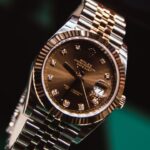
- Rolex Datejust: Amazon | Official Site
3. Patek Philippe: The Pinnacle of Hand-Finished Mechanical Artistry
If Grand Seiko is the king of precision, Patek Philippe is the king of artistry. Their movements are hand-finished to a degree that is almost religious.
- The Patek Philippe Seal: This internal certification goes beyond COSC, testing the cased watch for accuracy, power reserve, and water resistance.
- Complications: From perpetual calendars to minute repeaters, Patek’s ability to integrate complex movements is unmatched.
Why we love them: The finish. Look through the case back, and you’ll see anglage (beveled edges) polished to a mirror finish. It’s jewelry for the wrist.
👉 CHECK PRICE on:
- Patek Philippe Nautilus: Amazon | Official Site
- Patek Philippe Calatrava: Amazon | Official Site
4. A. Lange & Söhne: German Precision and the Langerwerk Legacy
A. Lange & Söhne represents the pinnacle of German watchmaking. Their movements are famous for the three-quarter plate, which provides exceptional stability.
- Hand-Wound Mastery: Even their automatic movements are finished with the same care as their hand-wound pieces.
- Accuracy: They often exceed COSC standards, with some models achieving ±1 second per day.
Why we love them: The contrast between the blackened screws and the gold chatons. It’s a visual feast that screams “quality.”
👉 CHECK PRICE on:
- A. Lange & Söhne Lange 1: Amazon | Official Site
5. Zenith: The El Primero Legend and High-Frequency Innovations
Zenith is the home of the El Primero, the first high-frequency automatic chronograph movement. It beats at 36,0 vibrations per hour (vph), allowing for 1/10th of a second precision.
- Defy Lab: Zenith’s latest innovation uses a monolithic silicon oscillator that eliminates the need for a balance wheel and hairspring, beating at 15Hz.
- Durability: The El Primero is known for running for decades without service.
Why we love them: The history. The El Primero was saved from destruction in the 1970s and is still in production today.
👉 CHECK PRICE on:
- Zenith El Primero: Amazon | Official Site
6. Omega: Co-Axial Escapements and Master Chronometer Certification
Omega revolutionized the industry with the Co-Axial escapement, designed by George Daniels. It reduces friction, meaning less wear and longer service intervals.
- Master Chronometer: Certified by METAS, these watches are tested for accuracy, magnetic resistance (up to 15,0 gauss), and power reserve.
- Silicon Hairsprings: Used in many modern calibers to resist magnetism.
Why we love them: The value proposition. You get top-tier technology and certification at a price point lower than many Swiss competitors.
👉 CHECK PRICE on:
- Omega Seamaster: Amazon | Official Site
- Omega Speedmaster: Amazon | Official Site
7. Jaeger-LeCoultre: The House That Built Movements for the World
Jaeger-LeCoultre (JLC) is often called the “watchmaker’s watchmaker.” They have produced movements for Patek Philippe, Vacheron Constantin, and others.
- In-House Mastery: They make everything from the balance spring to the mainspring.
- Reverso: Famous for the Reverso case, but the Calibre 82 inside is a masterpiece of thiness and reliability.
Why we love them: The versatility. JLC makes everything from simple dress watches to the most complex Reverso Gyrotourbillons.
👉 CHECK PRICE on:
- Jaeger-LeCoultre Reverso: Amazon | Official Site
8. Seiko: Innovating from 6R to the Revolutionary 010 Quartz
Seiko is the underdog that punches above its weight. Their 6R and 8R mechanical movements are workhorses found in many affordable luxury watches.
- Caliber 010: The latest quartz movement, accurate to ±1 second per year. It uses a double quartz crystal and a temperature sensor to compensate for drift.
- Spring Drive: Seiko invented this technology, which is now exclusive to Grand Seiko, but the roots are in Seiko’s innovation.
Why we love them: Accessibility. You can get a high-quality movement for under $50.
👉 CHECK PRICE on:
- Seiko Presage: Amazon | Official Site
- Seiko Astron: Amazon | Official Site
9. Breitling: SuperQuartz Technology and Aviation Reliability
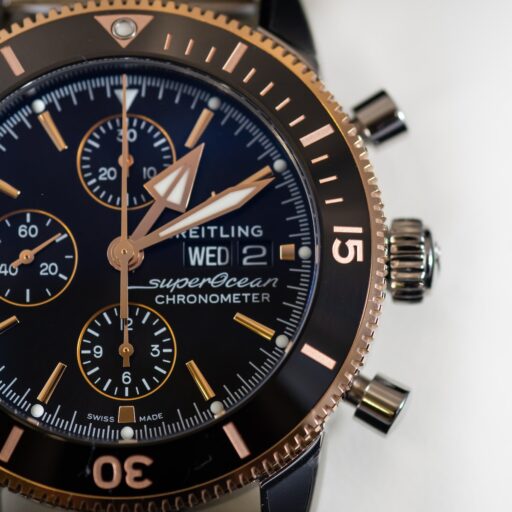
Breitling is the go-to for aviation and chronographs. Their SuperQuartz is ten times more accurate than standard quartz.
- Thermocompensation: They use a special circuit to adjust for temperature changes, ensuring accuracy in extreme conditions.
- COSC Certified: Most of their quartz and mechanical chronographs are COSC certified.
Why we love them: The tool watch heritage. A Breitling is built to be used, not just admired.
👉 CHECK PRICE on:
- Breitling Navitimer: Amazon | Official Site
- Breitling Superocean: Amazon | Official Site
10. Tudor: The Rise of In-House Manufacture Calibers
Once known for using ETA movements, Tudor has launched its own MT56 series of in-house movements.
- MT5602: Features a silicon balance spring and a 70-hour power reserve.
- COSC Certified: All their in-house movements are chronometer certified.
Why we love them: Value. You get a Swiss in-house movement with a 70-hour power reserve for the price of a mid-range fashion watch.
👉 CHECK PRICE on:
- Tudor Black Bay: Amazon | Official Site
🧪 Noteworthy High-Accuracy Movements That Redefined the Industry
While the brands above are the titans, specific movements have changed the game. Let’s zoom in on the legends.
The Grand Seiko 9F Quartz: Why It Beats Mechanical Watches at Their Own Game
The 9F is a marvel of engineering. It uses a dual-pulse control motor to drive the seconds hand with a “tick-tock” motion that mimics a mechanical watch, but with quartz precision.
- Specs: ±10 seconds per year.
- Feature: Instant date change at midnight.
- Feature: Shock-resistant quartz crystal.
Why it matters: It proves that quartz can be luxurious and precise.
Citizen Caliber 010: The Quest for One Second of Error Per Year
Citizen is the other giant in the quartz world. The Caliber 010 is their flagship, achieving ±1 second per year.
- Technology: Uses a double quartz crystal and a temperature compensation circuit.
- Power Reserve: 6 months on a single charge (solar).
Why it matters: It sets the benchmark for quartz accuracy.
Zenith Defy Lab: Oscillating at 15Hz for Unmatched Stability
The Defy Lab is a radical departure from tradition. Instead of a balance wheel, it uses a monolithic silicon oscillator.
- Frequency: 15Hz (108,0 vph).
- Accuracy: ±0.3 seconds per day.
- Durability: No friction, no wear, no need for lubrication.
Why it matters: It represents the future of mechanical timekeeping.
Breitling SuperQuartz: Ten Times More Stable Than Standard Quartz
Breitling’s SuperQuartz is a game-changer for quartz watches.
- Technology: Thermocompensation circuit.
- Accuracy: 10x more accurate than standard quartz.
- Certification: COSC certified.
Why it matters: It bridges the gap between quartz convenience and chronometer precision.
ETA Thermoline: Temperature Compensation for Extreme Conditions
ETA is the backbone of the Swiss industry. The Thermoline movement is designed for extreme temperature variations.
- Technology: Special balance spring and temperature compensation.
- Use Case: Ideal for aviation and diving.
Why it matters: It shows that even standard movements can be engineered for extreme accuracy.
📉 Why Accuracy Matters: The Science Behind Timekeeping Precision
You might ask, “Does it really matter if my watch gains 5 seconds a day?” The answer is yes, but not for the reason you think.
The Psychology of Precision
In a world of digital clocks, a mechanical watch that keeps time is a testament to human ingenuity. It’s about the craftsmanship and the discipline required to make a machine that runs perfectly.
The Science of Oscillation
Accuracy is determined by the frequency of the balance wheel.
- Low Frequency (18,0 vph): More robust, but less accurate.
- High Frequency (36,0 vph): More accurate, but more fragile.
The Role of the Escapement
The escapement is the heart of the movement. It controls the release of energy. A well-designed escapement (like the Co-Axial or Spring Drive) minimizes friction and maximizes efficiency.
Why it matters: A high-quality movement is a mariage of physics and art.
🌡️ Factors Affecting Watch Movement Accuracy: Temperature, Magnetism, and Position
Even the best movement can be thrown off by external factors. Here’s what you need to know.
Temperature
Quartz crystals change frequency with temperature. This is why thermocompensation is crucial in high-end quartz movements.
Magnetism
Magnetic fields can magnetize the balance spring, causing the watch to run fast. Silicon components and anti-magnetic shields (like in Omega and Rolex) solve this.
Position
Gravity affects the balance wheel differently depending on the watch’s position. This is why chronometer testing involves testing in 5 different positions.
Shock
Sudden impacts can damage the balance wheel or escapement. Shock protection systems (like Incabloc or Kif) are essential.
Why it matters: Understanding these factors helps you maintain your watch and choose the right one for your lifestyle.
💰 Best Accurate Watches Under $50: Quality Movements on a Budget
Wait, under $50? You read that right. While we usually talk about $5,0+ watches, there are budget gems with surprisingly accurate movements.
The Contenders
- Seiko 5 Sports: Uses the 4R36 movement. Accurate to ±25 seconds per day, but reliable and serviceable.
- Citizen Eco-Drive: Uses Eco-Drive quartz movements. Accurate to ±15 seconds per month.
- Timex Weekender: Uses a quartz movement. Accurate to ±15 seconds per month.
Why it matters: You don’t need to spend a fortune to get a reliable timepiece.
👉 CHECK PRICE on:
- Seiko 5 Sports: Amazon | Official Site
- Citizen Eco-Drive: Amazon | Official Site
- Timex Weekender: Amazon | Official Site
🔍 How to Verify Movement Quality: Certifications and Standards Explained
How do you know if a movement is truly high-quality? Look for these certifications.
COSC (Contrôle Officiel Suisse des Chronomètres)
- Standard: ±4 to +6 seconds per day.
- Scope: Tests the movement before casing.
METAS (Master Chronometer)
- Standard: 0 to +5 seconds per day.
- Scope: Tests the cased watch for accuracy, magnetism, and power reserve.
Patek Philippe Seal
- Standard: ±2 to +3 seconds per day.
- Scope: Internal certification, stricter than COSC.
Grand Seiko Standard
- Standard: ±15 seconds per month (mechanical), ±10 seconds per year (quartz).
- Scope: Internal certification.
Why it matters: These certifications are your guarantee of quality.
🛠️ Maintenance Tips: Keeping Your High-Quality Movement Running Smoothly
A high-quality movement is only as good as its maintenance. Here’s how to keep it running.
Regular Servicing
- Mechanical: Every 3-5 years.
- Quartz: Every 5-7 years (battery change).
Avoid Magnetism
- Keep your watch away from strong magnets (speakers, laptops).
- Use a demagnetizer if your watch starts running fast.
Proper Storage
- Store in a watch box or safe.
- Use a watch winder for automatics if you don’t wear them daily.
Water Resistance
- Check gaskets annually.
- Avoid pressing buttons underwater.
Why it matters: Prevention is better than cure. A well-maintained watch can last a lifetime.
🏁 Conclusion

So, which watch brands are known for their high-quality movements? The answer is a spectrum of excellence.
- If you want unmatched precision, look to Grand Seiko (9F Quartz) or Citizen (Caliber 010).
- If you want mechanical artistry, Patek Philippe and A. Lange & Söhne are the kings.
- If you want reliability and value, Rolex, Omega, and Tudor are unbeatable.
- If you want innovation, Zenith and Breitling are pushing the boundaries.
Our Final Recommendation:
If you’re looking for the best balance of accuracy, value, and craftsmanship, we recommend the Grand Seiko 9F Quartz or the Omega Seamaster Master Chronometer. Both offer exceptional accuracy and reliability that will last a lifetime.
Remember: The “best” movement is the one that fits your lifestyle and budget. Whether you choose a $50 quartz or a $50,0 mechanical, the most important thing is that it keps time and brings you joy.
🔗 Recommended Links
👉 Shop High-Quality Watches:
- Grand Seiko: Amazon | Official Site
- Rolex: Amazon | Official Site
- Omega: Amazon | Official Site
- Patek Philippe: Amazon | Official Site
- Zenith: Amazon | Official Site
- Breitling: Amazon | Official Site
- Tudor: Amazon | Official Site
- Citizen: Amazon | Official Site
Books on Watchmaking:
❓ FAQs

How can I identify a watch with a high-quality movement?
Look for certifications like COSC, METAS, or the Patek Philippe Seal. Check the brand’s reputation for in-house manufacturing. High-quality movements often feature exquisite finishing (perlage, Côtes de Genève) visible through a case back.
Read more about “12 Affordable Luxury Watch Brands You Can Actually Afford in 2026 ⌚✨”
Which watch brands offer the most accurate timekeeping?
Grand Seiko (9F Quartz) and Citizen (Caliber 010) offer the highest accuracy (±1 second per year). For mechanical, Rolex (±2 seconds/day) and Patek Philippe (±3 seconds/day) are top contenders.
Read more about “⏳ 20 Ancient Timekeeping Methods: From Sundials to Atoms”
Are in-house watch movements better than outsourced ones?
Not necessarily. In-house allows for more control and customization, but outsourced movements (like ETA or Sellita) are often highly reliable and cost-effective. The key is quality control and finishing, not just who made it.
What are the top watch brands known for durable movements?
Rolex, Omega, and Seiko are known for robust and durable movements. They use anti-magnetic materials and shock protection systems.
Read more about “⚖️ Swiss vs. Japanese Watches: The Ultimate Showdown (2026)”
How do Swiss watch movements compare to Japanese movements?
Swiss movements are often associated with artistry and complications, while Japanese movements (like Seiko and Citizen) excel in accuracy and reliability. Both have their strengths.
Read more about “⚙️ The Evolution of Automatic Self-Winding Watch Movements (2026)”
Which luxury watch brands have the best mechanical movements?
Patek Philippe, A. Lange & Söhne, Vacheron Constantin, and Breguet are renowned for their mechanical mastery and finishing.
Read more about “Top 10 Watch Brands for Mechanical Complications in 2026 ⌚️”
What makes a watch movement high quality?
Accuracy, reliability, finishing, durability, and innovation. A high-quality movement should keep time consistently, last for generations, and be a work of art.
Read more about “What is a Watch Luxury Brand? The 2026 Ultimate Guide 🕰️”
Do luxury watch brands always have better movements than affordable brands?
Not always. Affordable brands like Seiko and Citizen offer high-quality movements that rival or exceed some luxury brands in terms of accuracy and reliability.
What are the benefits of investing in a watch with a high-quality movement?
Longevity, resale value, accuracy, and satisfaction. A high-quality movement ensures your watch will last for generations and retain its value.
How do I maintain and service my watch to ensure its movement lasts?
Service every 3-5 years (mechanical) or 5-7 years (quartz). Avoid magnetism, shocks, and extreme temperatures. Store properly.
What is the difference between a quartz and mechanical watch movement?
Quartz uses a battery and a quartz crystal for timekeeping (high accuracy). Mechanical uses a mainspring and escapement (artistry, lower accuracy).
Read more about “27 Watch Brands You Can’t Miss in 2026 ⌚️”
Which watch brands are known for their in-house movements?
Rolex, Patek Philippe, A. Lange & Söhne, Zenith, Omega, Grand Seiko, and Jaeger-LeCoultre are known for in-house manufacturing.
Read more about “🔥 The 10 Best Watch Brands for Chronograph Models in 2026”
How do I choose a watch with a reliable and accurate movement?
Look for certifications, brand reputation, and user reviews. Consider your lifestyle (e.g., diving, aviation) and budget.
Read more about “🌍 The 25 Best Watch Brands by Country You Need to Know (2026)”
What are the key characteristics of a high-quality watch movement?
Accuracy, reliability, finishing, durability, power reserve, and innovation.
📚 Reference Links