Support our educational content for free when you purchase through links on our site. Learn more
💰 What Price Range is a Luxury Watch? (2026)

The short answer? A true luxury watch typically starts between $1,0 and $1,50, but the “sweet spot” for value and prestige often lies between $3,0 and $8,0. When you ask what price range is considered a luxury watch, you aren’t just looking for a number; you are hunting for the intersection of heritage, mechanical mastery, and that elusive feeling of exclusivity.
Many people assume that spending more automatically means better quality, but we’ve seen $5,0 fashion watches with generic movements and $2,0 independent masterpieces that outshine them. The global luxury watch market is projected to hit $63.6 billion by 2032, proving that we are all willing to pay for the story, not just the time.
I remember walking into a boutique years ago, mesmerized by a gleaming gold piece priced at $25,0, only to leave with a steel Tudor for a fraction of the cost that still turned heads and kept perfect time. The real luxury isn’t the price tag; it’s the confidence that comes from owning a piece of engineering history.
Key Takeaways
- Entry-Level Threshold: The journey into luxury watch territory generally begins at $1,0, where you transition from fashion brands to established Swiss or Japanese heritage makers.
- The Value Sweet Spot: For the best balance of in-house movements, finishing, and brand prestige, aim for the $3,0 to $8,0 range featuring brands like Omega and IWC.
- Investment vs. Wear: While Rolex and Patek Philippe steel sports models can hold or increase value, most luxury watches depreciate, so buy what you love, not just for profit.
- Quality Indicators: Look for Swiss Made certification, sapphire crystals, and mechanical movements as the true markers of luxury, regardless of the specific price point.
👉 Shop Top Luxury Categories:
- Entry-Level Luxury: Shop Tudor & Longines on Amazon | Shop Oris on Amazon
- Mid-Range Masterpieces: Shop Omega on Amazon | Shop Breitling on Amazon
- High-End Icons: Shop Rolex Authorized Dealers | Shop Grand Seiko on Amazon
Table of Contents
- ⚡️ Quick Tips and Facts
- 🕰️ The Evolution of Luxury: How Price Tags Defined Status
- 💸 The Entry-Level Enigma: Where Does the Luxury Journey Begin?
- 💎 The Sweet Spot: Mid-Range Masterpieces and Value Kings
- 👑 The High-End Horizon: Ultra-Luxury and Investment Grade Timepieces
- 🏆 The Holy Grail: Understanding the Price of Haute Horlogerie
- 📊 Price vs. Prestige: Decoding the Cost of Swiss Made, Japanese, and Independent Brands
- 🛒 The Buying Guide: How to Navigate Luxury Watch Price Tiers Without Breaking the Bank
- 🔍 7 Critical Factors That Drive Up the Price of a Luxury Watch
- 📈 The Resale Reality: Which Price Ranges Hold Their Value Best?
- 🚫 Common Pitfalls: What to Avoid When Shopping in Different Price Brackets
- 🧐 Frequently Asked Questions About Luxury Watch Pricing
- 🔗 Recommended Links for Further Reading
- 📚 Reference Links and Sources
- 🏁 Conclusion
⚡️ Quick Tips and Facts
Before we dive into the deep end of the pricing pool, let’s get the lay of the land with some rapid-fire truths that will save you from buyer’s remorse.
- The “Luxury” Threshold is Fluid: There is no single number where a watch magically becomes “luxury.” For some, it’s $1,0; for others, it’s $10,0. It depends entirely on the brand’s heritage, movement origin, and finishing quality.
- Swiss Made is a Legal Term: It’s not just a marketing buzzword. To carry the “Swiss Made” label, a watch must meet strict criteria, including having at least 60% of its production costs incurred in Switzerland. Learn more about Swiss Made standards here.
- The “Entry-Level” Trap: Just because a watch is from a luxury brand doesn’t mean it’s a good value. Sometimes, a $2,0 watch from a top-tier brand is a worse investment than a $1,50 watch from a mid-tier brand with better specs.
- Quartz vs. Mechanical: Don’t let the “mechanical or nothing” snobery fool you. High-end quartz (like Cartier or Bulgari) offers incredible accuracy and thiness, often at a lower price point than their mechanical counterparts.
- The Resale Reality: Only a tiny fraction of luxury watches hold or increase their value. Most luxury watches depreciate the moment you walk out of the store, much like a new car.
If you’re wondering, “But what actually makes a watch a luxury brand?” we’ve broken that down in depth right here on Watch Brands™.
🕰️ The Evolution of Luxury: How Price Tags Defined Status
Let’s take a quick trip down memory lane. Back in the day, a “luxury watch” wasn’t defined by a price tag; it was defined by utility and craftsmanship. In the 1920s, if you owned a Patek Philippe, you were likely a banker or an aristocrat. The price was high because the labor was astronomical.
Fast forward to the 1980s and the Quartz Crisis. Suddenly, a $50 Seiko could keep better time than a $5,0 mechanical masterpiece. The definition of luxury shifted from “accuracy” to “emotion and heritage.” Brands like Rolex and Omega survived by doubling down on storytelling, marketing, and exclusivity.
Today, the price range is a reflection of that story. We aren’t just paying for gears and springs; we are paying for the brand equity, the marketing budget, and the status symbol.
Did you know? The global luxury watch market is projected to exceed USD 63.6 billion by 2032. That’s a lot of wrist candy! Source: Ed Marshall’s Market Analysis.
💸 The Entry-Level Enigma: Where Does the Luxury Journey Begin?
So, where does the line get drawn? Is it $50? $1,0? $3,0?
At Watch Brands™, we define the Entry-Level Luxury tier as the sweet spot where you transition from “fashion watch” to “horological instrument.” This usually sits between $1,0 and $3,0.
The Contenders in the Entry Arena
- Tudor: The little brother of Rolex. They offer incredible build quality, in-house movements (in many models), and that distinct “Rolex DNA” without the six-figure waitlist.
- Longines: A historic brand that punches way above its weight. Their HydroConquest and Master Collection are staples of this tier.
- Oris: The champion of independent spirit. They don’t make quartz, they focus on diving and aviation, and they are fiercely independent.
- Seiko (Presage/Prospex): While Seiko is a Japanese giant, their high-end lines often compete directly with Swiss entry-level luxury in terms of value.
Why the Confusion?
You might see a $2,50 watch from Tudor and a $2,50 watch from Tag Heuer. One feels like a tool, the other like a fashion statement. The price is similar, but the value proposition is different.
Key Takeaway: In this tier, you are paying for Swiss Made reliability, decent finishing, and a brand with a history. You are not yet paying for rare materials or complex complications.
💎 The Sweet Spot: Mid-Range Masterpieces and Value Kings
If entry-level is the “starter home,” the Mid-Range Luxury tier ($3,0 to $8,0) is the “dream house.” This is where the magic happens. You get in-house movements, superior finishing, and iconic designs.
The Titans of the Mid-Range
- Omega: The Speedmaster and Seamaster are the kings here. You get METAS certification (anti-magnetic, precision), sapphire crystals, and a brand that literally went to the moon.
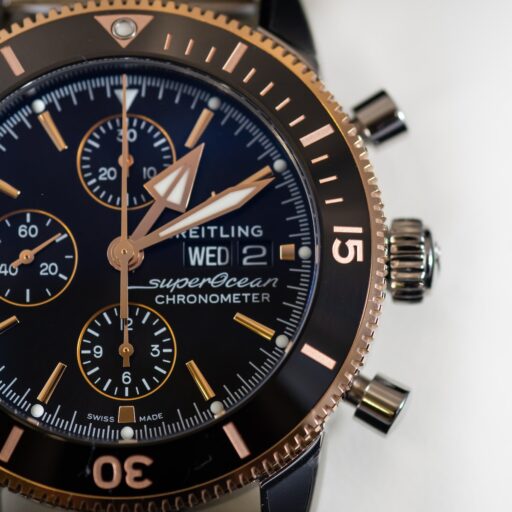
- Breitling: Known for aviation. Their Navitimer is a complex beast of a chronograph that looks incredible on the wrist.
- IWC Schaffhausen: The master of pilot watches and elegant dress watches. Their Pilot’s Watch collection is legendary.
- Cartier: While some of their quartz models sit lower, their mechanical pieces (like the Santos or Ballon Bleu) sit firmly in this tier, offering unmatched design pedigree.
The “Value” Debate
In this range, the cost-to-performance ratio is often at its peak. You are getting 90% of the quality of a $20,0 watch for 30% of the price.
Pro Tip: This is the tier where pre-owned deals are most aggressive. You can often find a barely worn Omega Seamaster for 20% less than retail.
👑 The High-End Horizon: Ultra-Luxury and Investment Grade Timepieces
Now we are talking about the $10,0 to $50,0+ range. This is where Rolex (Steel sports models), Audemars Piguet, and Patek Philippe (entry-level) reside.
The “Holy Trinity” and the New Guard
- Rolex: The Submariner, Daytona, and GMT-Master II are the benchmarks. You aren’t just buying a watch; you are buying a liquid asset. Waitlists are years long.
- Audemars Piguet: The Royal Oak redefined the luxury sports watch. It’s bold, expensive, and instantly recognizable.
- Patek Philippe: The Nautilus and Aquanaut are the pinnacle of desirability.
- A. Lange & Söhne: The German answer to Patek. If you want finishing that makes you wep, this is the brand.
The Investment Myth
Let’s be real: Not all high-end watches are investments.
- ✅ Investment Grade: Steel sports models from Rolex, AP, and Patek (if you can get them at retail).
- ❌ Depreciation: Gold models, limited editions that aren’t “hype,” and most dress watches from these brands will lose value.
🏆 The Holy Grail: Understanding the Price of Haute Horlogerie
When we cross the $50,0 threshold, we enter Haute Horlogerie. Here, price is driven by artistry, complications, and exclusivity.
- Complications: We’re talking tourbillons, perpetual calendars, minute repeaters, and split-seconds chronographs.
- Materials: Titanium, carbon composites, and even diamonds set by hand.
- The “Unobtainable” Factor: Some watches are made in single digits. If you can buy one, you are part of an elite club.
Brands like F.P. Journe, Richard Mille, and Vacheron Constantin dominate this space. A Richard Mille can easily cost $30,0+. Why? Because it’s a piece of engineering art that defies gravity and gravity-defying prices.
📊 Price vs. Prestige: Decoding the Cost of Swiss Made, Japanese, and Independent Brands
It’s not just about Swiss vs. Japanese. The Independent sector is exploding.
| Brand Origin | Typical Entry Price | Key Characteristics | Top Brands |
|---|---|---|---|
| Swiss (Mass Market) | $1,50 – $5,0 | Reliable, iconic, high resale value | Rolex, Omega, Tudor |
| Swiss (Independent) | $5,0 – $20,0+ | Unique designs, in-house movements, niche | F.P. Journe, H. Moser |
| Japanese (High-End) | $1,0 – $5,0 | Incredible value, Spring Drive, Grand Seiko | Grand Seiko, Credor |
| German | $3,0 – $15,0 | Precision finishing, distinct style | A. Lange & Söhne, Nomos |
Grand Seiko is a prime example of a brand that offers Haute Horlogerie quality (Zaratsu polishing, Spring Drive movement) at a price point that undercuts Swiss competitors by half.
🛒 The Buying Guide: How to Navigate Luxury Watch Price Tiers Without Breaking the Bank
Buying a luxury watch is a journey, not a transaction. Here is our step-by-step guide to navigating the price tiers:
- Define Your “Why”: Are you buying for investment, daily wear, or collection?
Daily Wear: Stick to the $2,0 – $5,0 range for durability and value.
Investment: Look at Rolex or Patek steel sports models, but be prepared to pay retail or wait. - Set a Hard Limit: Luxury watch prices are slippery. Decide your max budget and stick to it.
- Try Before You Buy: A 42mm watch looks different on a 6.5-inch wrist than on a 7.5-inch wrist. Visit an authorized dealer.
- Consider the Pre-Owned Market: You can often get a $10,0 watch for $7,0 if you buy pre-owned from a reputable dealer.
- Check the Movement: Is it a generic ETA/Sellita, or an in-house caliber? In-house usually commands a higher price and better resale.
🔍 7 Critical Factors That Drive Up the Price of a Luxury Watch
Why does a watch cost $5,0 and another $50,0? It’s not just the brand name.
- Movement Complexity: A simple automatic movement costs a fraction of a tourbillon or minute repeater.
- Finishing: Hand-beveled edges, polished bevels, and Geneva stripes take hours of labor.
- Materials: Titanium, ceramic, and precious metals (gold, platinum) are expensive.
- R&D: Developing a new caliber takes years and millions of dollars.
- Brand Heritage: A 20-year-old history adds a premium.
- Distribution Costs: Maintaining boutiques in Paris, New York, and Tokyo is costly.
- Scarcity: Limited production runs drive up prices.
Insight from the Industry: As noted in our analysis of industry trends, the “true cost” of manufacturing a luxury watch is often only 25% of the retail price. The rest covers marketing, distribution, and the “dream” you are buying. Source: First Video Analysis.
📈 The Resale Reality: Which Price Ranges Hold Their Value Best?
Let’s talk money. If you want your watch to hold value, here is the breakdown:
- Entry-Level ($1k-$3k): Generally depreciates 20-40%. Exception: Some Tudor and Grand Seiko models hold value well.
- Mid-Range ($3k-$8k): Depreciates 10-30%. Exception: Omega Speedmaster and Breitling Navitimer hold value surprisingly well.
- High-End ($10k+): This is the investment zone. Rolex steel sports models often sell for 20-50% above retail on the secondary market. Patek Philippe and AP are similar.
Warning: Buying a gold watch or a limited edition from a brand like Hublot or Bulgari usually means taking a massive hit on resale.
🚫 Common Pitfalls: What to Avoid When Shopping in Different Price Brackets
- The “Fake” Trap: Never buy a luxury watch from a random eBay seller or a “too good to be true” website. The market is flooded with super fakes.
- The “Hype” Buy: Don’t buy a watch just because it’s trendy. Trends fade; classic design endures.
- Ignoring Service Costs: A $10,0 watch might cost $1,0 to service every 5 years. Factor this into your budget.
- Buying Without Trying: A watch that looks great in a photo might be too thick or heavy for your wrist.
🧐 Frequently Asked Questions About Luxury Watch Pricing
What is the entry-level price for a luxury watch?
Generally, the entry-level price for a legitimate luxury watch starts around $1,0 to $1,50. Below this, you are often in the “fashion watch” or “affordable luxury” territory (like Seiko or Citizen). Brands like Tudor and Longines dominate this entry point.
How much does a mid-range luxury watch cost?
Mid-range luxury watches typically fall between $3,0 and $8,0. This is where you find iconic models from Omega, Breitling, and IWC. These watches offer in-house movements, superior finishing, and strong brand recognition.
What price point defines an ultra-luxury timepiece?
Ultra-luxury usually begins at $10,0 and goes up to $50,0+. This tier includes Rolex sports models, Audemars Piguet, and Patek Philippe. At this level, you are paying for exclusivity, complex complications, and potential investment value.
Are there affordable luxury watch brands under $50?
Strictly speaking, no. A watch under $50 is rarely considered “luxury” in the traditional sense. However, brands like Seiko, Orient, and Hamilton (sometimes on sale) offer incredible quality and heritage that feel like luxury for a fraction of the price. They are the best “value” options, even if they don’t carry the “luxury” price tag.
Why do some luxury watches cost so much more than others?
The price difference is driven by movement complexity, hand-finishing, materials, and brand prestige. A watch with a tourbillon or minute repeater requires hundreds of hours of labor, whereas a simple date watch requires far less. Additionally, brands with a long history of innovation (like Patek Philippe) command a higher premium.
Is it better to buy new or pre-owned?
It depends on your goal. If you want the warranty and the new experience, buy new. If you want value and access to discontinued models, buy pre-owned. Pre-owned is often the smartest financial move for mid-range and high-end watches.
How often should I service my luxury watch?
Most manufacturers recommend servicing every 3 to 5 years. Neglecting service can lead to costly repairs and damage to the movement.
What is the “Swiss Made” label worth?
The “Swiss Made” label guarantees a certain level of quality and origin. It requires at least 60% of production costs to be incurred in Switzerland. It’s a mark of reliability, but it doesn’t automatically mean “best value.”
Can I wear a luxury watch every day?
Absolutely! Many luxury watches, especially divers and sports models from Rolex, Omega, and Tudor, are built to be worn daily. Just ensure you service them regularly.
What is the best investment watch?
Currently, Rolex steel sports models (Submariner, Daytona, GMT-Master II) and Patek Philippe Nautilus/Aquanaut are the top performers. However, the market is volatile, and past performance doesn’t guarantee future results.
🏁 Conclusion

So, what price range is considered a luxury watch? The answer is as nuanced as the watches themselves.
If you are looking for a reliable, high-quality timepiece with a touch of prestige, the $1,0 to $3,0 range is your sweet spot. Brands like Tudor, Longines, and Oris offer incredible value here.
If you want iconic status and in-house engineering, the $3,0 to $8,0 tier is where Omega, Breitling, and IWC shine.
And if you are chasing exclusivity and investment potential, the $10,0+ world of Rolex, Patek Philippe, and Audemars Piguet awaits.
Our Final Verdict:
Don’t get caught up in the price tag alone. The best luxury watch is the one that makes you smile every time you look at your wrist. Whether it’s a $1,50 Tudor or a $50,0 Patek, the joy of ownership is what truly defines luxury.
Remember: “Select a timepiece that you genuinely love and that brings you joy and satisfaction every time you wear it!”
🔗 Recommended Links for Further Reading
Ready to start your journey? Here are our top picks for where to shop and what to read.
Top Brands to Explore
- Tudor: Shop Tudor on Amazon | Tudor Official Website
- Omega: Shop Omega on Amazon | Omega Official Website
- Rolex: Rolex Authorized Dealers (Note: Rolex does not sell online directly)
- Grand Seiko: Shop Grand Seiko on Amazon | Grand Seiko Official Website
- Breitling: Shop Breitling on Amazon | Breitling Official Website
Essential Reading
- “The Watch Book” by Gisbert L. Bruner: A comprehensive guide to watch history and collecting. Find on Amazon
- “Watch Time: A Collector’s Guide” by James M. Dowling: The bible for serious collectors. Find on Amazon
📚 Reference Links and Sources
- Ed Marshall’s Watch Buying Guide: A Step-by-Step Guide to Buying a Luxury Watch
- Swiss Made Standards: Swiss Made Certification
- Watch Brands™ Categories:
- Luxury Watch Brands
- Guide to Buying Watches
- Men’s Watches
- Affordable Watches
- Luxury Watch Investments
- Market Data: Global Luxury Watch Market Projections (Source: Ed Marshall)
- Brand Official Sites: Rolex, Omega, Patek Philippe, Audemars Piguet, Tudor