Support our educational content for free when you purchase through links on our site. Learn more
What Makes a Watch Brand Luxury? 50+ Secrets Revealed 🕰️

True luxury isn’t about the price tag; it’s the mariage of in-house craftsmanship, historical provenance, and uncompromising scarcity that separates a timepiece from a mere accessory. When you ask what makes a watch brand luxury, the answer lies not in the logo, but in the human hands that finish every gear and the generations of heritage that validate its existence.
Imagine walking into a room where everyone wears a $50 watch, except you’re wearing a Patek Philippe that cost $50,0. The difference isn’t just the cost; it’s the story woven into the movement and the exclusivity of owning something few can ever possess. Did you know that while a mass-market watch might be assembled in minutes, a Vacheron Constantin can take over 1,0 hours of hand-finishing by a single master watchmaker?
This isn’t just about telling time; it’s about owning a piece of history that refuses to be mass-produced. We’ve dissected the industry to bring you the definitive guide on the 50+ brands that truly earn the title.
Key Takeaways
- Craftsmanship is King: True luxury requires in-house movements and hand-finishing techniques like Côtes de Genève and anglage.
- Heritage Matters: Brands with centuries of history and a legacy of innovation hold higher prestige than modern “fashion” labels.
- Scarcity Drives Value: Limited production runs and waiting lists are hallmarks of the most coveted luxury brands.
- Material Mastery: The use of rare alloys, ceramics, and precious metals distinguishes high-end horology from standard manufacturing.
- Value Retention: Unlike fashion watches, genuine luxury timepieces from brands like Rolex and Patek Philippe often hold or appreciate in value.
Table of Contents
- ⚡️ Quick Tips and Facts
- 🕰️ The Genesis of Horological Prestige: A Brief History
- 🏗️ 1. Uncompromising Craftsmanship: The Art of Hand-Finishing
- ⚙️ 2. In-House Movements vs. Generic Calibers: The Engine Room
- 💎 3. Exquisite Materials: From 18k Gold to Rare Aloys
- 🏆 4. Brand Heritage and Provenance: Stories Woven in Time
- 📜 5. Limited Production and Exclusivity: The Scarcity Principle
- 🛡️ 6. After-Sales Service and Long-Term Value Retention
- 🎨 7. Design Language and Aesthetic Consistency
- 🌍 8. Global Recognition and Peer Validation
- 🧐 The Gray Market Trap: When “Luxury” Becomes a Discount
- 🚀 9. The Future of Luxury: Innovation Mets Tradition
- 💡 10. How to Spot a Fake Luxury Brand (Red Flags)
- 🏅 Top 50 Luxury Watch Brands Ranked by Prestige and Value
- 🛠️ Quick Tips and Facts: The Insider’s Cheat Sheet
- 📚 Recommended Links: Where to Buy and Learn More
- ❓ Frequently Asked Questions About Luxury Watch Brands
- 📖 Reference Links and Sources
- 🏁 Conclusion: Is It Worth the Hype?
⚡️ Quick Tips and Facts
Before we dive into the deep end of the horological ocean, let’s get the lay of the land. If you’re wondering what makes a watch brand luxury, the answer isn’t just a price tag; it’s a cocktail of history, engineering, and sheer audacity.
Here is the Watch Brands™ cheat sheet to separating the wheat from the chaff:
- Swiss Made isn’t a Magic Wand: While the “Swiss Made” label guarantees certain standards (60% of production costs must be Swiss), it doesn’t automatically equal luxury. You can find Swiss-made quartz watches that feel as cheap as a plastic toy. True luxury lies in the mechanical soul and finishing.
- The “Holy Trinity”: Historically, Patek Philippe, Audemars Piguet, and Vacheron Constantin sit at the apex. They don’t just make watches; they make history.
- In-House is King: If a brand buys movements from a generic supplier (like ETA or Sellita) and just slaps their logo on it, they are likely a “fashion brand” or an “entry-level luxury” brand, not a true manufacture. Manufacture status is the gold standard.
- Scarcity Drives Desire: If you can walk into a store and buy one off the shelf immediately, it’s probably not a “grail” piece. The waiting list is often part of the luxury experience.
- Resale Value Matters: A true luxury watch often holds or appreciates in value. A fashion watch? It loses 50% of its value the moment you unbox it.
For a deeper dive into the nuances of these definitions, check out our guide on What is a watch luxury brand?.
🕰️ The Genesis of Horological Prestige: A Brief History

To understand where we are, we must look at where we started. The story of luxury watches isn’t just about telling time; it’s about survival, status, and the human obsession with perfection.
From Pocket to Wrist: The Great Shift
In the 19th century, watches were pocket items, often carried by the wealthy. The Industrial Revolution changed everything. Mass production made timekeeping accessible, but it also created a divide. Suddenly, you had “utility” watches for the masses and “art” watches for the elite.
The true turning point came during World War I. Soldiers needed their hands free to operate rifles, so they strapped pocket watches to their wrists. The wristwatch was born, and with it, a new era of horological engineering. Brands like IWC Schaffhausen and Cartier (with the Santos) pioneered the wristwatch as a tool of war and a symbol of status.
The Quartz Crisis: A Near-Death Experience
In the 1970s, the Quartz Crisis nearly wiped out the Swiss luxury industry. Japanese brands like Seiko introduced quartz movements that were cheaper, more accurate, and required less maintenance. Swiss mechanical watchmaking was on the brink of extinction.
How did luxury survive? By pivoting. They stopped selling “timekeeping” and started selling emotion, heritage, and craftsmanship. As noted by industry analysts, the definition of luxury shifted from “rarity of materials” to “rarity of skills.” This is why a Rolex or Omega today costs thousands, while a Casio F91W (which is arguably more accurate) costs $15. The luxury watch is a piece of art, not just a tool.
“Luxury derived originally from rarity of materials or rarity of skills, or difficulty in manufacturing; most often, all three.” — The 1916 Company
🏗️ 1. Uncompromising Craftsmanship: The Art of Hand-Finishing
If you look at a luxury watch under a loupe, you aren’t just seeing metal; you are seeing human hands at work. This is the first major differentiator between a luxury brand and a mass-market manufacturer.
The Finishing Techniques
In the world of high horology, every surface is treated with reverence.
- Côtes de Genève: These are the parallel stripes seen on the movement bridges. They aren’t just for show; they reduce friction and prevent oil from pooling.
- Perlage: A circular pattern applied to the main plate, often hidden under the rotor, showing that even the unseen parts are finished.
- Anglage: The beveling of edges. A sharp edge is a sign of poor quality; a perfectly polished, 45-degree bevel is a sign of mastery.
- Polishing vs. Brushing: Luxury brands often use a combination of mirror polishing and satin brushing to create depth and contrast.
The Human Touch
At Patek Philippe, a single watch can take months to assemble and finish. The Patek Philippe Seal is a certification that goes beyond the standard Swiss certification, guaranteeing superior accuracy and finishing.
Contrast this with a brand like Shinola. As discussed in a Forbes analysis, Shinola markets itself as a luxury brand based on its Detroit manufacturing and design. However, many purists argue that without the in-house movement and traditional finishing techniques, it lacks the “soul” of true luxury. The debate highlights a modern shift: is luxury defined by the maker’s hands or the consumer’s perception?
| Feature | Mass Market / Fashion Brand | True Luxury Brand |
|---|---|---|
| Movement Assembly | Machine-asembled, minimal finishing | Hand-asembled, extensive hand-finishing |
| Edge Treatment | Sharp, unpolished edges | Angled, polished, and chamfered edges |
| Decoration | Laser-etched or printed | Hand-engraved, hand-blued screws |
| Time per Unit | Minutes to hours | Days to months |
| Quality Control | Automated testing | Multi-stage manual inspection |
⚙️ 2. In-House Movements vs. Generic Calibers: The Engine Room
The movement is the heart of the watch. If the heart is generic, the body is just a suit of clothes.
The “ETA” Problem
For decades, many Swiss brands relied on movements from ETA (a Swatch Group company) or Sellita. While these are reliable workhorses, they are used by thousands of brands. If you buy a watch with an ETA 2824, you are buying a commodity.
The “Manufacture” Standard
A true luxury brand develops, manufactures, and asembles its own movements. This is known as being a Manufacture d’Horlogerie.
- Rolex: Famous for their 3235 and 325 calibers, featuring the Chronergy escapement for better efficiency.
- Omega: Their Co-Axial Master Chronometer movements are certified by METAS, offering superior magnetic resistance and precision.
- Grand Seiko: Their Spring Drive technology is a unique hybrid of mechanical and quartz, offering a sweeping seconds hand and incredible accuracy.
Why It Matters
Developing an in-house movement requires massive R&D investment. It allows the brand to innovate. For example, FP Journe re-introduced the concept of resonance (two balances influencing each other for better accuracy), a technology lost since Breguet’s time. You won’t find that in a generic movement.
Pro Tip: If a brand can’t tell you the name of their movement caliber, or if it’s just “Swiss Automatic,” dig deeper. They might be hiding a generic heart.
💎 3. Exquisite Materials: From 18k Gold to Rare Aloys
Luxury brands don’t just use gold; they reinvent it.
Beyond the Basics
- 18k Gold: Standard for luxury, but brands like Rolex have their own alloys. Everose Gold is a rose gold alloy that doesn’t fade over time due to a unique mix of copper and platinum.
- Ceramics: Hublot and Omega use high-tech ceramics that are scratch-resistant and lightweight. Zenith even uses a ceramic that changes color under UV light.
- Carbon and Titanium: De Bethune is famous for heat-treating titanium to create a unique blue hue. Richard Mille uses Carbon TPT and Quartz TPT, materials originally developed for Formula 1 and aerospace, making their watches incredibly light and strong.
- Sapphire Crystal: While standard for the glass, some brands like Hublot and De Bethune make the entire case out of sapphire, a feat of engineering that takes weeks to produce.
The “Vantablack” Dial
H. Moser & Cie. took material innovation to the extreme with their Vantablack dials. Made of vertically aligned carbon nanotubes, it absorbs 9.965% of light, making the dial appear as a void. It’s a statement that says, “We are not afraid to break the rules.”
🏆 4. Brand Heritage and Provenance: Stories Woven in Time
A luxury watch is a time capsule. It carries the story of the brand, the era it was made in, and the hands it has passed through.
The Power of History
- Patek Philippe: Their slogan, “You never actually own a Patek Philippe. You merely look after it for the next generation,” speaks to their legacy. They have been making watches since 1839.
- Vacheron Constantin: Founded in 175, they are the oldest continuously operating watch manufacturer in the world.
- Rolex: While younger, their story of the Oyster case (waterproof) and the Daytona (racing) has cemented their place in history.
The “Shinola” Controversy
The debate over Shinola is a perfect example of why heritage matters. Shinola was founded in 201 in Detroit. While they have a great story about American manufacturing, they lack the centuries of horological history that define brands like Breguet or Jaeger-LeCoultre. As Forbes noted, the definition of luxury is shifting, and some consumers value the “new story” of Detroit over the “old story” of Geneva. However, for the purist, provenance is non-negotiable.
📜 5. Limited Production and Exclusivity: The Scarcity Principle
If everyone has one, is it really luxury?
The Waiting List
Brands like Patek Philippe and Audemars Piguet produce very few watches annually. A Nautilus or Royal Oak can have a waiting list of years. This artificial scarcity drives demand and secondary market prices to astronomical levels.
The “Grail” Mentality
Luxury is about exclusivity. When you buy a Richard Mille, you are buying into a club of the ultra-wealthy. The brand produces only a few hundred pieces a year. This scarcity ensures that the watch remains a status symbol.
The Gray Market Trap
When demand outstrips supply, the gray market emerges. You can buy a Rolex for 50% over retail on the secondary market. While this proves the brand’s strength, it also creates a barrier to entry. Is it still luxury if you have to pay a premium just to get in the door?
🛡️ 6. After-Sales Service and Long-Term Value Retention
A luxury watch is an investment. But an investment that breaks and can’t be fixed is a liability.
The Service Network
True luxury brands have authorized service centers worldwide. If your Omega breaks in Tokyo, you can get it fixed with genuine parts. A fashion brand might not even have a repair policy.
Value Retention
- High Retention: Rolex, Patek Philippe, and Audemars Piguet often hold their value or appreciate.
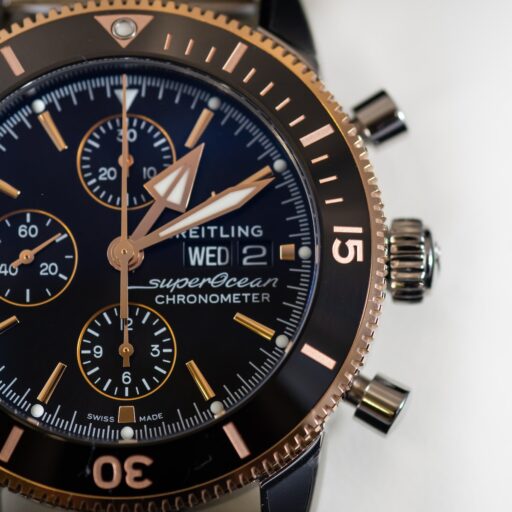
- Depreciation: Most other luxury brands, like Breitling or IWC, depreciate significantly once purchased, though they still hold value better than fashion watches.
The “Buy and Hold” Strategy
Many collectors buy a watch, wear it for a few years, and sell it for a profit. This is only possible with brands that have strong brand equity and limited production.
🎨 7. Design Language and Aesthetic Consistency
A luxury brand has a DNA. You should be able to recognize a Cartier or a Tudor from across the room.
Iconic Designs
- Cartier Tank: The rectangular case inspired by WWI tanks.
- Audemars Piguet Royal Oak: The octagonal bezel and integrated bracelet.
- Patek Philippe Calatrava: The epitome of the dress watch.
Consistency vs. Innovation
Luxury brands walk a fine line. They must innovate to stay relevant, but they must not alienate their core customers. Rolex is a master of this. They change their designs slowly, ensuring that a 1960s Submariner looks like a 2024 Submariner. This consistency builds trust and brand value.
🌍 8. Global Recognition and Peer Validation
Luxury is a social construct. If no one recognizes your watch, is it luxury?
The “Wrist Check”
In the world of luxury, recognition is key. A Rolex Submariner is recognized by almost everyone. A F.P. Journe is recognized only by conoisseurs. Both are luxury, but they serve different social functions.
Peer Validation
The watch community plays a huge role. Forums, YouTube channels, and social media groups validate brands. If the community respects a brand, it gains legitimacy. This is why independent brands like MB&F or Urwerk have gained such a following despite their small production numbers.
🧐 The Gray Market Trap: When “Luxury” Becomes a Discount
The gray market is a double-edged sword. It allows you to buy a watch for less than retail, but it also undermines the brand’s pricing power.
The Risks
- Warranty Issues: Some gray market dealers do not offer the full manufacturer’s warranty.
- Counterfeits: The risk of buying a fake is higher on the gray market.
- Service Denial: Some brands may refuse to service watches bought from unauthorized dealers.
The Verdict
If you buy from a gray market dealer, ensure they are reputable. But for the full luxury experience, buying from an authorized retailer is always the safer bet.
🚀 9. The Future of Luxury: Innovation Mets Tradition
The future of luxury watches is bright, but it’s changing.
Sustainability
Brands are starting to focus on sustainability. Omega and Rolex are investing in eco-friendly materials and manufacturing processes.
Smartwatch Integration
Some brands are integrating smart features into mechanical watches. Tag Heuer has the Connected line, which blends traditional design with modern tech.
The Rise of Independents
The future may belong to independent watchmakers who are free from the constraints of large corporations. Brands like Kari Voutilainen and Philipe Dufour are pushing the boundaries of what is possible.
💡 10. How to Spot a Fake Luxury Brand (Red Flags)
Not every brand that says “luxury” is one. Here’s how to spot the fakes.
The Red Flags
- Generic Movements: If the movement is not in-house and the brand doesn’t disclose the supplier, be wary.
- Poor Finishing: Look for sharp edges, uneven printing, and cheap materials.
- Lack of History: If the brand was founded last year but claims to be “heritage,” it’s a red flag.
- Over-Promising: If a brand claims to be “better than Rolex” for a fraction of the price, it’s likely a scam.
The “Shinola” Debate Revisited
As mentioned earlier, Shinola is a polarizing brand. While they have a great story, they lack the in-house movement and traditional finishing of true luxury brands. They are a “premium” brand, but not a “luxury” brand in the traditional sense.
🏅 Top 50 Luxury Watch Brands Ranked by Prestige and Value
Here is our curated list of the top 50 luxury watch brands, ranked by a combination of heritage, craftsmanship, innovation, and market value.
| Rank | Brand | Tier | Key Strength |
|---|---|---|---|
| 1 | Patek Philippe | Ultra-Luxury | Heritage, Complications |
| 2 | Audemars Piguet | Ultra-Luxury | Royal Oak, Design |
| 3 | Vacheron Constantin | Ultra-Luxury | Oldest Manufacturer, Finishing |
| 4 | Breguet | Ultra-Luxury | Invention (Tourbillon), History |
| 5 | A. Lange & Söhne | Ultra-Luxury | German Precision, Finishing |
| 6 | Jaeger-LeCoultre | High Luxury | Master Control, Calibers |
| 7 | Rolex | High Luxury | Brand Recognition, Value |
| 8 | Omega | High Luxury | Innovation, Space History |
| 9 | Cartier | High Luxury | Design, Jewelry |
| 10 | Blancpain | High Luxury | Fifty Fathoms, Complications |
| 1 | IWC Schaffhausen | High Luxury | Pilot Watches, Engineering |
| 12 | Panerai | High Luxury | Design, Military History |
| 13 | Breitling | High Luxury | Aviation, Chronographs |
| 14 | Tudor | Entry-Luxury | Value, Heritage |
| 15 | Grand Seiko | High Luxury | Spring Drive, Finishing |
| 16 | Hublot | High Luxury | Materials, Fusion |
| 17 | Zenith | High Luxury | El Primero, Chronographs |
| 18 | Chopard | High Luxury | Jewelry, L.U.C. Movements |
| 19 | Girard-Peregaux | High Luxury | Tourbillons, History |
| 20 | Ulyse Nardin | High Luxury | Marine Chronometers |
| 21 | Piaget | High Luxury | Ultra-thin, Jewelry |
| 2 | Baume & Mercier | Entry-Luxury | Value, Clifton |
| 23 | Longines | Entry-Luxury | History, Elegance |
| 24 | Tag Heuer | Entry-Luxury | Racing, Connected |
| 25 | Oris | Entry-Luxury | Diving, Independent |
| 26 | Frederique Constant | Entry-Luxury | Value, Manufacture |
| 27 | Montblanc | Entry-Luxury | Writing, Heritage |
| 28 | Nomos Glashütte | Entry-Luxury | Bauhaus, In-house |
| 29 | Sinn | Entry-Luxury | Tool Watches, German |
| 30 | Junghans | Entry-Luxury | Bauhaus, Max Bill |
| 31 | Mido | Entry-Luxury | Value, Ocean Star |
| 32 | Hamilton | Entry-Luxury | American Heritage, Swiss |
| 3 | Tissot | Entry-Luxury | Innovation, Value |
| 34 | Rado | Entry-Luxury | Ceramics, Design |
| 35 | Certina | Entry-Luxury | Diving, Value |
| 36 | Ball Watch | Entry-Luxury | Train Master, Precision |
| 37 | Christopher Ward | Entry-Luxury | Value, In-house |
| 38 | Sinn | Entry-Luxury | Tool Watches |
| 39 | Baltic | Micro-Luxury | Vintage, Design |
| 40 | Farer | Micro-Luxury | British, Color |
| 41 | H. Moser & Cie. | Ultra-Luxury | Vantablack, Simplicity |
| 42 | MB&F | Ultra-Luxury | Avant-Garde, Art |
| 43 | Urwerk | Ultra-Luxury | Futurism, Engineering |
| 4 | Greubel Forsey | Ultra-Luxury | Mult-axis Tourbillons |
| 45 | FP Journe | Ultra-Luxury | Resonance, Gold |
| 46 | De Bethune | Ultra-Luxury | Titanium, Innovation |
| 47 | Richard Mille | Ultra-Luxury | Carbon, Racing |
| 48 | Kari Voutilainen | Ultra-Luxury | Handmade, Unique |
| 49 | Philippe Dufour | Ultra-Luxury | Simplicity, Mastery |
| 50 | F.P. Journe | Ultra-Luxury | Resonance, Gold |
Note: This list is subjective and based on current market trends and horological consensus.
🛠️ Quick Tips and Facts: The Insider’s Cheat Sheet
We’ve covered a lot of ground, but here are the final takeaways to keep in your back pocket:
- Always buy from an authorized dealer if you want the full warranty and service.
- In-house movements are the hallmark of true luxury.
- Finishing is what separates a $1,0 watch from a $10,0 watch.
- Heritage matters, but innovation is the future.
- Scarcity drives value, but don’t fall for the hype.
📚 Recommended Links: Where to Buy and Learn More
Ready to start your journey? Here are the best places to buy and learn more about luxury watches.
Shop on:
- Rolex: Amazon | Official Rolex Website
- Omega: Amazon | Official Omega Website
- Patek Philippe: The 1916 Company | Official Patek Philippe Website
- Audemars Piguet: The 1916 Company | Official AP Website
- Grand Seiko: Amazon | Official Grand Seiko Website
Books to Read
❓ Frequently Asked Questions About Luxury Watch Brands
What defines a luxury watch brand compared to a premium one?
A luxury watch brand is defined by in-house movement manufacturing, hand-finishing, heritage, and exclusivity. A premium brand may use high-quality materials and reliable movements, but they often rely on generic calibers and mass production. The difference lies in the artistry and rarity.
Which watch brands hold their value best over time?
Rolex, Patek Philippe, and Audemars Piguet are the top contenders. Their limited production and high demand ensure that their watches often appreciate in value. Omega and Grand Seiko also hold value well, but not to the same extent as the “Holy Trinity.”
What are the hallmarks of a truly luxury watch movement?
A luxury movement features hand-finishing (Côtes de Genève, perlage, anglage), in-house design, high-quality materials (silicon, gold, titanium), and precision adjustment. It should also be serviceable for generations.
How does Swiss craftsmanship contribute to a watch’s luxury status?
Swiss craftsmanship is synonymous with precision, quality, and heritage. The “Swiss Made” label guarantees that the watch meets strict standards, but true luxury goes beyond that. It’s about the human touch and the artistry that goes into every piece.
Can a new brand be considered a luxury brand?
Yes, but it’s rare. Brands like Richard Mille and MB&F have achieved luxury status through innovation, exclusivity, and high-quality craftsmanship. However, they still need time to build heritage and recognition.
📖 Reference Links and Sources
- The 1916 Company: What Makes a Watch a Luxury Watch?
- Forbes: What Makes a Brand Luxury?
- The 1916 Company: Authorized Retailer
- Watch Brands™: Luxury Watch Brands
- Watch Brands™: Guide to Buying Watches
- Watch Brands™: What is a Watch Luxury Brand?
- Rolex Official Website
- Patek Philippe Official Website
- Omega Official Website
- Grand Seiko Official Website
🏁 Conclusion: Is It Worth the Hype?

So, what makes a watch brand luxury? It’s a complex blend of craftsmanship, heritage, innovation, and exclusivity. It’s not just about the price tag; it’s about the story, the art, and the emotion that the watch evokes.
Is it worth the hype? For many, absolutely. A luxury watch is more than a timepiece; it’s a legacy, a statement, and a piece of history. Whether you’re a seasoned collector or a first-time buyer, understanding what makes a brand luxury will help you make an informed decision.
But remember, luxury is subjective. What matters to one person might not matter to another. The best watch is the one that speaks to you.
“Luxury is not about the price. It’s about the value you place on it.” — Watch Brands™
If you’re ready to take the plunge, start by exploring the top 50 luxury watch brands we’ve listed. And don’t forget to check out our Guide to Buying Watches for more tips.
Happy hunting, and may your wrist always be adorned with a piece of horological art! 🎩⌚️