Support our educational content for free when you purchase through links on our site. Learn more
The Big 5 Watch Brands: Who Really Rules the Crown in 2026? 🏆

Ever walked into a room and felt the weight of a dozen eyes lock onto your wrist? That’s the power of the Big 5 watch brands. But who actually makes the cut in 2026? Is it the sheer sales volume of the Swiss giant, the artistic mastery of the independent houses, or the cultural ubiquity of the jewelry kings? While industry reports obsess over the “Top 10” and declare a single “undisputed king,” the reality is far more nuanced. The true hierarchy isn’t just about who sells the most units; it’s about who commands the most respect, holds the most value, and defines the very soul of luxury timekeeping.
In this deep dive, we’re cutting through the marketing fluff to reveal the five titans that dominate the landscape: Rolex, Patek Philippe, Audemars Piguet, Omega, and Cartier. We’ll explore why these specific brands have risen above the rest, how their revenue stacks up against their prestige, and which models are actually worth your hard-earned cash. Spoiler alert: The brand with the highest sales isn’t always the one you want to wear to a black-tie event, and the “investment” piece of the decade might surprise you. By the end, you’ll know exactly which of the Big 5 belongs on your wrist.
Key Takeaways
- The Big 5 Defined: The elite group consists of Rolex, Patek Philippe, Audemars Piguet, Omega, and Cartier, distinguished by a unique blend of cultural impact, heritage, and market dominance.
- Revenue vs. Prestige: While Rolex leads in raw revenue, Patek Philippe and Audemars Piguet often command higher per-unit value and secondary market premiums, proving that volume isn’t everything.
- Investment Reality: Not all luxury watches appreciate; only specific models from the Holy Trinity (Rolex, Patek, AP) consistently hold or increase their value over time.
- Ownership Matters: Three of the Big 5 are independent family-owned houses, while Omega and Cartier benefit from the massive resources of the Swatch Group and Richemont.
- Buying Strategy: Whether you choose the accessible luxury of Omega, the iconic style of Cartier, or the ultimate status of a Rolex, understanding the brand’s specific strengths is crucial for the right purchase.
👉 Shop the Big 5:
- Rolex: Amazon Search | Chrono24
- Patek Philippe: Chrono24 | Bob’s Watches
- Audemars Piguet: Chrono24 | AP Official
- Omega: Amazon Search | Omega Official
- Cartier: Amazon Search | Cartier Official
Table of Contents
- ⚡️ Quick Tips and Facts
- 🕰️ The Genesis: How the “Big 5” Legend Was Forged
- 🏆 The Holy Grail: Defining the Big 5 Watch Brands
- 1. Rolex: The Unrivaled Titan of Timekeeping
- 2. Patek Philippe: The Pinnacle of Horological Artistry
- 3. Audemars Piguet: The Royal Oak Revolutionaries
- 4. Omega: The Space-Age Icon and Olympic Partner
- 5. Cartier: The Jeweler of Kings and Watchmaker of Style
- 📊 Big 5 Watch Brands by Sales Volume vs. Revenue (2025)
- 🆚 Big 5 Watch Brands vs. The Rest: How They Stack Up Against Competitors
- 💎 Big 5 Watch Brands: Which Models Hold Their Value Best?
- 🏢 The Corporate Giants: Big 5 Watch Brands and Their Parent Groups
- 🤔 Is the “Big 5” Still Relevant in 2025? A Critical Look at Market Shifts
- 🛒 How to Buy Your First Big 5 Watch: Insider Tips and Pitfalls to Avoid
- 🔍 Related Guides: Deep Dives into Specific Collections
- ❓ Frequently Asked Questions About the Big 5 Watch Brands
- 🔗 Recommended Links for Further Reading
- 📚 Reference Links and Sources
- 🏁 Conclusion: The Final Verdict on the Big 5
⚡️ Quick Tips and Facts
Before we dive into the deep end of horological history, let’s hit the highlights. If you’re here to find out what are the Big 5 watch brands, you’re in the right place. But first, here’s the tea on the current state of the industry:
- The “Big 5” isn’t just about sales: While revenue matters, the true “Big 5” (Rolex, Patek Philippe, Audemars Piguet, Omega, and Cartier) are defined by a mix of cultural impact, heritage, and secondary market dominance.
- The Oligopoly Effect: According to recent industry analysis, the top 10 brands now control nearly 70% of the premium segment market. It’s an oligopoly, and these five are the kings.
- Scarcity is King: Rolex has famously trimmed production to maintain pricing power, creating a waiting list phenomenon that has become the stuff of legend.
- The Independent vs. The Conglomerate: Three of our Big 5 (Rolex, Patek, AP) are independent, while Omega and Cartier are powerhouses within massive groups (Swatch Group and Richemont, respectively).
- Value Retention: If you’re looking for an investment, the “Holy Trinity” of the Big 5 (Rolex, Patek, AP) consistently outperforms the rest on the secondary market.
For a deeper dive into the ecosystem of these giants, check out our comprehensive guide on Watch Brands.
🕰️ The Genesis: How the “Big 5” Legend Was Forged
You might think the “Big 5” is a modern marketing invention, but the roots go much deeper. The concept of a “Big 5” has evolved from the Holy Trinity (Patek Philippe, Audemars Piguet, Vacheron Constantin) of the 19th century to the modern commercial titans we see today.
From Art to Industry
In the early 20th century, watchmaking was purely about craftsmanship. The “Big 5” of today represent a unique convergence of artistic heritage and industrial might.
- Rolex revolutionized the industry with the first waterproof wristwatch, the Oyster, in 1926.
- Patek Philippe cemented its status by creating the most complicated mechanical watches ever made.
- Audemars Piguet shocked the world in 1972 by launching the Royal Oak, the first luxury sports watch in steel, changing the game forever.
- Omega became the name on the wrist of astronauts and spies, bridging the gap between tool watches and luxury.
- Cartier proved that a jewelry house could dominate the watch world, creating the Tank and Santos.
The Shift in 2025
The landscape has shifted dramatically. As noted in recent industry reports, the market is becoming increasingly polarized. While the “core” luxury segment (CHF 3,0–20,0) has seen a volume decline, the ultra-luxury segment (above CHF 20,0) has surged. This has solidified the positions of the Big 5, pushing them further apart from the “also-rans.”
“The industry is becoming increasingly oligopolistic.” — Monochrome Watches
🏆 The Holy Grail: Defining the Big 5 Watch Brands
So, who exactly makes the cut? The definition of the “Big 5” can be fluid depending on whether you look at revenue, units sold, or hype. However, based on a synthesis of 2025 data from Morgan Stanley, LuxeConsult, and Vontobel, these are the undisputed titans.
1. Rolex: The Unrivaled Titan of Timekeeping
The King of Kings. Rolex doesn’t just lead the pack; it often runs the race alone. With an estimated revenue exceeding CHF 10 billion in 2025, Rolex generates more money than many of its closest competitors combined.
- Why it’s Big: Unmatched brand recognition, legendary value retention, and a distribution strategy that relies on scarcity.
- The Vibe: “I made it.” Whether it’s a Submariner or a Daytona, a Rolex is the universal signifier of success.
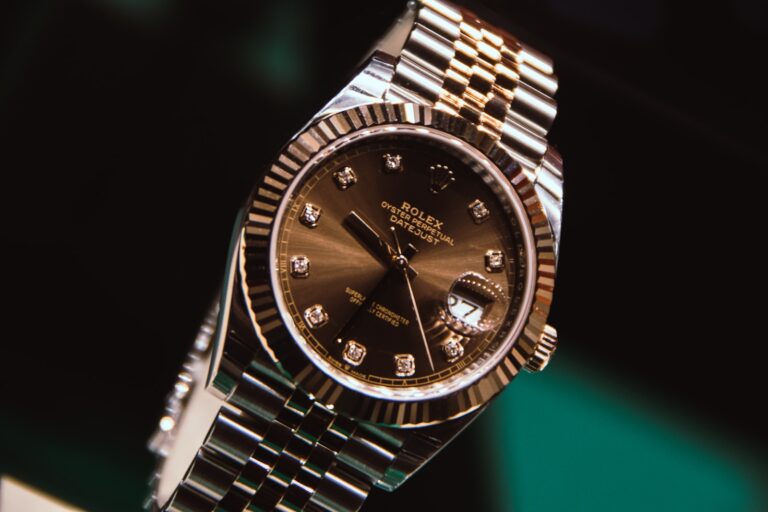
- Key Models: Submariner, Daytona, GMT-Master II, Datejust, Day-Date.
👉 CHECK PRICE on:
- Rolex Submariner: Amazon Search | Chrono24 | Rolex Official
- Rolex Daytona: Amazon Search | Chrono24 | Rolex Official
2. Patek Philippe: The Pinnacle of Horological Artistry
If Rolex is the king of commerce, Patek is the emperor of art. Often ranked #4 by revenue but #1 by enthusiast prestige, Patek Philippe represents the absolute peak of mechanical engineering.
- Why it’s Big: They produce fewer watches than almost anyone in the top 10, yet command astronomical prices. The slogan “You never actually own a Patek Philippe. You merely look after it for the next generation” isn’t just marketing; it’s a lifestyle.
- The Vibe: “I appreciate the finer things.” It’s for the collector who values complication over flash.
- Key Models: Nautilus, Aquanaut, Calatrava, Grand Complications.
👉 CHECK PRICE on:
- Patek Philippe Nautilus: Chrono24 | Bob’s Watches | Patek Official
- Patek Philippe Calatrava: Chrono24 | Bob’s Watches | Patek Official
3. Audemars Piguet: The Royal Oak Revolutionaries
Audemars Piguet (AP) is the rebel of the group. They overtook Omega in revenue rankings recently, proving that a niche, high-price strategy can outperform volume.
- Why it’s Big: The Royal Oak is arguably the most influential watch design of the last 50 years. AP has mastered the art of the “hype beast” while maintaining serious horological credibility.
- The Vibe: “I’m cool, and I know it.” AP is the choice for those who want to stand out in a sea of divers.
- Key Models: Royal Oak, Royal Oak Offshore, Code 1.59.
👉 CHECK PRICE on:
- Audemars Piguet Royal Oak: Chrono24 | Bob’s Watches | AP Official
- Audemars Piguet Royal Oak Offshore: Chrono24 | Bob’s Watches | AP Official
4. Omega: The Space-Age Icon and Olympic Partner
Omega is the workhorse of the luxury world. While they dropped to #5 in revenue rankings, they remain the most accessible entry point into the “Big 5” for many enthusiasts.
- Why it’s Big: A perfect blend of history (Moon landing, James Bond) and innovation (Co-Axial escapement). They are the only brand on this list that is part of the Swatch Group, giving them massive manufacturing scale.
- The Vibe: “I’m ready for anything.” From the depths of the ocean to the surface of the moon, Omega has been there.
- Key Models: Speedmaster Professional Moonwatch, Seamaster Diver 30M, Constellation.
👉 CHECK PRICE on:
- Omega Speedmaster: Amazon Search | Chrono24 | Omega Official
- Omega Seamaster: Amazon Search | Chrono24 | Omega Official
5. Cartier: The Jeweler of Kings and Watchmaker of Style
Cartier is the fashion icon that refuses to be ignored. As the #2 brand by revenue, Cartier leverages its jewelry heritage to dominate the luxury watch market.
- Why it’s Big: They don’t just make watches; they make jewelry that tells time. The Tank and Santos are design icons that transcend trends.
- The Vibe: “I have style.” Cartier is for those who prioritize aesthetics and brand prestige above all else.
- Key Models: Tank, Santos, Panthère, Ballon Bleu, Pasha.
👉 CHECK PRICE on:
- Cartier Tank: Amazon Search | Chrono24 | Cartier Official
- Cartier Santos: Amazon Search | Chrono24 | Cartier Official
📊 Big 5 Watch Brands by Sales Volume vs. Revenue (2025)
Here is where the plot thickens. If you look at revenue, the order is clear. But if you look at units sold, the story changes completely. This table breaks down the 2025 estimates based on industry data.
| Rank | Brand | Est. Revenue (CHF) | Est. Units Sold | Avg. Price (CHF) | Strategy |
|---|---|---|---|---|---|
| 1 | Rolex | ~10.0 Billion | ~1,150,0 | ~13,968 | Volume + High Price |
| 2 | Cartier | ~3.49 Billion | ~695,0 | ~6,103 | High Volume, Accessible Luxury |
| 3 | Audemars Piguet | ~2.60 Billion | ~53,0 | ~51,160 | Low Volume, Ultra-High Price |
| 4 | Patek Philippe | ~2.50 Billion | ~72,0 | ~47,413 | Low Volume, Ultra-High Price |
| 5 | Omega | ~2.21 Billion | ~460,0 | ~6,820 | High Volume, Mid-Luxury |
Key Insight: Notice how Audemars Piguet sells fewer than 60,0 units but generates nearly the same revenue as Omega, which sells nearly 50,0 units? That is the power of the ultra-luxury segment.
🆚 Big 5 Watch Brands vs. The Rest: How They Stack Up Against Competitors
You might be wondering, “What about Richard Mille? Or Vacheron Constantin?” They are huge, but they don’t quite crack the “Big 5” in this specific context. Why?
- Richard Mille: While their average price is astronomical (over CHF 290k), their total volume is so low (
5,950 units) that their total revenue (CHF 1.75B) trails behind the Big 5. They are the “Big 1” of a different league. - Vacheron Constantin: A member of the Holy Trinity, but their revenue (~CHF 914M) is less than half of Omega’s. They are a niche player compared to the mass-market appeal of the Big 5.
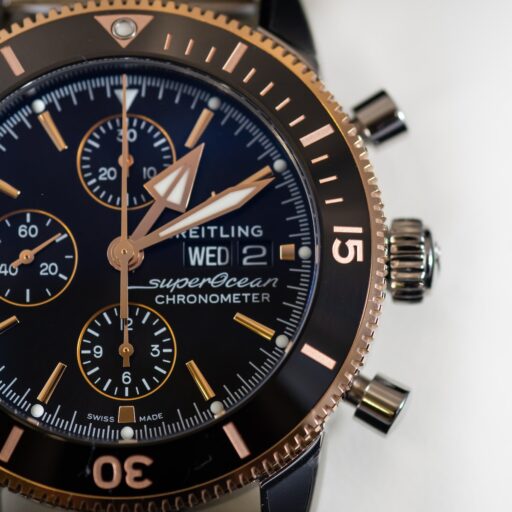
- Breitling & TAG Heuer: These are strong contenders, but they sit in the “accessible luxury” tier, with revenues around CHF 80M and CHF 720M respectively.
The Big 5 are unique because they have global brand recognition that transcends watch enthusiasts. Everyone knows a Rolex or a Cartier, even if they don’t know what a “tourbillon” is.
💎 Big 5 Watch Brands: Which Models Hold Their Value Best?
Let’s talk money. If you’re buying a watch, you probably want to know if it will hold its value. The secondary market is a wild ride, but the Big 5 generally lead the pack.
The Value Retention Hierarchy
- Audemars Piguet (Royal Oak): Historically the king of appreciation. Some models trade at 20-30% of retail.
- Patek Philippe (Nautilus/Aquanaut): The holy grail of value retention. Waitlists can be decades long.
- Rolex (Daytona/Submariner): The most consistent performer. While some models have dipped slightly from their 202 peaks, they remain incredibly strong.
- Cartier (Tank/Santos): Surprisingly strong. The Tank has seen a 39% increase in value over five years.
- Omega: Generally holds value well, but rarely appreciates significantly above retail unless it’s a limited edition.
Pro Tip: Avoid buying “hot” models at full retail if you plan to flip them immediately. The “grail” status often comes with a premium on the secondary market that you can’t recoup.
🏢 The Corporate Giants: Big 5 Watch Brands and Their Parent Groups
Not all Big 5 brands are created equal when it comes to ownership. This structure impacts everything from production capacity to marketing budgets.
- Rolex: 10% Independent. Owned by the Hans Wilsdorf Foundation. This allows them to make long-term decisions without shareholder pressure.
- Patek Philippe: 10% Independent. Owned by the Stern family. They prioritize heritage over quarterly earnings.
- Audemars Piguet: 10% Independent. Owned by the Audemars and Piguet families. They are the only independent brand in the top 5 to focus so heavily on the sports watch category.
- Omega: Swatch Group. Part of the largest watch group in the world. This gives them access to shared R&D and massive distribution networks.
- Cartier: Richemont Group. Part of a luxury conglomerate that also owns Van Clef & Arpels and Montblanc. This synergy boosts their jewelry and watch sales.
Did you know? The video breakdown of the watch industry (see #featured-video) highlights how these conglomerates control the market. While the Big 5 includes three independents, the other two are backed by the financial might of the world’s largest luxury groups.
🤔 Is the “Big 5” Still Relevant in 2025? A Critical Look at Market Shifts
Is the “Big 5” list outdated? Some argue that Richard Mille or Vacheron Constantin should be in. However, the “Big 5” remains relevant because of cultural ubiquity.
- The “Core” Squeeze: The market segment between CHF 3,0 and CHF 20,0 is shrinking. The Big 5 (especially Rolex and Omega) dominate this space, while the ultra-luxury brands (AP, Patek) are pulling away.
- The “New Money” Effect: Younger collectors are driving demand for AP and Rolex, keeping the hype alive.
- The “Old Money” Shift: Traditional collectors are still flocking to Patek and Vacheron, but the volume is lower.
The “Big 5” is not just a sales list; it’s a cultural phenomenon. As long as people recognize these names, they will remain the Big 5.
🛒 How to Buy Your First Big 5 Watch: Insider Tips and Pitfalls to Avoid
Ready to pull the trigger? Here is our step-by-step guide to navigating the Big 5 without getting burned.
Step 1: Define Your Budget (and Reality Check)
- Entry Level: Omega (CHF 4k–6k), Cartier (Tank Must, CHF 3k–4k).
- Mid Range: Rolex Datejust (CHF 8k–12k), AP Royal Oak (CHF 30k+).
- High End: Patek Calatrava (CHF 30k+), AP Royal Oak Offshore (CHF 40k+).
Step 2: Choose Your Path
- Authorized Dealer (AD): The safest route, but expect waiting lists for popular models. You might wait years for a Daytona or Nautilus.
- Grey Market: Pay a premium (sometimes 20-50% over retail) but get the watch now.
- Pre-Owned: A great way to find discontinued models or get a better deal. Always check for service history.
Step 3: Verify Authenticity
- Check the Papers: Box, papers, and warranty card are non-negotiable.
- Service History: A watch with a full service history from an authorized center is worth more.
- Third-Party Authentication: Use services like WatchCSA or Chrono24’s Authenticity Guarantee.
Common Pitfalls to Avoid
- ❌ Buying “Too Good to Be True”: If a Rolex Daytona is listed for half the market price, it’s a fake.
- ❌ Ignoring the Condition: A scratched bezel can drop the value by 20%.
- ❌ FOMO (Fear Of Missing Out): Don’t buy a watch just because it’s “hot.” Buy what you love.
🔍 Related Guides: Deep Dives into Specific Collections
Want to go deeper? We have comprehensive guides on every major collection:
- The Ultimate Guide to the Rolex Submariner: History, variations, and buying tips.
- Patek Philippe Nautilus vs. Aquanaut: Which one is right for you?
- Audemars Piguet Royal Oak: A Complete History: From Gerald Genta today.
- Omega Speedmaster: Moonwatch Evolution: From the Moon to the modern day.
- Cartier Tank: The Watch That Changed Everything: A design icon’s journey.
For more inspiration, check out our Luxury Watch Brands category or our Guide to Buying Watches.
🏁 Conclusion: The Final Verdict on the Big 5

So, what are the Big 5 watch brands? They are Rolex, Patek Philippe, Audemars Piguet, Omega, and Cartier. But more than just a list of names, they represent the pinnacle of the watch industry.
- Rolex is the undisputed king of commerce and recognition.
- Patek Philippe is the emperor of art and complication.
- Audemars Piguet is the revolutionary of design and hype.
- Omega is the reliable icon of exploration and history.
- Cartier is the stylish jewel of the luxury world.
Whether you are a seasoned collector or a first-time buyer, understanding the Big 5 is essential. They are the benchmarks against which all other watches are measured.
Our Recommendation:
- For the Investor: Go for a Rolex Submariner or Patek Nautilus (if you can find one).
- For the Enthusiast: An Audemars Piguet Royal Oak or Patek Calatrava offers the best horological experience.
- For the Style Icon: A Cartier Tank or Santos is timeless.
- For the Everyday Hero: An Omega Speedmaster or Seamaster is the perfect daily driver.
The “Big 5” isn’t just about money; it’s about legacy. And in the world of watches, legacy is everything.
🔗 Recommended Links for Further Reading
Ready to start your journey? Here are the best places to shop and learn:
- 👉 Shop Rolex: Amazon Search | Chrono24 | Rolex Official
- 👉 Shop Patek Philippe: Chrono24 | Bob’s Watches | Patek Official
- 👉 Shop Audemars Piguet: Chrono24 | Bob’s Watches | AP Official
- 👉 Shop Omega: Amazon Search | Chrono24 | Omega Official
- 👉 Shop Cartier: Amazon Search | Chrono24 | Cartier Official
Books to Read:
- [Wristwatch Annual 2025]: The definitive guide to the year’s best watches.
- [The Watch Book] by Gisbert L. Bruner: A comprehensive history of watchmaking.
- [Rolex: The Complete Guide] by Martin Green: Everything you need to know about the King of Watches.
❓ Frequently Asked Questions About the Big 5 Watch Brands
What should I look for when buying a watch from the Big 5 brands?
When buying from the Big 5, focus on authenticity, condition, and service history. Always verify the serial number and ensure the watch comes with original papers. For models like the Rolex Daytona or Patek Nautilus, be prepared for a significant premium on the secondary market.
How has the history of the Big 5 watch brands influenced modern watchmaking?
The Big 5 have shaped the industry through innovation and design. Rolex introduced the waterproof Oyster; AP created the luxury sports watch with the Royal Oak; Omega brought watches to the moon; and Cartier defined the art of the wristwatch. Their legacies are the foundation of modern watchmaking.
Are the Big 5 watch brands a good investment for collectors?
Yes, but with caveats. Rolex, Patek Philippe, and Audemars Piguet have historically shown strong value retention and appreciation. However, the market can be volatile. Always buy what you love, not just for investment purposes.
What are the signature features of watches from the Big 5 brands?
- Rolex: Oyster case, Cyclops lens, robust movements.
- Patek Philippe: Hand-finished movements, complications, elegant designs.
- Audemars Piguet: Tapiserie dials, integrated bracelets, Royal Oak design.
- Omega: Co-Axial escapement, Master Chronometer certification, historic tool watches.
- Cartier: Roman numerals, sword-shaped hands, iconic shapes (Tank, Santos).
How do the Big 5 watch brands compare in terms of craftsmanship and innovation?
All five brands excel in craftsmanship, but their focus differs. Patek and AP lead in complications and finishing. Rolex leads in durability and mass production quality. Omega leads in technical innovation (Co-Axial). Cartier leads in design and jewelry integration.
What makes the Big 5 watch brands stand out from other luxury brands?
The Big 5 have global recognition and cultural significance that other brands lack. They are not just watches; they are status symbols and heirloms. Their secondary market liquidity is unmatched.
Which watch brands are considered the most prestigious in the industry?
While “prestige” is subjective, Patek Philippe is often considered the most prestigious due to its heritage and complexity. Audemars Piguet and Rolex follow closely, with Cartier and Omega rounding out the top tier.
How do the Big 5 watch brands guarantee the quality and authenticity of their timepieces?
They use strict quality control, serial numbers, and certified movements. Rolex and Omega have their own testing standards (Superlative Chronometer, Master Chronometer). Patek and AP have their own seals (Patek Seal, AP Seal).
What are some emerging watch brands that could rival the Big 5 in the future?
Brands like Richard Mille, F.P. Journe, and A. Lange & Söhne are gaining ground. However, the Big 5’s brand equity is so deep that it will be difficult for new entrants to catch up in the short term.
Are the Big 5 watch brands worth the investment for a collector?
For a collector, yes. They offer a unique combination of historical significance, craftsmanship, and liquidity. However, the market is cyclical, so diversification is key.
How do I choose the right luxury watch brand for my style and budget?
Consider your lifestyle, budget, and aesthetic preference. If you need a durable daily watch, go for Rolex or Omega. If you want a statement piece, consider AP or Cartier. If you value horological art, choose Patek.
What are the differences between the Big 5 watch brands and other luxury brands?
The Big 5 have higher brand recognition, better value retention, and more extensive distribution networks. Other luxury brands may offer unique designs or lower prices, but they lack the “Big 5” cachet.
Which watch brands are considered investment pieces?
Rolex, Patek Philippe, and Audemars Piguet are the top investment pieces. Their models often appreciate in value, especially limited editions and iconic references.
What are the most prestigious watch brands in the world?
Patek Philippe is widely considered the most prestigious, followed by Audemars Piguet and Vacheron Constantin. Rolex is the most recognized, while Cartier is the most stylish.
What are the top 5 watch makers?
The top 5 watch makers, based on a combination of revenue, prestige, and influence, are Rolex, Patek Philippe, Audemars Piguet, Omega, and Cartier.
📚 Reference Links and Sources
- Monochrome Watches: Industry News: The 10 Largest Watch Brands in 2025
- Luxury Bazaar: Top 10 Luxury Watch Brands
- Rolex Official Website: Rolex
- Patek Philippe Official Website: Patek Philippe
- Audemars Piguet Official Website: Audemars Piguet
- Omega Official Website: Omega
- Cartier Official Website: Cartier
- Chrono24: Watch Market Data
- Morgan Stanley & LuxeConsult: Swiss Watch Industry Report 2025
- Vontobel: Swiss Watch Industry Analysis