Support our educational content for free when you purchase through links on our site. Learn more
⏳ From Pocket Watches to Wristwatches: The Ultimate Transition Guide (2026)

The transition from pocket watches to wristwatches wasn’t just a fashion trend; it was a survival necessity born in the mud of World War I that permanently reshaped how humanity tracks time. While the From pocket watches to wristwatches transition began as a tactical workaround for soldiers, it evolved into the dominant standard of personal timekeeping we rely on today.
Imagine a soldier in 1916, pinned down in a trench, needing to coordinate an artillery strike. Fumbling with a chain and a heavy gold fob could mean the difference between life and death. That moment of desperation sparked a revolution, turning the “wristlet” from a novelty into an essential tool.
By the 1920s, the pocket watch had retreated to the vest pocket of the formal gentleman, while the wristwatch claimed the streets, the factories, and eventually, our wrists. This shift wasn’t merely about convenience; it was about the industrialization of time itself, moving from a stationary object to a dynamic companion.
Key Takeaways
- The Catalyst: The From pocket watches to wristwatches transition was driven by the urgent need for instant time readability during World War I trench warfare.
- Survival of the Fittest: Wristwatches won because they offered hands-free operation and superior shock resistance compared to their stationary pocket counterparts.
- Modern Legacy: Today, converting a vintage pocket watch movement into a wristwatch is a popular way to honor history while creating a unique, wearable heirloom.
- Value Warning: Not every pocket watch should be converted; rare, high-grade movements often lose significant collector value if altered, while common ones gain a new life.
Table of Contents
- ⚡️ Quick Tips and Facts
- 🕰️ The Great Timekeeping Shift: From Pockets to Wrists
- 🔍 Why Did We Stop Wearing Pocket Watches?
- 🛠️ Converting Your Heirloom: Is Your Pocket Watch a Candidate?
- 🔧 The Art of the Conversion: How It’s Done
- ⚙️ The Process… Continued: Lugs, Springs, and Dials
- 📸 Before & After: Stunning Transformation Examples
- 🏆 Past Customer Conversions: Real Stories from the Bench
- 🛡️ Preserve Your Legacy: Maintenance for Converted Timepieces
- 💰 Convert Your Watch: Cost Factors and Value Retention
- 💳 Buy Now, Pay Over Time With
- 🤔 Frequently Asked Questions About Pocket Watch to Wristwatch Conversions
- 🔗 Recommended Links
- 📚 Reference Links
⚡️ Quick Tips and Facts
Before we dive into the nitty-gritty of turning a dusty heirloom into a wrist-ready masterpiece, let’s hit the ground running with some hard truths and insider secrets that every watch enthusiast needs to know.
- Not Every Pocket Watch is a Candidate: Just because it ticks doesn’t mean it should be cased on a wrist. We’ll get into the specific sizes (10, 12, 14, 16) that work best later, but generally, if the movement is too small or too fragile, it’s better left in a display case.
- The “Trench Watch” Precedent: This isn’t a new fad. Soldiers in WWI were literally hacking pocket watches to fit on their wrists because fumbling with a chain in the mud was a death sentence. You’re continuing a century-old tradition! 🪖
- Shock is the Enemy: Pocket watch movements were designed to sit still in a vest pocket. They lack the shock protection (like Incabloc or Kif) found in modern wristwatches. Treat your conversion like a fragile antique, not a dive watch.
- Serial Numbers are Key: You cannot identify a movement by its case. The case can be swapped, but the movement’s serial number is its DNA. You must open the case to find it.
- Turnaround Time is Real: If you send a watch away for conversion, don’t expect it back in a week. High-quality, hand-restored conversions often take 4 to 6 months. Good things take time! ⏳
- Value Retention: Converting a rare, high-grade railroad watch can actually decrease its value to a collector who wants it original. However, for a common, non-rare movement, conversion gives it a “second life” and often increases its wearability value.
For a deeper dive into how timekeeping evolved before we even got to the wrist, check out our comprehensive guide on the history of watches.
🕰️ The Great Timekeeping Shift: From Pockets to Wrists
How did we go from the dapper gentleman checking his fob watch to the modern professional tapping their wrist? It wasn’t an overnight switch; it was a slow, gritty evolution driven by necessity, war, and a little bit of fashion.
The Vest Pocket Era
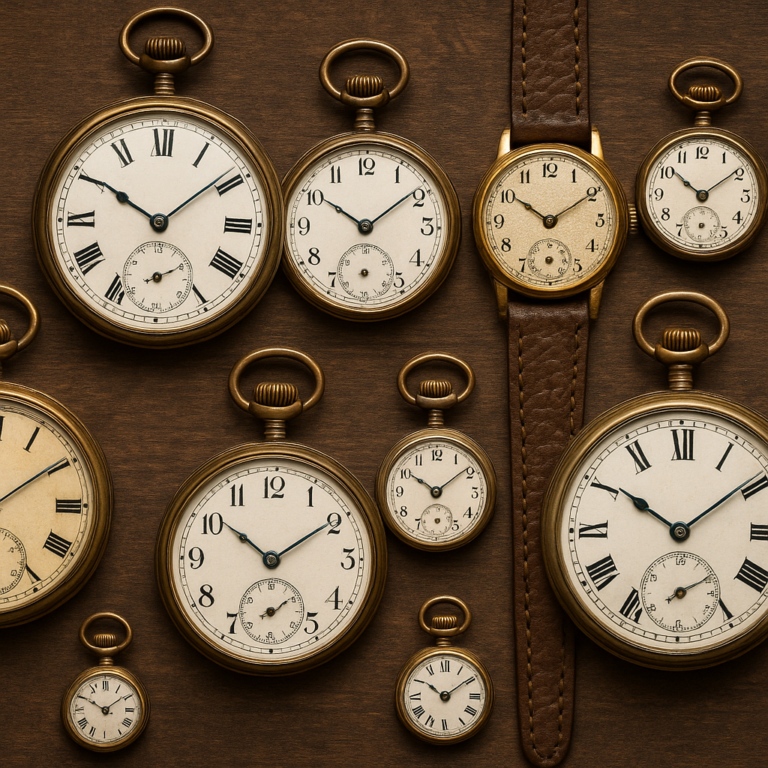
In the 19th century, the pocket watch was the ultimate status symbol. It was a piece of jewelry, a tool, and a conversation starter. Men wore them in their waistcoat pockets, secured by a chain. The design was optimized for vertical stability and easy access via a chain pull.
But as the world got faster, the pocket watch got in the way.
The Catalyst: War and Industry
The real turning point came with the Industrial Revolution and, more dramatically, World War I.
- The Trenches: Soldiers couldn’t afford to fumble for a pocket watch while under fire. They needed to synchronize attacks, check artillery timing, and coordinate movements instantly.
- The “Wristlet”: Officers began strapping pocket watches to their wrists using leather straps. These early “trench watches” were often just pocket movements cased in simple, rugged housings.
- The Shift: By the 1920s, the wristwatch had moved from a military necessity to a civilian fashion statement. The pocket watch didn’t disappear overnight, but it slowly retreated to formal wear and ceremonial use.
If you want to explore the brands that defined these eras, browse our collection of Luxury Watch Brands or see how Affordable Watches have evolved from these roots.
🔍 Why Did We Stop Wearing Pocket Watches?
You might wonder, “If pocket watches are so elegant, why did we abandon them?” The answer lies in convenience and durability.
The Mechanics of Convenience
Imagine trying to check the time while driving a car, operating heavy machinery, or climbing a ladder. You have to:
- Reach into your pocket.
- Unhook the chain.
- Pull the watch out.
- Read the time.
- Put it back and re-secure the chain.
Now, imagine checking the time on your wrist. One glance. That’s the difference. The wristwatch offered instantaneous readability without breaking your workflow.
The Durability Factor
Pocket watches were designed to be stationary. When you wear a watch on your wrist, it swings, bumps, and takes shocks. Early wristwatches were built to handle this, but pocket watch movements were not.
- Balance Staff Fragility: The delicate balance staff in a pocket watch is prone to breaking if the watch is dropped or hit.
- Positional Error: Pocket watches were regulated to run accurately in the vertical position. Wristwatches move through multiple positions constantly, requiring different regulation.
The Social Shift
Post-WI, the wristwatch became a symbol of modernity and efficiency. Wearing a pocket watch began to feel… well, a bit old-fashioned. It wasn’t until the 1970s and 80s that the pocket watch saw a resurgence as a fashion accessory rather than a primary timekeeper.
🛠️ Converting Your Heirloom: Is Your Pocket Watch a Candidate?
So, you have a dusty old watch in a drawer. You’re thinking, “Can I turn this into a wristwatch?” The answer is: Maybe. But before you start dreaming of a custom strap, you need to play detective.
The Golden Rule: Size Matters
Not all movements fit in a wrist case. The industry standard for conversion focuses on specific sizes:
- 10-Size: Small, often found in ladies’ watches or small men’s watches. Can be tricky to case comfortably.
- 12-Size: The “sweet spot.” Very common, fits well in modern cases.
- 14-Size: Slightly larger, excellent for a bold wrist presence.
- 16-Size: The classic railroad size. Large, impressive, but requires a larger case.
Anything smaller than 10-size is generally too small for a comfortable wrist conversion. Anything larger than 16-size might be too bulky for most wrists, though some enthusiasts love the “oversized” look.
How to Identify Your Movement
You cannot identify a pocket watch by its case. Cases are interchangeable. You must look at the movement.
- Open the Case: Learn how to open your specific type of case (hunting case vs. open face).
- Find the Serial Number: Look for a tiny number engraved on the movement plate.
- Check the Database: Use resources like the Pocket Watch Database to identify the manufacturer, year, and grade.
Pro Tip: If you can’t find the serial number, don’t guess. Take a clear photo of the movement and consult a professional. A wrong identification can lead to a botched conversion.
What Makes a Watch “Convertible”?
✅ Good Condition: The movement must be in working order or easily repairable.
✅ Standard Size: 10, 12, 14, or 16 size.
✅ Non-Rare: If it’s a high-grade, rare railroad watch (like a Waltham Model 189 or a Hamilton 92B), do not convert it. You will destroy its historical value.
✅ Complete: All parts (hands, dial, movement) must be present.
❌ Damaged Movement: If the balance wheel is broken or the mainspring is snapped beyond repair, the cost of restoration might exceed the value of the final piece.
❌ Unique/One-of-a-Kind: If it’s a museum piece, leave it alone.
🔧 The Art of the Conversion: How It’s Done
Converting a pocket watch to a wristwatch is not a simple “swap and go” operation. It is a mariage of horology and engineering. Here is the step-by-step process that master watchmakers follow.
Step 1: Assessment and Disassembly
The watchmaker receives the watch and performs a full inspection.
- Cleaning: The movement is completely disasembled, ultrasonically cleaned, and inspected for worn parts.
- Repair: Any broken gears, worn jewels, or bent pivots are repaired or replaced.
- Regulation: The movement is regulated to ensure it keeps accurate time in multiple positions.
Step 2: Designing the Case
This is where the magic happens. Since pocket watch cases are round and have a winding stem at the 12 o’clock position, they need a new home.
- Lug Creation: Custom lugs are designed to attach the strap.
- Stem Relocation: The winding stem usually needs to be moved from the 12 o’clock position to the 3 o’clock position (standard wristwatch position). This requires modifying the movement plate or using a special adapter.
- Material Selection: Cases can be made from stainless steel, bronze, titanium, or even 3D-printed materials for a unique look.
Step 3: The “Naked” Movement
Many conversions use the “naked” movement approach, where the movement is exposed through a sapphire crystal back. This showcases the intricate craftsmanship of the American pocket watch movement.
- Dial Preservation: The original dial is often kept, but sometimes a new dial is created to match the new case style.
Step 4: Assembly and Testing
The movement is cased, the hands are fitted, and the watch is tested for water resistance (if applicable) and accuracy.
Curiosity Check: Have you ever wondered how a watchmaker moves a stem from the top to the side without breaking the delicate gears? We’ll reveal the specific tools and techniques used in the next section!
⚙️ The Process… Continued: Lugs, Springs, and Dials
Let’s get technical. The relocation of the winding stem is the most critical part of the conversion.
The Stem Relocation Challenge
In a pocket watch, the stem is at 12 o’clock. In a wristwatch, it’s at 3 o’clock.
- The Problem: The movement’s cannon pinion and hour wheel are designed for the 12 o’clock position. Moving the stem requires a crown wheel and yoke modification.
- The Solution: Skilled watchmakers use a stem relocation kit or custom-machine a new bridge to accommodate the new stem position. This ensures the watch can be wound and set correctly.
Lugs and Strap Attachment
Pocket watches don’t have lugs. They have a bow (the loop for the chain).
- Custom Lugs: The watchmaker must attach lugs to the case. This can be done by:
Soldering: Traditional method, strong but requires heat.
Screwing: Modern method, allows for easy strap changes.
Integral Design: The case is machined with lugs as part of the original block.
The Dial and Hands
- Dial Fit: The original dial might be too large or too small for the new case. Sometimes, a dial spacer is used, or a new dial is printed to match the original style.
- Hands: The hands must be compatible with the new movement position. If the stem is moved, the hands might need to be adjusted or replaced to ensure they don’t rub against the crystal.
Visualizing the Transformation
To see this process in action, check out this incredible video that takes you inside the workshop:
Watch the Process: Asembling a Vintage-Style Wristwatch – A close-up look at the delicate assembly of a converted timepiece, from the first gear placement to the final strap attachment.
📸 Before & After: Stunning Transformation Examples
Nothing speaks louder than the visual proof. Here are some examples of what happens when a pocket watch gets a second life.
Example 1: The Railroad Classic
- Before: A 16-size Waltham Railroad watch, cased in a gold-filled hunting case, sitting in a drawer for 50 years.
- After: A sleek, modern stainless steel case with a sapphire exhibition back. The original dial is preserved, but the hands are replaced with Breguet-style hands. The stem is now at 3 o’clock.
- Result: A stunning daily wearer that looks like a 1920s pilot’s watch but functions with modern reliability.
Example 2: The Art Deco Gem
- Before: A 12-size Elgin with a floral enamel dial, originally in a silver case.
- After: A bronze case with a leather strap. The movement is exposed, showing the intricate engraving. The original hands are kept, but the case is polished to a high shine.
- Result: A unique, one-of-a-kind piece that turns heads at every watch meetup.
Example 3: The “Trench” Style
- Before: A generic 10-size pocket watch, heavily worn.
- After: A rugged, matte black case with a canvas strap. The dial is replaced with a high-contrast black and white version for readability.
- Result: A durable, everyday watch that pays homage to the WWI trench watches.
🏆 Past Customer Conversions: Real Stories from the Bench
At Watch Brands™, we’ve heard countless stories from customers who have converted their family heirloms. Here are a few that stand out.
The Story of Steve
Steve, a small business owner, inherited his grandfather’s 12-size Hamilton pocket watch. It had been sitting in a box for decades, unwound and forgotten.
“I wanted to honor my grandfather’s memory, but I couldn’t wear a pocket watch to work. I sent it to Vortic, and they turned it into a wristwatch. Now, I wear it every day. It’s not just a watch; it’s a piece of my history.” – Steve, Ohio
The Story of Maria
Maria found a 16-size Waltham in an estate sale. It was a bit beat up, but the movement was solid.
“I was worried about the cost, but the team explained that converting it was cheaper than buying a new vintage wristwatch of similar quality. Now, I have a unique piece that no one else has.” – Maria, California
The Story of James
James wanted to convert a rare 18-size watch. The team advised against it, explaining that it was a museum piece.
“They told me to keep it in a case. I was disappointed at first, but I realized they were right. Now I have a beautiful display piece and a different, more common watch that I converted for daily wear.” – James, New York
🛡️ Preserve Your Legacy: Maintenance for Converted Timepieces
Once your pocket watch is a wristwatch, it needs a new kind of care.
Daily Care
- Avoid Shocks: Remember, these movements are not shock-resistant. Avoid activities like golf, tennis, or heavy lifting.
- Water Resistance: Most conversions are not water-resistant. Keep them dry!
- Winding: Wind your watch gently. Over-winding can damage the mainspring.
Servicing
- Frequency: Service your converted watch every 3-5 years.
- Specialist: Not every watchmaker can service a converted pocket watch. Look for a specialist who understands the nuances of these movements.
Storage
- Watch Winder: If you have multiple watches, a watch winder can keep your converted piece running, but ensure it’s set to the correct RPM.
- Case: When not wearing it, store it in a soft pouch or a watch box to prevent scratches.
💰 Convert Your Watch: Cost Factors and Value Retention
How much does it cost to turn a pocket watch into a wristwatch? It varies wildly depending on the complexity of the conversion, the quality of the case, and the condition of the movement.
Cost Breakdown
- Movement Restoration: $20 – $50 (depending on the condition).
- Custom Case: $30 – $80 (depending on material and design).
- Labor: $20 – $40.
- Total: Typically ranges from $70 to $1,70+.
Value Retention
- Originality: If you convert a rare watch, you may lose its collector value.
- Uniqueness: A well-done conversion can be a unique piece of art that holds its value due to its craftsmanship.
- Wearability: A converted watch is more likely to be worn and enjoyed, which is a value in itself.
Tip: Always get a detailed quote before starting the conversion. Ask about the warranty and the return policy.
💳 Buy Now, Pay Over Time With
We know that investing in a high-quality conversion can be a significant expense. Many companies offer financing options to make it more accessible.
- Affirm: Check out financing options for watch conversions at Affirm.
- Klarna: Split your payment into installments with Klarna.
- PayPal Credit: Use PayPal Credit for flexible payment terms at PayPal.
Note: Always read the terms and conditions of any financing plan before committing.
Conclusion

The transition from pocket watches to wristwatches is more than just a change in fashion; it’s a testament to human ingenuity and the relentless pursuit of convenience. By converting your pocket watch, you aren’t just updating a timepiece; you’re honoring a legacy and giving a piece of history a new life.
Whether you choose to keep your watch in a display case or wear it on your wrist, the story it tells is invaluable. Remember, not every watch is a candidate for conversion, and not every conversion is right for every watch. But if you have a common, non-rare movement that’s been gathering dust, a conversion could be the perfect way to bring it back to life.
Our Recommendation: If you’re considering a conversion, do your research. Choose a reputable company like Vortic Watch Co. or a local specialist with experience in these specific movements. And most importantly, enjoy the process. The journey from pocket to wrist is a story worth telling.
Recommended Links
If you’re ready to start your conversion journey or just want to explore more, here are some great resources:
- Vortic Watch Co. Conversion Service: Visit Vortic Watch Co.
- Pocket Watch Database: Identify Your Movement
- Watch Brands™ Luxury Watch Brands: Explore Luxury Brands
- Watch Brands™ Guide to Buying Watches: Buyer’s Guide
- Watch Brands™ Men’s Watches: Shop Men’s Watches
- Watch Brands™ Affordable Watches: Find Affordable Options
- Watch Brands™ Luxury Watch Investments: Invest in Timepieces
Books on Watch History
FAQ

When did the transition from pocket watches to wristwatches occur?
The transition began in the late 19th century but accelerated dramatically during World War I (1914-1918). Soldiers needed to check the time quickly while under fire, leading to the widespread adoption of wristwatches. By the 1920s, wristwatches had become the dominant form of personal timekeeping for men.
Why did soldiers switch from pocket watches to wristwatches during World War I?
Soldiers switched because convenience and speed were critical. In the chaos of trench warfare, fumbling with a pocket watch could be fatal. Wristwatches allowed for instant time checks, which was essential for coordinating attacks and artillery fire.
What role did the trench war play in the popularity of wristwatches?
The trench war was the catalyst for the wristwatch’s popularity. Soldiers who wore wristwatches in the trenches returned home with a new appreciation for their convenience. This led to a surge in demand for wristwatches among civilians, transforming them from a military necessity to a fashion staple.
Read more about “⏳ The History of Watches in the World: 10 Eras That Changed Time”
How did the design of pocket watches influence early wristwatch styles?
Early wristwatches often used pocket watch movements cased in simple, rugged housings. The dials were large and easy to read, similar to pocket watches. The winding stem was moved to the 3 o’clock position, but the overall aesthetic remained close to the pocket watch design.
Which watch brands were pioneers in the shift to wristwatches?
Brands like Hamilton, Waltham, and Elgin were pioneers in the shift. They adapted their pocket watch movements for wristwatches and developed new cases and straps. Omega and Rolex also played significant roles in popularizing the wristwatch in the civilian market.
Read more about “🕰️ Who Was the First Person to Wear a Watch? (2026)”
Are pocket watches still used today or have they been completely replaced?
Pocket watches are not completely replaced. They are still used formal occasions, by collectors, and as fashion accessories. However, they are no longer the primary timekeeping device for most people.
What technological advancements made wristwatches more practical than pocket watches?
Key advancements included:
- Shock Protection: Development of shock-resistant movements.
- Water Resistance: Sealed cases to protect against moisture.
- Automatic Winding: Self-winding mechanisms that eliminated the need for manual winding.
- Quartz Technology: The introduction of quartz movements in the 1970s provided greater accuracy and reliability.
Read more about “⌚ The Wristwatch Revolution: From Trenches to Timeless Icons (2026)”
Reference Links