Support our educational content for free when you purchase through links on our site. Learn more
When Was the First Cartier Tank Made? 🕰️

The Cartier Tank was designed in 1917, and its first production watches are generally dated to 1919. The dates describe different milestones: Louis Cartier’s original design came first, followed by the small production run that brought the watch to customers.
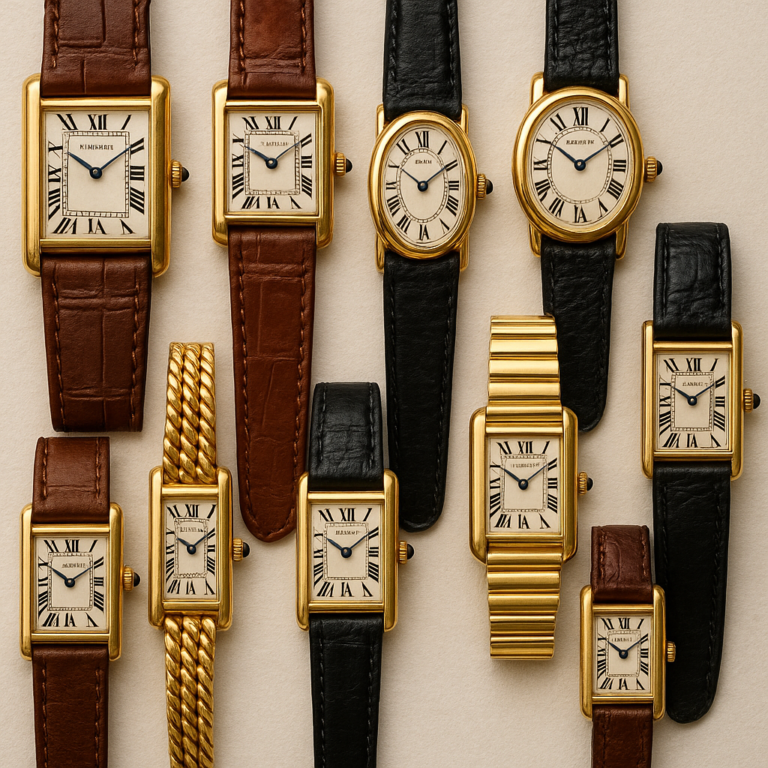
That distinction is why you’ll see both years in watch histories. The Tank’s origin story also comes with a striking visual reference: its rectangular form is widely associated with the French Renault FT-17 tank of the First World War, transformed by Cartier into an elegant wristwatch.
More than a century later, the Tank’s shape is still instantly recognizable. We’ll trace how the design began, explain the date discrepancy, and look at the models that carried its distinctive silhouette forward.
Key Takeaways
- Designed in 1917: Louis Cartier is credited with creating the original Tank.
- Production began around 1919: The first production watches are generally dated to that year.
- The first model was the Tank Normale: Its rectangular case and parallel side bars established the Tank’s signature look.
- The design drew inspiration from the Renault FT-17: Cartier turned a wartime silhouette into a refined wristwatch.
- Explore current models: Cartier Tank collection | Cartier official website
Table of Contents
- ⚡️ Quick Tips and Facts
- 🕰️ When Was the First Cartier Tank Watch Made?
- 1917: The Tank’s First Design and Prototype
- 1919: The First Cartier Tank Watches Go on Sale
- Why Sources Sometimes Give Different Dates
- 📜 The Origins of the Cartier Tank: Design, Inspiration, and History
- Did the Renault FT-17 Tank Inspire Cartier?
- How Louis Cartier Turned a Military Shape into a Dress Watch
- 🔍 The Original Tank Normale: Features and Details
- Case Shape, Brancards, Dial, and Crown
- Movement, Materials, and Early Variations
- How to Recognize an Authentic Early Cartier Tank
- 📅 Cartier Tank Models Through the Years
- 1. Tank Normale (1917)
- 2. Tank Cintrée (1921)
- 3. Tank Louis Cartier (192)
- 4. Tank Chinoise (192)
- 5. Tank À Guichets (1928)
- 6. Tank Basculante (1932)
- 7. Tank Asymétrique (1936)
- 8. Tank Must (197)
- 9. Tank Américaine (1989)
- 10. Tank Française (1996)
- 11. Tank Anglaise (2012)
- 12. Modern Tank Normale and Contemporary Editions
- 🧭 How the Cartier Tank Evolved Without Losing Its Identity
- Tank Louis Cartier vs. Tank Must
- Tank Américaine vs. Tank Cintrée
- Tank Française vs. Classic Leather-Strap Tanks
- 🌟 Famous Cartier Tank Owners and Cultural Influence
- Artists, Actors, Royals, and Presidents Who Wore a Tank
- The Cartier Tank in Film, Fashion, and Popular Culture
- 💡 Why the Cartier Tank Became an Icon
- A Distinctive Rectangular Watch Design
- Versatility, Proportion, and Timeless Style
- 🛒 Buying a Cartier Tank: New, Vintage, or Pre-Owned?
- What to Check Before Buying a Vintage Cartier Tank
- Authentication, Condition, Papers, and Service History
- Quartz or Mechanical: Choosing the Right Movement
- ⌚ Cartier Tank Sizing, Fit, and Everyday Wear
- How to Choose a Tank Case Size
- Can You Wear a Cartier Tank Every Day?
- Water Resistance and Care Tips
- ❓ Cartier Tank FAQs
- Was the First Cartier Tank Made in 1917 or 1919?
- What Was the Very First Cartier Tank Model Called?
- Is the Cartier Tank Based on a Real Military Tank?
- Which Cartier Tank Is Closest to the Original?
- Is a Cartier Tank a Good First Luxury Watch?
- Conclusion
- Recommended Links
- Reference Links
Table of Contents
- ⚡️ Quick Tips and Facts
- 🕰️ When Was the First Cartier Tank Watch Made?
- 1917: The Tank’s First Design and Prototype
- 1919: The First Cartier Tank Watches Go on Sale
- Why Sources Sometimes Give Different Dates
- 📜 The Origins of the Cartier Tank: Design, Inspiration, and History
- Did the Renault FT-17 Tank Inspire Cartier?
- How Louis Cartier Turned a Military Shape into a Dress Watch
- 🔍 The Original Tank Normale: Features and Details
- Case Shape, Brancards, Dial, and Crown
- Movement, Materials, and Early Variations
- How to Recognize an Authentic Early Cartier Tank
- 📅 Cartier Tank Models Through the Years
- 1. Tank Normale (1917)
- 2. Tank Cintrée (1921)
- 3. Tank Louis Cartier (192)
- 4. Tank Chinoise (192)
- 5. Tank À Guichets (1928)
- 6. Tank Basculante (1932)
- 7. Tank Asymétrique (1936)
- 8. Tank Must (197)
- 9. Tank Américaine (1989)
- 10. Tank Française (1996)
- 11. Tank Anglaise (2012)
- 12. Modern Tank Normale and Contemporary Editions
- 🧭 How the Cartier Tank Evolved Without Losing Its Identity
- Tank Louis Cartier vs. Tank Must
- Tank Américaine vs. Tank Cintrée
- Tank Française vs. Classic Leather-Strap Tanks
- 🌟 Famous Cartier Tank Owners and Cultural Influence
- Artists, Actors, Royals, and Presidents Who Wore a Tank
- The Cartier Tank in Film, Fashion, and Popular Culture
- 💡 Why the Cartier Tank Became an Icon
- A Distinctive Rectangular Watch Design
- Versatility, Proportion, and Timeless Style
- 🛒 Buying a Cartier Tank: New, Vintage, or Pre-Owned?
- What to Check Before Buying a Vintage Cartier Tank
- Authentication, Condition, Papers, and Service History
- Quartz or Mechanical: Choosing the Right Movement
- ⌚ Cartier Tank Sizing, Fit, and Everyday Wear
- How to Choose a Tank Case Size
- Can You Wear a Cartier Tank Every Day?
- Water Resistance and Care Tips
- ❓ Cartier Tank FAQs
- Who Designed the Original Cartier Tank Watch?
- What Inspired the Design of the Cartier Tank?
- When Did the Cartier Tank Watch First Go on Sale?
- What Are the Most Iconic Cartier Tank Models?
- Was the First Cartier Tank Made in 1917 or 1919?
- What Was the Original Cartier Tank Model Called?
- Which Modern Cartier Tank Is Closest to the Original?
- Is a Cartier Tank a Good First Luxury Watch?
- Conclusion
- Recommended Links
- Reference Links
⚡️ Quick Tips and Facts
The short answer: Cartier designed the first Tank in 1917. The first prototype and public presentation are commonly associated with 1918, while Cartier’s first small production run is generally dated to 1919. So, if you’ve seen more than one “birth year,” the dates can coexist: they refer to different milestones. Cartier’s official Tank collection carries on the design today.
For a little more context on Cartier’s early wristwatch history, see our guide to the first wrist watch in the world Cartier.
| Quick fact | What to know |
|---|---|
| Design date | 1917, attributed to Louis Cartier |
| First prototype | Commonly dated 1917, with presentation to General John J. Pershing often reported in 1918 |
| First production | 1919, traditionally reported as an initial run of six watches |
| Original model | Tank Normale, the design that established the Tank’s visual language |
| Inspiration | The French Renault FT-17 tank of the First World War |
| Signature details | Rectangular case, parallel side bars (brancards), Roman numerals, minute track, blued-stel hands |
| Why it still matters | Its recognizable outline remained intact while Cartier developed many variations |
Our quick verdict: The Tank is less a watch that happens to be rectangular than a design built around its rectangle. That distinction is why it still looks unmistakably like a Cartier Tank a century later. If you’re considering one, our luxury watch brands and guide to buying watches pages offer useful broader context.
🕰️ When Was the First Cartier Tank Watch Made?
The clearest answer is 1917 for the design, and 1919 for the first production watches. Cartier’s Tank wasn’t born in a single cleanly documented moment with a ribbon-cuting and a waiting list. Like many enduring designs, it moved from idea to prototype to production.
That distinction explains why reputable watch histories use different dates. Analog:Shift describes the first Tank as made in 1917, while specialist guides such as Teddy Baldassarre’s Cartier Tank history distinguish the 1917 prototype from serial production in 1919.
1917: The Tank’s First Design and Prototype
Louis Cartier is credited with designing the Tank in 1917, during the First World War. Its bold, straight-sided form departed from the rounded pocket-watch shapes that had influenced many early wristwatches.
A prototype is often said to have been presented to General John J. Pershing, commander of the American Expeditionary Forces. That story is widely repeated in watch histories, but the prototype’s present-day whereabouts are unknown. Treat the gift story as a persistent historical account, not as a surviving, publicly verifiable object.
| Milestone | Commonly cited date | Meaning |
|---|---|---|
| Tank design conceived | 1917 | Louis Cartier develops the distinctive concept |
| Prototype and presentation | 1917–1918 | Early example associated with the Pershing story |
| Small production run | 1919 | Cartier begins making Tank watches for customers |
The dates matter because “made” can mean designed, protyped, presented, or produced. When someone says the Tank is a 1917 watch, they usually mean its design origin—not necessarily that a customer could buy one that year.
1919: The First Cartier Tank Watches Go on Sale
Cartier’s first production Tanks are generally dated to 1919, with accounts commonly citing an initial run of six watches. That was a tiny beginning for a design that would eventually become one of the best-known luxury wristwatches.
Production expanded through Cartier’s international network over time. Analog:Shift’s history notes Paris production in 1919, New York in 1921, and an English production chapter beginning in the 1950s. The model’s evolution therefore reflects not only a design story, but also Cartier’s growth across different markets.
The early production run also helps explain why an original Tank Normale is a serious collector’s subject today. A design conceived in 1917 and produced in very small numbers is not the same thing as a mass-market watch launch.
Why Sources Sometimes Give Different Dates
Watch histories often compress several steps into one headline date. That’s handy for a quick caption, less handy when you’re trying to settle a trivia argument at dinner.
| Date | Why it appears in histories | How to interpret it |
|---|---|---|
| 1917 | Design or prototype year | Best answer for when the Tank was created |
| 1918 | Reported presentation or introduction | A milestone in the prototype’s early story |
| 1919 | First production | Best answer for when production examples were made |
For perspective, Analog:Shift calls the Normale the model that “broke the proverbial mold,” while Teddy Baldassarre calls 1917 the Tank’s “birthday year” and distinguishes it from 1919 production. These descriptions don’t necessarily conflict: one emphasizes the design’s arrival, the other separates its birthday from its production start.
The most reliable wording is therefore: Louis Cartier designed the Tank in 1917; production began in 1919. If a source gives just one date, check what event it means.
📜 The Origins of the Cartier Tank: Design, Inspiration, and History

The Tank’s origin story pairs modern warfare with Parisian design. Its geometry has a military reference, but the finished watch was never a miniature instrument of battle. It was a refined wristwatch that borrowed the tank’s visual architecture and gave it a very different job: keeping time with elegance.
Cartier’s wider history can be explored through the house’s official heritage material, while the Cartier Tank collection shows how the original design language continues in present-day watches.
Did the Renault FT-17 Tank Inspire Cartier?
The Tank is widely understood to have been inspired by the Renault FT-17, a French light tank used during the First World War. The FT-17’s arrangement—with a central body between continuous tracks—offers a convincing visual parallel to the Tank watch’s central dial flanked by elongated side bars.
That said, the familiar story is about design inspiration, not a literal engineering blueprint. The case does not reproduce a tank mechanically. Cartier translated a recognizable silhouette into a dress-watch design.
| Tank detail | Common design association |
|---|---|
| Rectangular central dial | The body or cockpit-like center of the tank |
| Parallel side bars | Tracks running along the tank’s sides |
| Strong, straight case lines | The angular, industrial impression of military equipment |
The analogy is elegant, but there’s a useful caveat: the watch’s shape works on its own. Even if you’d never seen a Renault FT-17, the Tank would still read as a deliberate, balanced rectangle.
How Louis Cartier Turned a Military Shape into a Dress Watch
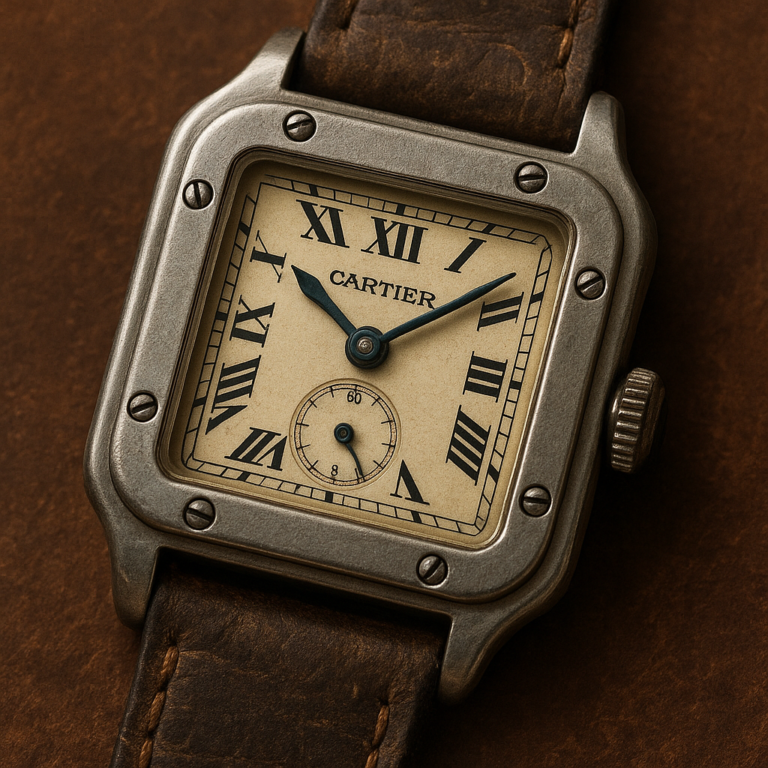
The cleverness wasn’t simply noticing the shape. It was knowing what to remove. Cartier used clean proportions, a legible dial, Roman numerals, a railway-style minute track, and a restrained case to transform a military reference into something suited to formal and everyday wear.
The design’s brancards—the vertical bars running along the sides—do more than hint at tank tracks. They make the case and strap feel integrated, as though the watch’s outline has been drawn in a few confident strokes.
That clarity gave the Tank a visual identity unusually strong for a wristwatch. Analog:Shift argues that “after the release of the Tank, the watch space was changed forever.” That is an emphatic claim, but the Tank’s longevity and influence make the point understandable: Cartier created an outline that could be recognized across generations of variations.
🔍 The Original Tank Normale: Features and Details
The Tank Normale established the traits people still associate with the Cartier Tank. It wasn’t just rectangular; it used the rectangle as a complete design system, from the case bars to the dial furniture.
The Tank Normale is the historic reference point, though surviving early examples can differ in details. With antique watch, age, servicing, restoration, and individual production changes all matter. A photograph alone can’t prove that a watch is original.
Case Shape, Brancards, Dial, and Crown
The Normale’s most important features are easy to name and hard to improve upon:
- Rectangular case: A clear departure from the dominant round-watch silhouette.
- Brancards: Parallel side bars that frame the dial and extend toward the strap.
- Roman numerals: A classic Cartier dial signature.
- Chemin de fer minute track: A railway-style minute scale around the dial.
- Blued-stel hands: Typically sword-shaped, providing contrast against the dial.
- Cabochon-set crown: A crown topped with a colored stone, commonly associated with Cartier’s blue-sapphire look.
Together, these details produce a face that is highly legible without feeling like a tool watch. In our experience, that is part of the Tank’s charm: it looks formal, but its graphic clarity keeps it from feeling fussy.
Movement, Materials, and Early Variations
Early Cartier Tanks were made in the context of early twentieth-century watchmaking, when mechanical movements were the norm. Exact specifications varied by period and example, so it’s safer not to assume that every early Tank shares one movement, case metal, or dial configuration.
| Feature | Early Tank Normale context |
|---|---|
| Movement | Mechanical; exact caliber depends on the watch and production details |
| Case | Produced in precious metals in early examples |
| Dial | Roman numerals and minute track are defining visual cues |
| Crown | Often associated with a cabochon-set design |
| Condition today | Originality, restoration, and service history vary substantially |
The benefit of an early mechanical Tank is obvious to collectors: a direct connection to the model’s formative years. The drawback is equally practical: age brings maintenance questions, and replacement parts or sympathetic restoration can require specialist care.
How to Recognize an Authentic Early Cartier Tank
Authentication is not a checklist you can finish from a listing title. A vintage Cartier should be judged as a complete object, with its serial number, case, dial, movement, hallmarks, and documented history considered together.
Before buying, ask an experienced Cartier specialist or reputable watchmaker to inspect:
- Case and proportions: Are the case, brancards, and lugs consistent with the claimed model and era?
- Dial: Are the printing, numerals, hands, and patina plausible for the watch’s age?
- Movement: Does the movement match the model and period, and is it in sound condition?
- Serial and hallmarks: Are markings present, legible, and consistent with available records?
- Service and restoration: Have components been replaced, refinished, or repaired?
- Seller documentation: Are provenance and service claims supported by records rather than confident adjectives?
A polished case or refinished dial isn’t automatically a deal-breaker, but it can affect originality and collector appeal. For more buying fundamentals, see our guide to buying watches.
📅 Cartier Tank Models Through the Years
Cartier expanded the Tank into multiple shapes and personalities while keeping its core design language recognizable. Dates below refer to commonly cited model introductions; historical naming and production timelines can vary across sources and archives.
| Model | Commonly cited debut | Design character |
|---|---|---|
| Tank Normale | 1917 design; production from 1919 | Original, straight-sided form |
| Tank Cintrée | 1921 | Long, curved case |
| Tank Louis Cartier | 192 | Softer, refined classic proportions |
| Tank Chinoise | 192 | Architectural crossbars |
| Tank À Guichets | 1928 | Time displayed through apertures |
| Tank Basculante | 1932 | Reversible case construction |
| Tank Asymétrique | 1936 | Angled case and dial |
| Tank Must | 197 | More accessible line and bold dial options |
| Tank Américaine | 1989 | Elongated, curved profile |
| Tank Française | 1996 | Integrated metal-bracelet design |
| Tank Anglaise | 2012 | Crown integrated into the case |
| Contemporary Tank editions | Modern era | Updated sizes, movements, and materials |
1. Tank Normale (1917)
The Tank Normale is the original design reference. Its parallel brancards and rectangular dial established the template for later Tanks. The design is associated with 1917, while the first production watches are generally dated to 1919.
Why it matters: If you want to understand what makes a Tank a Tank, start here. Cartier’s modern collection includes contemporary interpretations, but an original Normale is a distinct historical object.
2. Tank Cintrée (1921)
The Tank Cintrée introduced a dramatically elongated, curved case designed to sit closely around the wrist. The curve changes the wearing experience as well as the silhouette: this is a Tank with a graceful, almost architectural sweep.
Its shape became an important reference for later curved models, including the Tank Américaine. It’s a natural choice for someone who loves the Tank outline but wants something more expressive than the classic rectangular case.
3. Tank Louis Cartier (192)
The Tank Louis Cartier, often called the Tank LC, developed the original’s straight-sided idea into a softer, more elongated form. Its rounded corners and balanced proportions give it a dressier, less industrial character than the Normale.
The model is closely associated with the classic Cartier look: restrained dial design, elegant case lines, and a refined leather-strap presence. For many enthusiasts, it is the Tank that best captures the collection’s traditional spirit.
4. Tank Chinoise (192)
The Tank Chinoise uses horizontal bars at the top and bottom of the case, creating a more architectural composition. Cartier’s design drew on Chinese architectural motifs, particularly the impression of structural gateways and layered beams.
It’s an adventurous Tank: instantly related to the family, yet much less conventional. If the classic Tank is a cleanly drawn rectangle, the Chinoise is the version that adds a little architecture to the sketch.
5. Tank À Guichets (1928)
The Tank À Guichets replaced the traditional open dial with apertures—guichets—through which the time is displayed. The pared-back layout makes it one of the most unusual Tanks and a striking example of Cartier’s willingness to experiment.
It is not the best model for people who want a conventional dial at a glance. But collectors prize its unusual display and confident minimalism.
6. Tank Basculante (1932)
The Tank Basculante is known for its reversible case mechanism, allowing the watch to pivot within its frame. That construction adds a functional twist to the Tank’s formal design and connects it to the broader tradition of reversible watches.
The appeal is tactile as much as visual: it’s a Tank with a small piece of mechanical theatre. The trade-off is that a moving case introduces additional components that should be checked carefully on a vintage example.
7. Tank Asymétrique (1936)
The Tank Asymétrique—also known in later forms as the Tank Oblique—tilts the case and dial so the time can be read from angled wrist position. Its unusual geometry makes it one of the most distinctive historical Tank designs.
This is not a subtle variation. It looks purposefully off-center, and that’s exactly the point: a wearable design experiment that still feels unmistakably Cartier.
8. Tank Must (197)
The Must de Cartier line helped bring Cartier’s design language to a broader audience. Introduced in the late 1970s, Must Tanks appeared in varied colors and materials, with quartz models among the offerings.
Some historical Must watches use vermeil, a thick layer of gold over sterling silver, rather than a solid-gold case. That can make them more accessible than precious-metal Cartier watches, but condition matters: plating wear and service needs deserve close attention.
The modern Tank Must is a contemporary collection, not simply the same watch as a vintage Must de Cartier. Cartier has also introduced solar-powered and strap-material innovations in selected modern models; check the specifications of the exact reference rather than assuming all Must versions share them. See the current range on Cartier’s official Tank page.
9. Tank Américaine (1989)
The Tank Américaine carried the elongated, curved-case idea into a modern collection. It is generally considered a descendant of the Cintrée’s curved silhouette, with a more contemporary interpretation and a range of sizes and complications across its history.
Compared with a classic Tank Louis Cartier, the Américaine makes a stronger visual statement on the wrist. Its curve can also help it sit comfortably, though fit depends on case size and wrist shape.
10. Tank Française (1996)
The Tank Française brought the Tank into a more integrated bracelet design. Instead of treating the strap as a separate finishing touch, the bracelet becomes part of the case’s visual flow.
This model tends to feel sportier and more contemporary than a leather-strap Tank. It is a good option if you want a Cartier Tank that can move between casual and polished outfits without the formality of a traditional dress watch.
11. Tank Anglaise (2012)
The Tank Anglaise introduced a more substantial case and integrated crown arrangement. The crown is housed within the case structure, giving the design a smoother, more built-in appearance.
It is a bolder take on the Tank and can feel larger than a slim classic model. As with any Tank, try the actual case size on your wrist if possible; rectangular watches can wear differently from round watches with similar measurements.
12. Modern Tank Normale and Contemporary Editions
Cartier has revisited the Tank’s heritage with modern editions, including anniversary-era interpretations and contemporary collection updates. These watches retain the Tank’s recognizable profile while using current materials, manufacturing, and movement options.
To compare current references, begin with the official Cartier Tank collection. Specifications can change by market and model year, so verify case dimensions, movement, water resistance, and strap details for the exact reference you’re considering.
🧭 How the Cartier Tank Evolved Without Losing Its Identity
Tank models can look surprisingly different, yet most retain a visual link to the original: the rectangular case, framed dial, or strong brancard-like lines. Choosing between them is less about finding the “correct” Tank and more about deciding which interpretation suits your wrist and wardrobe.
| Model comparison | Main difference | Best suited to |
|---|---|---|
| Tank Louis Cartier vs. Tank Must | Precious-metal heritage and refined detailing versus a wider range of materials and dial styles | Traditional elegance vs. varied everyday options |
| Tank Américaine vs. Tank Cintrée | Modern collection expression versus the earlier, highly curved vintage design | Contemporary wear vs. historical character |
| Tank Française vs. leather-strap Tanks | Integrated bracelet and sportier feel versus classic strap-led dress-watch styling | Bracelet convenience vs. traditional formality |
Tank Louis Cartier vs. Tank Must
The Tank Louis Cartier is the classicist’s choice: elegant proportions, a strong link to Cartier heritage, and a dress-watch feel. The Tank Must is a broader family with different materials, movements, and dial designs, making it easier to find a version suited to more casual wear.
Neither is automatically “better.” A Tank LC may appeal more to collectors who value traditional precious-metal Cartier design; a Tank Must may be more practical if you want a modern watch to wear frequently without treating it like a museum object.
Tank Américaine vs. Tank Cintrée
Both models use a curved, elongated profile, but they belong to different moments in the Tank story. The Cintrée is the historic design with a notably elegant curve and collector appeal. The Américaine translates that curved idea into a later, more contemporary collection.
If you’re buying vintage, the Cintrée asks for extra attention to condition, authenticity, and service. If you prefer modern convenience and a current reference, the Américaine may be the simpler ownership proposition.
Tank Française vs. Classic Leather-Strap Tanks
The Tank Française makes a metal bracelet central to the design. It often feels more versatile for everyday use, especially if you prefer a watch that doesn’t require strap changes or a leather strap’s extra care.
Classic leather-strap Tanks, such as the Tank Louis Cartier, have a more traditional dress-watch character. Leather can be changed to alter the look, but it needs protection from moisture and wear. Explore more wristwear ideas in our men’s watches and fashion trends in watches guides.
🌟 Famous Cartier Tank Owners and Cultural Influence
The Tank’s cultural reputation is unusually strong for a watch with such a restrained design. It has been worn by artists, public figures, and style icons across very different eras, helping it travel from a formal accessory into a broader symbol of personal taste.
The exact model worn by a public figure is not always documented consistently. We recommend treating celebrity-watch claims with care, especially when a photograph is distant or the model reference is unclear.
Artists, Actors, Royals, and Presidents Who Wore a Tank
Among the figures commonly associated with the Tank are:
- Jacqueline Kennedy Onassis, whose Tank became closely tied to her polished personal style.
- Andy Warhol, often quoted as saying of the Tank, “I don’t wear a Tank to tell time. In fact, I never wind it. I wear a Tank because it is the watch to wear.”
- Yves Saint Laurent, reflecting the Tank’s strong connection to fashion and design.
- Rudolph Valentino, frequently cited in accounts of the watch’s early celebrity following.
- Princess Diana, whose watch choices helped reinforce the Tank’s enduring appeal.
- Michelle Obama and other contemporary public figures, showing that the design continues to feel current.
The Warhol quote is memorable because it gets at the Tank’s appeal: the watch can be appreciated as an object of design, not just a timekeeping tool. Still, it remains a watch, and a well-serviced one will tell the time just fine.
The Cartier Tank in Film, Fashion, and Popular Culture
A Tank works on screen and in photographs because its outline is clean and easy to read. Unlike a heavily decorated watch, it can complement a look without competing with it. That makes it a natural fit for costume design, editorial fashion, and formal wardrobes.
The watch’s status also creates a risk for buyers: popularity invites imitations and misleading listings. If you’re shopping for a Cartier, rely on documentation and expert inspection—not a celebrity association or a seller’s story. Our luxury watch brands guide explores Cartier’s place among established watch houses.
💡 Why the Cartier Tank Became an Icon
The Tank’s longevity rests on a rare combination: a recognizable shape, restrained detailing, and enough variation to remain interesting. It is historically significant without requiring you to dress like a 1920s film star to wear one.
A Distinctive Rectangular Watch Design
The Tank’s rectangle is not merely a case shape; it organizes the entire watch. The brancards frame the dial, the Roman numerals echo its vertical lines, and the minute track gives the face structure.
That coordination is why a Tank can be recognized across models that differ in size, curve, bracelet, or dial treatment. Analog:Shift describes the original as a design that “broke the proverbial mold.” The phrase is apt: the Tank didn’t just choose a different shape, it made that shape feel complete.
Versatility, Proportion, and Timeless Style
A Tank can work with formal clothing, business wear, or a simple casual outfit. Its modest dial and clean case keep it from shouting, while the rectangular silhouette gives it enough personality to avoid disappearing.
Benefits
- Distinctive design with deep history.
- Slim, dress-friendly profile on many models.
- Multiple case shapes, sizes, materials, and movements.
- Broad style range, from classic leather straps to integrated bracelets.
Drawbacks
- Many models are not designed for swimming or rough use.
- Rectangular case dimensions can be tricky to judge from a listing photo.
- Vintage examples may need specialist servicing.
- Some models have small dials that prioritize style over quick, high-contrast reading.
If you’re after a robust sports watch, a Tank may not be the right tool. If you want a refined, enduring design with a strong identity, it is an excellent candidate. Those comparing more accessible alternatives can browse our affordable watches category.
🛒 Buying a Cartier Tank: New, Vintage, or Pre-Owned?
A new Cartier Tank offers modern support and known specifications. A vintage Tank offers historical character and, sometimes, a more unusual design. A pre-owned modern Tank can combine established model availability with the opportunity to compare different references.
| Buying route | Advantages | Potential drawbacks |
|---|---|---|
| New from Cartier | Clear provenance, current warranty terms, modern support | Less vintage character; model availability varies |
| Pre-owned modern | More reference and configuration choices | Condition and service history need verification |
| Vintage | Historical interest and distinctive period designs | Greater authentication, originality, and maintenance risk |
For a new watch, start with Cartier’s official Tank collection. For pre-owned and vintage examples, use a reputable specialist and get an independent inspection where possible. We avoid recommending a particular listing without being able to verify its condition and seller.
What to Check Before Buying a Vintage Cartier Tank
A disciplined inspection protects both your enjoyment and your wallet. Use this sequence:
- Identify the exact model and reference. Don’t rely on broad labels such as “vintage Cartier Tank.” Confirm the case shape and period.
- Compare the dimensions. Ask for measured case width, length, and thickness; rectangular watches can appear larger or smaller than their numbers suggest.
- Study the case. Look for excessive polishing, softened edges, corrosion, or uneven finishing.
- Inspect the dial and hands. Check for repainting, replacement parts, moisture damage, and inconsistencies with the model.
- Request movement and service details. A dated service invoice is more useful than “recently serviced” in a description.
- Confirm the strap and buckle. These may be original, replaced, or aftermarket; have the seller state which.
- Check the return policy and seller record. A credible seller should be willing to answer specific questions.
- Arrange specialist authentication. Especially important for rare or high-value vintage references.
A vintage Tank with honest wear can be more appealing than an over-restored example. The trick is knowing whether the wear is honest—and whether the movement is healthy.
Authentication, Condition, Papers, and Service History
Original papers and boxes can add useful context, but they do not authenticate a watch by themselves. A complete-looking set can still contain mismatched components, while a genuine watch may have lost its paperwork decades ago.
Prioritize evidence in this order:
- The watch itself: case, dial, movement, and serial details.
- Professional assessment: a Cartier specialist or qualified watchmaker.
- Service records: dates, work performed, and parts replaced.
- Provenance documents: helpful when verifiable and consistent.
- Box and accessories: desirable, but secondary to the watch’s identity and condition.
Keep in mind that vintage watches may have been serviced with replacement parts. That does not automatically make them unsuitable, but it affects originality and should be disclosed.
Quartz or Mechanical: Choosing the Right Movement
Quartz and mechanical Tanks offer different ownership experiences. A quartz movement is convenient and generally straightforward for daily timekeeping. A mechanical watch offers the traditional interaction and craftsmanship many enthusiasts enjoy, but it needs periodic servicing and may require winding or wearing to stay running.
| Movement | Main advantage | Main trade-off |
|---|---|---|
| Quartz | Convenience and dependable everyday timekeeping | Battery or electronic-system service; less traditional mechanical appeal |
| Hand-wound mechanical | Engaging daily ritual and traditional watchmaking | Requires winding and periodic maintenance |
| Automatic mechanical | Self-winding while worn | Still needs servicing; can stop when left unused |
Choose based on how you’ll wear the watch, not on a blanket assumption that mechanical is always superior. If the Tank will be worn occasionally and you want minimal fuss, quartz may suit you better. If the movement itself is part of the pleasure, consider a mechanical model.
⌚ Cartier Tank Sizing, Fit, and Everyday Wear
Tank sizing is a little different from round-watch sizing. A rectangular case’s length can dominate the wrist, while its width may look smaller than you expect. The best measurement is your own wrist with the actual watch on it.
Cartier’s official product pages list dimensions by reference; compare them carefully rather than relying on labels such as “small” or “large.”
How to Choose a Tank Case Size
Use these steps before choosing a size:
- Measure your wrist circumference with a flexible tape or paper strip.
- Check the case length and width on the exact model page.
- Consider lug-to-lug or overall case length, especially if your wrist is narrow.
- Try the watch on if possible. The brancards and rectangular shape can change how it appears.
- Think about your preferred look: a smaller Tank feels discreet and classic; a larger one reads more contemporary.
A Tank that looks small in a product photo may appear just right on the wrist. Conversely, a long case can extend close to the wrist edges even when its listed width seems modest.
Can You Wear a Cartier Tank Every Day?
Yes—many owners wear a Tank regularly—but everyday suitability depends on the model, movement, strap, and your routine. A metal-bracelet Tank may be more convenient for frequent wear than a delicate leather-strap dress model. A quartz Tank may be easier if you don’t want to reset a watch after leaving it unworn.
Good everyday habits
- Take it off for heavy manual work or impact-prone activities.
- Avoid exposing leather straps to sweat, rain, and repeated soaking.
- Have a watchmaker check the case and seals if water resistance matters.
- Store it away from strong magnetic fields and abrasive surfaces.
- Follow Cartier’s care guidance for the specific reference.
A Tank can handle ordinary life, but it is not a substitute for a purpose-built dive or sports watch. It’s the difference between wearing a beautifully tailored jacket and bringing a rain shell on a mountain hike.
Water Resistance and Care Tips
Water resistance varies by model and reference, and it can decline as seals age. Never infer water resistance from appearance alone. Check the specifications for your exact watch and have its seals tested by a qualified service provider if you plan to expose it to water.
| Situation | Practical advice |
|---|---|
| Handwashing | Avoid direct water exposure unless the model’s rating and condition are confirmed |
| Rain | Protect leather straps; wipe the case dry |
| Swimming | Do not assume a Tank is suitable—verify the specific reference and current seal condition |
| Cleaning | Use a soft, dry cloth; follow Cartier’s care instructions |
| Storage | Keep away from moisture, extreme heat, and magnetic sources |
For official care and service information, consult Cartier’s watch services and maintenance resources.
❓ Cartier Tank FAQs

Who Designed the Original Cartier Tank Watch?
Louis Cartier is credited with designing the original Tank in 1917. He was a grandson of Cartier founder Louis-François Cartier and played a major role in shaping the house’s watch designs.
The Tank’s original model is known as the Tank Normale. Cartier’s heritage and current Tank references can be explored through the official Tank collection and Cartier’s maison history.
Read more about “12 Watch Brands Leading in Eco-Friendly Materials 🌱”
What Inspired the Design of the Cartier Tank?
The Tank’s design is widely associated with the Renault FT-17, a French tank used during the First World War. Its central body and side tracks offer a visual parallel to the watch’s dial and brancards.
The design reference is a visual inspiration, not a claim that the watch copied the tank’s construction. Cartier translated a strong industrial silhouette into a refined wristwatch with Roman numerals, a minute track, and a cabochon crown.
Read more about “🏆 15 Best Watches for Men in 2026: The Ultimate Guide”
When Did the Cartier Tank Watch First Go on Sale?
The first Cartier Tank watches are generally dated to 1919, when Cartier began production after the design and prototype period. The Tank itself was created in 1917, and the prototype’s early presentation is commonly associated with 1918.
So the most precise answer is: designed in 1917; first production in 1919. This explains why sources may give different years without necessarily disagreeing.
Read more about “Which Is the No 1 Watch Brand in the World? Top 15 Revealed (2025) ⌚️”
What Are the Most Iconic Cartier Tank Models?
The models most often cited as iconic include:
- Tank Normale: the original design.
- Tank Louis Cartier: the classic, softened dress-watch interpretation.
- Tank Cintrée: the elongated curved model.
- Tank Must: the line that broadened the Tank’s appeal.
- Tank Américaine: a modern expression of the curved Tank.
- Tank Française: the integrated-bracelet version.
The “most iconic” choice depends on what you mean. For historical importance, the Normale leads. For the classic Cartier look, many enthusiasts choose the Tank Louis Cartier. For a distinctive modern silhouette, the Américaine or Française may be more compelling.
Read more about “🚀 Top 10 Watch Brands with Ceramic & Titanium Models (2026)”
Was the First Cartier Tank Made in 1917 or 1919?
Both dates are used, but they describe different events. The design is dated to 1917; production is generally dated to 1919. Some accounts also mention a prototype presentation around 1918.
When a source says “the first Tank was made in 1917,” it may be using “made” to mean created or protyped. When it says production began in 1919, it is referring to watches made for sale.
What Was the Original Cartier Tank Model Called?
The original model is called the Tank Normale. It established the Tank’s rectangular case, brancards, Roman-numeral dial, railway-style minute track, and distinctive crown design.
The name is useful when comparing the original style with later variations such as the Cintrée, Louis Cartier, Chinoise, and Américaine.
Read more about “Did Cartier Make the First Wristwatch? ⌚”
Which Modern Cartier Tank Is Closest to the Original?
There is no single answer, because “closest” could mean the case shape, design language, or historical connection. A modern Tank Normale-style edition is the closest by name and visual reference, while a Tank Louis Cartier retains much of the classic Tank character in a refined contemporary form.
Compare current models and specifications directly on Cartier’s Tank collection page. Case size, materials, movement, and dial details can differ by reference.
Read more about “Was the Santos the First Wristwatch? ⌚”
Is a Cartier Tank a Good First Luxury Watch?
It can be an excellent first luxury watch if you want a refined, historically important design and don’t need a rugged sports watch. The Tank offers enduring style, several model options, and a recognizable Cartier identity.
Before buying, consider the trade-offs:
- Good fit if: you value design, dress-watch proportions, and a versatile classic.
- Less suitable if: you need high water resistance, a large luminous dial, or a watch for rough activities.
- Best first step: try multiple sizes, compare quartz and mechanical options, and buy from Cartier or a reputable specialist with clear documentation.