Support our educational content for free when you purchase through links on our site. Learn more
🕰️ The Untold History of Integrated Bracelet Sports Watches (2026)

Imagine a world where a steel watch cost more than a gold one, simply because it looked different. In 1972, that world became reality when Audemars Piguet unveiled the Royal Oak, a timepiece that defied every rule of horology and saved the Swiss industry from the impending Quartz Crisis. But the Royal Oak was just the opening act. The story of the integrated bracelet sports watch is a thrilling saga of rebellion, genius design by the legendary Gérald Genta, and a relentless pursuit of the perfect silhouette that flows seamlessly from case to wrist.
In this deep dive, we unravel the origins of the “Holy Trinity”—the Royal Oak, the Patek Philippe Nautilus, and the Vacheron Constantin 2—and explore how these icons evolved from niche novelties into the most coveted assets in the luxury market today. We’ll dissect the engineering that makes a bracelet truly “integrated,” separate the authentic legends from the modern “faux-integrated” imitators, and reveal why these watches command such astronomical prices on the secondary market. Whether you’re a seasoned collector or just curious about why your favorite watch looks so fluid, you’ll discover the hidden mechanics and untold stories that define this enduring genre.
Key Takeaways
- The “Holy Trinity” Defined the Genre: The Audemars Piguet Royal Oak, Patek Philippe Nautilus, and Vacheron Constantin 2 are the three pillars of integrated sports watch history, all designed in the 1970s to redefine luxury.
- True Integration Means Unity: A genuine integrated bracelet is a single, unified unit with the case, making strap swapping difficult or impossible, unlike “faux-integrated” designs that retain traditional lugs.
- Gérald Genta Was the Architect: The legendary designer Gérald Genta is credited with sketching the iconic designs of the Royal Oak and Nautilus, revolutionizing watch aesthetics forever.
- Steel Became the New Gold: These watches proved that stainless steel could be a luxury material, often commanding higher prices and collector demand than precious metal counterparts.
- Investment Potential is High: Due to scarcity and historical significance, vintage models from the Holy Trinity often trade for multiples of their original retail price, making them top-tier investment pieces.
Table of Contents
- ⚡️ Quick Tips and Facts
- 🕰️ The Genesis: How the Integrated Bracelet Revolutionized Sports Watch Design
- 🏆 The Holy Trinity: Defining the Icons That Started It All
- 1. The Patek Philippe Nautilus: When Jumbo Met Luxury
- 2. The Audemars Piguet Royal Oak: Breaking the Rules of Dress Watches
- 3. The Vacheron Constantin Overseas: The Underdog’s Elegant Entry
- 🚀 The Golden Age: How the Integrated Bracelet Became the Mainstream Sensation
- 4. The Rolex Oysterquartz and the Modern Sports Standard
- 5. The IWC Ingenieur: Engineering Mets Aesthetics
- 6. The Cartier Santos: The First Aviation Watch with a Built-In Link
- 7. The Zenith Defy: A Modern Reimagining of the Classic Form
- 8. The Tudor Black Bay Pro: Bringing Heritage to the Masses
- 🔍 Anatomy of a Masterpiece: Understanding the Integrated Bracelet Construction
- ⚖️ The Great Debate: Integrated vs. Traditional Lug Attachments
- 💎 Material Matters: Steel, Gold, Titanium, and Ceramic in Sports Watch Evolution
- 🛠️ Maintenance and Care: Keeping Your Integrated Link Bracelet Pristine
- 💰 Investment Potential: Which Integrated Sports Watches Hold Their Value?
- 🎯 How to Choose: Finding the Perfect Integrated Sports Watch for Your Wrist
- 📝 Conclusion
- 🔗 Recommended Links
- ❓ FAQ: Your Burning Questions About Integrated Bracelet Sports Watches Answered
- 📚 Reference Links
⚡️ Quick Tips and Facts
Before we dive into the deep end of the watch pool, let’s get the lay of the land. If you’re new to the world of integrated bracelet sports watches, here are the absolute essentials you need to know to sound like you’ve been collecting since the 1970s (even if you just started yesterday).
- The “True” Definition: A genuine integrated bracelet isn’t just a bracelet that looks cool; it means the case and bracelet are a single, unified unit. You cannot swap the strap for a leather one without a specialized tool or a complete redesign. If it has traditional lugs where a spring bar sits, it’s not truly integrated.
- The Holy Trinity: The genre was defined by three specific models in the early 1970s: the Audemars Piguet Royal Oak, the Patek Philippe Nautilus, and the Vacheron Constantin 2. These are the “Big Three” that started the gold rush.
- The Architect: Almost every iconic design from that era was sketched by the legendary Gérald Genta. He is the Michelangelo of the wristwatch world, though he didn’t design every single one (more on that later!).
- Steel is the New Gold: Before 1972, a steel watch was a tool for divers or pilots. The Royal Oak changed the narrative, proving that stainless steel could be a luxury material worthy of a price tag higher than gold.
- The “Faux” Trap: Many modern watches look integrated but have hidden lugs. Brands like Rolex (with the GMT-Master II) or Omega (with the Seamaster 30M) often use “integrated-style” bracelets, but they are technically faux-integrated because you can still change the strap easily.
For a deeper dive into how timekeeping evolved before these sports icons took over, check out our comprehensive guide on the history of watches.
🕰️ The Genesis: How the Integrated Bracelet Revolutionized Sports Watch Design
Imagine it’s 1970. The world is in chaos. The Quartz Crisis is looming, threatening to wipe out the entire Swiss mechanical watch industry. Suddenly, a young designer named Gérald Genta is handed a challenge: create a luxury sports watch that can compete with the new, cheap, accurate quartz movements flooding the market.
The result? The Audemars Piguet Royal Oak.
But why did this specific design change everything? It wasn’t just the octagonal bezel. It was the integration. Before this, watches had cases, and they had straps. They were two separate entities bolted together. Genta’s vision was to make the bracelet flow out of the case, creating a seamless silhouette that hugged the wrist like a piece of jewelry rather than a tool.
“Watches, thankfully, sit above this trying transience and are, with very few exceptions, pretty much timeless.” — Revolution Watch
This design philosophy was a gamble. The Royal Oak launched at a price of CHF 3,30 (roughly CHF 8,50 today), which was astronomical for a steel watch. Critics called it a “cage” or a “diver’s watch for the rich.” Yet, it saved Audemars Piguet from bankruptcy and birthed a genre that dominates the market today.
The integration wasn’t just aesthetic; it was structural. The bracelet links were often shaped to fit the specific curvature of the case, requiring Gay Frères, the premier bracelet manufacturer of the time, to develop entirely new tooling. This created a barrier to entry that few could cross, cementing the “luxury” status of the design.
🏆 The Holy Trinity: Defining the Icons That Started It All
When we talk about the origins of the integrated bracelet sports watch, we are talking about the Holy Trinity. These three watches, all released within a few years of each other, defined the DNA of the genre.
1. The Patek Philippe Nautilus: When Jumbo Met Luxury
If the Royal Oak was the shock to the system, the Patek Philippe Nautilus (Ref. 370/1A) was the masterstroke. Released in 1976, it was designed by Genta while he was allegedly dining at a restaurant in Geneva. Legend has it he sketched the design on a napkin in five minutes.
- The Design: Inspired by a porthole on an ocean liner, the Nautilus features a rounded octagonal bezel with horizontal embossed lines on the dial.
- The Specs: It was massive for its time at 42mm (though it wears smaller due to the design) and was waterproof to 120 meters.
- The Movement: It utilized the ultra-thin Jaeger-LeCoultre Caliber 920, allowing the watch to remain surprisingly flat.
- The Legacy: The Nautilus proved that a sports watch could be the pinnacle of Patek’s craftsmanship. Today, the steel models are among the most coveted and expensive watches in the world.
👉 Shop Patek Philippe on: Amazon | Official Website
2. The Audemars Piguet Royal Oak: Breaking the Rules of Dress Watches
The Royal Oak (Ref. 5402) remains the archetype. Its defining features are the eight hexagonal screws on the bezel (which are functional, not just decorative) and the “petit tapiserie” dial pattern.
- The Innovation: The bracelet was designed to taper dramatically, making the watch look smaller on the wrist despite its 39mm case.
- The Impact: It was the first “luxury sports watch.” It blurred the line between a dress watch and a tool watch, creating a new category entirely.
- The Price: It cost more than a gold Rolex Submariner at the time.
👉 Shop Audemars Piguet on: Amazon | Official Website
3. The Vacheron Constantin 2: The Underdog’s Elegant Entry
Often overshadowed by its cousins, the Vacheron Constantin 2 (launched in 197) is the “sleeper” of the trio. Designed by Jörg Hysek (not Genta, though often confused), it was created to celebrate the brand’s 2nd anniversary.
- The Design: It features a more fluid, “jellyfish” shape with a notched bezel. It is widely considered by conoisseurs to be the most elegant of the three.
- The Rarity: Only about 70 “Jumbo” examples were produced in the original run, making it incredibly rare.
- The Quirk: It originally came with a matching money clip shaped like the bezel!
👉 Shop Vacheron Constantin on: Amazon | Official Website
| Feature | Royal Oak (1972) | Nautilus (1976) | Vacheron 2 (197) |
|---|---|---|---|
| Designer | Gérald Genta | Gérald Genta | Jörg Hysek |
| Case Shape | Octagonal | Rounded Octagon | Fluid/Notched |
| Bezel Screws | 8 Hexagonal | 4 (Hidden) | 0 (Notched) |
| Dial Pattern | Tapiserie | Horizontal Lines | Sunburst/Plain |
| Original Price | ~$12,0 (adjusted) | ~$15,0 (adjusted) | ~$10,0 (adjusted) |
| Status | The Icon | The King | The Rare Gem |
🚀 The Golden Age: How the Integrated Bracelet Became the Mainstream Sensation
While the Holy Trinity set the stage, the 1970s and 80s saw other brands trying to find their footing in this new world. Some succeeded, some failed, and some created legends that are only now being fully appreciated.
4. The Rolex Oysterquartz and the Modern Sports Standard
Rolex, usually the king of traditional lugs, dipped its toe into the integrated pool with the Oysterquartz.
- The Story: In the late 70s, Rolex needed a quartz movement to compete. They developed the Caliber 5035/505 and paired it with a case that integrated the bracelet.
- The Design: The Ref. 170 (Datejust) and Ref. 19018 (Day-Date) featured a distinct “squarer” case that flowed into the Oyster bracelet.
- The Legacy: While not as flashy as the Royal Oak, the Oysterquartz is now a cult favorite for its unique “Jubilee” style integration and technical prowess.
👉 Shop Rolex on: Amazon | Official Website
5. The IWC Ingenieur: Engineering Mets Aesthetics
The IWC Ingenieur (Ref. 1832) was Genta’s attempt to create a sports watch for engineers.
- The Design: It featured a flat bezel with five rivets and a basket-weave dial.
- The Failure: It was a commercial flop. Only about 1,0 were made.
- The Revival: It was briefly revived in 1989 and has seen modern iterations, but the original “Jumbo” remains a holy grail for collectors.
👉 Shop IWC on: Amazon | Official Website
6. The Cartier Santos: The First Aviation Watch with a Built-In Link
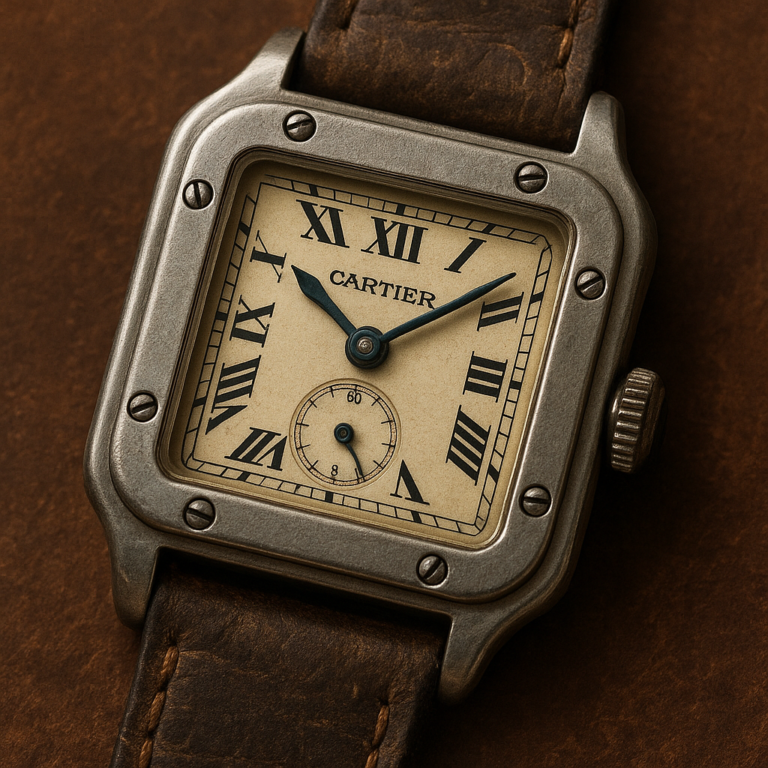
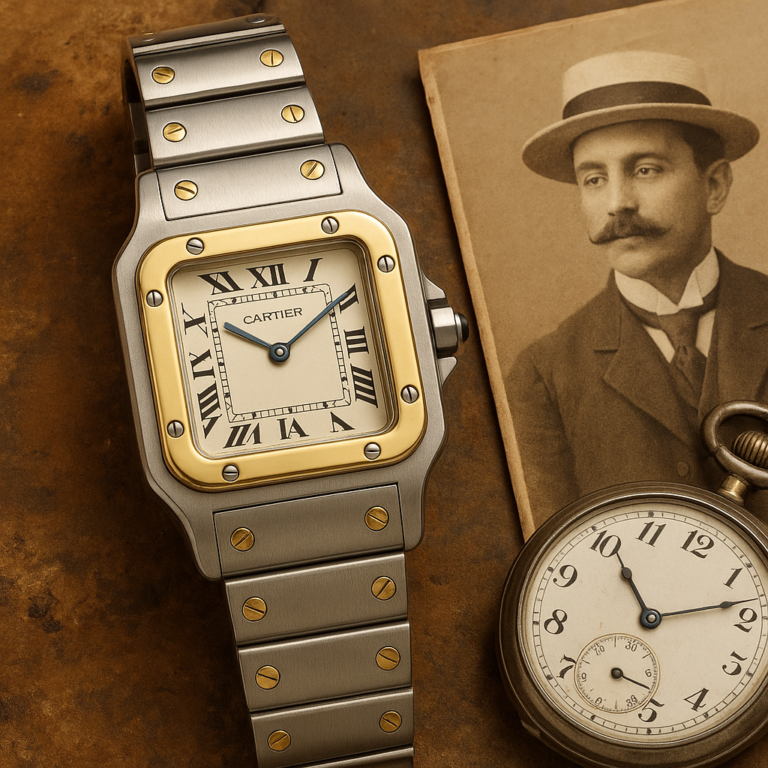
While the Cartier Santos (1904) is the grandfather of aviation watches, the Santos Galbée (1987) and the two-tone versions of the 70s/80s introduced a form of integration that was distinct.
- The Innovation: The Santos de Cartier features a bracelet where the links are integrated into the case via a system of screws, though it retains a level of modularity.
- Cultural Impact: Worn by Michael Douglas in Wall Street, it became the ultimate symbol of 80s corporate power.
👉 Shop Cartier on: Amazon | Official Website
7. The Zenith Defy: A Modern Reimagining of the Classic Form
The original Zenith Defy (1969) was a 40mm monster with an integrated bracelet, but it was ahead of its time. The modern Defy Classic and Defy Extreme have reimagined this concept with titanium and carbon fiber, proving that integration isn’t just for the 70s.
👉 Shop Zenith on: Amazon | Official Website
8. The Tudor Black Bay Pro: Bringing Heritage to the Masses
Tudor, Rolex’s sister brand, has mastered the art of the “affordable luxury” integrated look. The Tudor Royal (2020) and the Black Bay Pro (with its integrated-style bracelet option) bring the 70s aesthetic to a wider audience.
- The Value: You get the look and feel of a high-end integrated watch for a fraction of the price.
- The Movement: Powered by the in-house T60 series movements.
👉 Shop Tudor on: Amazon | Official Website
🔍 Anatomy of a Masterpiece: Understanding the Integrated Bracelet Construction
So, what actually makes a bracelet “integrated”? It’s not just a marketing buzzword. Let’s break down the engineering.
The “Male Link” Connection
In a traditional watch, the bracelet attaches to the case via lugs (the little arms sticking out) and spring bars. In an integrated design, the first link of the bracelet (often called the male link) is shaped to fit inside a recess in the case.
- No Spring Bars: You usually can’t just pop the bracelet off with a spring bar tool. It requires a specific screw or a specialized tool to disassemble the first link.
- The Taper: The bracelet often tapers significantly from the case to the clasp, creating a fluid, jewelry-like silhouette.
The Clasp Challenge
Because the bracelet is part of the case, the clasp must be perfectly matched.
- Hidden Clasps: Many integrated watches feature “hidden” clasps that fold into the bracelet to maintain the seamless look.
- Micro-adjustments: High-end integrated bracelets (like the Patek Philippe Glidelock or AP’s fine adjustments) often have complex mechanisms to fit the wrist perfectly without breaking the visual flow.
Pro Tip: If you own an integrated bracelet watch, never try to force a standard strap onto it. You will likely scratch the case or break the lugs. Stick to the brand’s specific strap options or use a professional watchmaker.
⚖️ The Great Debate: Integrated vs. Traditional Lug Attachments
Is one better than the other? The answer depends on what you value: Aesthetics or Versatility.
The Case for Integrated
- Aesthetic Unity: The watch looks like a single, cohesive object. It sits flush on the wrist and often wears smaller.
- Luxury Feel: The complexity of the manufacturing process often results in higher finishing standards.
- Exclusivity: You are locked into the brand’s ecosystem, which can drive up resale value (and scarcity).
The Case for Traditional Lugs
- Versatility: Want to wear your watch with a suit? Put on a leather strap. Going to the beach? Switch to rubber. Integrated watches limit this freedom.
- Serviceability: Changing a spring bar is easy. Disasembling an integrated bracelet can be a nightmare for the untrained.
- Cost: Traditional bracelets are often cheaper to replace if damaged.
“If a regular strap can be fitted to the watch, it is not an integrated design.” — Fratellowatches
This distinction is crucial. Many modern “integrated” watches (like the Rolex GMT-Master II or Omega Seamaster) are actually faux-integrated. They have the look of integration but retain traditional lugs. This gives you the best of both worlds: the sleek look with the ability to swap straps.
💎 Material Matters: Steel, Gold, Titanium, and Ceramic in Sports Watch Evolution
The material of the integrated bracelet is just as important as the design.
- Stainless Steel: The king of the genre. It’s durable, affordable (relatively), and develops a beautiful patina. The Royal Oak and Nautilus in steel are the most sought-after.
- Gold (Yellow, Rose, White): In the 70s, gold was the standard for luxury. The Patek Nautilus in gold is a classic, but steel has overtaken it in popularity due to the “sporty” aesthetic.
- Titanium: Brands like Bvlgari (Octo Finissimo) and Bell & Ross have embraced titanium for its lightness and modern look. It’s hypoallergenic and incredibly durable.
- Ceramic: Used by Hublot and Rado, ceramic offers a scratch-resistant, high-tech look. The Hublot Big Bang Integral is a prime example.
Material Comparison Table:
| Material | Pros | Cons | Best For |
|---|---|---|---|
| Steel | Durable, Classic, Affordable | Can be heavy, scratches easily | Daily Wear, Collectors |
| Gold | Prestige, Warmth, Value | Heavy, Soft, Expensive | Special Occasions |
| Titanium | Light, Hypoallergenic, Modern | Harder to polish, Can look “techy” | Active Lifestyles |
| Ceramic | Scratch-proof, Unique | Britle (can shatter), Expensive | Fashion Forward |
🛠️ Maintenance and Care: Keeping Your Integrated Link Bracelet Pristine
Owning an integrated bracelet watch is a commitment. Here’s how to keep it looking sharp.
- Regular Cleaning: Use a soft brush and mild soapy water to clean the links. Integrated bracelets have more crevices where dirt can hide.
- Avoid “Faux” Adjustments: Never try to remove links yourself unless you have the specific tool for that brand. The screws integrated bracelets are often tiny and require precision.
- Professional Servicing: When the watch needs a service, ensure the watchmaker is experienced with integrated bracelets. They may need to disassemble the entire bracelet to access the movement.
- Storage: Store the watch in a box that supports the bracelet’s shape to prevent kinking.
💰 Investment Potential: Which Integrated Sports Watches Hold Their Value?
Let’s talk money. The integrated bracelet sports watch market has seen insane appreciation, but not all models are created equal.
- The Blue Chips: Patek Philippe Nautilus (Ref. 571) and Audemars Piguet Royal Oak (Ref. 15202) are the gold standard. They often trade for multiples of their retail price.
- The Rising Stars: Vacheron Constantin 2 and IWC Ingenieur Jumbo are seeing a resurgence as collectors look for “undervalued” icons.
- The Modern Contenders: Bvlgari Octo Finissimo and H. Moser Streamliner are holding value well, but they haven’t reached the “holy grail” status of the 70s icons yet.
- The Cautionary Tale: Be wary of “me-too” watches from brands without a history in the genre. As the market saturates, the value of these newer models may stagnate.
“The trend’s trajectory is presented as an irony: it began with a sense of ‘scarcity and exclusivity’ but ended in ‘abundance and irony’.” — First Video Summary
🎯 How to Choose: Finding the Perfect Integrated Sports Watch for Your Wrist
Ready to take the plunge? Here’s your checklist:
- Wrist Size: Integrated bracelets often wear smaller, but the case thickness can be deceptive. Try them on!
- Budget: Are you looking for a vintage icon (high budget) or a modern entry-level piece (lower budget)?
- Lifestyle: Do you need a strap-swapping option? If so, look for “faux-integrated” models.
- Brand Heritage: Do you care about the history? If yes, stick to the Holy Trinity or their modern revivals.
- Comfort: The taper of the bracelet is crucial. A good integrated watch should feel like an extension of your arm.
Check out our guide to Buying Watches for more tips on making the right choice.
📝 Conclusion

The history of the integrated bracelet sports watch is a story of rebellion, innovation, and enduring style. From Gérald Genta’s napkin sketch to the saturation of the modern market, these watches have proven that a single, unified design can transcend trends.
While the market has seen a flood of “me-too” designs, the true icons—the Royal Oak, the Nautilus, and the 2—remain untouchable. They represent a perfect marriage of form and function that modern brands are still trying to replicate.
As we move forward, the question remains: Will the integrated bracelet remain the king of the hill, or will a new design language emerge? For now, the integrated sports watch stands as a testament to the idea that luxury is in the details, and sometimes, the most beautiful things are the ones that look like they were made in one piece.
Whether you’re a seasoned collector or a first-time buyer, there’s never been a better time to appreciate the art of the integrated bracelet. Just remember: authenticity matters, and the best watch is the one that fits your wrist and your soul.
🔗 Recommended Links
If you’re ready to explore the world of integrated bracelet sports watches, here are some top picks and resources:
- Audemars Piguet Royal Oak: Shop on Amazon | Official Website
- Patek Philippe Nautilus: Shop on Amazon | Official Website
- Vacheron Constantin 2: Shop on Amazon | Official Website
- Bvlgari Octo Finissimo: Shop on Amazon | Official Website
- Tudor Royal: Shop on Amazon | Official Website
- Book: The Integrated Bracelet: A History of the Luxury Sports Watch (Available on Amazon)
❓ FAQ: Your Burning Questions About Integrated Bracelet Sports Watches Answered

What are the best modern alternatives to vintage integrated bracelet sports watches?
If you can’t afford a vintage Royal Oak or Nautilus, consider the Tudor Royal, Bell & Ross BR 05, or the Chopard Alpine Eagle. These watches offer the integrated aesthetic with modern reliability and more accessible price points.
Read more about “What Are Some Nice Watches to Buy? Top 7 Picks for 2026 ⌚”
How does the integrated bracelet design affect the watch’s value?
Generally, true integrated designs hold their value better than traditional lugs, especially from heritage brands. However, the market is saturated, so only the most iconic models (like the Nautilus) see massive appreciation. Newer, non-iconic models may depreciate.
Read more about “Which Watch Brands Are Truly the Best? Top 20 Revealed (2026) ⌚️”
Why are integrated bracelet sports watches so popular today?
They offer a unique blend of luxury and sportiness. The seamless design is visually appealing, and the “lock-in” effect creates a sense of exclusivity. Plus, the 70s retro trend has brought them back into the spotlight.
Read more about “⏳ The History of Luxury Watches: From Queens to Space (2026)”
What are the most iconic vintage integrated bracelet sports watches?
The Audemars Piguet Royal Oak (1972), Patek Philippe Nautilus (1976), and Vacheron Constantin 2 (197) are the undisputed kings. The IWC Ingenieur Jumbo and Cartier Santos are also highly regarded.
Read more about “🏆 52 Best Watch Brands Under $500 (2026)”
How did the integrated bracelet sports watch evolve in the 1970s?
It started with the Royal Oak in 1972, followed by the Nautilus and 2. Brands like Girard-Peregaux (Laureato) and Piaget (Polo) joined the fray, creating a golden age of integrated design.
Read more about “What’s More Prestigious Than Rolex? Top 5 Luxury Watches in 2025 ⌚️”
Which brand invented the integrated bracelet sports watch design?
While Gérald Genta is credited with the concept, the Omega Constellation (1969) had early integrated designs. However, the Audemars Piguet Royal Oak was the first to successfully commercialize the “luxury sports watch” with a true integrated bracelet.
Read more about “Discover the 15 Best Luxury Watch Brands to Know in 2026 ⌚️”
What are the origins of the integrated bracelet sports watch?
The origins trace back to the 1960s and 70s, driven by the need for a new luxury category to counter the Quartz Crisis. The design was a response to the “crude” separation of case and strap.
Read more about “🕰️ Which Are the Watch Brands? The Ultimate 2026 Guide”
What is the difference between the Royal Oak, Nautilus, and other early integrated sports watches?
The Royal Oak has an octagonal bezel with visible screws. The Nautilus has a rounded octagonal bezel with hidden screws and horizontal dial lines. The 2 has a fluid, notched bezel. Each has a distinct DNA.
How does the integrated bracelet design differ from traditional watch straps?
An integrated bracelet is a single unit with the case, while a traditional strap attaches via lugs and spring bars. Integrated bracelets offer a seamless look but limit strap swapping.
Why are vintage integrated bracelet sports watches so expensive?
Scarcity, historical significance, and the “holy trinity” status drive prices. The original production numbers were low, and demand far exceeds supply.
Read more about “Top 12 Best Watch Brands for Vintage-Inspired Timepieces (2026) ⌚️”
What are the most iconic integrated bracelet sports watches in history?
See the “Holy Trinity” section above. The Royal Oak, Nautilus, and 2 are the top three, followed by the Piaget Polo and Chopard St. Moritz.
Read more about “🕰️ Watch Brands History: 15 Legendary Makers That Shaped Time (2026)”
How did the integrated bracelet design evolve in the 1970s?
It evolved from a niche experiment to a mainstream trend, with brands like IWC, Cartier, and Rolex creating their own versions.
Which brand invented the integrated bracelet sports watch?
Audemars Piguet with the Royal Oak is widely credited, though Omega had earlier attempts.
Read more about “🏆 The Most Famous Watch Company Revealed: Top 25 Brands (2026)”
What is the history of the integrated bracelet sports watch?
It began in the early 1970s as a response to the Quartz Crisis, with Gérald Genta’s designs leading the way. It has since evolved into a dominant trend in the luxury watch market.
Read more about “🏆 15 Best Watch Brands for Luxury Sports Watches (2026)”
📚 Reference Links
- Revolution Watch: The Integrated Bracelet Story
- Fratellowatches: Stop Releasing Sports Watches with Integrated Bracelets
- A Colected Man: An Honest Take on Integrated Bracelet Watches
- Audemars Piguet Official Site
- Patek Philippe Official Site
- Vacheron Constantin Official Site
- Watch Brands™: History of Watches