Support our educational content for free when you purchase through links on our site. Learn more
⌚ How the Quartz Crisis Saved Swiss Watchmaking (2026)

In 1970, Switzerland held half the global watch market; by 1983, that number had plummeted to a mere 10%, and the industry stood on the brink of total extinction. It wasn’t a war of nations that nearly erased centuries of horological heritage, but a tiny, battery-powered crystal that ticked with perfect, souless precision. You might think this story ends with the death of the mechanical watch, but the twist is far more dramatic: the crisis didn’t kill Swiss watchmaking; it forced it to evolve into the luxury empire we know today. From the ashes of 160 bankrupt workshops rose the Swatch, a plastic revolution that funded the resurrection of Breguet and Patek Philippe, turning timepieces from mere tools into investment-grade art.
Key Takeaways
- The Paradox of Survival: The Quartz Crisis nearly destroyed the Swiss industry by making mechanical watches obsolete, yet it ultimately saved them by forcing a strategic pivot from mass-market utility to exclusive luxury.
- The Power of Consolidation: The merger of ASUAG and SSIH to form the Swatch Group under Nicolas Hayek was the critical turning point, using the low-cost Swatch to generate the capital needed to acquire and revitalize historic brands.
- Emotion Over Accuracy: Swiss manufacturers realized they could never compete on precision or price against Japanese quartz; instead, they mastered the art of selling heritage, craftsmanship, and status, creating a market where a mechanical watch is valued for its “soul” rather than its timekeeping.
- Modern Resilience: The lessons learned in the 1970s have made the Swiss luxury sector remarkably resilient, allowing it to withstand the modern threat of smartwatches by doubling down on emotional value and long-term investment potential.
Table of Contents
Quick Tips and Facts
Welcome to the Watch Brands™ deep dive! We’ve spent decades analyzing the tectonic shifts in horology, and few events are as dramatic or pivotal as the Quartz Crisis. Here is the rapid-fire breakdown for you:
- The “Cris” Wasn’t Just Tech: While quartz technology was the spark, the real fuel was an economic storm involving the soaring value of the Swiss Franc and rigid industry cartels that refused to modernize. 📉
- Japan’s Masterstroke: Seiko didn’t just invent the quartz watch; they opened their patents to the world. This strategic move flooded the market with affordable, accurate timepieces, forcing Swiss manufacturers to either adapt or die. 🇯🇵
- Swiss Collapse: Between 1970 and 1983, the number of Swiss watchmakers plummeted from 160 to 60, and employment dropped from 90,0 to 28,0. It was an existential threat to a national identity. 🇨🇭
- The Swatch Savior: Nicolas Hayek’s genius wasn’t just in merging companies; it was in creating the Swatch—a plastic, fashion-forward watch that saved the industry’s cash flow and allowed for the consolidation of luxury brands. 🧡
- Luxury Pivot: The crisis forced Swiss watchmakers to stop competing on accuracy and start competing on heritage, craftsmanship, and status. This shift is why your grandfather’s mechanical watch is worth more today than a brand-new quartz one. 💎
- Modern Parallel: Just as quartz threatened mechanical watches, smartwatches now threaten quartz watches. But unlike the 1970s, the luxury mechanical sector has proven remarkably resilient, focusing on emotional value over utility. ⌚
The Genesis of the Quartz Revolution
To understand the impact, we first have to look at the history of watches and the state of play before the storm. For decades, the Swiss held a near-monopoly on global watchmaking, relying on intricate mechanical movements that required skilled artisans. But in the mid-20th century, a new player entered the arena, one that didn’t care about gears and springs.
The Swiss Lead in Quartz?
Contrary to popular belief, Switzerland was actually a pioneer in quartz technology. The Centre Electronique Horloger (CEH) in Neuchâtel developed the first quartz wristwatch in 1967. However, the Swiss industry was fragmented. Small workshops, protected by cartels, were slow to adopt this new, “souless” technology. They believed mechanical watches would always remain the premium choice.
“From their position of market strength… many in Switzerland thought that moving into electronic watches was unnecessary.”
This arrogance became their undoing. While Swiss firms debated the philosophical implications of quartz, Japanese manufacturers were busy perfecting it.
The Japanese Challenger: Seiko and the Astron
In 1964, Seiko provided the official timekeeping for the Tokyo Olympics with the Crystal Chronometer QC-951. This wasn’t just a watch; it was a statement. Then, on December 25, 1969, Seiko dropped the Astron, the world’s first commercial quartz wristwatch.
Why did the Astron matter so much?
- Accuracy: It lost only 10 seconds per month, compared to mechanical watches that might gain or lose minutes daily.
- Inovation: Seiko released its patents to the public. This was a masterstroke. By making quartz technology a “de facto standard,” they ensured that everyone—from Casio to Hamilton—would use quartz, flooding the market and driving down prices.
| Feature | Mechanical Watch (Pre-1970s) | Seiko Astron (1969) |
|---|---|---|
| Power Source | Mainspring (Manual/Automatic) | Quartz Crystal + Battery |
| Accuracy | ±15-30 seconds/day | ±10 seconds/month |
| Maintenance | Frequent servicing required | Battery change every 1-2 years |
| Cost | High (Skilled Labor) | Lower (Mass Production) |
| Complexity | ~91 moving parts | ~50+ electronic components |
The Swiss Response: Too Little, Too Late?
Swiss brands did eventually respond. Girard-Peregaux introduced the Caliber 350 in 1971, boasting incredible accuracy. Omega released the Electroquartz at the 1970 Basel Fair. Hamilton (then American, but with Swiss roots) launched the Pulsar, the first digital electronic watch.
However, these efforts were fragmented. The Swiss Ebauches S.A. and other cartels enforced price controls and restricted competition to protect small manufacturers. This lack of unified innovation allowed Japanese brands like Seiko, Citizen, and Casio to dominate the mass market.
The Swiss Watchmaking Industry Before the Storm
To grasp the magnitude of the fall, we must appreciate the height of the climb. Before the 1970s, the Swiss watch industry was the backbone of the global market.
The “Établissage” System
The Swiss relied on a system called établissage, where production was dispersed among thousands of small, specialized family workshops. One made the case, another the dial, another the movement. This system fostered incredible craftsmanship but was terible for mass production.
“The cartels, cooperatives, and holding companies created in the 1920s were designed to retain the geographical and functional dispersion of watchmaking.”
This structure meant that when quartz technology arrived, which required vertical integration and high-volume manufacturing, the Swiss were structurally incapable of competing. They were artisans trying to fight an industrial war with paintbrushes.
The Economic Time Bomb
While the tech war was brewing, an economic disaster was unfolding. The collapse of the Breton Woods system in the early 1970s led to floating exchange rates. The Swiss Franc appreciated dramatically.
- 1970: 1 USD = ~4.375 CHF
- 1975: 1 USD = ~2.50 CHF
- 1978: 1 USD = ~1.50 CHF (Peak)
This meant a Swiss watch cost three times as much in 1978 compared to a decade earlier. Swiss exports became prohibitively expensive. Japanese watches, backed by a weaker Yen, were not only cheaper but also more accurate. The Swiss were being squeezed out of their own market.
The Japanese Challenger: Seiko and the Astron
Let’s zoom in on the villain (or hero, depending on your perspective) of this story: Seiko.
The Patent Strategy
Seiko’s decision to open its quartz patents was not just generous; it was strategic. By establishing quartz as the standard, Seiko ensured that the entire world would move away from mechanical watches. This created a massive global market for quartz components, which Seiko could supply at scale.
The Grand Quartz and Beyond
Seiko didn’t stop at the Astron. They introduced the Grand Quartz (Twinquartz) in 1978, which used two oscillators to cancel out temperature-induced errors, achieving unprecedented accuracy. They also developed the Crystal Chronometer for sports timing, cementing their reputation for precision.
The Impact on Swiss Brands
Swiss brands were caught off guard. Omega tried to compete with the Electroquartz, but it was based on the Beta 21 movement, a joint project that was too complex and expensive to produce at scale. Hamilton’s Pulsar was a hit, but Hamilton was American, and its Swiss operations were struggling.
The result? A massive shift in consumer preference. For the first time, accuracy mattered more to the average buyer than heritage. And in accuracy, quartz won every time.
The Collapse of Swiss Market Share
The numbers are stark. The Quartz Crisis wasn’t just a dip; it was a cliff.
The Numbers Game
- 1970: Swiss watchmakers numbered 160.
- 1983: Only 60 remained.
- Employment: Dropped from 90,0 to 28,0.
- Market Share: Switzerland’s global share fell from 50% to less than 10% in the low-to-mid price segments.
Bankruptcies and Disappearances
Many famous names vanished. Bovet, Lemania, and Valjoux (a major movement maker) were absorbed or went under. The psychological impact was devastating. Watchmaking was not just a job in Switzerland; it was a national identity. Seeing this industry crumble was traumatic.
The “Quartz Plague”
The media dubbed the influx of quartz watches the “Quartz Plague.” Consumers were buying quartz watches for their reliability and low cost. Mechanical watches were seen as obsolete, expensive, and unnecessary. The Swiss industry was effectively dead in the water for the mass market.
The Great Consolidation: Birth of the Swatch Group
Out of the ashes, a phoenix rose. But it wasn’t a phoenix of gold and gears; it was a phoenix of plastic and strategy.
The Merger of ASUAG and SIH
In 1983, the two largest Swiss watch groups, ASUAG (which owned ETA, Longines, Rado) and SSIH (which owned Omega, Tissot), merged to form SMH (Société de Microélectronique et d’Horlogerie). This was a desperate move to consolidate resources and stop the bleeding.
Nicolas Hayek’s Vision
Enter Nicolas G. Hayek, a consultant who saw the writing on the wall. He realized that SMH needed a cash cow to fund the restructuring of the luxury brands. That cash cow was the Swatch.
The Swatch: A Watch for the People
Launched in 1982, the Swatch was revolutionary:
- Price: Sold for 50 Swiss Francs (a fraction of a mechanical watch).
- Design: Fashion-forward, colorful, and playful.
- Production: Only 51 moving parts (vs. 91+ in mechanical watches).
- Assembly: Fully automated, reducing labor costs.
The Swatch was a phenomenon. Over 2.5 million units were sold in less than two years. This cash flow allowed SMH to acquire struggling luxury brands like Blancpain, Breguet, and Glashütte Original.
“ETA caused a sensation with the low-cost Swatch… But the fashionable plastic watch provided the impetus and financing for much-needed consolidation and focus.”
Selection and Concentration
Hayek also implemented a strategy of “Selection and Concentration.” SMH streamlined its brands, eliminating duplication. Omega was positioned as the core luxury brand, focusing on heritage and innovation. Tissot took the mid-range. Swatch handled the fashion/volume segment. This clarity helped the group regain its footing.
The Mechanical Renaissance: How Swiss Watches Survived
With the Swatch saving the company’s finances, SMH (later renamed The Swatch Group in 1985) could focus on the long-term recovery of mechanical watchmaking.
Rebranding Mechanical Watches as Luxury
The key insight was that mechanical watches could no longer compete on utility. They had to compete on emotion. Swiss brands began marketing mechanical watches as:
- Art Pieces: Celebrating the craftsmanship of the movement.
- Heritage: Highlighting centuries of history.
- Status Symbols: Positioning them as exclusive, high-end goods.
This shift was crucial. It moved the conversation away from “accuracy” (where quartz wins) to “soul” (where mechanical wins).
The Role of Rolex and Independent Brands
While SMH orchestrated the recovery, Rolex had already insulated itself. Rolex focused on robustness, prestige, and a strong secondary market. Patek Philippe, Vacheron Constantin, and Audemars Piguet also thrived by maintaining their exclusivity and heritage.
The Richemont and LVMH Entries
The success of the Swatch Group model attracted other conglomerates. Richemont acquired Cartier, Jaeger-LeCoultre, and IWC. LVMH entered the fray with Zenith and TAG Heuer. This consolidation created the modern luxury watch landscape we know today.
The Shift to Luxury and Heritage Marketing
The Quartz Crisis forced Swiss watchmakers to become marketers as much as engineers.
The “Haute Horlogerie” Concept
Brands began to emphasize complications (tourbillons, perpetual calendars, minute repeaters) not for utility, but for technical prowess. These features were impractical for daily timekeeping but showcased the brand’s mastery.
Storytelling and Heritage
Marketing campaigns shifted to focus on exploration (Omega with NASA), sport (Rolex with diving and racing), and royalty (Patek Philippe with heirs). The narrative was no longer “this watch tells time”; it was “this watch tells your story.”
The Secondary Market Boom
As brands tightened supply and emphasized exclusivity, the secondary market for vintage and limited-edition watches exploded. This created a self-reinforcing cycle of value appreciation, further cementing the luxury status of Swiss mechanical watches.
The Modern Era: Smartwatches vs. Traditional Horology
Fast forward to the 2010s. A new crisis loms: Smartwatches.
The Apple Watch Effect
Launched in 2015, the Apple Watch disrupted the watch industry again. Like quartz in the 1970s, smartwatches offered superior utility (health tracking, notifications, connectivity). Sales of quartz watches plummeted.
The Resilience of Luxury
However, the impact on high-end mechanical watches was minimal. Why?
- Different Value Proposition: Smartwatches are tools; luxury watches are jewelry/status symbols.
- Emotional Connection: People still want to wear something with history and craftsmanship.
- Longevity: A mechanical watch can last generations; a smartwatch becomes obsolete in 3-5 years.
The “New Quartz Crisis”?
Some analysts warn of a “new quartz crisis,” but the luxury segment has proven resilient. Brands like Rolex and Audemars Piguet continue to thrive, with waiting lists and price increases. The lesson from the 1970s is clear: Utility is commoditized; luxury is eternal.
Key Innovations That Saved Swiss Watchmaking
Several key innovations and strategies were pivotal in the Swiss recovery.
ETA’s Standardization
ETA (part of the Swatch Group) standardized movements across brands. This reduced costs and allowed for efficient production. ETA also began selling movements to external brands, creating a new revenue stream.
The Tourbillon Revival
Brands like Breguet (acquired by Swatch Group) revived the tourbillon, a complication designed to counteract gravity’s effect on accuracy. While no longer necessary for accuracy, it became a symbol of technical mastery.
Marketing of “Swiss Made”
The “Swiss Made” label was strengthened and protected. It became a guarantee of quality and heritage, allowing Swiss watches to command premium prices globally.
Global Impact on Watchmaking Regions
The Quartz Crisis reshaped the global watch map.
Japan’s Dominance
Japan became the world’s largest watch producer, dominating the mid-range and fashion segments with brands like Seiko, Citizen, and Casio.
China’s Rise
In the 20s, China emerged as a major player in the affordable segment, further squeezing the mid-range market.
Switzerland’s Niche
Switzerland retreated to the luxury niche, becoming the undisputed king of high-end mechanical watches. This shift was painful but ultimately profitable.
Economic and Cultural Aftermath of the Quartz Crisis
The crisis had profound economic and cultural effects.
Economic Restructuring
The Swiss watch industry moved from a fragmented, artisanal model to a consolidated, industrial model. This allowed for greater efficiency and global competitiveness in the luxury segment.
Cultural Identity
The crisis challenged the Swiss national identity. Watchmaking is deeply ingrained in Swiss culture. The recovery was seen as a national triumph, restoring pride and confidence.
The “Swatch” Culture
The Swatch became a cultural icon, influencing fashion and design. It proved that watches could be more than just timekeepers; they could be expressions of personality.
Iconic Swiss Watches That Defined the Recovery
Several watches symbolize the Swiss recovery.
The Swatch (1983)
The original Swatch (e.g., the SBB or Swatch Big Iron) was a fashion statement. It saved the industry’s cash flow and proved that watches could be affordable and stylish.
Omega Speedmaster Professional
The Speedmaster’s heritage as the “Moonwatch” helped reinforce Omega’s position as a leader innovation and exploration.
Rolex Submariner
The Submariner continued to be marketed as the ultimate dive watch, emphasizing durability and heritage.
Patek Philippe Nautilus
Launched in 1976, the Nautilus was one of the first luxury sports watches. It bridged the gap between casual wear and high horology, appealing to a new generation of buyers.
Psychological Factors in the Return to Mechanical Watches
Why did consumers return to mechanical watches?
The “Soul” of the Machine
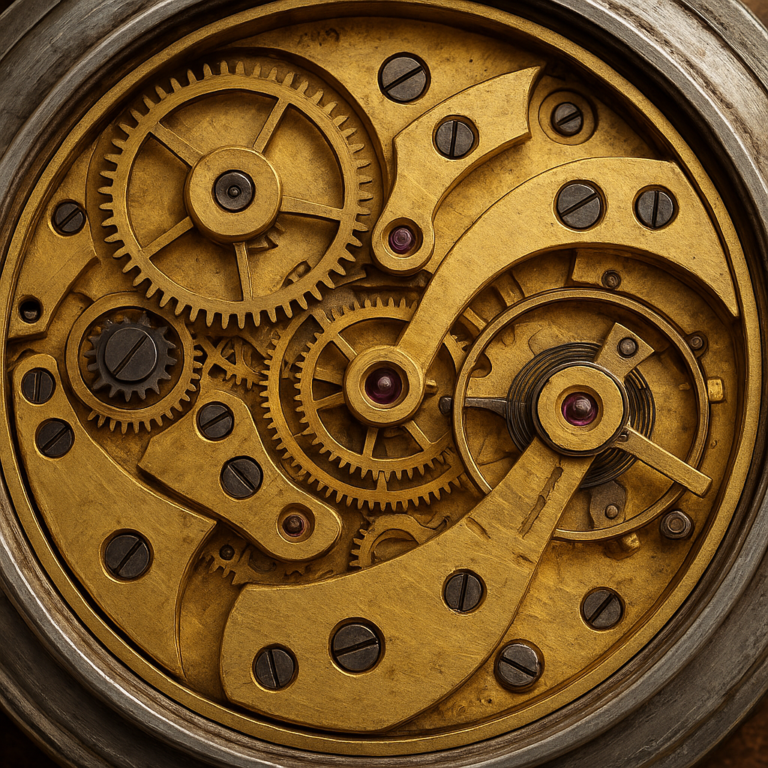
Mechanical watches offer a tangible connection to human craftsmanship. The ticking balance wheel, the visible gears—these elements create an emotional bond that quartz cannot replicate.
Status and Exclusivity
Luxury watches are status symbols. Owning a Rolex or Patek Philippe signals success and taste. This social signaling is powerful.
Investment Value
The appreciation of luxury watches assets has attracted investors. Unlike quartz watches, which depreciate, high-end mechanical watches can increase in value.
The “Analog” Rebellion
In a digital world, analog watches offer a break from screens. They encourage mindfulness and appreciation of traditional craftsmanship.
Recommended Links
- Luxury Watch Brands
- Guide to Buying Watches
- Men’s Watches
- Affordable Watches
- Fashion Trends in Watches
FAQ

What was the Quartz Crisis?
The Quartz Crisis was a period in the 1970s and 1980s when the Swiss watch industry was nearly destroyed by the rise of accurate, affordable quartz watches from Japan and the US.
Read more about “🕰️ Watch Brands History: 15 Legendary Makers That Shaped Time (2026)”
How did the Swatch save the Swiss watch industry?
The Swatch provided a massive cash flow through its low-cost, high-volume sales. This money funded the consolidation of Swiss brands and the development of luxury mechanical watches.
Read more about “⏳ The History of Luxury Watches: From Queens to Space (2026)”
Why are mechanical watches still popular today?
Mechanical watches are valued for their craftsmanship, heritage, and status. They are seen as art pieces and investments, unlike quartz watches which are seen as utilitarian tools.
Read more about “⚙️ The Evolution of Automatic Self-Winding Watch Movements (2026)”
Did the Quartz Crisis affect all Swiss brands equally?
No. Luxury brands like Rolex and Patek Philippe were less affected because they focused on high-end markets. Mass-market brands suffered the most.
How does the Quartz Crisis compare to the Smartwatch era?
Both crises threatened Swiss watchmakers. However, the luxury mechanical segment has proven resilient to smartwatches, just as it was to quartz watches, by focusing on luxury and heritage.
Reference Links
Conclusion

The story of the Quartz Crisis is not merely a tale of technological obsolescence; it is a masterclass in strategic reinvention. We began this journey asking how a nation that defined timekeeping for centuries could nearly vanish from the map. The answer lies in the painful but necessary pivot from utility to emotion.
Swiss watchmakers learned that they could not compete with the accuracy and affordability of quartz. Instead, they doubled down on what they did best: craftsmanship, heritage, and exclusivity. The crisis forced the industry to consolidate, creating the powerful groups we see today (Swatch Group, Richemont, LVMH), and birthed the Swatch, a cultural icon that funded the resurrection of haute horlogerie.
The Verdict for the Modern Collector:
- ✅ The Positives: The crisis saved the soul of Swiss watchmaking. It transformed mechanical watches from mere tools into investment-grade assets and works of art. Without it, brands like Breguet, Blancpain, and Glashütte Original might have disappeared forever.
- ❌ The Negatives: The human cost was staggering. Thousands of skilled artisans lost their livelihoods, and the établissage system of small, independent workshops was largely destroyed in favor of industrial consolidation.
- 💡 Our Recommendation: If you are looking for a timepiece that tells time, a modern Seiko or Casio is unbeatable. But if you seek a companion that tells a story, connects you to history, and holds value, a Swiss mechanical watch is the only choice. The crisis taught us that while technology changes, the human desire for beauty and legacy remains eternal.
As we face the current era of smartwatches, the lesson remains the same: Don’t fight the tool; elevate the art. The Swiss didn’t just survive the storm; they learned to dance in the rain.
Recommended Links
For those inspired to explore the history or acquire a piece of this legacy, here are our top picks for books and timepieces that define the era and the recovery.
📚 Essential Reading
- “The Watch Book” by Gisbert L. Bruner: A comprehensive guide to the history and mechanics of watches, perfect for understanding the context of the crisis.
- Check Price on Amazon
- “Swatch: The Story of the Watch That Changed the World” by Nicolas G. Hayek: The definitive account of the man and the watch that saved the industry.
- Check Price on Amazon
- “Seiko: The Watch That Changed the World” by Seiko Museum: An in-depth look at the Japanese challenger that forced the Swiss to evolve.
- Check Price on Amazon
⌚ Iconic Timepieces to Explore
- The Swatch (Original Models): Experience the watch that started the renaissance. Look for vintage models like the Big Iron or SBB.
👉 Shop Swatch on: Amazon | Swatch Official Website - Omega Speedmaster Professional: The “Moonwatch” that survived the crisis by leaning into its NASA heritage.
👉 Shop Omega on: Amazon | Omega Official Website - Seiko Astron (Modern Reissues): Celebrate the origin of the quartz revolution with a modern tribute to the 1969 classic.
👉 Shop Seiko on: Amazon | Seiko Official Website - Rolex Submariner: The ultimate symbol of the luxury pivot, representing durability and status.
👉 Shop Rolex on: Amazon | Rolex Official Website - Tissot Le Locle: A bridge between the affordable and the mechanical, representing the accessible side of the recovery.
👉 Shop Tissot on: Amazon | Tissot Official Website
FAQ

What lessons did Swiss watchmakers learn from the quartz crisis?
The primary lesson was that utility is a commodity. Swiss manufacturers realized they could not compete on accuracy or price against mass-produced quartz. Instead, they learned to market emotional value, heritage, and craftsmanship. They also learned the necessity of vertical integration and brand consolidation to survive in a globalized market.
Did the quartz crisis lead to the decline of American watchmaking?
Yes, significantly. While the crisis is often framed as “Swiss vs. Japanese,” American watchmaking was already struggling. Hamilton, a major American brand with Swiss roots, was acquired by the Swiss group Buren in 1969 and later integrated into the Swatch Group. The Pulsar, the first digital watch, was an American innovation, but the mass production capabilities required to sustain it were better aligned with Japanese and Swiss industrial models. By the 1980s, traditional American mechanical watchmaking had largely ceased to exist as a distinct industry.
How did the quartz crisis affect the price of Swiss mechanical watches?
Initially, prices for Swiss mechanical watches plummeted as demand evaporated. However, as the industry pivoted to the luxury segment, prices began to rise. By repositioning mechanical watches as luxury goods and investment assets, brands like Rolex and Patek Philippe were able to command premium prices that far exceeded their pre-cris levels. The crisis effectively created a two-tier market: affordable quartz (dominated by Japan) and expensive mechanical (dominated by Switzerland).
What role did the Swatch Group play in ending the quartz crisis?
The Swatch Group (originally SMH) was the architect of the recovery. Under Nicolas G. Hayek, it merged the fragmented ASUAG and SSIH groups, creating a powerhouse capable of competing globally. The introduction of the Swatch provided the necessary cash flow to fund the restructuring of luxury brands. The group also implemented standardization (via ETA movements) and brand differentiation, ensuring that each brand had a clear market position.
Why did Swiss watches become luxury items after the quartz crisis?
Swiss watches became luxury items because they had to. With quartz watches offering superior accuracy at a fraction of the cost, the only remaining value proposition for mechanical watches was exclusivity and artistry. Brands began to emphasize the hand-finishing, complications, and history of their timepieces. This shift turned watches from tools into status symbols and heirloms, a position they hold to this day.
What brands survived the quartz crisis in Switzerland?
Several brands survived by adapting or focusing on niche markets. Rolex remained strong due to its brand equity. Patek Philippe, Vacheron Constantin, and Audemars Piguet thrived in the ultra-luxury segment. The Swatch Group saved brands like Omega, Longines, Tissot, Blancpain, and Breguet. Independent brands like A. Lange & Söhne (revived later) and Glashütte Original also found their footing.
How did the quartz crisis change Swiss watchmaking forever?
The crisis fundamentally altered the structure of the industry. It ended the era of the independent workshop and the établissage system, replacing it with conglomerates and vertical integration. It also shifted the industry’s focus from mass production to high-end luxury. The crisis also led to the creation of the Swatch, which introduced the concept of watches as fashion accessories, a trend that continues today.
How did the quartz crisis change Swiss watchmaking strategies?
Strategies shifted from product-centric (focusing on accuracy and features) to brand-centric (focusing on heritage and lifestyle). Companies began to invest heavily in marketing, storytelling, and retail control. The Swatch Group pioneered the strategy of selection and concentration, eliminating duplicate brands and focusing resources on core strengths.
Why did Swiss watchmakers struggle during the quartz crisis?
Swiss watchmakers struggled due to a combination of technological complacency, economic factors (strong Swiss Franc), and structural rigidity. The industry was fragmented, with cartels preventing innovation and competition. They were slow to adopt quartz technology, believing mechanical watches would always dominate. When they finally did, they were too late and too expensive to compete with Japanese mass production.
How did the quartz crisis affect the value of vintage Swiss watches?
The crisis created a scarcity of high-quality mechanical watches from the pre-cris era. As the industry shifted to luxury, these vintage pieces became highly sought after by collectors. The historical significance of watches from the 1950s and 60s, combined with their craftsmanship, has driven their value up significantly. Today, vintage Rolex, Omega, and Patek Philippe watches often sell for multiples of their original price.
What innovations did Swiss watchmakers introduce after the quartz crisis?
Post-cris innovations focused on mechanical refinement and marketing. The Swatch introduced automated assembly and plastic cases for fashion watches. In the luxury sector, brands revived and refined complications like the tourbillon and perpetual calendar. The ETA movement was standardized and improved for efficiency. Brands also introduced new materials like ceramic and carbon fiber to modernize their offerings.
Did the quartz crisis lead to the rise of luxury mechanical watches?
Absolutely. The crisis was the catalyst that transformed mechanical watches from timekeeping instruments into luxury goods. By forcing Swiss brands to abandon the mass market, it allowed them to focus exclusively on the high-end segment, where they could charge premium prices for craftsmanship and heritage. This shift is the foundation of the modern luxury watch industry.
How did the Swatch Group help recover Swiss watchmaking after the crisis?
The Swatch Group provided the financial stability and strategic direction needed for recovery. By merging ASUAG and SSIH, it created a unified entity that could compete globally. The Swatch brand generated the cash flow necessary to acquire and revitalize struggling luxury brands. The group also implemented standardization and brand differentiation, ensuring that each brand had a clear and profitable market position.
Reference Links
- Seiko Museum: The Quartz Crisis and Recovery of Swiss Watches – An authoritative look at the Japanese perspective on the crisis.
- Wikipedia: Quartz Crisis – A comprehensive overview of the historical events and statistics.
- Europa Star: Debunking the Quartz Crisis – An analysis of the economic vs. technological causes.
- The Swatch Group: Our History – Official history of the group’s formation and growth.
- Omega: History of the Speedmaster – The story of the watch that survived the crisis.
- Rolex: The Submariner – The evolution of the iconic dive watch.
- Patek Philippe: The Nautilus – The luxury sports watch that bridged the gap.
- Breguet: History of Breguet – The revival of the historic brand under the Swatch Group.
- Longines: Heritage – The story of one of the oldest surviving Swiss brands.
- Tissot: Tissot History – The journey from the crisis to the modern era.