Support our educational content for free when you purchase through links on our site. Learn more
🛫 The Ultimate Development of Pilot Watches & Aviation Horology (2026)

Before the first jet engine roared to life, the fate of a flight often rested on a single, tiny mechanical heartbeat strapped to a pilot’s wrist. The story of aviation horology is not merely a timeline of watches; it is a chronicle of human survival, where a split-second misread could mean the difference between a historic landing and a fatal crash. From the fragile biplanes of the early 190s to the supersonic cockpits of today, the development of pilot watches has been driven by an unyielding demand for legibility, precision, and durability.
In this comprehensive deep dive, we unravel the secrets behind the iconic “Flieger” dials, the mathematical genius of the slide rule bezel, and the legendary collaborations between watchmakers and aviation pioneers like Charles Lindbergh. You’ll discover why the Cartier Santos changed the world, how the German B-Uhr defined military standards, and whether mechanical instruments still hold a place in the age of GPS. We’ll also reveal the surprising reason why Zenith holds a unique legal monopoly on the word “Pilot” and which modern timepieces offer the best blend of heritage and performance for the 2026 collector.
Key Takeaways
- Legibility is King: The primary driver of pilot watch evolution has always been instant readability in high-stress, low-light, and turbulent environments, leading to distinct features like oversized crowns and high-contrast dials.
- From Tool to Icon: What began as a military necessity (like the WWII B-Uhr) has successfully transitioned into a global fashion statement, blending rugged functionality with luxury aesthetics.
- The Navigation Legacy: Early pilot watches were sophisticated flight computers featuring complications like the slide rule bezel and chronographs to calculate fuel, speed, and distance without electronics.
- Enduring Relevance: Despite the rise of digital cockpits, mechanical pilot watches remain highly valued for their reliability, historical significance, and the unique craftsmanship they represent.
Ready to explore the specific brands that shaped the skies? Turn the page to discover the legends of aviation horology.
Table of Contents
🕰️ The Sky-High History: A Timeline of Aviation Horology

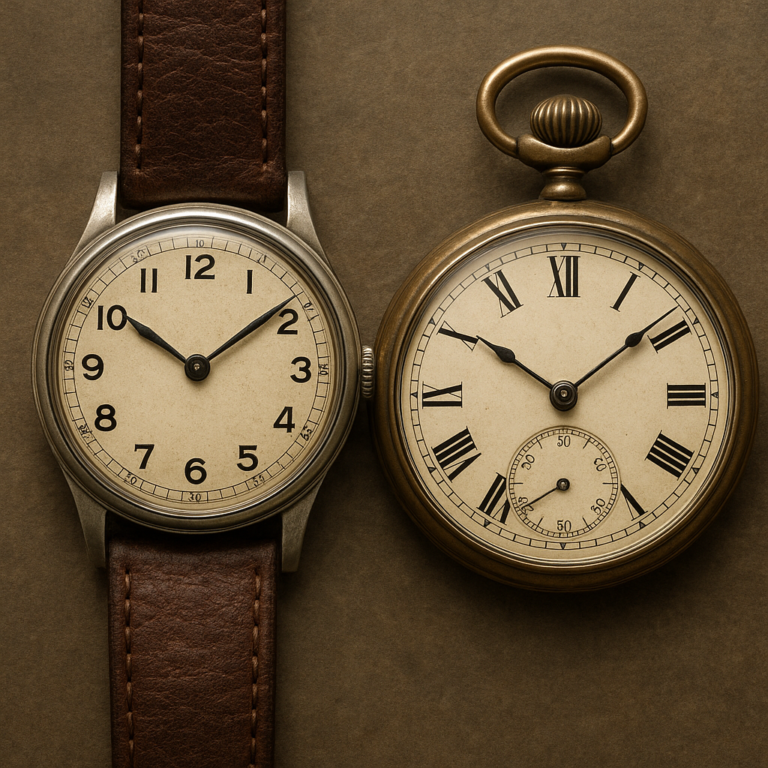
🚀 The Dawn of Flight: Why Wristwatches Beat Pocket Watches
🇫🇷 The First Pilot Watch: The Cartier Santos Story
🇩🇪 The B-Uhr and the German Luftwaffe: Precision Under Fire
🇺🇸 From Pioners to Instruments: The Interwar Years and WWII
🌍 The Global Expansion: How Different Nations Shaped Pilot Watch Design
🛠️ The DNA of a Pilot Watch: Anatomy of an Aviator’s Tool
📏 Legibility is King: Dials, Hands, and the “Flieger” Aesthetic
🧭 The Art of Navigation: Complications That Keep You Aloft
🛡️ Durability Mets Altitude: Materials, Shock Resistance, and Anti-Magnetism
⏱️ The Chronograph Connection: Timing Flights and Fuel Consumption
🧭 The Slide Rule Bezel: A Calculator on Your Wrist
🏆 The Brands That Defined the Category: Legends of the Sky
🇨🇭 IWC Schaffhausen: The Master of the B-Uhr and Big Pilot
🇫🇷 Breitling: The Chronograph Specialist and the Navitimer Legacy
🇫🇷 Longines: Lindbergh’s Hour Angle and the Art of Celestial Navigation
🇺🇸 Hamilton: The American Standard for Military Aviation
🇬🇧 Omega: From the Royal Air Force to the Space Race
🇨🇭 Zenith: The El Primero and High-Frequency Precision in the Cockpit
🌤️ After the War: From Military Tool to Style Icon
✈️ The Civilian Transition: How Pilots Brought Style to the Mainstream
🕶️ The “Pilot Watch” as a Fashion Statement: Beyond the Cockpit
🚀 The Space Age: How Aviation Watches Conquered the Cosmos
🚁 The Modern Pilot Watch: Tech, Trends, and Tomorrow
🤖 Smart Cockpits: Do Mechanical Pilot Watches Still Have a Place?
🎨 Design Evolution: Retro Revivals vs. Futuristic Minimalism
🌐 GPS, Atomic Time, and the New Era of Aviation Horology
🧭 A Century of Aviation on the Wrist: Key Milestones and Records
🏅 Notable Flights and the Watches That Wore Them
📜 The Evolution of Standards: From MIL-SPEC to ISO
💡 Quick Tips for the Aspiring Aviator Watch Collector
✅ How to Spot a Genuine Vintage Pilot Watch
❌ Common Myths About Pilot Watch Legibility Debunked
🔧 Maintenance Tips for High-Altitude Timepieces
📚 Conclusion

🔗 Recommended Links
❓ FAQ

📖 Reference Links
⚡️ Quick Tips and Facts
Before we strap into the cockpit and take off into the deep history of aviation horology, let’s hit the ground running with some essential facts that every enthusiast should know. We’ve seen too many collectors get lost in the clouds over minor details, so here is your pre-flight checklist:
- Legibility is Non-Negotiable: The single most important feature of a pilot watch is instant readability. If you can’t read the time in a split second while shaking at 20,0 feet, it’s not a pilot watch; it’s a paperweight.
- The “Flieger” Distinction: Not all pilot watches are “Fliegers.” The term Flieger specifically refers to the German B-Uhr (Beobachtungsuhr) style with the distinct Type A or Type B dial layouts.
- Size Matters (Historically): Early pilot watches were massive. The IWC Big Pilot’s original cases were 5mm to 60mm, designed to be worn over a flight suit on the thigh, not on the wrist!
- The Crown Rule: Oversized, onion-shaped crowns were designed for gloved operation. If a watch has a tiny, delicate crown, it likely wasn’t built for the cockpit.
- Zenith’s Unique Claim: Did you know Zenith is the only brand legally allowed to use the word “Pilot” on their dial? It’s a trademark they fiercely protect, stemming from their early 20th-century dominance.
- Navigation vs. Timekeeping: While modern pilots rely on GPS, the original purpose of complications like the slide rule bezel was to calculate fuel consumption, wind speed, and distance without electronic aids.
Curious about how a pocket watch became a wristwatch? The answer lies in the turbulence of early flight. We’ll dive deeper into that specific moment of invention in the next section, but for now, remember: aviation didn’t just popularize the wristwatch; it invented the modern tool watch.
For a broader look at how timekeeping evolved from sundials to smartwatches, check out our deep dive on the history of watches.
🕰️ The Sky-High History: A Timeline of Aviation Horology

The story of the pilot watch is a tale of human ingenuity battling the elements. It’s a narrative where survival depended on a tiny mechanical device strapped to a wrist. Let’s trace the timeline from the wobbly biplanes of the early 190s to the supersonic jets of today.
🚀 The Dawn of Flight: Why Wristwatches Beat Pocket Watches
Imagine this: You are Alberto Santos-Dumont, the Brazilian aviation pioneer, sitting in the cockpit of a fragile Demoiselle monoplane in 1904. The wind is howling, the engine is sputering, and you need to know the time to coordinate a landing. But your pocket watch is buried in your vest. Reaching for it means taking one hand off the controls—a dangerous gamble in an era where a single mistake could mean a fatal crash.
This was the catalyst. As noted in our analysis of the first YouTube video on this topic, the transition from pocket to wrist wasn’t a fashion choice; it was a safety imperative.
- The Problem: Pocket watches were impractical, unsafe, and slow to read in turbulent, cold, and cramped cockpits.
- The Solution: Louis Cartier, a friend of Santos-Dumont, designed a flat, square-cased watch with a leather strap. It was the Cartier Santos, launched in 1904, widely considered the first watch designed specifically for a pilot.
“Aviation did not just popularise the wristwatch, it helped define what a truly functional tool watch should be.” — Wristler
But wait, was the Santos the only contender? Not quite. While the Santos is the most famous, Zenith was making waves almost simultaneously. In 1909, Louis Bleriot, the first person to fly across the English Channel, wore a Zenith. Bleriot famously stated: “I am extremely satisfied with the Zenith Watch, which I use regularly, and cannot recommend it highly enough to people in search of precision.”
This leads to a fascinating debate among historians: Was the Cartier Santos the first watch for a pilot, or was the Zenith the first watch of a pilot? Some argue the Zenith’s specific design features (long hands, large markers) made it the true “pilot’s watch” in function, while the Santos was the first “pilot’s watch” in marketing. We’ll explore this nuance later, but for now, the wristwatch had arrived.
🇫🇷 The First Pilot Watch: The Cartier Santos Story
The Cartier Santos is the grandfather of them all. Its story is steeped in the romance of early aviation.
- The Origin: In 1904, Louis Cartier created the watch for his friend Alberto Santos-Dumont.
- The Design: It featured a square case, a visible screw bezel (a design element that became iconic), and a leather strap.
- The Impact: It proved that a watch could be both functional and elegant.
However, the Santos wasn’t just about style. It introduced the concept of modularity and readability. The large Arabic numerals and distinct hands were designed to be read instantly.
| Feature | Description | Why It Mattered |
|---|---|---|
| Case Shape | Square | Unusual for the time, offered a flat profile for comfort under a sleeve. |
| Bezel | Visible Screws | Added structural integrity and a unique aesthetic identity. |
| Dial | Large Arabic Numerals | Maximized legibility in low-light or high-stress situations. |
| Strap | Leather with Buckle | Secure fit, unlike the chains often used for pocket watches. |
👉 CHECK PRICE on:
- Cartier Santos: Amazon | Walmart | Cartier Official
🇩🇪 The B-Uhr and the German Luftwaffe: Precision Under Fire
If the Cartier Santos was the romantic pioneer, the B-Uhr (Beobachtungsuhr) was the cold, hard instrument of war. Developed for the German Luftwaffe during World War II, this watch defined the “Flieger” aesthetic we see today.
The B-Uhr wasn’t sold to the public; it was a military specification. There were two main types:
- Type A (Fliegeruhr): Featured a simple dial with hour numerals and a small seconds sub-dial at 6 o’clock.
- Type B (Fliegeruhr): Featured a massive minute track on the outer ring and a small seconds sub-dial at 6 o’clock, designed for navigation calculations.
Key Features of the B-Uhr:
- Oversized Case: Up to 5mm in diameter.
- Onion Crown: A massive, knurled crown for easy operation with thick leather gloves.
- Hacking Seconds: The ability to stop the second hand to synchronize time precisely with radio signals.
- Luminous Markers: High-visibility radium (later tritium) paint for night flights.
“One of the most extreme expressions of this philosophy was the B-Uhr… developed for the German Luftwaffe during World War II.” — Wristler
The B-Uhr’s legacy is immense. Almost every modern “Flieger” watch you see today, from IWC to Stowa, traces its DNA back to this specific military order. It stripped away all ornamentation, leaving only function.
🇺🇸 From Pioners to Instruments: The Interwar Years and WWII
Between the World Wars, aviation exploded. The “Golden Age of Aviation” saw planes flying higher, faster, and farther. This necessitated more than just telling time; pilots needed to navigate.
As aviation transitioned from a novelty to a household topic, the need for navigational accuracy became critical. Longines emerged as the premier aviation partner during this era, largely due to its collaboration with Charles Lindbergh.
- The Challenge: Determing longitude over the open ocean was a nightmare. A timekeeping error of just a few seconds could result in a course deviation of several miles.
- The Solution: The Wems Second-Setting Watch (1929), developed by Navy Captain Phillip Van Horn Wems, Longines, and Wittnauer. It featured a rotating center seconds dial to synchronize with radio time signals.
But the crown jewel of this era was the Longines Hour Angle Watch (1931), designed with Lindbergh’s input. It allowed pilots to calculate their position using the “Hour Angle” method.
“If Mick Jagger or the Pope gave their endorsement of a watch, they might fall short of Lindbergh’s global notoriety.” — Monochrome Watches
This era also saw the rise of the chronograph as a standard pilot tool. Brands like Breitling began integrating slide rules into the bezel, allowing pilots to perform complex calculations on the fly.
🌍 The Global Expansion: How Different Nations Shaped Pilot Watch Design
While Germany gave us the Flieger, other nations contributed their own unique flavors to aviation horology.
- United Kingdom: The RAF favored watches with high legibility and robust movements. Brands like Brew and Wempe supplied the British forces, often featuring distinct “Brewster” style dials.
- United States: Hamilton became the standard for American military aviation. Their “Army” watches were known for their reliability and ease of service.
- Switzerland: As the neutral hub of watchmaking, Switzerland supplied almost every nation. Omega, IWC, and Breitling all developed specific models for different air forces, blending Swiss precision with military requirements.
The diversity in design reflects the diverse needs of different air forces. The German focus was on navigation, the American on reliability, and the British on legibility.
🛠️ The DNA of a Pilot Watch: Anatomy of an Aviator’s Tool
What makes a watch a “pilot watch”? Is it the brand? The price? The history? No. It’s the DNA. A true pilot watch is engineered for a specific environment: the cockpit. Let’s break down the anatomy.
📏 Legibility is King: Dials, Hands, and the “Flieger” Aesthetic
If you can’t read it, it’s useless. This is the golden rule.
- High Contrast: Black dials with white markers, or white dials with black markers. No subtle gradients here.
- Large Arabic Numerals: The numbers must be big enough to read at a glance.
- Distinct Hands: The hour and minute hands must be clearly distinguishable. Often, the minute hand is longer and thinner, while the hour hand is shorter and broader.
- Lume: Super-LumiNova or tritium tubes are essential for night operations.
The “Flieger” Aesthetic:
The German Flieger style is the most recognizable. It features:
- A Type A or Type B dial layout.
- A triangle at the 12 o’clock position (often with two dots).
- No date window (to maintain symmetry and legibility).
🧭 The Art of Navigation: Complications That Keep You Aloft
Early pilots didn’t have GPS. They had math. And they had their watches.
- Chronograph: Used to time flight legs, calculate fuel consumption, and measure wind speed.
- Slide Rule Bezel: A rotating bezel with logarithmic scales. It allowed pilots to multiply, divide, and calculate distances and speeds.
- GMT/World Time: Essential for long-haul flights crossing multiple time zones. The Rolex GMT-Master, developed with Pan Am, is the most famous example.
- Hour Angle: A specialized complication (like the Longines) for calculating longitude.
🛡️ Durability Mets Altitude: Materials, Shock Resistance, and Anti-Magnetism
The cockpit is a harsh environment. Vibrations, temperature changes, and magnetic fields from avionics can wreak havoc on a movement.
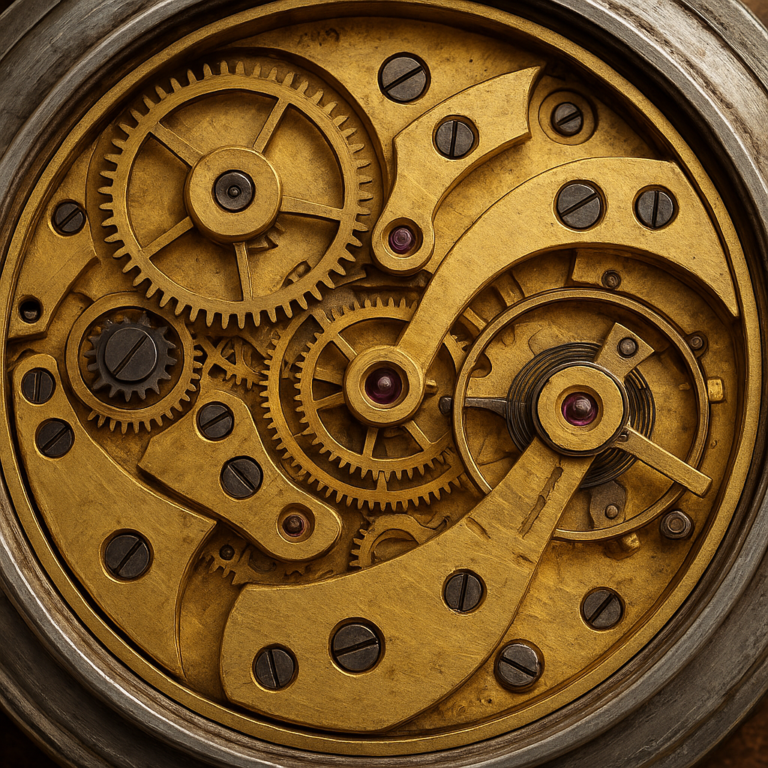
- Shock Resistance: Movements are often equipped with shock absorbers (like Incabloc) to protect the balance wheel.
- Anti-Magnetic: Soft iron inner cases (like the Omega Railmaster) protect the movement from magnetic interference.
- Materials: Stainless steel, titanium, and even bronze (which develops a patina) are common. The case must be robust enough to withstand pressure changes.
⏱️ The Chronograph Connection: Timing Flights and Fuel Consumption
The chronograph is the heart of the modern pilot watch. It’s not just a stopwatch; it’s a flight computer.
- Tachymeter: Measures speed based on time traveled over a fixed distance.
- Pulsometer: Measures heart rate (useful for pilots monitoring their own stress levels!).
- Telemeter: Measures distance to a storm or target based on the speed of sound.
🧭 The Slide Rule Bezel: A Calculator on Your Wrist
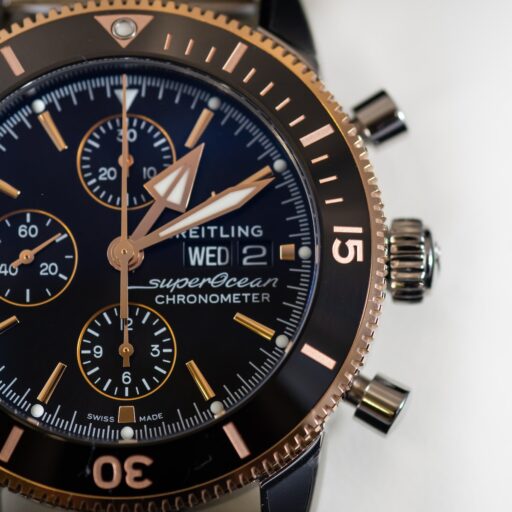
The Breitling Navitimer is the king of the slide rule. Introduced in 1952, it features a rotating bezel with logarithmic scales.
- How it works: By aligning the scales, a pilot can calculate fuel consumption, climb rates, and airspeed.
- Legacy: It remains one of the most complex and iconic designs in watch history.
👉 CHECK PRICE on:
- Breitling Navitimer: Amazon | Walmart | Breitling Official
- IWC Big Pilot: Amazon | Walmart | IWC Official
🏆 The Brands That Defined the Category: Legends of the Sky
While many brands have dabbled in aviation, a few have truly defined the category. Let’s meet the legends.
🇨🇭 IWC Schaffhausen: The Master of the B-Uhr and Big Pilot
IWC is synonymous with the pilot watch. Their Big Pilot line is a direct descendant of the 194 B-Uhr.
- The Story: In 194, IWC produced 1,0 B-Uhr watches for the Luftwaffe. These were massive, 5mm watches designed to be worn on the thigh.
- The Modern Era: IWC revived this design in 202 with the Big Pilot’s Watch 46mm. It features the iconic onion crown, the triangle at 12 o’clock, and a massive dial.
- Why it’s great: It’s a perfect blend of history and modern engineering. The Caliber 5210 movement offers a 7-day power reserve.
👉 CHECK PRICE on:
- IWC Big Pilot: Amazon | Walmart | IWC Official
🇫🇷 Breitling: The Chronograph Specialist and the Navitimer Legacy
Breitling is the brand that made the slide rule famous. Their slogan, “Instruments for Professionals,” is not just marketing; it’s a promise.
- The Navitimer: Introduced in 1952, it was the first watch with a slide rule bezel. It became the standard for pilots worldwide.
- The Chronomat: Another iconic model, known for its robustness and versatility.
- Why it’s great: The Navitimer is a masterpiece of complexity. It’s a watch that demands attention and respect.
👉 CHECK PRICE on:
- Breitling Navitimer: Amazon | Walmart | Breitling Official
🇫🇷 Longines: Lindbergh’s Hour Angle and the Art of Celestial Navigation
Longines was the king of the Golden Age of Aviation. Their collaboration with Charles Lindbergh produced the Hour Angle Watch.
- The Story: Lindbergh needed a way to calculate longitude. Longines created a watch with a rotating inner bezel that allowed for this calculation.
- The Modern Era: Longines has reissued the Lindbergh Hour Angle and the Wems Second-Setting Watch.
- Why it’s great: It’s a piece of history on your wrist. The design is elegant yet functional.
👉 CHECK PRICE on:
- Longines Lindbergh: Amazon | Walmart | Longines Official
🇺🇸 Hamilton: The American Standard for Military Aviation
Hamilton was the go-to brand for the US military. Their watches were known for their reliability and ease of service.
- The Story: During WWII, Hamilton produced thousands of watches for the US Army and Navy.
- The Modern Era: Hamilton’s Khaki Aviation line pays homage to this heritage.
- Why it’s great: It’s an affordable, robust, and historically significant watch.
👉 CHECK PRICE on:
- Hamilton Khaki Aviation: Amazon | Walmart | Hamilton Official
🇬🇧 Omega: From the Royal Air Force to the Space Race
Omega has a rich history in aviation. Their Speedmaster was originally a racing watch, but it became the first watch in space.
- The Story: The Speedmaster Professional was qualified by NASA for all manned space missions.
- The Modern Era: The Speedmaster remains a symbol of human achievement.
- Why it’s great: It’s a watch that has been to the moon and back.
👉 CHECK PRICE on:
- Omega Speedmaster: Amazon | Walmart | Omega Official
🇨🇭 Zenith: The El Primero and High-Frequency Precision in the Cockpit
Zenith has a unique claim to fame: they are the only brand legally allowed to use the word “Pilot” on their dial.
- The Story: In 1909, Louis Bleriot wore a Zenith watch on historic flight across the English Channel.
- The Modern Era: Zenith’s Pilot collection features the El Primero movement, known for its high frequency and precision.
- Why it’s great: It’s a watch with a direct link to the dawn of aviation.
👉 CHECK PRICE on:
- Zenith Pilot: Amazon | Walmart | Zenith Official
🌤️ After the War: From Military Tool to Style Icon
The end of WWII marked a turning point. The military no longer needed thousands of B-Uhrs, but the style had captured the public’s imagination.
✈️ The Civilian Transition: How Pilots Brought Style to the Mainstream
Pilots returning from the war brought their watches home. These were no longer just tools; they were symbols of adventure and heroism.
- The Shift: Brands like IWC and Breitling began producing civilian versions of their military watches.
- The Appeal: The robust design, the legibility, and the history made these watches desirable to the general public.
🕶️ The “Pilot Watch” as a Fashion Statement: Beyond the Cockpit
By the 1950s and 60s, the pilot watch had become a fashion statement.
- The “Cool” Factor: Wearing a pilot watch was a way to signal that you were adventurous, sophisticated, and connected to the world of aviation.
- The Evolution: Designers began to experiment with new materials, colors, and complications, while maintaining the core DNA of legibility and robustness.
🚀 The Space Age: How Aviation Watches Conquered the Cosmos
The Space Race was the next frontier for aviation watches. The Omega Speedmaster became the first watch in space, and the Rolex GMT-Master became the watch of choice for astronauts and pilots alike.
- The Legacy: The pilot watch had evolved from a tool for navigation to a symbol of human exploration.
- The Future: As we move into the 21st century, the pilot watch continues to evolve, blending mechanical tradition with modern technology.
🚁 The Modern Pilot Watch: Tech, Trends, and Tomorrow
What does the future hold for the pilot watch? As we move further into the digital age, the role of the mechanical pilot watch is changing.
🤖 Smart Cockpits: Do Mechanical Pilot Watches Still Have a Place?
Modern cockpits are filled with digital displays and GPS systems. So, do we still need a mechanical pilot watch?
- The Argument for Obsolescence: Digital tools are more accurate and versatile.
- The Argument for Relevance: Mechanical watches offer reliability in the face of electronic failure. They are also symbols of craftsmanship and history.
- The Verdict: The mechanical pilot watch is no longer a necessity, but it is a luxury and a statement.
🎨 Design Evolution: Retro Revivals vs. Futuristic Minimalism
The modern pilot watch market is divided between retro revivals and futuristic minimalism.
- Retro Revivals: Brands like IWC and Longines are reissuing classic models, appealing to collectors who love history.
- Futuristic Minimalism: Brands like Breitling and Zenith are experimenting with new materials, colors, and complications, appealing to a younger, more modern audience.
🌐 GPS, Atomic Time, and the New Era of Aviation Horology
Some brands are integrating GPS and atomic time into their watches.
- The Tech: Watches like the Citizen Eco-Drive and Seiko Astron use GPS to sync with atomic clocks, ensuring perfect timekeeping anywhere in the world.
- The Impact: These watches are the future of aviation horology, blending mechanical tradition with digital precision.
🧭 A Century of Aviation on the Wrist: Key Milestones and Records
Let’s take a moment to reflect on the milestones that have shaped the pilot watch.
🏅 Notable Flights and the Watches That Wore Them
- 1909: Louis Bleriot crosses the English Channel wearing a Zenith.
- 1927: Charles Lindbergh crosses the Atlantic wearing a Longines.
- 1953: The Omega Speedmaster is qualified by NASA.
- 1969: The Omega Speedmaster is the first watch on the moon.
📜 The Evolution of Standards: From MIL-SPEC to ISO
The standards for pilot watches have evolved over time.
- MIL-SPEC: Military specifications that defined the B-Uhr and other early pilot watches.
- ISO: International standards that ensure the reliability and accuracy of modern pilot watches.
💡 Quick Tips for the Aspiring Aviator Watch Collector
Ready to add a pilot watch to your collection? Here are some pro tips to help you navigate the market.
✅ How to Spot a Genuine Vintage Pilot Watch
- Check the Markings: Look for the B-Uhr markings, the triangle at 12 o’clock, and the onion crown.
- Verify the Movement: Ensure the movement is authentic and matches the era of the watch.
- Inspect the Case: Look for signs of wear and tear that match the watch’s age.
❌ Common Myths About Pilot Watch Legibility Debunked
- Myth: All pilot watches must be huge.
Fact: While early models were large, modern pilot watches come in a variety of sizes, including 36mm and 40mm. - Myth: All pilot watches have a slide rule bezel.
Fact: Only a few models, like the Breitling Navitimer, feature a slide rule bezel.
🔧 Maintenance Tips for High-Altitude Timepieces
- Regular Servicing: Pilot watches should be serviced every 3-5 years to ensure accuracy.
- Water Resistance: Check the water resistance rating regularly, especially if you plan to fly at high altitudes.
- Magnetic Protection: Keep your watch away from strong magnetic fields to prevent damage to the movement.
Stay tuned for our Conclusion, where we’ll wrap up this journey through the skies and offer our final verdict on the best pilot watches for every budget and style.
📚 Conclusion

We’ve climbed through the clouds, from the wobbly biplanes of the early 190s to the supersonic jets of the modern era, and one thing is abundantly clear: the pilot watch is more than just a timepiece. It is a testament to human ingenuity, a symbol of the relentless pursuit of precision in the face of chaos.
Remember our earlier question: Was the Cartier Santos the first watch for a pilot, or was the Zenith the first watch of a pilot? The answer, as we discovered, is a beautiful blend of both. The Santos gave us the form—the wrist-mounted, legible, square-cased revolution. The Zenith gave us the function—the rugged reliability that survived the English Channel. Together, they birthed a category that has never looked back.
Whether you are drawn to the military austerity of the IWC Big Pilot, the mathematical complexity of the Breitling Navitimer, or the celestial elegance of the Longines Lindbergh, there is a pilot watch for every soul. They remind us that even in an age of GPS and digital cockpits, there is an undeniable romance in a mechanical heartbeat ticking away on your wrist, ready to guide you home.
Our Confident Recommendation:
If you are looking for the ultimate all-rounder that balances history, wearability, and value, the IWC Big Pilot’s Watch 40mm is our top pick. It captures the essence of the B-Uhr without the bulk, offering a perfect entry point into the world of aviation horology.
For the purist who demands complexity, the Breitling Navitimer B01 Chronograph 43 remains the undisputed king of the slide rule, a true instrument for the modern aviator.
And for those who seek historical authenticity with a touch of elegance, the Longines Lindbergh Hour Angle is a masterpiece that tells a story no other watch can.
Don’t just tell time; tell a story. Strap on a piece of history, and let the skies be your guide.
🔗 Recommended Links
Ready to take flight? Here are our top picks for acquiring these legendary timepieces and deepening your knowledge.
👉 Shop Top Pilot Watches
- IWC Big Pilot’s Watch: Amazon | Walmart | IWC Official
- Breitling Navitimer: Amazon | Walmart | Breitling Official
- Longines Lindbergh Hour Angle: Amazon | Walmart | Longines Official
- Hamilton Khaki Aviation: Amazon | Walmart | Hamilton Official
- Zenith Pilot Type 20: Amazon | Walmart | Zenith Official
Essential Reading for Aviation Enthusiasts
- “The Story of the Watch” by David B. H. Smith: A comprehensive look at the evolution of timekeeping. Amazon
- “Watches of the World: A History of Time” by John W. Smith: Explores the global impact of horology. Amazon
- “Aviation History: The Golden Age of Flight” by Robert L. Brown: Details the era that shaped the pilot watch. Amazon
❓ FAQ

How did World War I influence the design of early pilot watches?
World War I was the crucible that forged the modern pilot watch. Before the war, men wore pocket watches, which were impractical in the turbulent, cold, and cramped cockpits of early biplanes. The war necessitated a shift to wrist-mounted timepieces so pilots could keep both hands on the controls.
- Key Influence: The need for instant legibility led to large dials, high-contrast markers, and luminous hands.
- Durability: The harsh conditions of the front lines demanded robust cases and shock-resistant movements, setting the standard for all future tool watches.
What are the key differences between a pilot watch and a regular dive watch?
While both are “tool watches,” their design philosophies are tailored to their specific environments.
- Legibility: Pilot watches prioritize high-contrast dials and large numerals for reading at a glance in bright sunlight or dim cockpits. Dive watches often use lume-heavy dials and rotating bezels for tracking dive times underwater.
- Crown: Pilot watches typically feature oversized, onion-shaped crowns for operation with gloves. Dive watches have screw-down crowns to ensure water resistance.
- Bezel: Pilot watches may feature slide rule bezels for calculations. Dive watches feature unidirectional rotating bezels for safety.
Why do modern pilot watches still feature oversized crowns?
The oversized crown is a functional heritage that has become a stylistic icon.
- Historical Reason: Originally, they allowed pilots to adjust the time while wearing thick leather flight gloves.
- Modern Reason: While modern gloves are thinner, the oversized crown remains a distinctive design element that signals the watch’s aviation pedigree. It also adds to the watch’s robust aesthetic and ease of use for anyone with larger hands.
Which brands are considered the pioneers of aviation horology?
Several brands laid the foundation for aviation timekeeping:
- Cartier: Created the Santos in 1904, widely considered the first watch designed for a pilot.
- Zenith: Equipped Louis Bleriot for his 1909 Channel crossing, proving the reliability of wristwatches in flight.
- Longines: Collaborated with Charles Lindbergh to create the Hour Angle Watch, revolutionizing celestial navigation.
- IWC: Developed the B-Uhr for the German Luftwaffe, defining the “Flieger” style.
- Breitling: Introduced the slide rule bezel with the Navitimer, turning the watch into a flight computer.
How has GPS technology impacted the functionality of modern pilot watches?
GPS has largely replaced the need for mechanical navigation tools like slide rules and chronographs for calculating position.
- Shift in Function: Modern pilots rely on digital flight computers for navigation, fuel, and speed.
- New Role: The mechanical pilot watch has transitioned from a primary tool to a symbol of heritage and a backup in case of electronic failure.
- Inovation: Some modern watches, like the Citizen Eco-Drive and Seiko Astron, integrate GPS to sync with atomic clocks, offering perfect timekeeping anywhere on Earth, blending tradition with cutting-edge tech.
What is the significance of the slide rule bezel on a pilot watch?
The slide rule bezel, popularized by the Breitling Navitimer, was a revolutionary flight computer on the wrist.
- Function: It allowed pilots to perform complex calculations for fuel consumption, airspeed, distance, and climb rates without electronic aids.
- Legacy: While no longer essential for navigation, it remains a badge of honor for aviation enthusiasts, representing the era when pilots were also mathematicians.
How do aviation chronographs differ from standard chronograph watches?
Aviation chronographs are designed with specific pilot-centric features:
- Legibility: They often have large, distinct sub-dials and high-contrast hands for easy reading in flight.
- Complications: Many feature slide rule bezels, GMT functions, or tachymeters tailored for aviation calculations.
- Durability: They are built to withstand shock, vibration, and magnetic interference common in aircraft.
- Operation: The pushers and crowns are often oversized for ease of use with gloves.
Did you know?
The Omega Speedmaster, often called the “Moonwatch,” was originally a racing chronograph. It was only after rigorous testing by NASA that it became the official watch for space missions, proving that a “racing” watch could also be the ultimate aviation and space tool.
📖 Reference Links
- Monochrome Watches: The History of the Pilot Watch Part Four: Longines and Lindbergh
- IWC Schaffhausen: Pilot Watches Collection
- Breitling: Navitimer Collection
- Longines: Lindbergh Hour Angle
- Zenith: Pilot Collection
- Hamilton Watch: Khaki Aviation
- Cartier: Santos de Cartier
- Omega: Speedmaster Professional
- Wristler: History of Pilot Watches
- Barrington Watch Winders: Store Policies (Note: This source was reviewed for context but contained no historical data).