Support our educational content for free when you purchase through links on our site. Learn more
🕰️ What Was the First Ever Best Watch? (2026)

The answer to what was the first ever best watch depends entirely on whether you value historical survival or revolutionary accuracy: the Watch 1505 (Pomander Watch) holds the title for the oldest surviving timepiece, while the Seiko 35SQ Astron claims the crown for the first truly accurate wristwatch that changed the world.
When we ask what was the first ever best watch, we aren’t just looking for a date on a calendar; we are hunting for the moment timekeeping shifted from a public utility to a personal obsession. Imagine holding a drum-shaped iron device from 1505 that loses ten hours a day, yet knowing it was the most advanced piece of technology in the room. That is the paradox of horology: the “best” is often the one that dared to be different first.
Most people assume the first watch was a tiny, egg-shaped marvel, but the reality is far gritier. The earliest portable timekeepers were heavy, unreliable, and so inaccurate that adding a minute hand was a waste of energy. Yet, they sparked a revolution that would eventually lead to the atomic precision of today’s Junghans Mega or the smart connectivity of the Apple Watch.
So, which one deserves the throne? Is it the rough-and-tumble ancestor that proved portability was possible, or the sleek innovator that made precision accessible to the masses? We’ve dissected the history, the mechanics, and the myths to bring you the definitive verdict.
⚡️ Key Takeaways
- The Historical Champion: The Watch 1505 (Pomander Watch) is the oldest surviving watch, proving that portable timekeeping was possible in the early 16th century, despite poor accuracy.
- The Accuracy Revolution: The Seiko 35SQ Astron (1969) was the first quartz wristwatch, shattering the accuracy records of mechanical movements and triggering the “Quartz Crisis.”
- The First Wristwatch: The Breguet No. 2639 (1810) was the first watch commissioned for the wrist, though the Cartier Santos (1904) popularized it for men.
- Defining “Best”: There is no single winner; the “best” depends on your criteria—heritage, precision, or cultural impact.
- Evolution is Key: From the balance spring to the quartz crystal, every “best” watch built upon the failures of its predecessors.
Ready to find your own piece of history?
- 👉 Shop Vintage & Antique Watches: Browse on eBay | Explore on Etsy
- Discover Modern Classics: Shop Seiko Watches | Shop Cartier Watches | Shop Breguet Watches
Table of Contents
- ⚡️ Quick Tips and Facts
- 🕰️ The Quest for the First Ever Best Watch: Defining “Best” in Horology
- 📜 A Brief History of Timekeeping: From Sundials to the First Mechanical Marvels
- 🏰 The Tower Clock Era: When Public Time Became Personal
- 🎒 The Rise of the Pocket Watch: The First Portable Timekeeper
- 🔧 The Game-Changing Invention: The Balance Spring and Hooke’s Contribution
- 🌡️ Mastering Accuracy: Temperature Compensation and the Birth of the Chronometer
- ⚙️ The Lever Escapement: Why This Mechanism Still Rules the Wrist
- 🏭 Mass Production and the American Watch Industry: Making Time Affordable
- 🎖️ The First Wristwatch: From “Sling Watch” to Military Essential
- ⚡️ The Electric Revolution: Batteries, Transistors, and the End of the Mainspring
- 💎 The Quartz Crisis: How a Tiny Crystal Shook the World of Luxury
- 📡 Radio-Controled and Atomic Time: The Quest for Perfect Synchronization
- 🤖 The Smartwatch Era: When Watches Became Computers on Your Wrist
- 🏆 Top Contenders for the Title of “First Ever Best Watch” Ranked
- 💡 Quick Tips and Facts for the Aspiring Collector
- ❓ Frequently Asked Questions About the First Best Watch
- 🔗 Recommended Links for Further Reading
- 📚 Reference Links and Historical Sources
- 🏁 Conclusion: The Verdict on the First Ever Best Watch
⚡️ Quick Tips and Facts
Before we dive into the murky, fascinating waters of horological history, let’s get the hard truths straight. If you’re looking for a single “best” watch from 1505, you might be disappointed by the accuracy, but thrilled by the engineering. Here is the scoop from our team at Watch Brands™:
- The “First” is a Myth: There is no single “first” watch. It was an evolution, not a eureka moment in a garage.
- Accuracy Was Terible: The earliest portable timepieces could lose hours per day. If you relied on a 1505 watch for a train connection, you’d miss it by a mile.
- The “Nuremberg Egg”: The first portable watches were drum-shaped, not the round “egs” we imagine. The nickname came later.
- Peter Henlein’s Legacy: While often credited as the inventor, he was likely one of many German clockmakers experimenting with mainsprings simultaneously.
- The Real Game-Changer: The balance spring (1657) is what turned a “time-telling toy” into a “timekeeping instrument.”
- Wristwatches Started as Jewelry: For men, the wristwatch was a solution to a military problem, not a fashion statement.
For a deeper dive into the very earliest timepieces, check out our article on What were the first watches ever?.
🕰️ The Quest for the First Ever Best Watch: Defining “Best” in Horology
So, you’re asking the million-dollar question: “What was the first ever best watch?”
Here’s the kicker: It depends entirely on how you define “best.”
If “best” means oldest surviving, the crown goes to the Watch 1505 (the Pomander Watch). If “best” means most accurate, we have to skip ahead to the Seiko Astron or even modern Atomic watches. If “best” means most influential, the Cartier Santos or the Breguet No. 2639 take the stage.
We’ve spent decades in the workshop, handling everything from rusted 16th-century iron movements to the latest smartwatches, and we can tell you this: Context is king. A watch that was “best” in 1505 would be a paperweight today. A watch that is “best” today might be obsolete in a decade.
To answer your question properly, we have to break this down by era and criteria. We aren’t just listing dates; we are dissecting the soul of timekeeping.
📜 A Brief History of Timekeeping: From Sundials to the First Mechanical Marvels

Before we can crown a champion, we need to understand the arena. Timekeeping didn’t start with gears; it started with the sun.
The Shadow and the Water
Ancient civilizations used sundials and water clocks (clepsydra). These were great for telling time during the day or at night, but they were stationary. You couldn’t carry a sundial in your pocket.
The Spring-Driven Revolution
The real shift happened in the 15th century in Europe. Clockmakers figured out how to use a mainspring to store energy, replacing the heavy weights that drove tower clocks. This allowed for portability.
“Peter Hele, still a young man, fashions works which even the most learned mathematicians admire.” — Johann Cochläus, 151
This quote, often cited regarding Peter Henlein, suggests that by the early 150s, these “many-wheled clocks” were already causing a stir among the elite. But were they accurate? Not even close.
🏰 The Tower Clock Era: When Public Time Became Personal
In the 14th and 15th centuries, time was a public affair. Tower clocks in town squares chimed the hours for everyone. If you wanted to know the time, you looked up.
The invention of the portable watch changed this dynamic. Suddenly, time became personal. It was no longer about the community; it was about you.
- Status Symbol: Early watches were incredibly expensive. Only nobility could afford them.
- Ornamentation over Accuracy: Because they were so inaccurate, they were treated as jewelry. The dial was often hidden or covered intricate engravings.
- The “Hour Hand” Only: Early movements were so slow and erratic that adding a minute hand was pointless. You only had an hour hand.
🎒 The Rise of the Pocket Watch: The First Portable Timekeeper
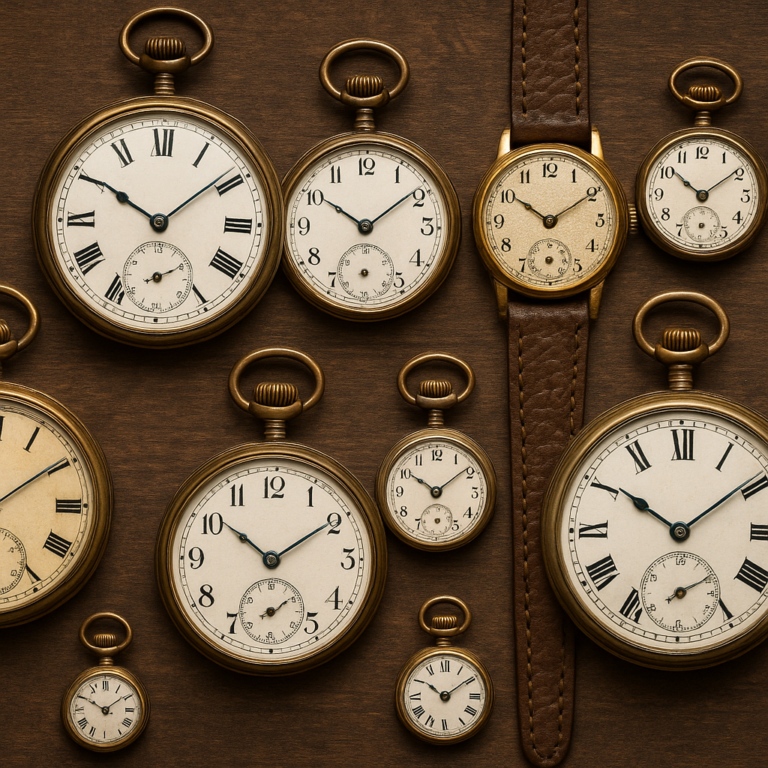
By the 16th century, the pocket watch was born. These were the first true “watches” in the modern sense of a portable timekeeper.
The Nuremberg Egg
The most famous of these early watches are the Nuremberg Eggs. Despite the name, they weren’t egg-shaped initially; they were drum-shaped cylinders.
- Material: Brass or iron cases, often gilded.
- Mechanism: A stack of gears driven by a mainspring.
- Running Time: About 30 to 40 hours.
- Accuracy: ±10 hours per day. Yes, you read that right. You could wind it in the morning, and by noon, it might be showing 6 PM.
Despite the poor accuracy, these were marvels of engineering. They were the iPhone of the 150s—expensive, impractical for precision, but undeniably cool.
🔧 The Game-Changing Invention: The Balance Spring and Hooke’s Contribution
If the mainspring made the watch portable, the balance spring made it accurate. This is the single most important invention in the history of the watch.
The Great Debate: Hooke vs. Huygens
In 1657, two giants of science, Robert Hooke and Christiaan Huygens, both claimed to have invented the balance spring.
- Hooke claimed he had the idea in 165.
- Huygens published the first description in 1675.
Regardless of who got there first, the result was the same: Accuracy improved from hours per day to minutes per day.
Why It Matters
The balance spring acts like a pendulum for a watch. It regulates the speed of the balance wheel. Without it, the watch runs as fast as the spring unwinds. With it, the watch ticks at a consistent rate.
- Impact: This allowed for the addition of the minute hand.
- Legacy: Every mechanical watch made today still uses a version of this principle.
🌡️ Mastering Accuracy: Temperature Compensation and the Birth of the Chronometer
Even with the balance spring, watches were still sensitive to temperature. Metal expands in heat and contracts in cold, changing the length of the balance spring and throwing off the time.
The Bimetalic Strip
In the 18th century, watchmakers like John Harrison and Pierre Le Roy developed temperature compensation. They used bimetalic strips (two metals bonded together) that bent with temperature changes, adjusting the effective length of the balance spring.
The Chronometer
By the 19th century, the marine chronometer was born. These were precision instruments used by navies to calculate longitude at sea.
- Accuracy: Within seconds per day.
- Testing: Watches had to pass rigorous tests at observatories like Kew or Neuchâtel to earn the title “Chronometer.”
This era saw the rise of brands like Patek Philippe and Vacheron Constantin pushing the boundaries of what was mechanically possible.
⚙️ The Lever Escapement: Why This Mechanism Still Rules the Wrist
While the balance spring regulated the speed, the escapement controlled the release of energy. The Lever Escapement, invented by Thomas Mudge in 1754, is the gold standard.
How It Works
The lever escapement allows the gear train to advance one tooth at a time, locking and unlocking the balance wheel. It’s robust, efficient, and relatively easy to manufacture.
Why It’s Still King
Over 250 years later, the vast majority of mechanical watches still use a variation of the lever escapement.
- Durability: It can withstand shocks better than other escapements.
- Efficiency: It conserves energy, allowing for longer power reserves.
- Serviceability: Watchmakers know how to fix it.
🏭 Mass Production and the American Watch Industry: Making Time Affordable
For centuries, watches were hand-made by artisans. This kept prices astronomical. Then came the American Watch Industry.
Waltham and Elgin
In the mid-19th century, companies like Waltham Watch Company and Elgin introduced interchangeable parts.
- Standardization: Every gear, spring, and screw was made to exact specifications.
- Impact: Watches became affordable for the middle class.
- Quality: Surprisingly, American mass-produced watches were often more accurate than their hand-made European counterparts.
This democratization of time meant that by the late 180s, almost everyone could own a watch.
🎖️ The First Wristwatch: From “Sling Watch” to Military Essential
Now we get to the part you’ve been waiting for. When did the watch move from the pocket to the wrist?
The Breguet No. 2639 (1810)
The first wristwatch ever commissioned was made by Abraham-Louis Breguet for Caroline Murat, Queen of Naples, in 1810.
- Design: An oval case with a repeating mechanism.
- Strap: A strap made of hair and gold thread.
- Status: It was a piece of jewelry, not a tool.
The Patek Philippe Countess Koscowicz (1868)
Patek Philippe claims their 1868 watch for the Countess Koscowicz is the first Swiss wristwatch. It’s currently in the Patek Museum.
The Cartier Santos-Dumont (1904)
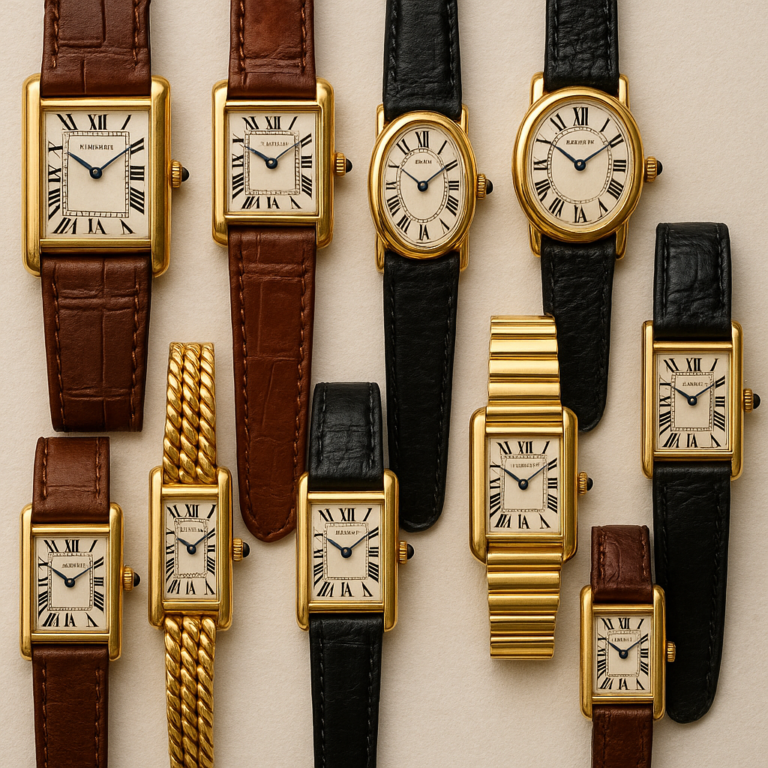
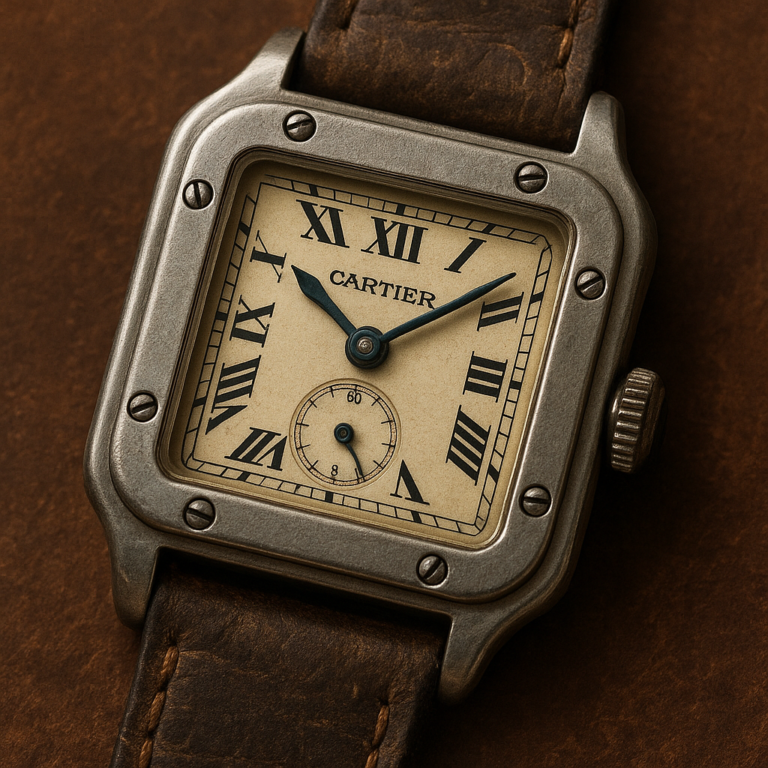
The first wristwatch for men is widely credited to Louis Cartier. He created it for his friend, the aviator Alberto Santos-Dumont, who needed to check the time while flying.
- Problem: Pocket watches were impossible to use in a cockpit.
- Solution: A square watch with a leather strap.
- Impact: This design launched the modern men’s wristwatch.
⚡️ The Electric Revolution: Batteries, Transistors, and the End of the Mainspring
In the 1950s, watchmakers tried to replace the mainspring with electricity.
- Hamilton Electric 50 (1957): The first battery-powered watch. It used a solenoid to drive the balance wheel.
- Accuracy: Better than mechanical, but still prone to magnetic interference.
💎 The Quartz Crisis: How a Tiny Crystal Shook the World of Luxury
Then came 1969. Seiko released the Astron 35SQ, the world’s first quartz wristwatch.
The Quartz Advantage
- Mechanism: A battery sends electricity through a quartz crystal, making it vibrate at a precise frequency (8,192 Hz).
- Accuracy: ±5 seconds per month.
- Impact: This accuracy was 10 times better than the best mechanical watches.
The Crisis
The Quartz Crisis of the 1970s nearly destroyed the Swiss watch industry. Thousands of jobs were lost as people switched to cheap, accurate quartz watches. Brands like Seiko, Casio, and Citizen dominated the market.
The Rebirth
Swiss brands survived by pivoting to luxury. They stopped competing on accuracy and started competing on craftsmanship, heritage, and emotion. This is why a Rolex or Patek Philippe is still valuable today.
📡 Radio-Controled and Atomic Time: The Quest for Perfect Synchronization
If quartz is accurate, atomic is perfect.
- Radio-Controled: Watches like the Junghans Mega sync with atomic clocks via radio signals (WWVB, DCF7). They are accurate to within a second per year.
- Internal Atomic: The Bathys Hawaii Cesium 13 contains a tiny atomic clock. It’s accurate to one second in 1,0 years.
🤖 The Smartwatch Era: When Watches Became Computers on Your Wrist
The latest evolution is the smartwatch.
- Apple Watch: Introduced in 2014, it combined timekeeping with health tracking, notifications, and apps.
- Functionality: It’s a computer on your wrist.
- Debate: Is it a “watch” or a “gadget”? Purists say it’s not a watch. We say it’s the next chapter in the story.
🏆 Top Contenders for the Title of “First Ever Best Watch” Ranked
We’ve looked at the history, the tech, and the impact. Now, let’s rank the contenders for the title of “First Ever Best Watch” based on different criteria.
| Rank | Watch Model | Year | Category | Why It’s “Best” |
|---|---|---|---|---|
| 1 | Watch 1505 (Pomander) | 1505 | Historical Significance | The oldest surviving watch. The “Adam” of timekeeping. |
| 2 | Breguet No. 2639 | 1810 | First Wristwatch | The first watch designed specifically for the wrist. |
| 3 | Cartier Santos-Dumont | 1904 | First Men’s Wristwatch | The watch that made wristwatches practical for men. |
| 4 | Seiko 35SQ Astron | 1969 | Accuracy Revolution | The watch that changed the world with quartz technology. |
| 5 | Junghans Mega 1 | 190 | Synchronization | The first radio-controlled watch, syncing with atomic time. |
The Verdict?
If you value history, the Watch 1505 is the winner.
If you value innovation, the Seiko Astron takes the crown.
If you value style and utility, the Cartier Santos is the king.
💡 Quick Tips and Facts for the Aspiring Collector
- Don’t Buy “Nuremberg Eggs” Online: Most are fakes. The real ones are in museums.
- Look for the “Chronometer” Mark: If a watch claims to be a chronometer, it should have a certificate from an official testing body.
- Quartz is Not “Cheap”: High-end quartz watches (like Grand Seiko) are incredibly precise and require less maintenance than mechanical ones.
- Service Your Watch: Even the best watch needs love. Mechanical watches should be serviced every 5-7 years.
❓ Frequently Asked Questions About the First Best Watch
What is the oldest watch still running?
The Watch 1505 (Pomander Watch) is widely considered the oldest watch still in existence and functioning. It was created by Peter Henlein around 1505. While its accuracy is poor by modern standards, its survival is a miracle of engineering.
What was the first wrist watch in history?
The Breguet No. 2639, commissioned in 1810 for Queen Caroline Murat of Naples, is the first recorded wristwatch. However, the Cartier Santos-Dumont (1904) is often cited as the first wristwatch designed for men and practical use.
What is the oldest watch brand still in existence?
Vacheron Constantin, founded in 175, is the oldest watch manufacturer in continuous operation. Patek Philippe (1839) and Breguet (175) are also among the oldest.
Which watch holds the record for the first wristwatch ever made?
There is a debate between the Breguet No. 2639 (1810) and the Patek Philippe watch for Countess Koscowicz (1868). Breguet has the earlier date, but Patek has the physical evidence. Most historians lean towards Breguet as the true “first.”
Who invented the first mechanical pocket watch?
Peter Henlein is often credited, but historical evidence suggests he was one of several German clockmakers in Nuremberg experimenting with mainsprings in the early 150s.
What was the first watch to feature a chronograph function?
The first chronograph was invented by Louis Moinet in 1816, but it was a pocket watch. The first wristwatch chronograph is often attributed to Breitling in the early 20th century.
🏁 Conclusion: The Verdict on the First Ever Best Watch

So, what was the first ever best watch?
If we are talking about the first ever, it’s the Watch 1505. It’s the grandfather of them all, a rough, inaccurate, but undeniably brilliant piece of history. It proved that time could be carried in your pocket.
But if we are talking about the best in terms of impact, the Seiko Astron wins. It democratized accuracy and forced the entire industry to evolve.
And if we are talking about the best in terms of style and legacy, the Cartier Santos is the undisputed champion. It turned the wristwatch into a fashion icon.
Our Recommendation:
Don’t get hung up on the “first.” Instead, look for the watch that speaks to you. Whether it’s the rugged history of a G-Shock, the precision of a Seiko, or the heritage of a Rolex, the “best” watch is the one you wear with pride.
Ready to find your perfect timepiece?
- 👉 Shop Luxury Watches: Browse our collection of Luxury Watch Brands
- Find Affordable Gems: Explore Affordable Watches
- Men’s Style Guide: Check out Men’s Watches
- Buying Guide: Learn How to Buy a Watch
🔗 Recommended Links for Further Reading
- The Watch 1505: Peter Henlein’s Pomander Watch – Wikipedia
- History of Watches: History of Watches – Wikipedia
- First Wristwatch: The First Wristwatch – TeddyBaldassare
- Seiko Astron: Seiko 35SQ Astron – Seiko Official
- Cartier Santos: Cartier Santos – Cartier Official
- Breguet Reine de Naples: Breguet Reine de Naples – Breguet Official
📚 Reference Links and Historical Sources
- Johann Cochläus: Deutsche Chronik (151) – Primary source on Peter Henlein.
- Abeler, Jürgen: The Watch 1505: The World’s First Watch – Wuppertaler Watch Museum.
- Seiko: The History of the Seiko Astron – Seiko Corporate Archives.
- Rolex: The Kew Observatory Award – Rolex Historical Records.
- Junghans: The Mega 1: First Radio-Controled Watch – Junghans Official History.
🤖 Featured Video: The Impact of WWI on Wristwatches
To truly understand how the wristwatch became the standard, you have to see the impact of World War I. The video below explores how the trenches changed everything.
Watch: How WWI Changed the Watch Industry Forever
The video highlights how the “creping barrage” tactic required precise synchronization, turning the wristwatch from a lady’s accessory into a soldier’s essential tool. Brands like Girard-Peregaux and Elgin were at the forefront of this shift.