Support our educational content for free when you purchase through links on our site. Learn more
⌚ The Ultimate Timeline of Notable Watch Inventions (12 Eras)

Imagine holding a device in your hand that can tell time with an accuracy of one second every ten years, yet its heartbeat is powered by a coiled spring invented centuries ago. From the heavy, drum-shaped “Nuremberg Eggs” of the 150s that lost hours a day to the Seiko Quartz Astron that shattered the industry in 1969, the journey of timekeeping is a saga of human obsession. We often think of watches as mere accessories, but they are actually the most precise machines ever mass-produced in human history. In this deep dive, we unravel the 12 pivotal eras that transformed time from a vague concept of “sunrise” into the atomic precision we rely on today. You might be surprised to learn that the wristwatch wasn’t born in the trenches of WWI, but was actually a royal gift to a Queen in 1810, or that the “Quartz Crisis” nearly wiped out an entire civilization of craftsmen before they reinvented themselves as luxury icons. Whether you are a collector seeking the perfect mechanical movement or a tech enthusiast curious about the first smartwatches, this timeline reveals the hidden innovations that shaped our modern world.
Key Takeaways
- Precision Evolution: Timekeeping accuracy improved from losing hours per day in the 150s to gaining/losing less than a second per year with modern atomic and GPS-synced watches.
- The Wristwatch Revolution: Originally a femine novelty in the 19th century, the wristwatch became a military necessity during WWI, permanently replacing the pocket watch for men.
- The Quartz Shock: The 1969 introduction of the Seiko Quartz Astron was so accurate and affordable it caused the Quartz Crisis, forcing the Swiss industry to pivot from mass production to high-end luxury.
- Future of Time: While smartwatches dominate the functional market, mechanical watches have survived as symbols of heritage, craftsmanship, and art, proving that technology and tradition can coexist.
Looking for your next timepiece? Whether you want the reliability of a Seiko quartz, the heritage of a Rolex mechanical, or the connectivity of an Apple Watch, explore our curated guides to find the perfect match for your lifestyle.
- 👉 Shop Mechanical Watches: Affordable Mechanical Watches | Luxury Mechanical Watches
- 👉 Shop Smart & Digital: Men’s Smart Watches | Fashion Trends in Watches
Table of Contents
-
⏳ A Brief History of Horology: From Sundials to Silicon Chips
-
1. The Dawn of Timekeeping: Early Mechanical Clocks and the First Gears
-
2. The Portable Revolution: Invention of the Nuremberg Egg and the Pocket Watch
-
3. The Heartbeat of Precision: Pierre Le Roy and the Balance Spring Breakthrough
-
4. Navigating the Seas: Temperature Compensation and the Marine Chronometer
-
5. The Escapement Evolution: From the Cylinder to the Swiss Lever
-
6. The Industrial Shift: Mass Production and the Rise of American Watchmaking
-
7. The Wristwatch Emergence: From “Wristlets” to the Trenches of WWI
-
8. The Electric Spark: Batteries, Tuning Forks, and the Accutron Era
-
9. The Quartz Crisis: How the Seiko Quartz Revolution Shook the World
-
10. The Digital Dawn: LCD Displays and the Birth of the Calculator Watch
-
1. The Atomic Age: Radio-Controled and GPS Synchronized Timepieces
-
12. The Smartwatch Saga: From the Apple Watch to Wearable Tech Dominance
-
🔍 Deep Dive: How These Inventions Changed Daily Life and Culture
-
🛠️ Key Components Explained: Escapements, Complications, and Movements
⚡️ Quick Tips and Facts
Before we dive into the gears, springs, and silicon chips that defined human history, let’s hit the rewind button on some common misconceptions. You might think the wristwatch was born in the trenches of WWI, or that quartz killed mechanical watches overnight. Spoiler alert: The truth is far more nuanced, and the timeline is a lot messier than a dusty museum label suggests.
Here are the non-negotiable facts you need to know before we start our journey:
- The “Nuremberg Egg” wasn’t actually an egg: Despite the nickname, Peter Henlein’s 16th-century portable clocks were often drum-shaped or spherical, not perfectly oval like a chicken egg. 🥚
- Accuracy was a luxury: In the 150s, losing several hours a day was considered “good enough” for the elite. It wasn’t until the 1670s that the minute hand became a standard feature.
- The Wristwatch wasn’t a “women’s accessory” forever: While early wristlets were marketed to women, it was the military necessity of WWI that forced men to adopt them, flipping the script on pocket watches.
- Quartz didn’t just “win”: It caused the Quartz Crisis, wiping out 90% of the Swiss mechanical industry in a decade. The survival of mechanical watches is a story of resilience, not just technology.
- Smartwatches aren’t the end: They are the latest chapter, but the mechanical heartbeat still beats strong in the hearts of collectors and purists.
Fun Fact: The first person to wear a watch on their wrist was likely a queen! In 1810, Abraham-Louis Breguet created the first known wristwatch for Caroline Murat, Queen of Naples. 🇳🇪👑
For a deeper dive into the origins of these timepieces, check out our comprehensive guide on the History of Watches.
⏳ A Brief History of Horology: From Sundials to Silicon Chips

Time is the one resource you can’t buy, save, or borrow. It’s the great equalizer. But how did we go from staring at shadows on a rock to checking our heart rate on a glowing screen?
The story of watchmaking is a saga of obsession. It’s the story of humans refusing to accept “close enough.” We went from sundials that only worked on sunny days to atomic clocks that lose a second every 10 million years.
Why does this matter to you? Because every tick of your watch, whether it’s a $50 mechanical masterpiece or a $20 smart device, carries the DNA of centuries of innovation.
Teaser: Did you know that the very first “smart” feature in a watch wasn’t a notification, but a way to tell time at night? We’ll get to the Luminous Dial revolution later, but first, we have to go back to the beginning.
The Dawn of Timekeeping: Early Mechanical Clocks and the First Gears
Before we had watches, we had clocks. And before clocks, we had sundials and water clocks.
In ancient Egypt and China, time was measured by the sun’s shadow or the steady drip of water. These were great for the day, but useless at night or on cloudy days. The real game-changer arrived in 15th-century Europe: the mainspring.
The Mainspring Revolution
Imagine a clock that didn’t need a heavy weight hanging from a chain to keep moving. That was the mainspring. By coiling a strip of steel, clockmakers could store energy and release it slowly.
- Impact: This allowed clocks to be miniaturized.
- Result: The birth of the portable timepiece.
Quote: “Peter Hele, still a young man, fashions works which even the most learned mathematicians admire. He shapes many-wheled clocks out of small bits of iron, which run and chime the hours without weights forty hours, whether carried at the breast or in a handbag.” — Johann Cochläus (151)
This quote, describing Peter Henlein, marks the transition from stationary tower clocks to the Nuremberg Egg. These early devices were heavy, drum-shaped, and only had an hour hand. If you were late, you were late by hours, not minutes.
The Portable Revolution: Invention of the Nuremberg Egg and the Pocket Watch
By the 150s, the Nuremberg Egg had evolved. These weren’t just functional; they were jewelry.
- Design: Often spherical, resembling a pomander (a ball of spices used to ward off bad smells).
- Material: Brass, iron, and later, silver and gold.
- Accuracy: Still terrible by modern standards (losing hours per day), but revolutionary for the time.
The Pomander Watch
One famous example is the Melanchthon’s Watch (c. 1530), now housed in the Walters Art Museum. It looks like a decorative sphere but hides a timekeeping mechanism inside.
Did You Know? The first time glass was used to cover the watch face was around 1610. Before that, you had to open a hinged brass cover just to see the time!
The Heartbeat of Precision: Pierre Le Roy and the Balance Spring Breakthrough
If the mainspring gave us portability, the balance spring gave us precision.
Before 1657, a watch’s accuracy depended entirely on the balance wheel’s inertia. It was like a pendulum without a string. Enter Christiaan Huygens (and possibly Robert Hooke, the jury is still out on who invented it first).
The Harmonic Oscillator
By attaching a tiny spiral spring to the balance wheel, they created a harmonic oscillator. This meant the wheel swung back and forth at a consistent frequency, regardless of the watch’s position.
- Before: Error of several hours per day.
- After: Error of 10 minutes per day.
This was a massive leap. It also allowed for the addition of the minute hand, which became standard in Britain by 1680 and France by 170. Suddenly, time wasn’t just about “morning” or “afternoon”; it was about 10:15 or 10:45.
Navigating the Seas: Temperature Compensation and the Marine Chronometer
As the balance spring improved, a new problem emerged: temperature.
Metal expands in heat and contracts in cold. A balance wheel that gets bigger in the summer swings slower, making the watch lose time. In the winter, it swings faster, making the watch gain time. For sailors navigating the high seas, a few minutes of error could mean getting lost by hundreds of miles.
The Solution: Bimetalic Balance
In 1765, Pierre Le Roy and later Thomas Earnshaw invented the temperature-compensated balance wheel.
- Mechanism: A bimetalic strip (two metals with different expansion rates) that bends as the temperature changes, adjusting the effective length of the balance wheel.
- Impact: Reduced error to a few seconds per day.
This innovation was crucial for the Marine Chronometer, the ultimate tool for determining longitude at sea. Without it, the British Empire might have lost its way.
Pro Tip: If you own a vintage mechanical watch, avoid leaving it in a hot car. The temperature swings can still affect accuracy, even with modern compensation!
The Escapement Evolution: From the Cylinder to the Swiss Lever
The escapement is the heart of the watch. It’s the mechanism that releases energy from the mainspring in controlled bursts, driving the gears.
The Verge Escapement
The earliest watches used the verge escapement. It was simple but inefficient, requiring a large balance wheel and offering poor accuracy.
The Cylinder Escapement
In the late 17th century, Thomas Tompion and George Graham introduced the cylinder escapement. It allowed the balance wheel to swing “detached” for part of the cycle, improving precision.
The Swiss Lever Escapement
The crown jewel of escapements arrived in 1754 with Thomas Mudge. The lever escapement became the industry standard by 190.
- Features: Self-starting, precise “locking” and “draw.”
- Benefit: It allowed the balance wheel to swing almost entirely free, minimizing friction and maximizing accuracy.
Why it matters: Almost every mechanical watch you see today, from a Rolex to a Seiko, uses a variation of the lever escapement. It’s the gold standard of mechanical timekeeping.
The Industrial Shift: Mass Production and the Rise of American Watchmaking
For centuries, watches were made by hand, one by one, by master craftsmen. This made them expensive and rare. But in the 19th century, the Industrial Revolution changed everything.
Interchangeable Parts
In 1830, Georges-Auguste Leschot (working for Vacheron Constantin) invented the pantograph, a machine that could cut gears with perfect precision. This led to interchangeable parts.
- Impact: If a gear broke, you didn’t need a master watchmaker to hand-fit a new one. You could just swap it out.
The Waltham Watch Company
In 1851, Aaron Lufkin Dennison founded a factory in Massachusetts (later the Waltham Watch Company) dedicated to mass-producing watches with interchangeable parts.
- 1876: At the Philadelphia Centennial Exposition, American mass-produced watches outclassed their Swiss competitors in precision contests.
- Result: Watches became affordable for the middle class. The “Dollar Watch” era began.
Fun Fact: The Roskopf Watch, invented by Georges Frederic Roskopf in 1876, was a cheap, mass-produced watch that sold for about $1. It democratized timekeeping.
The Wristwatch Emergence: From “Wristlets” to the Trenches of WWI
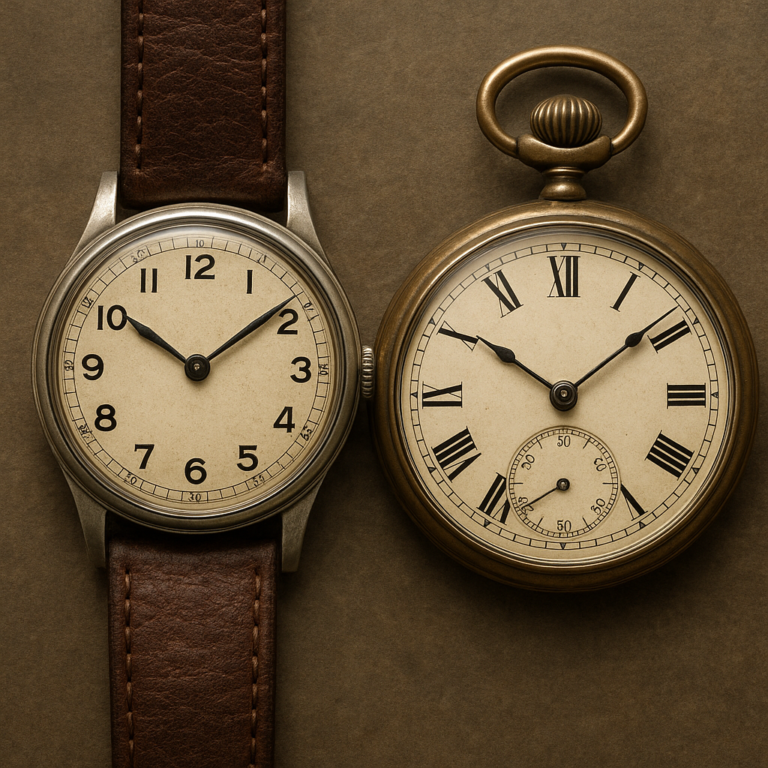
For a long time, wristwatches were considered femine or novelty items. Men wore pocket watches.
The First Wristwatch
In 1810, Abraham-Louis Breguet made a wristwatch for Caroline Murat. But it was a one-off.
The Military Catalyst
The real shift happened during the Boer War (189–1902) and WWI (1914–1918).
- Problem: Officers needed to synchronize troop movements. Fumbling for a pocket watch in the trenches was dangerous and impractical.
- Solution: They strapped their pocket watches to their wrists with leather straps.
By 1930, the ratio of wristwatches to pocket watches was 50 to 1. The Santos-Dumont watch (1904), designed by Louis Cartier for the aviator Alberto Santos-Dumont, was a key player in this transition, proving that a watch could be useful while flying.
Did You Know? The first chronometer-certified wristwatch was a Rolex in 1910. By 1914, Rolex won an award from the Kew Observatory for its accuracy.
The Electric Spark: Batteries, Tuning Forks, and the Accutron Era
In the 1950s, watchmakers tried to electrify the mechanical watch.
The Bulova Accutron
In 1960, Bulova introduced the Accutron. It didn’t use a balance wheel; it used a tuning fork vibrating at 360 Hz.
- Mechanism: An electromagnetic coil kept the tuning fork vibrating.
- Accuracy: Far superior to mechanical watches, with an error of only 1-2 seconds per day.
- Sound: It made a distinctive high-pitched hum (like a bee).
Why it failed: It was expensive, and the battery life was short. But it paved the way for the quartz revolution.
The Quartz Crisis: How the Seiko Quartz Revolution Shook the World
If the mainspring was the first revolution, quartz was the nuclear explosion.
The Seiko 35 SQ Astron
On December 25, 1969, Seiko released the Astron. It was the world’s first quartz wristwatch.
- Tech: A quartz crystal vibrating at 8,192 Hz.
- Accuracy: ±5 seconds per month.
- Impact: It was 10 times more accurate than the best mechanical watches.
The Aftermath
The Quartz Crisis hit the Swiss industry like a tsunami.
- Result: 90% of Swiss watchmakers went bankrupt.
- Survival: The industry survived by rebranding mechanical watches as luxury items and focusing on craftsmanship rather than just accuracy.
Perspective: While quartz watches are more accurate, mechanical watches offer a connection to history and a human touch that quartz lacks. It’s the difference between a digital photo and a hand-painted portrait.
The Digital Dawn: LCD Displays and the Birth of the Calculator Watch
In the 1970s, the digital display took over.
The Pulsar LED
In 1970, Pulsar (a brand of Hamilton) released the first LED digital watch. It required a button press to light up the red numbers.
The Calculator Watch
By the 1980s, watches could do math. The Casio calculator watch became a pop culture icon.
- Features: LCD display, calculator functions, and sometimes even a stopwatch.
- Impact: Watches became tools rather than just timekeepers.
The Atomic Age: Radio-Controled and GPS Synchronized Timepieces
In the 190s, watches got connected to the atomic clock.
The Junghans MEGA 1
In 190, Junghans released the first radio-controlled analog wristwatch.
- Tech: It received a signal from government time stations (like DCF7 in Germany or WWVB in the US).
- Accuracy: It synchronized daily, ensuring atomic clock accuracy.
GPS Synchronization
Later, Casio and Citizen introduced watches that sync via GPS, allowing them to adjust to any time zone automatically.
Fun Fact: Some modern watches, like the Bathys Hawaii Cesium 13, even have an internal atomic clock on a chip, accurate to 1 second in 10 years!
The Smartwatch Saga: From the Apple Watch to Wearable Tech Dominance
The latest chapter in the story is the smartwatch.
The Early Days
In the 1980s, Steve Mann created the first Linux Watch. In 19, Samsung released the SPH-WP10, the first watch phone.
The Apple Watch
In 2014, Apple changed the game with the Apple Watch.
- Features: Notifications, fitness tracking, EKG, and contactless payments.
- Impact: It turned the watch into a wearable computer.
The Modern Era
Today, smartwatches from Garmin, Fitbit, and Samsung offer health monitoring, GPS navigation, and voice assistants.
Teaser: But does a smartwatch have the same soul as a mechanical watch? We’ll explore this in the Deep Dive section.
🔍 Deep Dive: How These Inventions Changed Daily Life and Culture
It’s not just about the technology; it’s about how we live.
The Shift from “Sun Time” to “Standard Time”
Before the 19th century, every town had its own time based on the sun. If you traveled 20 miles, your watch was wrong.
- Impact of Mass Production: The need to synchronize trains and factories led to Standard Time and Time Zones.
- Result: The world became smaller and more connected.
The Wristwatch and the Modern Woman
The wristwatch also played a role in women’s liberation.
- Before: Women wore pocket watches or no watches at all.
- After: The wristwatch became a symbol of independence and modernity.
The Quartz Crisis and the Rise of Luxury
The Quartz Crisis forced the Swiss industry to reinvent itself.
- Strategy: Focus on heritage, craftsmanship, and status.
- Result: Brands like Patek Philippe and Rolex became investment pieces.
Question: Do you think the smartwatch will eventually replace the mechanical watch, or will they coexist?
🛠️ Key Components Explained: Escapements, Complications, and Movements
To truly appreciate the timeline, you need to understand the anatomy of a watch.
The Movement
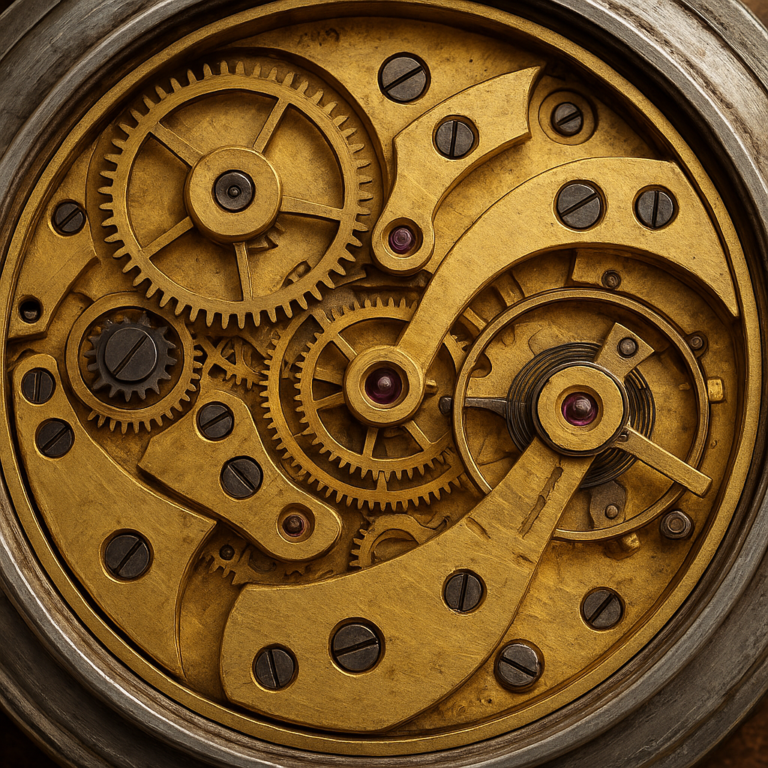
The movement is the engine of the watch.
- Mechanical: Powered by a mainspring.
- Quartz: Powered by a battery and a quartz crystal.
- Automatic: A type of mechanical movement that winds itself via a rotor.
The Escapement
The escapement controls the release of energy.
- Lever: The most common type.
- Cylinder: Used in early watches.
- Detent: Used in marine chronometers.
Complications
A complication is any function beyond telling time.
- Date: Shows the day of the month.
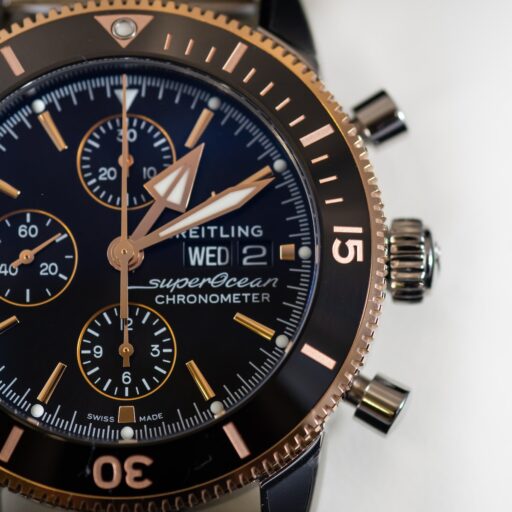
- Chronograph: A stopwatch function.
- Moon Phase: Shows the phase of the moon.
- Tourbillon: A rotating cage that improves accuracy (mostly for show today).
Pro Tip: If you’re buying your first luxury watch, look for a simple complication like a date or day-date. It’s practical and timeless.
🏆 The Titans of Innovation: Brands That Defined Each Era
Every era had its giants. Here are the brands that shaped the timeline.
The Pioners (15th–18th Century)
- Peter Henlein: The father of the portable watch.
- Christiaan Huygens: The inventor of the balance spring.
- Thomas Mudge: The father of the lever escapement.
The Industrialists (19th Century)
- Waltham Watch Company: Pionered mass production.
- Vacheron Constantin: One of the oldest watchmakers, still in operation.
The Modernists (20th Century)
- Rolex: Defined the sports watch and chronometer standards.
- Seiko: Led the quartz revolution.
- Bulova: Introduced the Accutron and tuning fork.
The Innovators (21st Century)
- Apple: Revolutionized the smartwatch.
- Citizen: Pushed the limits of quartz accuracy with the Caliber 010.
- Junghans: Pionered radio-controlled timekeeping.
Did You Know? Vacheron Constantin is the oldest watch manufacturer in continuous operation, founded in 175.
❓ Frequently Asked Questions About Watch Inventions
Q: Who invented the first watch?
A: Peter Henlein is often credited with the first portable watch in the early 150s, though the exact origins are debated.
Q: What is the most accurate watch ever made?
A: The Bathys Hawaii Cesium 13 atomic watch, accurate to 1 second in 10 years.
Q: Why did the quartz crisis happen?
A: The Seiko Astron (1969) was so accurate and affordable that it made mechanical watches obsolete for the mass market, causing a collapse in the Swiss industry.
Q: Are smartwatches the future?
A: They are the future of functionality, but mechanical watches remain the future of luxury and heritage.
Q: Can I still buy a mechanical watch today?
A: Absolutely! Brands like Seiko, Tissot, and Omega still produce high-quality mechanical watches.
📚 Recommended Links for Further Reading
Want to dive deeper? Check out these resources:
- Luxury Watch Brands – Explore the top-tier brands.
- Guide to Buying Watches – Tips for your first purchase.
- Men’s Watches – Styles for the modern gentleman.
- Affordable Watches – Great value without breaking the bank.
- Fashion Trends in Watches – Stay stylish with the latest trends.
🔗 Reference Links and Historical Sources
- History of Watches – A comprehensive timeline from Wikipedia.
- Seiko 35 SQ Astron – Official page on the first quartz watch.
- Rolex Chronometer – Learn about Rolex’s precision.
- Bulova Accutron – The story of the tuning fork.
- Apple Watch – The evolution of the smartwatch.
🏁 Conclusion: The Future of Timekeeping

We’ve traveled from the sundials of ancient Egypt to the atomic clocks of the 21st century. The timeline of watch inventions is a testament to human ingenuity and obsession.
But the story isn’t over. As we move forward, the question remains: Will the smartwatch replace the mechanical watch, or will they coexist?
The answer lies in what you value. If you value precision and functionality, the smartwatch is your friend. If you value craftsmanship, heritage, and the human touch, the mechanical watch is timeless.
Final Thought: The next great invention might be a hybrid that combines the best of both worlds. What do you think?
Stay tuned for more insights from the team at Watch Brands™! ⌚✨