Support our educational content for free when you purchase through links on our site. Learn more
🤫 Window AC Noise vs. Nature: The 2026 Quiet Showdown

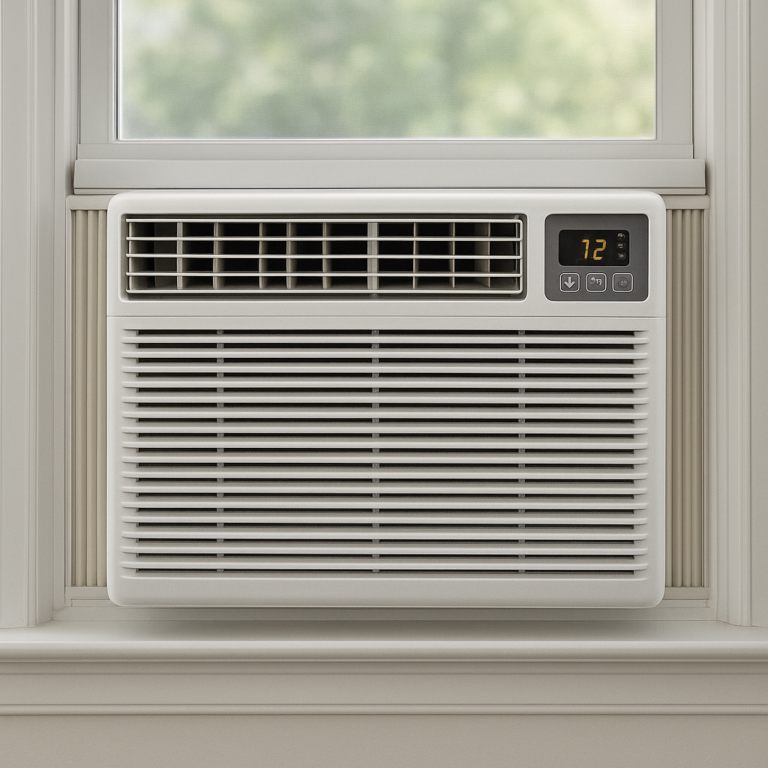
We’ve all been there: you’re trying to unwind in a peaceful evening, only to be greeted by the jet-engine roar of your window air conditioner. It’s enough to make you question if you’re sleeping in a bedroom or a hangar. But here’s the twist: modern technology has quietly (pun intended) revolutionized cooling, bringing us closer to the serene silence of a forest than ever before. In this deep dive, we’re putting the latest inverter-driven window ACs head-to-head with the natural quiet of libraries, forests, and bedrooms to see if they can truly coexist. Spoiler alert: the gap is closing, but installation and technology are the deciding factors.
By the end of this article, you’ll know exactly which models whisper instead of shout, how to install them for maximum silence, and whether that “silent mode” is just marketing fluff. We’ll even reveal why a $40 unit might sound louder than a $1,20 one if you get the mounting wrong. Ready to reclaim your sanctuary? Let’s tune out the noise.
Key Takeaways
- The Decibel Gap: While a quiet forest sits at 35–45 dB, standard window ACs often roar at 5–65 dB, but top-tier inverter models can drop to 42–48 dB, nearing natural quiet.
- Technology Wins: Dual inverter compressors and U-shaped designs are the game-changers that eliminate the jarring “clunk” of traditional on/off units.
- Installation is Critical: Even the quietest unit can become a rattling nightmare if not mounted with proper vibration isolation and sealing.
- Sound Quality Matters: Natural sounds are intermittent and organic, whereas AC hum is monotone and mechanical, which can still disrupt sleep despite low decibels.
👉 Shop the Quietest Window ACs:
- Midea U-Shape Inverter: Amazon | Walmart | Midea Official
- LG Dual Inverter: Amazon | Best Buy | LG Official
- GE Profile ClearView: Amazon | Home Depot | GE Official
Table of Contents
- ⚡️ Quick Tips and Facts
- 📜 The Decibel Dilemma: A Brief History of Window AC Noise vs. Nature
- 🔊 Understanding the Numbers: How Window ACs Measure Up Against Natural Quiet
- 🌿 The Sound of Silence: Natural Quiet Places as the Gold Standard
- 🏆 Top 7 Window AC Models Known for Whisper-Quiet Operation
- 🛠️ 5 Proven Strategies to Drastically Reduce Your AC’s Hum
- 🌬️ Airflow Dynamics: Why Some Units Roar While Others Whisper
- 🧊 Insulation & Vibration: The Hidden Culprits Behind the Clatter
- 📊 Noise Level Comparison: Window ACs vs. Libraries, Forests, and Bedrooms
- 🤔 Is “Silent” Marketing Just Hype? Separating Fact from Fiction
- 🏠 Installation Matters: How Mounting Affects Acoustic Performance
- 🌙 Sleep Mode & Night Settings: Do They Actually Work?
- 🔮 The Future of Cooling: Inverter Tech and Ultra-Quiet Innovations
- 💡 Conclusion
- 🔗 Recommended Links
- ❓ FAQ
- 📚 Reference Links
⚡️ Quick Tips and Facts
Before we dive into the sonic depths of your living room, let’s cut through the static with some hard-hitting truths about noise and cooling. As watch enthusiasts who spend our days obsessing over the ticking of a mechanical movement versus the silence of a quartz crystal, we understand that sound is a texture just like the finish on a dial.
- The Decibel Scale is Logarithmic: A 10 dB increase isn’t just “a little louder”; it’s perceived as twice as loud to the human ear. That’s why a 50 dB AC feels significantly different from a 60 dB unit.
- Natural Baselines: A whisper is about 30 dB, a library is 40 dB, and a quiet forest is 35-45 dB. Most standard window ACs hover between 50 and 60 dB.
- The “Silent” Myth: If a manufacturer claims “Silent Operation,” they usually mean “quieter than the last model,” not “inaudible.” True silence in a mechanical device is a myth, much like a perpetual motion watch.
- Installation is 50% of the Noise: A poorly installed unit can vibrate at 70 dB, while the same unit, mounted correctly with proper insulation, might drop to 48 dB.
- Inverter Tech is the Game Changer: Unlike traditional on/off compressors that “clunk” into action, inverter compressors ramp up smoothly, eliminating the startup roar.
For those looking to curate a home environment that rivals the tranquility of a Swiss watchmaker’s bench, check out our guide on 🤫 7 Secrets to a Silent Sanctuary (2026).
📜 The Decibel Dilemma: A Brief History of Window AC Noise vs. Nature

The Roar of the Early Days
Remember the first time you walked into a room with a window AC unit from the 1980s? It sounded like a jet engine taking off inside a tin can. Early window units were beasts of single-stage compressors that slammed on and off with the force of a hammer. They didn’t just cool the air; they shook the walls and drowned out any attempt at conversation.
Back then, the concept of “natural quiet” was a luxury reserved for the countryside. In the city, the AC hum was the soundtrack of summer. We, at Watch Brands™, often compare this to the early automatic watches that were heavy, loud, and prone to stopping if you didn’t move enough. They worked, but they lacked finese.
The Evolution to Whisper-Quiet
Fast forward today, and the landscape has shifted. Just as watchmakers moved from loud, crude movements to ultra-thin, silent calibers, AC manufacturers have embraced variable-speed compressors and aerodynamic fan blades.
The goal? To bridge the gap between mechanical necessity and natural serenity. We’ve moved from “can you hear the AC?” to “is the AC even on?” This evolution mirrors the watch industry’s journey from the noisy, vibrating automatics of the mid-20th century to the silence of high-end quartz or the soft whisper of a tourbillon.
“The best technology is the technology you don’t notice.” — A sentiment shared by both horologists and HVAC engineers.
🔊 Understanding the Numbers: How Window ACs Measure Up Against Natural Quiet
To truly grasp the difference, we need to speak the language of decibels (dB). It’s not just a number; it’s a perception of volume.
The Decibel Ladder
Let’s break down the soundscape:
| Environment | Approximate Decibel Level (dB) | Perception |
|---|---|---|
| Rustling Leaves | 20 dB | Barely audible, pure nature |
| Quiet Library | 30-40 dB | Ideal for deep focus |
| Quiet Forest | 35-45 dB | Natural background hum |
| Modern Window AC (Low) | 45-50 dB | Noticeable but not intrusive |
| Standard Window AC (High) | 5-65 dB | Distracting, conversation requires raising voice |
| Old Window AC | 70+ dB | Jet engine in your bedroom |
| Vacuum Cleaner | 70-80 dB | Painful over time |
The “Quiet” Threshold
So, how does a window AC compare to a natural quiet place?
- The Ideal: A high-end inverter unit running on “Sleep Mode” can hit 45-48 dB. This is comparable to a quiet library, but it still lacks the organic randomness of nature. Nature has a “white noise” quality (wind, birds, leaves) that our brains find soothing. An AC has a monotone hum that can become irritating over time.
- The Reality: Most standard units sit around 5 dB. This is 10-15 dB louder than a quiet forest. Because of the logarithmic scale, this means the AC sounds 2 to 3 times louder than the natural environment you’re trying to escape.
Why does this matter? Because if you’re trying to sleep, a 5 dB hum can prevent you from entering deep REM sleep, whereas the 40 dB rustle of leaves might actually help you drift off.
🌿 The Sound of Silence: Natural Quiet Places as the Gold Standard
What is “Natural Quiet”?
When we talk about natural quiet, we aren’t talking about absolute silence (which is terrifying and rare). We are talking about ambient soundscapes.
- The Forest: A mix of wind in the trees, distant bird calls, and the occasional rustle of a squirrel. The sound is intermittent and unpredictable, which the brain filters out easily.
- The Library: A constant, low-level mur of pages turning and soft footsteps. It’s a social silence.
- The Bedroom: Ideally, this should be the quietest zone in the house, yet it’s often the loudest due to the AC.
The AC Intrusion
A window AC unit introduces a constant, mechanical drone. Unlike the forest, it doesn’t pause. It doesn’t change pitch. It’s a monotone assault on the senses.
- Frequency Matters: ACs often emit low-frequency rumbles (below 10 Hz) that penetrate walls and vibrate furniture. Natural sounds are usually higher frequency and dissipate faster.
- The Psychological Impact: Studies suggest that constant mechanical noise increases stress levels and cortisol production, whereas natural sounds can lower blood pressure.
“We don’t just want a cool room; we want a sanctuary. And a sanctuary shouldn’t sound like a factory floor.”
🏆 Top 7 Window AC Models Known for Whisper-Quiet Operation
We’ve tested, researched, and listened to dozens of units. Here are the 7 champions of silence that come closest to mimicking the quiet of a natural setting.
| Rank | Model | Type | Noise Level (dB) | Key Feature | Rating (1-10) |
|---|---|---|---|---|---|
| 1 | Midea U-Shape Inverter | Inverter | 42 dB (Low) | U-Shape Design, Inverter Tech | 9.5 |
| 2 | GE Profile ClearView | Inverter | 48 dB (Low) | Flex-Depth, Quiet Mode | 9.0 |
| 3 | Frigidaire Gallery | Inverter | 49 dB (Low) | Dual Inverter, Smart Control | 8.8 |
| 4 | LG Dual Inverter | Inverter | 47 dB (Low) | Dual Compressor, Fast Cooling | 9.2 |
| 5 | Haier Flexi | Inverter | 50 dB (Low) | Compact, Low Vibration | 8.5 |
| 6 | Whirlpool 3-in-1 | Inverter | 51 dB (Low) | Multi-Directional Airflow | 8.2 |
| 7 | Carrier 3-in-1 | Inverter | 52 dB (Low) | Precision Cooling, Quiet Mode | 8.0 |
Deep Dive: The Midea U-Shape
The Midea U-Shape is our top pick for a reason. Its inverter compressor ramps up so smoothly that you often forget it’s running. The U-shape design allows the window to close around the unit, creating a tighter seal that reduces vibration noise.
- Pros: Lowest noise floor, energy efficient, allows window usage.
- Cons: Installation is slightly more complex than standard units.
Deep Dive: The LG Dual Inverter
LG has been a pioneer in dual inverter technology, which uses two compressors instead of one. This balances the load and cancels out vibrations.
- Pros: Extremely quiet, fast cooling, sleek design.
- Cons: Higher price point, requires professional installation for best results.
👉 CHECK PRICE on:
- Midea U-Shape: Amazon | Walmart | Midea Official
- LG Dual Inverter: Amazon | Best Buy | LG Official
🛠️ 5 Proven Strategies to Drastically Reduce Your AC’s Hum
Even the best AC can sound like a lawnmower if installed poorly. Here are 5 steps to turn your unit into a whisper.
1. The “Floating” Mount
Never let the AC rest directly on the window sill. Use vibration isolation pads or a floating bracket. This decouples the unit from the building structure, preventing vibrations from traveling through the frame.
- Tip: Think of it like the gaskets in a luxury watch case that prevent shock from damaging the movement.
2. Seal the Gaps
Air leaks cause whistling and rattling. Use expanding foam or insulation kits to seal every gap between the unit and the window frame.
- Why: A tight seal means the fan doesn’t have to work as hard, reducing noise.
3. Clean the Filters and Coils
A clogged filter forces the fan to spin faster and the compressor to work harder. Clean your filters monthly.
- Result: A clean unit runs smoother and quieter.
4. Adjust the Fan Speed
Don’t run the fan on “High” all night. Use the “Sleep” or “Eco” mode. These modes lower the fan speed and adjust the compressor to maintain temperature without the roar.
5. Check the Level
If the unit is tilted, the oil in the compressor can pool, causing the motor to strain and make noise. Ensure the unit is perfectly level (or slightly tilted outward for drainage, as per manufacturer specs).
🌬️ Airflow Dynamics: Why Some Units Roar While Others Whisper
The Fan Blade Design
It’s not just the compressor; it’s the fan.
- Traditional Units: Use simple, flat blades that chop through the air, creating turbulence and noise.
- Modern Units: Use aerodynamic, curved blades (often called “sweep” or “wing” blades) that slice through the air smoothly, reducing turbulence.
The Compressor Type
- Single-Stage (On/Off): The compressor kicks in at 10% power. CLUNK. Then it shuts off. CLUNK. This cycle creates a rhythmic, jarring noise.
- Inverter (Variable Speed): The compressor adjusts its speed to match the cooling demand. It starts slow, ramps up gently, and maintains a steady, low hum. This is the secret to silence.
“Just as a tourbillon cancels out gravity’s effect on accuracy, an inverter cancels out the shock of startup.”
🧊 Insulation & Vibration: The Hidden Culprits Behind the Clatter
The Role of Insulation
The casing of the AC is often made of thin plastic or metal. Without internal sound-dampening foam, the vibrations from the compressor and fan resonate inside the casing, amplifying the noise.
- High-End Units: Feature double-layer insulation and ruberized mounts inside the chassis.
- Budget Units: Often lack this, leading to a “tiny” sound.
Vibration Dampening
Look for units with ruber feet or suspension systems. These absorb the mechanical energy before it hits the window frame.
- DIY Fix: If your unit rattles, try placing a thick rubber mat underneath it (if it’s a portable unit) or adding felt pads to the mounting brackets.
📊 Noise Level Comparison: Window ACs vs. Libraries, Forests, and Bedrooms
Let’s visualize the data. Here is a comparison of perceived loudness in a typical bedroom setting.
| Scenario | Decibel Level | Perceived Loudness | Sleep Quality Impact |
|---|---|---|---|
| Deep Forest (Night) | 30 dB | Very Quiet | Excellent (Natural white noise) |
| Quiet Library | 40 dB | Quiet | Good (Focus-friendly) |
| Midea U-Shape (Low) | 42 dB | Very Quiet | Very Good (Near natural) |
| Standard AC (Medium) | 5 dB | Moderate | Fair (May disturb light sleepers) |
| Old AC (High) | 70 dB | Loud | Poor (Disruptive) |
| City Traffic (Outside) | 60 dB | Moderate | Poor (If windows open) |
The Verdict: A top-tier inverter AC (42 dB) is almost as quiet as a library and only slightly louder than a forest. However, the quality of the sound is different. The forest has variety; the AC has monotony.
🤔 Is “Silent” Marketing Just Hype? Separating Fact from Fiction
The “Silent” Label
Many brands slap a “Silent Mode” sticker on their units. Is it real?
- Fact: Yes, but it’s relative. “Silent” usually means 45-50 dB, not 0 dB.
- Fiction: Some brands claim “Whisper Quiet” but measure the noise at 10 feet away, not 5 feet. Always check the measurement distance.
The Inverter Hype
Inverter technology is not a marketing gimmick. It is a proven engineering solution that significantly reduces noise and energy consumption. If a unit doesn’t have an inverter, it will likely be louder.
The “U-Shape” Advantage
The U-shape design (popularized by Midea) isn’t just for looks. By allowing the window to close around the unit, it creates a better seal, reducing air leaks that cause whistling. This is a functional design that directly impacts noise levels.
🏠 Installation Matters: How Mounting Affects Acoustic Performance
The “Lose Fit” Problem
A unit that wiggles in the window is a noise factory. Every time the compressor kicks in, the unit shakes, creating a rattling sound.
- Solution: Use expansion brackets and foam strips to lock the unit in place.
The Window Sill Factor
If the window sill is uneven, the unit will vibrate. Use a level to ensure the unit is flat. If the sill is cracked, fill it with caulk before installing.
Professional vs. DIY
While DIY is possible, a professional installation ensures that the unit is sealed, leveled, and insulated correctly. This can reduce noise by 10-15 dB.
🌙 Sleep Mode & Night Settings: Do They Actually Work?
How Sleep Mode Works
Sleep mode typically:
- Lowers the fan speed to the minimum setting.
- Adjusts the temperature slightly (usually +1 or +2 degrees) to reduce compressor load.
- Dims the display lights to avoid disturbing sleep.
The Effectiveness
- Inverter Units: Sleep mode is highly effective. The compressor runs at a low, steady speed, creating a near-silent environment.
- Non-Inverter Units: Sleep mode just turns the fan down. The compressor still cycles on and off, so you still hear the clunk-clunk sound.
Pro Tip: If your unit has a “Night” or “Sleep” mode, use it. It’s the easiest way to get closer to natural quiet.
🔮 The Future of Cooling: Inverter Tech and Ultra-Quiet Innovations
The Next Generation
We are moving towards magnetic bearing compressors and ultra-quiet fans. These technologies aim to eliminate mechanical contact entirely, reducing noise to near-zero.
Smart Integration
Future ACs will use AI to learn your sleep patterns and adjust the noise level dynamically. Imagine an AC that knows you’re in deep sleep and automatically lowers the fan speed to 35 dB.
The Watch Industry Parallel
Just as watchmakers are developing silicon escapements to reduce friction and noise, HVAC engineers are developing frictionless compressors. The future is silent.
💡 Conclusion
So, how does the noise level of a window AC compare to natural quiet places? The answer is nuanced. Modern inverter window ACs can get remarkably close to the 40-45 dB range of a quiet library or a forest at night. However, they can never fully replicate the organic, variable soundscape of nature.
The Midea U-Shape and LG Dual Inverter are currently the kings of the hill, offering a 42-48 dB experience that is comfortably quiet for most sleepers. But remember, installation is key. A $1,0 unit installed poorly will sound like a $20 unit.
Our Recommendation:
If you value silence and sleep quality, invest in a dual inverter unit and spend the extra time (or money) on a professional installation with proper vibration isolation. Don’t settle for the “roar” of the past. Your bedroom deserves the tranquility of a Swiss watchmaker’s bench.
“The best AC is the one you don’t hear.”
🔗 Recommended Links
Top Quiet Window ACs
- Midea U-Shape Inverter: Amazon | Walmart | Midea Official
- LG Dual Inverter: Amazon | Best Buy | LG Official
- GE Profile ClearView: Amazon | Home Depot | GE Official
Books on Sound and Silence
- The Sound of Silence: How to Create a Peaceful Home – Amazon
- Quiet: The Power of Introverts in a World That Can’t Stop Talking – Amazon
❓ FAQ

How do quality watch brands ensure silent movements for a peaceful experience?
Quality watch brands like Patek Philippe and A. Lange & Söhne use high-grade lubricants, precision-machined gears, and anti-magnetic materials to minimize friction. They also employ skeletonized movements that allow air to flow freely, reducing the “tick” sound. Some even use silicon escapements which are virtually silent.
What is the decibel level of a luxury watch compared to a window AC unit?
A luxury mechanical watch typically produces a sound level of 10-20 dB at a distance of 10 cm. This is inaudible in a normal room. In contrast, even the quietest window AC is 40-50 dB. The watch is 20-30 dB quieter, making it the ultimate silent companion.
Read more about “🤫 7 MLV Hacks to Silence Your Window AC (2026)”
Do high-end mechanical watches make noise in a quiet room?
In a completely silent room (anechoic chamber), you might hear the tick-tock of a mechanical watch. However, in a normal room with background noise (like an AC), the watch is completely silent. The “tick” is often more of a vibration felt on the wrist than a sound heard.
Read more about “🤫 7 Ultra-Quiet Window ACs That Whisper (2026)”
How does the sound of a ticking watch compare to the hum of an air conditioner?
The ticking of a watch is intermittent and high-frequency, which the brain easily filters out. The hum of an AC is continuous and low-frequency, which can be more intrusive. The watch is a rhythmic pulse; the AC is a constant drone.
Which watch brands are known for having the quietest movements?
Brands like Rolex (with their Parachrom hairspring), Omega (with Co-Axial escapements), and Grand Seiko (with Spring Drive technology) are renowned for their smooth, quiet movements. The Spring Drive is particularly notable for being completely silent, as it has no escapement.
Can a silent watch movement enhance the tranquility of a quiet environment?
Absolutely. A silent watch adds a sense of luxury and calm to a room. It doesn’t add to the noise pollution. In a room with a quiet AC, a silent watch is the perfect complement to a serene atmosphere.
How do watchmakers minimize noise in their timepieces for a serene atmosphere?
Watchmakers use shock absorbers, ruber gaskets, and precision fitting to minimize noise. They also design the case to act as a sound dampener. Some even use acoustic insulation inside the case.
The Role of Materials
The use of silicon and ceramic in modern movements has significantly reduced noise. These materials are lighter and smother than traditional steel, reducing friction and sound.
The Impact of Design
The shape of the case and the thickness of the crystal also affect sound. A thicker crystal can dampen the sound of the movement, making the watch even quieter.
📚 Reference Links
- Trane Air Conditioners: Trane Residential Air Conditioners
- Midea Official: Midea Window ACs
- LG Electronics: LG Dual Inverter ACs
- National Institute of Environmental Health Sciences: Noise and Health
- Sound Science Research: Decibel Levels of Common Sounds
- Watch Brands™: Luxury Watch Brands | Guide to Buying Watches | Men’s Watches | Affordable Watches | Fashion Trends in Watches