Support our educational content for free when you purchase through links on our site. Learn more
20 Best Watch Brands for Everyday Wear ⌚

The best watch brands for everyday wear combine comfort, dependable performance, and a style you’ll want on your wrist from Monday morning to Saturday night. For most people, Citizen is a standout for low-maintenance Eco-Drive convenience, Seiko offers versatile mechanical value, and Casio is the easy pick for rugged, no-fuss wear.
We’ve learned that the watch you reach for every day isn’t always the one with the most impressive spec sheet. It’s the one that fits comfortably, reads at a glance, and doesn’t make you wince when it brushes a doorframe.
Our list spans practical favorites like Timex and Orient, everyday Swiss options from Tissot and Hamilton, and luxury picks from Tudor, Omega, Rolex, Cartier, and Grand Seiko. The right choice depends less on a logo and more on your wrist, routine, and appetite for winding, charging, or simply getting on with the day.
Key Takeaways
- Best low-maintenance picks: Citizen Eco-Drive and solar-powered Timex watches.
- Best everyday mechanical value: Seiko 5 Sports, Orient, and Hamilton Khaki Field.
- Best for rugged use: Casio G-Shock.
- Best luxury all-rounders: Tudor Black Bay, Omega Aqua Terra, Rolex Datejust or Explorer, and Grand Seiko.
- Fit beats fashion hype: Check case thickness and lug-to-lug length—not just diameter—and try the watch on when possible.
- Match water resistance to your routine: Follow the maker’s guidance, and remember that seals need maintenance.
- 👉 Shop the brands: Seiko | Citizen | Casio G-Shock | Orient | Timex | Tissot | Hamilton | Tudor | Omega
Table of Contents
- ⚡ Quick Tips and Facts: Everyday Watch Essentials
- ⌚ What Makes a Watch Great for Everyday Wear?
- Comfort, case size, and fit
- Water resistance and durability
- Automatic, quartz, solar, or smartwatch?
- Bracelets, straps, and versatile style
- 📚 A Brief History of the Everyday Wristwatch
- 🏆 20 Best Watch Brands and Watches for Everyday Wear
- 1. Seiko: dependable Japanese value
- 2. Citizen: low-maintenance Eco-Drive watches
- 3. Casio: practical digital and analog classics
- 4. Orient: accessible mechanical watches
- 5. Timex: easygoing everyday style
- 6. Tissot: Swiss versatility for daily life
- 7. Hamilton: heritage with modern practicality
- 8. Certina: sporty Swiss durability
- 9. Bulova: bold designs and dependable quartz
- 10. Swatch: colorful, lightweight everyday watches
- 11. G-Shock: rugged watches for hard use
- 12. Longines: refined watches for work and weekends
- 13. Tudor: robust everyday luxury
- 14. Rolex: iconic watches built for regular wear
- 15. Omega: precision with everyday versatility
- 16. Cartier: elegant watches beyond formal occasions
- 17. Breitling: capable tool watches with presence
- 18. IWC Schaffhausen: understated engineering
- 19. Grand Seiko: meticulous finishing for daily wear
- 20. Apple: connected convenience on your wrist
- ✨ Luxury Icons and the Holy Trinity of Everyday Watches
- Patek Philippe, Audemars Piguet, and Vacheron Constantin
- When luxury makes sense for daily wear
- 👔 Everyday Watches for Men, Women, and Every Wrist
- Best everyday watches for men
- Best everyday watches for women
- Unisex watches and choosing by wrist size
- 📊 Everyday Watches Compared
- Brand, movement, style, and strengths at a glance
- Best picks by lifestyle and watch type
- 🧭 Choose an Everyday Watch for Your Lifestyle
- Office, business-casual, and formal wear
- Travel, commuting, and outdoor adventures
- Sports, swimming, and active routines
- Minimalist, dress, field, diver, and integrated-bracelet styles
- 🛒 How to Buy the Right Everyday Watch
- New, pre-owned, or vintage: pros and trade-offs
- How to check fit, authenticity, warranty, and return policies
- Common buying mistakes to avoid
- 🧽 Everyday Watch Care and Maintenance
- Cleaning watches, bracelets, and straps
- Servicing mechanical and quartz watches
- Magnetism, water damage, and everyday wear
- 🔎 Recommended Links
- ❓ FAQ
- Which watch brand is best for everyday wear?
- What is the most durable type of everyday watch?
- Are automatic watches practical for daily use?
- Can you wear a diver watch every day?
- What watch size is best for a small wrist?
- How much water resistance do you need?
- Should an everyday watch be quartz or automatic?
- How often should an everyday watch be serviced?
- ✅ Conclusion
- 📖 Reference Links
⚡ Quick Tips and Facts: Everyday Watch Essentials
The best everyday watch isn’t necessarily the fanciest, toughest, or most famous. It’s the one that feels natural on your wrist, suits most of your week, and doesn’t make you nervous every time a door handle gets involved. For our wider brand-by-brand recommendations, see our guide to what are the best brands of watch?.
| Everyday priority | What to look for | Why it matters |
|---|---|---|
| Fit | A case that sits between your wrist edges; check thickness and lug-to-lug, not diameter alone | A watch can be “only” 40 mm and still wear like a dinner plate |
| Water resistance | Match the rating to your actual routine; confirm the crown is secured before water exposure | Water resistance is a condition-dependent rating, not a permanent force field |
| Crystal | Sapphire for scratch resistance; mineral for affordable practicality; acrylic for a softer vintage look | A crystal is the part of the watch most likely to collect everyday marks |
| Movement | Quartz for accuracy and minimal upkeep; automatic for mechanical charm; solar for low-maintenance convenience | Your ideal movement depends on how you like to own a watch |
| Versatility | A legible dial, restrained colors, and a bracelet or easily changed strap | The more outfits it works with, the more likely you are to wear it |
| Ownership | Check warranty, service access, and replacement strap availability | A watch is easier to enjoy when routine care isn’t a scavenger hunt |
Fast picks from our watch-enthusiast bench:
- Best low-fuss daily watch: Citizen Eco-Drive. Light charges its rechargeable cell, so regular battery changes aren’t part of the routine. Citizen explains Eco-Drive technology.
- Best rugged budget companion: Casio G-Shock, especially if bumps, outdoor work, or enthusiastic weekend projects are common. Casio’s G-Shock history and technology.
- Best value mechanical starting point: Seiko 5 Sports or Orient Bambino, depending on whether you want sporty versatility or a dressier profile.
- Best one-watch luxury shortlist: Tudor Black Bay, Omega Aqua Terra, Rolex Oyster Perpetual, or Grand Seiko Heritage models.
- Best one-watch rule: Choose the watch you’ll actually wear, not the one that looks best in a locked box. As Bob’s Watches puts it, “The best daily driver isn’t the watch you save for special occasions; it’s the one you never want to take off.”
A quick consumer-insight reality check: hands-on reviewers often find that comfort, strap feel, glare, crown operation, and night-time readability matter more after a month than headline specifications. That’s why a sensible try-on can beat a glamorous spec sheet. Which everyday detail do shoppers most often underestimate? We’ll get to it when we talk about fit.
⌚ What Makes a Watch Great for Everyday Wear?
A true everyday watch has to earn wrist time across ordinary life: desk days, errands, dinner, travel, and the occasional “I’ll just fix that myself” project. We’d prioritize comfort, legibility, durability, versatility, and maintainability over prestige alone.
For practical buying advice beyond this shortlist, browse our Guide to Buying Watches. Our Men’s Watches and Fashion Trends in Watches categories can also help you compare style and fit across different wardrobes.
Comfort, case size, and fit
There’s no magic case diameter that suits everyone. A commonly suggested range is 36–41 mm, but wrist shape, lug-to-lug distance, thickness, and bracelet taper can change how a watch wears dramatically. Bob’s Watches favors that broad “sweet spot,” while our experience says the ruler is only the opening act: try the actual watch on your actual wrist whenever possible.
A practical fit check, step by step
- Measure your wrist circumference with a flexible tape or strip of paper.
- Check lug-to-lug length. The lugs should generally not overhang the wrist’s top surface.
- Notice thickness. A thick case can catch a shirt cuff and feel top-heavy, even if the diameter looks reasonable.
- Assess weight and balance. A heavy head on a light strap can rotate around the wrist.
- Wear it for at least ten minutes. If you keep adjusting it, that’s useful evidence.
- Try it with a cuff and jacket sleeve. Watches are remarkably good at finding the one shirt you wanted to wear.
For case dimensions and fit considerations, the Seiko watch glossary explains common watch components and terminology.
Our wrist-size rule: a 38 mm watch with short lugs can wear more compactly than a 36 mm model with long, straight lugs. Don’t let the diameter number bully you.
Water resistance and durability
Water-resistance markings are not an invitation to treat every watch like a scuba instrument. The Federal Trade Commission’s guidance on watch water-resistance claims is a useful reminder that technical claims should be understood in context; for your specific model, follow its manufacturer’s water-use guidance.
| Typical marking | Sensible everyday interpretation |
|---|---|
| 30 m / 3 bar | Splash resistance in suitable condition; not a swimming recommendation |
| 50 m / 5 bar | Better splash protection; check the manufacturer’s guidance before swimming |
| 100 m / 10 bar | Often a more practical everyday target for active use, but verify the watch’s instructions |
| 200 m / 20 bar | Common on dive-style watches; still check crown position, seals, and maintenance status |
Important: water resistance can diminish as seals age or the case is damaged. A screw-down crown helps when correctly secured, but it does not make a watch invulnerable. Don’t operate crowns or pushers underwater unless the manufacturer explicitly says you can.
Other everyday durability choices include:
- Sapphire crystal: generally more scratch-resistant than mineral glass, though not immune to damage.
- Mineral crystal: a practical compromise in many affordable watches.
- Stainless steel: versatile and serviceable, but scratches are part of the deal.
- Titanium: lighter on the wrist; surface marks and finishing vary by model.
- Resin: comfortable and useful for rough use, though it can show wear over time.
Automatic, quartz, solar, or smartwatch?
Movement choice is really a lifestyle choice in disguise. Quartz generally asks the least from you. Automatic watches add mechanical interest but need regular wear, winding, or resetting. Solar watches—such as Citizen Eco-Drive and several Casio and Seiko models—convert light into stored energy. A smartwatch adds connectivity but tends to have a shorter replacement cycle.
| Movement | Best suited to | Main advantage | Main trade-off |
|---|---|---|---|
| Quartz | Accuracy and set-it-and-forget-it ownership | Low maintenance and reliable timekeeping | Battery changes unless solar-powered |
| Solar quartz | Daily convenience with fewer battery changes | Recharges under light; excellent grab-and-go option | Needs periodic exposure to light |
| Automatic | People who enjoy mechanical watches | Mechanical motion, sweeping seconds, and traditional appeal | More sensitive to shocks, magnetism, and service needs than quartz |
| Manual-wind | Ritual and mechanical engagement | A direct daily interaction with the movement | Requires regular winding |
| Smartwatch | Notifications, health tracking, and connected tools | More functions than a traditional watch | Battery charging, software support, and shorter tech-life cycle |
For movement basics, the Horological Society of New York’s educational resources and manufacturers’ technical pages are more useful than breathless forum folklore.
Bracelets, straps, and versatile style
A bracelet often wins for all-week versatility; leather feels polished but dislikes sweat and water; rubber and nylon can be excellent for active routines. The clasp and strap comfort are not minor details. They are the difference between “I wear this daily” and “I’ll put it on after I find a different strap.”
Quick strap checklist:
- Bracelet: inspect the clasp, adjustment range, and taper.
- Leather: look for comfortable lining and a realistic care routine.
- Ruber or FKM: useful for heat, water, and exercise; check whether it fits your style.
- Nylon or NATO: easy to swap and washable, but extra strap layers can add height.
- Quick-release spring bars: handy if you enjoy changing the watch’s mood without a toolbox.
A well-chosen strap can make a watch feel like two watches. It can also reveal the overlooked culprit in an otherwise perfect setup: the supplied strap.
📚 A Brief History of the Everyday Wristwatch

Wristwatches moved from specialist instruments and fashion objects into ordinary daily life as manufacturing improved and people wanted time close at hand. The story isn’t simply “pocket watch, then wristwatch”; military needs, changing clothing, and mass production all helped make wrist-worn timekeeping practical.
The National Watch and Clock Museum preserves the wider history of timekeeping, while the Smithsonian’s watch collections offer context for how watches evolved in design and use.
A few useful milestones:
- Early wristwatches: worn in the nineteenth century, often as jewelry before becoming widespread practical tools.
- Early twentieth century: wristwatches became more useful for military and professional settings, where checking a pocket watch could be inconvenient.
- Quartz era: battery-powered quartz movements made reliable timekeeping widely accessible and changed the industry.
- Modern daily wear: mechanical watches, quartz watches, solar models, and smartwatches now coexist. The best choice depends on what you want from the object.
The everyday watch has always reflected its era: first a useful instrument, then a style choice, now sometimes a tiny notification center. But the most enduring idea remains wonderfully simple: a good watch should be easy to live with.
🏆 20 Best Watch Brands and Watches for Everyday Wear
No single brand is the winner for everyone. We’ve grouped these recommendations by what each brand does especially well, from carefree quartz to refined mechanical watches. These are brand-and-model starting points, not a claim that every model from a brand is equally suited to daily use.
1. Seiko: dependable Japanese value
Seiko’s range runs from practical quartz watches to mechanical divers and dressier everyday pieces. The Seiko 5 Sports SRPE51 is a strong all-rounder: 40 mm case, automatic movement, 100 m water resistance, and a restrained grey dial. Its 4R36 movement provides hacking seconds and hand-winding; Seiko outlines its caliber information through its official support resources.
Why we like it: versatile design, good lume, easy strap changes, and broad model choice.
Trade-offs: Hardlex is less scratch-resistant than sapphire, and quality control details such as alignment can vary by individual watch.
A useful real-world lesson from enthusiast reviews: a bracelet can feel lighter and noisier than expected, while a simple strap swap may improve the entire experience. That’s not a flaw unique to Seiko; it’s a reminder that the watch head and the wrist fit are a package deal.
👉 Shop Seiko: Amazon search | Walmart search | Seiko official website
2. Citizen: low-maintenance Eco-Drive watches
Citizen is an easy recommendation when you want a watch that’s ready when you are. Eco-Drive uses light to power the watch, which means many models can go a long time without routine battery replacement when maintained and charged according to the instructions. The Citizen Eco-Drive technology page explains the system.
Look at the Citizen Promaster Diver for a sporty daily option, or a simpler Eco-Drive three-hander for office-and-weekend use. The Citizen Nighthawk adds travel-oriented slide-rule features, though its size and busy dial won’t suit everyone.
Why we like it: practical power, wide selection, and plenty of capable everyday designs.
Trade-offs: Some models are large, and highly technical dials can be harder to read at a glance.
👉 Shop Citizen: Amazon search | Walmart search | Citizen official website
3. Casio: practical digital and analog classics
Casio is the champion of useful, unfussy watches. The F-91W is feather-light and packs a time display, alarm, stopwatch, calendar, and light into a famously simple design. For more rugged use, a G-Shock DW-560 or GA-210 offers a tougher case construction; Casio describes its G-Shock design approach on its official G-Shock site.
Why we like it: functional, approachable, and easy to wear without worrying over every bump.
Trade-offs: Basic models use modest crystals and materials; some G-Shocks can be bulky under a cuff.
Casio’s appeal is wonderfully democratic: your watch doesn’t have to announce its movement architecture to be useful. Sometimes you just need the time, an alarm, and a watch that doesn’t object to a rainy commute.
👉 Shop Casio: Amazon search | Walmart search | Casio official website
4. Orient: accessible mechanical watches
Orient is a favorite for affordable mechanical watches, with the Bambino offering dressier styling and the Kamasu leaning sportier. Orient describes its watch range and movements on its official site.
The Bambino’s domed crystal and classic dial feel at home with office wear, weddings, and dinners. The catch: it is not the watch we’d choose for swimming, and its crystal can reflect light. The Kamasu is a more water-ready alternative, with a diver-inspired look.
Why we like it: mechanical character, strong value, and clear choices for dress or sport.
Trade-offs: Lower water resistance on many Bambino variants; strap quality can be an easy first upgrade.
👉 Shop Orient: Amazon search | Walmart search | Orient official website
5. Timex: easygoing everyday style
Timex makes watches that tend to feel approachable rather than precious. The Expedition Field Post Solar combines a field-watch layout with solar charging, while the Weekender offers a simple casual look and easy strap changes. Check model-specific details on Timex’s official site.
Why we like it: easy-to-understand designs and useful solar options.
Trade-offs: Construction and finishing vary by model; check the exact crystal, water rating, and strap before choosing.
The Expedition Field Post Solar is an especially practical pick for someone who wants clear numerals and fewer battery-related chores. Reviewers have praised its compact proportions and sapphire crystal on select versions, while noting that the stock strap may not be everyone’s favorite. A strap is a small thing—until it’s rubbing your wrist all Tuesday.
👉 Shop Timex: Amazon search | Walmart search | Timex official website
6. Tissot: Swiss versatility for daily life
Tissot’s PRX is a strong style pick for an integrated-bracelet look; the Gentleman offers a more conventional everyday profile; and the Seastar is the sportier route. Explore movement and model specifications on Tissot’s official website.
Why we like it: broad design range and accessible Swiss-made options.
Trade-offs: Integrated bracelets can be less flexible with straps, and popular designs may feel less individual.
The PRX is often the watch that gets a curious wrist-check from across the table. Try it on before buying: integrated bracelets have a distinct fit, and not every wrist loves the same end-link shape.
👉 Shop Tissot: Amazon search | Walmart search | Tissot official website
7. Hamilton: heritage with modern practicality
Hamilton’s Khaki Field Mechanical and Khaki Field Auto are versatile field watches; the Murph adds a more cinematic, vintage-inspired mood. The brand’s collections and model details are available through Hamilton’s official site.
Why we like it: strong legibility, recognizable field-watch design, and options for both manual and automatic preferences.
Trade-offs: Many field models use a restrained aesthetic that may feel plain if you want a statement watch; water resistance varies by model.
A manual-wind Khaki can turn a mundane morning into a tiny ritual. That’s charming if you enjoy it—and mildly annoying if you only want the correct time before coffee.
👉 Shop Hamilton: Amazon search | Walmart search | Hamilton official website
8. Certina: sporty Swiss durability
Certina is worth a look if you want a practical Swiss sports watch without choosing a familiar luxury logo. The DS Action Diver line uses the brand’s Double Security concept; review the exact water-resistance and certification details on Certina’s official site.
Why we like it: sporty utility, clear dive-watch options, and robust daily-wear positioning.
Trade-offs: Availability can be more limited in some markets, and dive-watch styling may be too chunky for dress shirts.
👉 Shop Certina: Amazon search | Certina official website
9. Bulova: bold designs and dependable quartz
Bulova’s range includes the retro Lunar Pilot, classic Surveyor, and distinctive Precisionist quartz models. The brand’s official product pages explain each collection and movement approach: Bulova watches.
Why we like it: variety, strong visual personality, and quartz options for people who value accuracy and low upkeep.
Trade-offs: Some designs are large or visually busy; try them on before committing.
👉 Shop Bulova: Amazon search | Walmart search | Bulova official website
10. Swatch: colorful, lightweight everyday watches
Swatch is ideal when you want a playful watch that doesn’t take itself too seriously. The brand’s collections range from classic plastic-cased designs to collaborations and more technical models. Browse Swatch’s official collections.
Why we like it: lightweight comfort, lively color, and instant casual personality.
Trade-offs: Some models are less versatile formal wardrobes, and materials differ substantially across the range.
👉 Shop Swatch: Amazon search | Swatch official website
11. G-Shock: rugged watches for hard use
G-Shock is a smart choice for outdoor work, sports, and rough daily routines. The DW-560 is a classic digital choice; the GA-210 offers analog-digital layout; Mudmaster models bring more specialized outdoor features. Check the exact construction and ratings on Casio’s G-Shock site.
Why we like it: shock-resistant construction and a lineup built around practical toughness.
Trade-offs: Case size, styling, and feature complexity can be overkill for a quiet office watch.
If you’re the kind of person whose watches meet door frames, toolboxes, and enthusiastic dogs, a G-Shock is the friend who says, “That’s fine,” and means it.
👉 Shop G-Shock: Amazon search | Walmart search | Casio G-Shock official website
12. Longines: refined watches for work and weekends
Longines offers a useful balance of traditional styling and modern everyday capability. The Conquest suits sporty daily wear, while the Spirit line brings pilot-watch cues and the HydroConquest leans into dive-watch territory. See the collections on Longines’ official site.
Why we like it: polished designs with enough versatility for office and casual use.
Trade-offs: The more refined finishing may make scratches feel more noticeable; choose a model with specifications that match your routine.
👉 Shop Longines: Amazon search | Longines official website
13. Tudor: robust everyday luxury
The Black Bay 58 is a popular daily-wear option thanks to its compact-for-a-diver proportions and versatile design. The Black Bay 54 goes smaller; the Black Bay 36 offers a less dive-focused profile. Explore case dimensions and technical details through Tudor’s official collections.
Why we like it: sturdy construction, strong legibility, and enough design character to feel special without being overly delicate.
Trade-offs: A diver-style case can still feel thick, and polished surfaces collect marks.
Bob’s Watches calls the Black Bay Fifty-Eight a standout everyday luxury option in its daily-watch guide. We agree on its versatility, with one qualification: try the bracelet and strap versions if you can. The best one is the one that settles comfortably on your wrist.
👉 Shop Tudor: Amazon search | Tudor official website
14. Rolex: iconic watches built for regular wear
For everyday use, the Oyster Perpetual, Datejust, and Explorer are the natural starting points. The Submariner is tougher and sportier, though its size and visual presence may be more watch than some routines need. Rolex publishes model information on its official site.
Why we like it: versatile designs, robust construction, strong brand support, and a large service ecosystem.
Trade-offs: High demand can complicate purchasing; polished areas show wear; the logo can attract attention you may not want.
Bob’s Watches favors the Datejust 36 as an all-round pick and the Explorer 36 as a quieter option. Our advice: choose by fit and use, not assumptions about resale. No watch guarantees investment returns. Buy what you want to wear.
👉 Shop Rolex: Amazon search | Rolex official website
15. Omega: precision with everyday versatility
Omega’s Aqua Terra is a particularly flexible everyday choice, bridging sport and dress. The Speedmaster Professional Moonwatch is a chronograph with major historical significance, while the Seamaster Diver 300M makes a more overtly sporty companion. Explore current collections on Omega’s official site.
Why we like it: strong engineering, widely recognized models, and a range that covers work, travel, and sport.
Trade-offs: Some watches are thick or heavy, and the Speedmaster’s manual-wind movement requires winding. The Hesalite model is a beloved classic, but crystal choice and water-use expectations deserve careful consideration.
A contributor perspective from the featured video puts the Speedmaster Moonwatch at the heart of a collection and favors the Submariner No-Date for rugged daily use. That’s a collector’s point of view, not a universal rule: the Speedmaster’s chronograph has charm, while the Aqua Terra may be easier if you want one watch to disappear under a cuff and go anywhere.
👉 Shop Omega: Amazon search | Omega official website
16. Cartier: elegant watches beyond formal occasions
Cartier’s Santos de Cartier and Tank show that an everyday watch doesn’t need to be round or overtly sporty. The Santos has a distinctive square case and bracelet; Cartier’s QuickSwitch system on select models allows strap changes. See the product specifications on Cartier’s official watch site.
Why we like it: strong design identity and a polished look that still works with casual clothes.
Trade-offs: Exposed polished surfaces can show scratches, and the squared case may feel larger than its measurements suggest.
👉 Shop Cartier: Amazon search | Cartier official website
17. Breitling: capable tool watches with presence
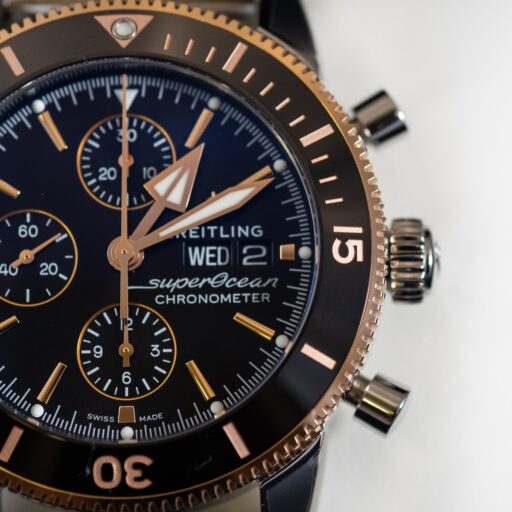
Breitling’s Chronomat, Navitimer, and Superocean lines each serve a distinct style. The Chronomat’s rouleaux bracelet is especially recognizable, but the watch can feel substantial. See technical information and current models on Breitling’s official site.
Why we like it: legible, feature-rich watches with confident design.
Trade-offs: Many models have considerable wrist presence; busy dials and heavy bracelets are worth trying before purchase.
👉 Shop Breitling: Amazon search | Breitling official website
18. IWC Schaffhausen: understated engineering
The Pilot’s Watch Mark XX is a clear, practical daily option; the Ingenieur takes a more integrated-bracelet route, and the Portugieser offers dressier proportions. Find specifications on IWC’s official site.
Why we like it: clean dials, thoughtful design, and useful options for travel or work.
Trade-offs: Prices and servicing put IWC firmly in luxury territory, and pilot-watch cases may feel large on smaller wrists.
👉 Shop IWC: Amazon search | IWC official website
19. Grand Seiko: meticulous finishing for daily wear
Grand Seiko stands out for dial work, case finishing, and several movement types, including quartz, mechanical, and Spring Drive. The SBGA211 “Snowflake” is known for its light titanium case and textured dial; the seconds hand’s smooth glide is a defining Spring Drive trait. Grand Seiko explains its movement technology on its official site.
Why we like it: exceptional detail, comfort in titanium models, and a distinctive approach to timekeeping.
Trade-offs: Polished surfaces require care, and the dial can be more striking in person than product photos suggest.
👉 Shop Grand Seiko: Amazon search | Grand Seiko official website
20. Apple: connected convenience on your wrist
The Apple Watch is not a traditional watch substitute in every sense, but it may be the best everyday wrist device if notifications, fitness tracking, navigation, and quick interactions matter most. Apple publishes compatibility and feature information on its official Apple Watch site.
Why we like it: practical connected features and a large range of bands.
Trade-offs: regular charging is required, and software support and battery condition shape its lifespan.
A smartwatch can make a mechanical watch feel delightfully quiet. It can also make your wrist feel like it has a tiny office attached. Choose the kind of everyday experience you actually want.
👉 Shop Apple Watch: Amazon search | Apple official website
✨ Luxury Icons and the Holy Trinity of Everyday Watches
Collectors commonly call Patek Philippe, Audemars Piguet, and Vacheron Constantin the “Holy Trinity.” The nickname reflects their place in high-end watchmaking, not a rule that says you need one to own a great daily watch. See our broader Luxury Watch Brands guide for more context.
Patek Philippe, Audemars Piguet, and Vacheron Constantin
| Brand | Everyday-leaning example | What appeals | Daily-wear consideration |
|---|---|---|---|
| Patek Philippe | Aquanaut | Sporty design and comfortable strap options | Availability and ownership costs can be substantial |
| Audemars Piguet | Royal Oak | Distinctive integrated bracelet and iconic geometry | Polished surfaces can show scratches; bracelet edges may catch cuffs |
| Vacheron Constantin | Overseas | Quick-change strap system on select models and refined sport styling | Case and bracelet feel should be tried on carefully |
The featured video reflects a collector’s enthusiasm for the Overseas and Aquanaut, especially their comfort, and recommends the Royal Oak for a classic luxury look. That’s a useful perspective—but not an objective ranking. At this level, fit, service access, and how comfortable you feel wearing the watch in public matter as much as a celebrated name.
When luxury makes sense for daily wear
Luxury can make sense if you enjoy the finishing, engineering, history, or design and can afford ownership without treating the watch as a guaranteed asset. It makes less sense if you’re afraid to wear it.
Use this simple test:
- Would you wear it to the places you go most often?
- Are you comfortable with visible scratches accumulating?
- Do you understand the service and insurance requirements?
- Are you buying for personal enjoyment rather than a promised return?
Bob’s Watches puts it plainly: “Buy the watch you’ll wear … and treat any gain as a bonus.” That’s sound advice for every brand, not just the famous ones.
👔 Everyday Watches for Men, Women, and Every Wrist
Good daily watches aren’t sorted by gender as neatly as marketing departments might prefer. Case dimensions, comfort, styling, and personal taste are more useful filters. Browse our Men’s Watches category for more examples, but treat the labels as shopping guides—not rules.
Best everyday watches for men
For a versatile men’s daily watch, consider:
- Seiko 5 Sports SRPE51: approachable automatic with flexible casual styling.
- Citizen Eco-Drive three-hander: easy daily ownership and minimal upkeep.
- Hamilton Khaki Field Auto: legible field-watch style for casual and business-casual wear.
- Tissot Gentleman: a more polished all-rounder.
- Tudor Black Bay 58: luxury sport styling in a relatively wearable diver format.
- Rolex Explorer 36: a quieter premium option for office and weekend use.
Shop from the model’s dimensions rather than the “men’s” shelf. A smaller case can look sharper and wear better than a larger one, regardless of who wears it.
Best everyday watches for women
Women’s everyday watch choices can range from small classic cases to full-size divers and smartwatches. Good options include:
- Tissot PRX 35 mm: integrated-bracelet style with a compact profile.
- Cartier Tank Must: elegant rectangular design that works beyond formal occasions.
- Citizen Eco-Drive Silhouette Crystal: a dressier low-maintenance option.
- Seiko 5 Sports smaller-case models: sporty mechanical choices with a more compact fit.
- Apple Watch: useful if fitness, notifications, and connected features lead the list.
A smaller wrist doesn’t require a tiny watch, and a larger wrist doesn’t require a giant one. The deciding factor is whether the lugs sit well and the watch feels balanced.
Unisex watches and choosing by wrist size
Many popular everyday models are effectively unisex. The Hamilton Khaki Field Mechanical, Casio F-91W, and Cartier Santos appeal across different styles and wrist sizes.
A quick try-on checklist:
- Look at the case from above and from the side.
- Check whether the watch rotates or slides toward your hand.
- Make sure the bracelet has enough adjustment range.
- Test it with your usual sleeves.
- Ask yourself whether the size feels intentional—not just fashionable.
A watch is worn by a person, not a demographic category. That’s a much better way to shop.
📊 Everyday Watches Compared
Brand, movement, style, and strengths at a glance
| Brand and model family | Typical movement choices | Best for | Main trade-off |
|---|---|---|---|
| Casio F-91W / G-Shock | Quartz | Low-fuss daily use and rugged routines | Basic models can feel inexpensive |
| Citizen Eco-Drive | Solar quartz | Convenience and minimal battery maintenance | Needs suitable light exposure |
| Seiko 5 Sports | Automatic | Mechanical versatility | Hardlex and bracelet details vary |
| Orient Bambino | Automatic | Dressier everyday wear | Limited water capability on many models |
| Timex Expedition Solar | Solar quartz | Field style and grab-and-go use | Strap preference may vary |
| Tissot PRX / Gentleman | Quartz or automatic, depending on model | Swiss everyday styling | PRX bracelet fit is personal |
| Hamilton Khaki Field | Mechanical or automatic | Legible casual wear | Field aesthetic isn’t for everyone |
| Tudor Black Bay | Automatic | Sporty luxury daily wear | Can be thick or visually bold |
| Rolex Datejust / Explorer | Automatic | Premium all-round use | Availability, attention, and servicing |
| Omega Aqua Terra | Automatic | Office-to-weekend versatility | Luxury ownership costs |
| Grand Seiko | Quartz, automatic, Spring Drive | Finishing and movement choice | Polished surfaces need care |
| Apple Watch | Smartwatch | Connectivity and health tools | Charging and software lifecycle |
A few consumer-review patterns we keep seeing: reviewers often praise a watch’s movement or water rating at first, then spend more time discussing fit, strap feel, glare, and readability after actual wear. That’s a useful reminder: a specification is a promise; comfort is the daily experience.
Best picks by lifestyle and watch type
| If your priority is… | Consider… | Why |
|---|---|---|
| Set-it-and-forget-it reliability | Citizen Eco-Drive or Casio quartz | Low-maintenance operation |
| Mechanical character | Seiko 5 Sports, Orient, Hamilton | Engaging movements and broad styles |
| Rough daily use | G-Shock | Designed around shock resistance |
| One-watch versatility | Tissot Gentleman, Tudor Black Bay, Omega Aqua Terra | Can suit a mix of work and casual settings |
| A dressier office watch | Orient Bambino, Cartier Tank, Rolex Datejust | More refined profiles |
| Travel utility | Citizen Nighthawk, Seiko GMT, IWC Mark XX | Time-zone or legibility-focused features |
| Premium finishing | Grand Seiko | Distinctive detail and movement variety |
| Smart features | Apple Watch | Notifications, activity tracking, and apps |
🧭 Choose an Everyday Watch for Your Lifestyle
There’s no universal “best” watch because people don’t all have the same Tuesdays. A watch that suits a desk job may be wrong for a construction site; a polished bracelet may be ideal at dinner and irritating during a trail run.
Office, business-casual, and formal wear
For office use, prioritize comfort under cuffs, clear time reading, and a restrained dial.
- Dressier: Orient Bambino, Cartier Tank, Tissot Gentleman.
- Business-casual: Rolex Datejust, Omega Aqua Terra, Grand Seiko Heritage.
- Casual office: Hamilton Khaki Field, Seiko 5 Sports, Citizen Eco-Drive.
A bracelet is convenient if your days include frequent transitions; leather can look more formal, but it’s not ideal for heat or rain. Consider a thinner case if you wear fitted shirts.
Travel, commuting, and outdoor adventures
Travel watches should be easy to read, comfortable over long days, and practical across time zones. A GMT complication can help if you work with people in another region; a solar movement is handy when you don’t want to think about a battery.
- Seiko 5 GMT: mechanical travel function at an accessible level.
- Citizen Nighthawk: solar-powered features for frequent travelers.
- IWC Pilot’s Watch Mark XX: legible, refined travel companion.
- Casio G-Shock: durable and low-worry for active trips.
For air travel and cabin pressure, ordinary wristwatches are generally less of a concern than water resistance after pressure changes or service neglect. Follow the manufacturer’s care guidance and don’t assume that “travel watch” means “indestructible.”
Sports, swimming, and active routines
For exercise, choose a secure strap, legible display, and water rating suited to the activity. A smartwatch may offer activity tracking; a simple quartz or G-Shock can better if you prefer fewer distractions.
Before swimming:
- Confirm the exact model’s water-resistance rating and manufacturer guidance.
- Ensure the crown and pushers are in the correct position.
- Check whether the watch has been serviced or pressure-tested, especially if it is older.
- Rinse salt or chlorine from the case and bracelet after use.
- Don’t use a leather strap in the pool.
A “200 m” marking does not excuse a loose crown, worn seal, or cracked crystal. Treat water resistance as a maintained feature—not a permanent superpower.
Minimalist, dress, field, diver, and integrated-bracelet styles
| Style | Good everyday examples | Strength | Watch-out |
|---|---|---|---|
| Minimalist | Junghans Max Bill, Tissot Everytime | Clean, easy to pair | May lack lume or sporty protection |
| Dress | Orient Bambino, Cartier Tank | Refined and cuff-friendly | Often less suited to swimming |
| Field | Hamilton Khaki Field, Timex Expedition | Strong legibility | Can look casual with formal clothing |
| Diver | Seiko Prospex, Tudor Black Bay, Citizen Promaster | Legible and robust-looking | Bezel and case can add bulk |
| Integrated bracelet | Tissot PRX, Cartier Santos, Audemars Piguet Royal Oak | Distinctive, polished silhouette | Fit and strap flexibility are more limited |
Don’t assume “diver” is automatically the best all-purpose style. A diver can be an excellent daily watch, but a slim field watch may be more comfortable under a cuff, and a solar three-hander may be more convenient when you’re late.
🛒 How to Buy the Right Everyday Watch
A little patience before buying can spare you the familiar watch-owner sequel: “I love it, except for the part that sits on my wrist.”
New, pre-owned, or vintage: pros and trade-offs
| Buying route | Advantages | Risks and checks |
|---|---|---|
| New from an authorized retailer | Manufacturer warranty and clear provenance | Confirm fit, return policy, and service coverage |
| Pre-owned from a reputable dealer | Wider selection and access to discontinued models | Verify authenticity, condition, service history, and return terms |
| Vintage | Character and historic design | Water resistance, parts availability, and originality can be uncertain |
For a first everyday watch, new or carefully authenticated pre-owned is usually the simpler route. Vintage watches can be wonderful, but treat their water resistance as unverified unless a qualified watchmaker has tested them recently.
For additional buying help, visit our Guide to Buying Watches and browse Affordable Watches if you’re comparing practical options.
How to check fit, authenticity, warranty, and return policies
Use this checklist before you buy:
- Verify the reference number against the manufacturer’s official specifications.
- Compare the serial and paperwork where applicable, but don’t rely on papers alone to prove authenticity.
- Inspect condition: crystal, bezel, bracelet stretch, clasp, crown, and case edges.
- Ask about service history and whether water resistance has been tested.
- Read the warranty terms: find out what is covered and what can void coverage.
- Confirm the return window and whether restocking or inspection fees apply.
- Try it on if possible or verify lug-to-lug dimensions and strap width before ordering.
- Use an authorized or trusted seller. Rolex, Omega, and other brands publish official retail and service information on their own websites.
Avoid buying a watch as an investment based solely on internet chatter. Demand can shift, condition matters, and no outcome is guaranteed.
Common buying mistakes to avoid
- Choosing by diameter alone.
- Treating “water-resistant” as “safe for any water activity.”
- Buying a watch too precious to wear.
- Ignoring thickness, weight, and bracelet comfort.
- Assuming an automatic watch is more accurate than quartz.
- Overlooking servicing and strap replacement.
- Purchasing from an unverified seller because a listing looks irresistible.
- Believing a watch will reliably appreciate in value.
The most common mistake may be buying for the photograph rather than your own wrist. Photos don’t show a crown digging into your hand.
🧽 Everyday Watch Care and Maintenance
Most daily watches need sensible, regular care—not ceremonial treatment. Follow the manufacturer’s manual for your exact model, especially when water, leather, or smart features are involved.
Cleaning watches, bracelets, and straps
A simple cleaning routine:
- Check the watch’s water resistance and cleaning instructions.
- Remove the strap if it is leather or otherwise not water-safe.
- Use a soft, slightly damp cloth for ordinary surface dirt.
- For suitable water-resistant steel watches, use lukewarm water and mild soap only when the manufacturer permits it.
- Use a soft brush to remove dirt between bracelet links.
- Rinse carefully and dry completely with a clean, soft cloth.
- Keep leather away from soaking, sunscreen, and prolonged sweat.
Don’t use household solvents, abrasive pads, or ultrasonic cleaning on a complete watch unless a qualified professional confirms it is appropriate. A soft cloth is less exciting than a gadget, but it’s rarely the wrong first move.
Servicing mechanical and quartz watches
Mechanical watches have many moving parts and require periodic inspection and servicing. Intervals vary by brand, caliber, age, use, and environmental exposure. Follow the manufacturer’s recommendation for the specific watch rather than relying on a single universal schedule.
Quartz watches usually need less mechanical attention, but still need battery or rechargeable-cell care, seal checks, and occasional inspection—particularly if you use them around water.
For service information, start with official resources from Seiko, Citizen, Tissot, or the maker of your watch. Use an authorized service center when warranty coverage or brand-specific parts matter.
Magnetism, water damage, and everyday wear
Magnetic fields can affect some mechanical watches. Keep a mechanical watch away from strong magnets and electronic devices that may contain powerful magnetic components; consult your manufacturer for model-specific guidance. If a mechanical watch suddenly runs unusually fast, a watchmaker can check whether magnetism is involved.
Other everyday safeguards:
- Don’t set the time or date in a prohibited period if the manual warns against it.
- Avoid operating the crown underwater.
- Remove the watch before high-impact activities if the manufacturer advises against shock exposure.
- Have water resistance checked after a significant impact or case opening.
- Store watches dry and away from extreme heat.
- Treat scratches as normal wear unless they affect function or safety.
A watch is built to be worn, not preserved in a drawer. Just know which rough edges are harmless and which are a signal to get it checked.
🔎 Recommended Links
- What are the best brand of watch?
- Luxury Watch Brands
- Guide to Buying Watches
- Men’s Watches
- Affordable Watches
- Fashion Trends in Watches
- Best Watches For Everyday Wear Under $100 — Two Broke Watch Snobs
- Best Everyday Watches — Bob’s Watches
- The One and Done Watch List — David Vaucher
- Watchmaking: A Guide for Amateurs by George Daniels
- The Watch Book by Gisbert L. Brunner
- A Man and His Watch by Matt Hranek
❓ FAQ

Which watch brand is best for everyday wear?
There isn’t one universal winner. Citizen is hard to beat for low-maintenance Eco-Drive convenience; Seiko offers a broad range of versatile mechanical and quartz options; Casio excels at straightforward, resilient watches; and Tissot, Hamilton, Tudor, Omega, Rolex, and Grand Seiko cover progressively more refined or luxury-oriented tastes.
Choose by movement, wrist fit, water-use needs, service access, and style. A watch that fits your routine beats a famous name that stays in the box.
Read more about “15 High-Quality Watch Brands for Women to Know ⌚”
What is the most durable type of everyday watch?
For rough use, a G-Shock is a strong practical choice because its design centers on shock resistance. For a more conventional wristwatch, look for a well-built case, secure crown, suitable water resistance, legible dial, and a strap that stays put.
Durability depends on use and maintenance. A dive-style watch isn’t automatically more robust than every field watch, and no case can make a watch immune to impacts or neglected seals.
Read more about “24 Best Watch Brands for Women Who Love Elegance ✨”
Are automatic watches practical for daily use?
Yes—if you enjoy wearing, winding, or resetting a mechanical watch. An automatic watch can be a satisfying everyday companion, but it may stop when left unworn and will eventually require professional service. If you want the most accurate and low-maintenance option, quartz or solar quartz is usually easier.
Read more about “🌍 All Watch Brands in the World: 200+ Names to Know”
Can you wear a diver watch every day?
Absolutely. Many divers have legible dials, sturdy cases, and useful water resistance. The trade-off is size: rotating bezels and thicker cases can feel bulky under cuffs. Check the exact model’s dimensions and water-use instructions before swimming.
Read more about “⚙️ Automatic Watch Movements: 10 Milestones That Changed Time”
What watch size is best for a small wrist?
There’s no fixed number, but smaller wrists often suit watches with shorter lug-to-lug measurements, moderate thickness, and a balanced bracelet or strap. Try 34–38 mm models as a starting point, not a strict limit. A well-shaped 40 mm case can still fit beautifully.
Read more about “24 Top Swiss Watch Brands: Which One Fits You? ⌚”
How much water resistance do you need?
For everyday splashes, many people choose a watch with at least 50 m water resistance; for frequent swimming, look for a model specifically rated and approved by its maker for swimming, commonly 100 m or more. Check the manual and the watch’s maintenance history, because seals age and water resistance can be compromised.
Read more about “15 Affordable Watch Brands That Impress in 2025 ⌚️”
Should an everyday watch be quartz or automatic?
Choose quartz for accuracy, convenience, and fewer routine demands. Choose automatic if mechanical craftsmanship and wearing a traditional movement are part of the appeal. Solar quartz is an excellent middle ground if you like low maintenance and want to avoid regular battery changes.
Read more about “15 Best Watch Brands Under $500 That Deliver ⌚”
How often should an everyday watch be serviced?
Follow the watchmaker’s recommendation for the exact model. Mechanical service intervals vary by movement and use; quartz models also need battery, seal, and function checks. If a watch is losing time, has suffered a hard impact, or will be used around water after a long period without testing, have it inspected by a qualified professional.
Read more about “Which Are the Watch Brands? 30 Names to Know ⌚”
What should I look for in a watch for everyday use?
Start with comfort and fit, then consider movement, legibility, water resistance, crystal, strap options, service access, and how well the style fits your wardrobe. Try the watch on if you can, and don’t pay extra for features you won’t use.
Read more about “History of Professional Dive Watches: 12 Deep-Dive Milestones 🌊”
Which affordable watch brands offer the best reliability?
Casio, Citizen, Seiko, Orient, and Timex are sensible starting points across digital, quartz, solar, and mechanical categories. Reliability still depends on the specific model, care, and seller, so compare the watch’s specifications and warranty rather than judging the logo alone.
Read more about “🚀 The Rise of Independent Watchmaking & Microbrand Culture (2024)”
Are Swiss watch brands more reliable than Japanese brands?
Not inherently. Swiss and Japanese brands both make reliable watches across a wide range of movements and quality levels. The better comparison is model by model: movement design, assembly, quality control, water resistance, warranty, and service network all matter.
Read more about “🔎 12 Ways to Authenticate a Luxury Watch”
Are Seiko or Citizen watches better for everyday wear?
Pick Seiko if you’re drawn to broad styling and accessible mechanical options; pick Citizen if solar-powered convenience and low-maintenance ownership appeal more. Both brands make a range of watches, so compare the exact models rather than treating either brand as one uniform product.
Read more about “🛩️ The Development of Pilot Watches: Aviation Horology”
Which brands make durable watches for daily use?
For rugged utility, consider Casio G-Shock and Citizen Promaster. For traditional mechanical or luxury sports watches, Seiko Prospex, Tudor, Omega, and Rolex have models designed for active wear. Check the specific watch’s construction and intended use: brand reputation alone doesn’t tell you whether a particular model suits your routine.
Read more about “What Are the 15 Most Expensive Watch Brands? 💎”
✅ Conclusion