Support our educational content for free when you purchase through links on our site. Learn more
How to Choose the Best Watch Brand for Your Budget ⌚


To answer “How do I choose the best watch brand for my budget?”, start with how you’ll wear the watch, then compare fit, movement, durability, service support, and total ownership costs—not just the name on the dial. For everyday value, consider Casio, Citizen, Seiko, and Orient; if you want Swiss heritage or luxury finishing, compare brands like Tissot, Hamilton, Longines, Tudor, and OMEGA.
We’ve seen shoppers fall for a watch online, only to try it on and find the case feels too large or the bracelet pinches. A few minutes checking comfort and specifications can matter more than hours spent debating brand rankings.
Key Takeaways
- Match the watch to your daily life: dress, field, sport, digital, and dive-style watches serve different needs.
- Choose a movement that suits your routine: quartz is convenient, solar quartz is low-fuss, and mechanical watches offer a hands-on experience.
- Compare the whole watch, not just its logo: case fit, bracelet comfort, water resistance, warranty, and serviceability all count.
- Budget for ownership, too: batteries, servicing, repairs, and insurance may add to the cost.
- Buy for enjoyment, not promised resale value: future market prices are never guaranteed.
Table of Contents
- ⚡️ Quick Tips and Facts
- 🧭 How to Choose the Best Watch Brand for Your Budget
- Set Your Budget: Watch Price, Ownership Costs, and Value
- Decide What You Need: Everyday, Dress, Dive, or Sports Watch
- Quartz, Automatic, or Manual-Wind: Which Movement Fits?
- New, Pre-Owned, or Vintage: Choosing How to Buy
- Case Size, Materials, Water Resistance, and Other Specs
- Brand Reputation, Warranty, Service, and Resale Value
- 📜 A Brief History of Watch Brands and Price Tiers
- 🔍 What Makes a Watch Worth Buying at Any Budget?
- Movement Quality and Accuracy
- Build, Finishing, and Bracelet Comfort
- Design, Heritage, and Brand Recognition
- 🏆 20 Watch Brands to Consider at Different Budgets
- 1. Casio: Dependable Digital and Everyday Watches
- 2. Timex: Affordable Classics and Weekenders
- 3. Citizen: Solar-Powered Convenience
- 4. Seiko: Broad Choice and In-House Movements
- 5. Orient: Mechanical Value for Money
- 6. Tissot: Swiss Heritage at an Accessible Tier
- 7. Hamilton: Field-Watch Character and Swiss Craft
- 8. Bulova: Distinctive Designs and High-Beat Quartz
- 9. G-Shock: Tough Watches for Hard Use
- 10. Certina: Sporty Swiss Watches and Robust Specs
- 11. Longines: Refined Watches with Deep Heritage
- 12. Mido: Practical Swiss Automatics
- 13. Oris: Independent Swiss Watchmaking
- 14. Sinn: Purpose-Built Tool Watches
- 15. Nomos Glashütte: Minimalist German Design
- 16. Tudor: A Step into Luxury Sports Watches
- 17. TAG Heuer: Sporty Design and Motorsport Roots
- 18. OMEGA: Technical Innovation and Iconic Collections
- 19. Rolex: Luxury, Recognition, and Long-Term Demand
- 20. Grand Seiko: Precision, Finishing, and Japanese Craft
- 💰 Best Watch Brands by Budget Range
- Affordable Watches: First Watches and Reliable Daily Wear
- Mid-Range Watches: Better Materials and Mechanical Choices
- Premium Watches: Refined Finishing and Stronger Brand Heritage
- Luxury Watches: Craftsmanship, Prestige, and Ownership Costs
- Pre-Owned Luxury: When Buying Used Makes Sense
- ⌚ Quartz vs. Automatic vs. Manual-Wind Watches
- How a Self-Winding Automatic Movement Works
- Accuracy, Power Reserve, and Everyday Convenience
- Which Watch Movement Is Best for Your Lifestyle?
- 🛒 How to Buy a Watch Safely
- Authorized Dealers, Brand Boutiques, and Online Retailers
- How to Check a Watch’s Authenticity and Condition
- What to Know About Warranties, Returns, and Documentation
- Common Watch-Buying Mistakes to Avoid
- 🧰 Watch Ownership Costs, Care, and Servicing
- Battery Changes, Mechanical Servicing, and Repair Costs
- Water Resistance, Magnetism, and Everyday Wear
- How to Store and Maintain Your Watch
- ❓ Frequently Asked Questions About Choosing a Watch Brand
- What Is the Best Watch Brand for the Money?
- Which Watch Brand Is Best for a First Watch?
- Are Expensive Watch Brands Worth the Extra Cost?
- Do Watches Hold Their Value?
- Is a Swiss Watch Better Than a Japanese Watch?
- Should I Buy a Watch Online or in Person?
- ✅ Final Recommendations: Match the Brand to Your Budget and Priorities
- Conclusion
- Recommended Links
- Reference Links
⚡️ Quick Tips and Facts
Choosing the best watch brand for your budget means balancing reliability, fit, features, serviceability, and the style you’ll actually wear. The logo matters, but it should not be the whole shopping list. For our broader brand-by-brand perspective, see What is the best brand of watch?.
| Your priority | Brands worth a look | Why they make sense |
|---|---|---|
| Affordable, low-fuss timekeeping | Casio, Timex, Citizen | Broad choices, practical features, and quartz models that are easy to live with |
| Entry-level mechanical watch | Seiko, Orient | Accessible automatic options and distinctive designs |
| Swiss-made mechanical value | Tissot, Hamilton, Certina | Established brands with varied collections and recognized service networks |
| Independent character | Oris, Sinn, Nomos Glashütte | Strong design identities and specialist appeal |
| Luxury sports and dress watches | Tudor, OMEGA, Rolex | Prestigious, well-developed collections and extensive enthusiast interest |
| Japanese finishing and precision | Grand Seiko | Detailed finishing, varied movements, and a design language all its own |
A few rules we keep coming back to:
- ✅ Set a total ownership budget, not just a purchase budget. Mechanical servicing, straps, insurance, and repairs can add up.
- ✅ Try the watch on if you can. A 40mm case can feel compact or oversized depending on thickness, lug-to-lug length, and bracelet shape.
- ✅ Buy the watch, not the fantasy of resale. Future value is uncertain; choose something you’ll enjoy wearing.
- ❌ Don’t assume “Swiss” automatically means better, or that a famous name guarantees a better fit.
- ❌ Don’t confuse water resistance with permission to press buttons underwater. Check the manufacturer’s guidance.
For current buying guidance, start with our Guide to Buying Watches and Affordable Watches. The first YouTube video, Everything You MUST Know Before Buying A Watch – Essential Beginner’s Buying Guide by Ben’s Watch Club, is also a useful companion for learning what to check before you buy.
🧭 How to Choose the Best Watch Brand for Your Budget
The useful question is not “Which brand is best?” It’s which brand makes the best watch for your needs, wrist, and budget. A rugged quartz Casio can be a better choice than a luxury automatic if you want a worry-free travel watch. A Seiko may be a better first mechanical watch than a pricier Swiss option if you want to learn what owning an automatic feels like.
Set Your Budget: Watch Price, Ownership Costs, and Value
Start with a number you can spend without borrowing or sacrificing essentials. Then leave room for ownership costs.
| Cost to consider | Why it matters |
|---|---|
| Purchase | The watch, tax, shipping, and any import duties |
| Fit and comfort | Bracelet sizing, replacement strap, or a different clasp |
| Maintenance | Battery replacement for quartz; periodic service for mechanical watches |
| Protection | Insurance or secure storage for a high-value watch |
| Repairs | Accidental damage, water intrusion, or parts that need replacement |
A quartz watch generally needs less routine attention than a mechanical watch, but it still may need a battery, seals, or repairs. Mechanical servicing is more involved, and costs differ by brand, movement, location, and condition. The Federation of the Swiss Watch Industry offers background on the Swiss watch sector, while manufacturer service pages are the best place to check brand-specific care guidance.
Our practical budgeting method:
- Pick your maximum purchase amount.
- Decide whether you want quartz, solar, automatic, or manual-wind.
- Reserve a maintenance cushion, especially for mechanical or pre-owned watches.
- Compare at least three watches with similar use cases.
- Choose the one that fits and feels right, not the one with the loudest online hype.
Teddy Baldassarre’s guide focuses on attainable watches and makes a useful point: value is personal. Its summary notes, “value and the entire concept of attainability are also subjective.” That’s right. A solar Citizen may be outstanding value to someone who values convenience; an Orient automatic may be more satisfying to someone who wants a visible mechanical movement.
Decide What You Need: Everyday, Dress, Dive, or Sports Watch
Before picking a logo, picture a normal week. Are you at a desk, outdoors, in a workshop, at formal events, or all of the above?
| Watch type | Best for | Features to consider | Potential trade-off |
|---|---|---|---|
| Everyday | One-watch versatility | Comfortable case, clear dial, dependable movement | May not excel at any single task |
| Dress | Formal clothing and understated style | Slim profile, restrained dial, leather strap | Often less water-resistant |
| Dive-style | Sporty daily wear and swimming, depending on specs | Legible markers, rotating bezel, suitable water resistance | Can be thick or heavy |
| Field | Casual wear and legibility | Simple dial, durable case, readable numerals | Military styling may feel informal |
| Digital/sports | Training, travel, rough use | Timers, alarms, backlight, shock resistance | Less traditional styling |
| Integrated-bracelet sports | Modern everyday use | Bracelet fit, finishing, clasp adjustment | Bracelet fit can be harder to customize |
“Dive watch” is not just a look. ISO 6425 sets requirements for watches designed for scuba diving; a watch with a diver-style bezel is not automatically certified. See the ISO overview of diving equipment standards and the brand’s own specifications before taking any watch underwater.
Quartz, Automatic, or Manual-Wind: Which Movement Fits?
Movement choice changes the ownership experience more than many first-time buyers expect.
| Movement | Strengths | Trade-offs |
|---|---|---|
| Quartz | Usually accurate, convenient, and low-maintenance | Requires a battery or charging system unless solar-powered |
| Solar quartz | Low-fuss timekeeping with light-powered charging | Needs light exposure and eventual service |
| Automatic | Self-winds while worn; mechanical appeal | Can stop when unworn and needs servicing |
| Manual-wind | Direct, hands-on ritual and often slim construction | Requires regular winding |
The National Institute of Standards and Technology explains how precise time standards are maintained; in everyday watch shopping, though, the useful distinction is simpler: quartz generally prioritizes convenience, mechanical movements prioritize craft and interaction.
New, Pre-Owned, or Vintage: Choosing How to Buy
A new watch typically offers a manufacturer warranty, known condition, and a straightforward return process. Pre-owned can open the door to discontinued designs or higher-end models, but condition and service history matter.
| Buying route | Advantages | Risks and checks |
|---|---|---|
| New from an authorized retailer | Clear provenance, manufacturer warranty | Less access to discontinued models |
| New from a reputable independent retailer | Broad selection and potential availability | Confirm authorized status and warranty terms |
| Pre-owned from a specialist dealer | More choice, possible access to older references | Verify condition, authenticity, warranty, and return policy |
| Private sale | Direct negotiation and broad market access | Highest need for authentication and careful documentation |
| Vintage | Character, history, and unusual designs | Parts, water resistance, originality, and service can be challenging |
Bob’s Watches describes its business as pre-owned-focused and says, “Bob’s Watches only sells pre-owned watches and provides its own warranties on the watches it sells.” That is a useful reminder: a seller’s warranty is not automatically the manufacturer’s warranty. Read exactly who backs it, what is covered, and how claims work. Bob’s also states that it is independent and not affiliated with Rolex, OMEGA, or other brands; check its disclosures and warranty information.
Case Size, Materials, Water Resistance, and Other Specs
A spec sheet can look impressive and still wear badly. We’ve seen shoppers fixate on diameter, then discover the lugs extend past their wrist or the case sits like a hockey puck.
Check these dimensions and features:
- Case diameter: useful, but incomplete without the other measurements.
- Lug-to-lug length: often the better clue for whether the watch will span your wrist.
- Thickness: affects how the watch slides under a cuff and how top-heavy it feels.
- Bracelet taper and clasp: determine comfort and adjustability.
- Crystal: sapphire is generally more scratch-resistant than mineral glass, while acrylic can be easier to polish.
- Water resistance: follow the maker’s instructions; ratings are not a simple guarantee for every water activity.
- Lume and legibility: especially important for sports, field, and dive-style watches.
- Weight and material: steel, titanium, resin, ceramic, and precious metals feel very different in daily wear.
For a formal watch, slimness and strap comfort may matter more than extreme water resistance. For a sport watch, legibility and a secure clasp can matter more than a polished case. There’s no universal winner; there is only the watch you’ll keep reaching for.
Brand Reputation, Warranty, Service, and Resale Value
A watch brand’s reputation is useful, but it’s not a substitute for checking the specific model. Ask:
- Can the watch be serviced where you live?
- What does the warranty cover and exclude?
- Are parts and trained watchmakers available?
- Does the brand publish clear care instructions?
- Are you buying it to wear, or mainly hoping it will appreciate?
Resale values move with demand, condition, completeness, and market trends. Rolex and some OMEGA or Tudor models may attract strong secondary-market interest, but no brand can promise a future resale price. For most buyers, the dependable return is years of enjoyment—not a speculative exit.
📜 A Brief History of Watch Brands and Price Tiers

Modern watches grew from a mix of European watchmaking traditions, industrial-scale production, and later advances in quartz and electronic timekeeping. Swiss makers built global recognition around mechanical craft; Japanese companies helped make reliable quartz watches widely available; American brands brought their own histories of mass production and practical design.
That history still shapes what you see on a dial today. Seiko and Citizen span accessible everyday watches through more specialized collections. Tissot and Hamilton draw on Swiss production and heritage. Rolex and OMEGA are global luxury names, while Grand Seiko has earned a following for its finishing and movement variety.
Price tier does not equal quality in a straight line. Spending more may buy finer finishing, more complex movements, precious materials, higher brand recognition, or specialized engineering. It may not buy a watch that is more accurate or comfortable for your life. That distinction is the key to avoiding the “pay more, automatically get more” trap.
🔍 What Makes a Watch Worth Buying at Any Budget?
A worthwhile watch earns its place through the combination of fit, function, reliability, and personal appeal. We recommend judging the whole package rather than one headline feature.
Movement Quality and Accuracy
Movement type is only part of the story. Quartz movements are usually more accurate in ordinary use than mechanical movements, while mechanical watches offer an intricate, traditional experience. Solar quartz adds convenience by using light to recharge its power cell; Citizen explains its Eco-Drive technology.
When comparing mechanical watches, look for:
- Published accuracy tolerances, if available.
- Power reserve and winding behavior.
- Whether the movement hacks—stops the seconds hand when setting.
- Whether it supports hand-winding.
- Brand service support and movement parts availability.
- Resistance to magnetism, shocks, and water, as specified by the manufacturer.
Do not read a movement’s country of origin as a quality verdict. A well-designed Japanese or Swiss movement can both be reliable; execution, regulation, service, and the complete watch matter.
Build, Finishing, and Bracelet Comfort
A watch’s case finishing might look excellent in a product photo but feel sharp on the wrist. Inspect the clasp, crown, caseback, bracelet edges, and how the links articulate.
Try this quick fit test in a store:
- Put the watch on and fasten it as you would normally.
- Check whether the lugs sit within the edges of your wrist.
- Move your wrist through your usual range of motion.
- Notice whether the crown digs in or the clasp creates a pressure point.
- Compare the same model on a bracelet and strap, if possible.
- Wear it for several minutes; a watch that feels fine for ten seconds may feel different after an hour.
Teddy Baldassarre’s affordable-watch guide highlights case dimensions and lug-to-lug measurements as useful fit checks. We agree: measurements are the shortlist; your wrist is the final judge.
Design, Heritage, and Brand Recognition
A famous logo can be emotionally satisfying, and heritage can bring meaningful design continuity. But brand recognition is a preference, not a technical feature.
Ask yourself:
- Do you like the watch without considering its logo?
- Will the design work with most of your clothes?
- Does it feel too precious to wear?
- Are you paying for a feature you’ll use?
- Would you still want it if resale value were irrelevant?
If the answer to the last question is no, pause. The watch may be a market story more than a personal choice. Browse our Luxury Watch Brands and Fashion Trends in Watches pages for broader style and brand context.
🏆 20 Watch Brands to Consider at Different Budgets
These are not rankings from “worst” to “best.” Each brand has strengths, limitations, and models that suit different people. Always verify specifications on the exact reference you’re considering.
1. Casio: Dependable Digital and Everyday Watches
Casio is a strong choice for practical digital watches, everyday quartz models, and rugged G-Shock designs. The brand is especially appealing if you want alarms, timers, a backlight, or shock resistance without treating your watch like fine china.
Strengths: reliability, utility, broad range, and easy everyday wear.
Trade-offs: some designs lean distinctly casual, and the most affordable models may use basic materials.
- Good for: travel, daily wear, sport, and a low-worry backup watch.
- Look at: Casio Vintage and G-Shock collections.
- Official collection: Casio watches
2. Timex: Affordable Classics and Weekenders
Timex offers accessible field, dress, and digital watches with a recognizable American design history. The Weekender and Expedition lines are popular starting points; the brand also has more refined and mechanical options.
Strengths: approachable designs, easy-to-understand collections, and broad availability.
Trade-offs: finishing and movement features vary significantly by model; check the exact spec sheet.
- Good for: a first watch, casual outfits, and a simple daily companion.
- Official collection: Timex watches
3. Citizen: Solar-Powered Convenience
Citizen’s Eco-Drive technology powers watches using light, which makes it a compelling choice for buyers who want to avoid routine battery changes. The brand also makes conventional quartz and mechanical models.
Strengths: practical solar quartz, strong sport-watch selection, wide variety.
Trade-offs: some cases wear large, and the Eco-Drive experience is less mechanical than an automatic.
- Good for: busy owners, travel, and dependable everyday use.
- Official information: Citizen Eco-Drive
4. Seiko: Broad Choice and In-House Movements
Seiko’s range spans accessible quartz, entry-level automatics, sport watches, and high-end collections. Enthusiasts often like the breadth: there is a Seiko for a dress shirt, a camping trip, or a weekend dive-style outfit.
Strengths: variety, recognizable designs, and deep watchmaking heritage.
Trade-offs: specifications and finishing differ across collections; compare references rather than assuming every Seiko is alike.
- Good for: a first automatic, a durable sports watch, or a collection with variety.
- Official collection: Seiko watches
5. Orient: Mechanical Value for Money
Orient is well known for accessible mechanical watches, including dressy Bambino models and sportier divers such as the Kamasu. It’s an appealing brand if you specifically want an automatic without moving straight into a premium tier.
Strengths: mechanical focus, strong design value, approachable entry point.
Trade-offs: case dimensions and bracelet feel can be divisive; try one on if possible.
- Good for: first-time automatic buyers and mechanical-watch enthusiasts on a budget.
- Official collection: Orient watches
6. Tissot: Swiss Heritage at an Accessible Tier
Tissot offers dress, sport, and integrated-bracelet designs, with quartz and automatic options. The PRX is a standout for its distinctive bracelet-led look, while the Gentleman is a more conventional everyday choice.
Strengths: broad selection, recognizable Swiss heritage, and multiple movement types.
Trade-offs: popular designs are common, and bracelet fit may not suit every wrist.
- Good for: a first Swiss watch or a versatile work-to-weekend model.
- Official collection: Tissot watches
7. Hamilton: Field-Watch Character and Swiss Craft
Hamilton’s Khaki Field line brings military-inspired legibility and a casual, useful design. The brand also makes dress watches and chronographs, so its identity is broader than “field watch.”
Strengths: clear dials, recognizable heritage styling, and a strong selection of mechanical models.
Trade-offs: field-watch designs are intentionally informal; larger references may not suit smaller wrists.
- Good for: everyday wear, casual outfits, and a first Swiss mechanical watch.
- Official collection: Hamilton watches
8. Bulova: Distinctive Designs and High-Beat Quartz
Bulova mixes heritage-inspired designs with modern quartz and mechanical watches. The Precisionist family is known for a high-frequency quartz movement, while the Lunar Pilot has a distinctive chronograph identity.
Strengths: varied styling, interesting quartz technology, and recognizable historical references.
Trade-offs: case sizes can run bold, and the right collection depends heavily on taste.
- Good for: distinctive designs, chronographs, and buyers curious about unusual quartz movements.
- Official collection: Bulova watches
9. G-Shock: Tough Watches for Hard Use
G-Shock is a practical pick for people who want shock resistance, useful digital functions, and a watch they can wear without constant worry. Some designs add solar charging, radio timekeeping, or Bluetooth-connected features.
Strengths: durability-focused construction, functional displays, and broad choice.
Trade-offs: the chunky profile is part of the appeal but not everyone’s idea of subtle.
- Good for: travel, outdoor use, sport, and rough daily wear.
- Official collection: G-Shock watches
10. Certina: Sporty Swiss Watches and Robust Specs
Certina offers Swiss sports watches with a practical emphasis, including dive and GMT models. Its DS Action range is worth considering if you want a functional watch rather than a delicate dress piece.
Strengths: sport-focused collections and robust specifications on selected models.
Trade-offs: availability varies by market, so confirm the local warranty and exact reference specs.
- Good for: buyers looking for a Swiss sports watch with a purposeful design.
- Official collection: Certina watches
11. Longines: Refined Watches with Deep Heritage
Longines occupies a polished middle ground between accessible Swiss brands and higher luxury. Its collections include classic dress watches, pilot-inspired models, and sports designs.
Strengths: heritage, elegant finishing, broad appeal, and a deep catalog.
Trade-offs: the jump in ownership cost includes brand positioning as well as materials and movement.
- Good for: buyers ready to step into a more refined Swiss watch.
- Official collection: Longines watches
12. Mido: Practical Swiss Automatics
Mido is often considered by shoppers looking for Swiss automatic watches with practical features and restrained styling. Collections such as Ocean Star and Multifort cover sporty and everyday roles.
Strengths: versatile designs and a strong mechanical focus.
Trade-offs: brand recognition is lower than some competitors, which may be a plus or a drawback depending on what you value.
- Good for: a less obvious Swiss automatic with everyday usability.
- Official collection: Mido watches
13. Oris: Independent Character and Mechanical Focus
Oris is a Swiss brand with a strong personality across diver, pilot, and everyday collections. The Aquis is its best-known modern dive-watch line, while the Big Crown brings a more vintage-inspired look.
Strengths: distinct design language, mechanical identity, and broad sport-watch appeal.
Trade-offs: some models wear large or thick; check fit before committing.
- Good for: buyers seeking a mechanical Swiss watch with character.
- Official collection: Oris watches
14. Sinn: Purpose-Built Tool Watches
Sinn focuses on functional, legible watches, with a reputation for technical case treatments and instrument-inspired design. It is a specialist choice for people who prefer purpose over polished status.
Strengths: practical tool-watch approach and clear, distinctive design.
Trade-offs: styling can feel utilitarian, and availability may be less straightforward than mainstream brands.
- Good for: aviation-inspired watches, robust daily wear, and enthusiasts who like engineering details.
- Official collection: Sinn watches
15. Nomos Glashütte: Minimalist German Design
Nomos is known for clean Bauhaus-inspired design and in-house mechanical movements. Its watches tend to feel refined and design-led without relying on a traditional luxury-sports template.
Strengths: distinctive minimalism, thoughtful proportions, and mechanical depth.
Trade-offs: the clean look is not for everyone, and some models can wear larger than their diameter suggests.
- Good for: dress and everyday wear, especially if you like uncluttered dials.
- Official collection: Nomos watches
16. Tudor: A Step into Luxury Sports Watches
Tudor offers sports and dress watches with strong brand heritage, including Black Bay and Pelagos collections. It can suit buyers who want a capable luxury watch but prefer a different look or price positioning from Rolex.
Strengths: robust sports designs, strong recognition, and a broad collection.
Trade-offs: models can be thick or heavy, and demand does not make every reference an ideal fit.
- Good for: a luxury sports watch with a strong tool-watch lineage.
- Official collection: Tudor watches
17. TAG Heuer: Sporty Design and Motorsport Roots
TAG Heuer’s collections lean into motorsport and sport timing, including Carrera and Monaco lines. It’s a good brand to explore if you want a watch with strong visual presence and chronograph options.
Strengths: recognizable sport designs and established chronograph heritage.
Trade-offs: check specific movement details and fit; the brand’s broad catalog covers very different levels and styles.
- Good for: motorsport-inspired designs and sporty chronographs.
- Official collection: TAG Heuer watches
18. OMEGA: Technical Innovation and Iconic Collections
OMEGA’s Seamaster and Speedmaster collections are widely recognized, and the brand offers a mix of technical features, refined finishing, and sports-watch heritage.
Strengths: established collections, broad enthusiast interest, and detailed movement technology.
Trade-offs: servicing and purchase costs are firmly in luxury territory; evaluate whether you’ll use the added features.
- Good for: buyers seeking a high-end sports or chronograph watch with a strong history.
- Official collection: OMEGA watches
19. Rolex: Luxury, Recognition, and Long-Term Demand
Rolex is one of the most recognizable watch brands and makes robust everyday, dress, and sports models. Its appeal includes design continuity, brand recognition, and a broad service network.
Strengths: strong recognition, enduring designs, and widespread collector interest.
Trade-offs: availability can be difficult for some models, and resale behavior should never be treated as guaranteed investment performance.
- Good for: buyers who genuinely want the design and are comfortable with luxury ownership.
- Official collection: Rolex watches
20. Grand Seiko: Precision, Finishing, and Japanese Craft
Grand Seiko combines Japanese design cues with carefully finished cases and dials, and offers mechanical, quartz, and Spring Drive movements. Its appeal often becomes obvious in person: light catches the surfaces differently than it does in a product photo.
Strengths: detailed finishing, strong dial work, and diverse movement technology.
Trade-offs: prices and servicing are premium, and its understated branding may be less instantly recognizable to non-enthusiasts.
- Good for: buyers who value craft and precision over logo visibility.
- Official collection: Grand Seiko watches
💰 Best Watch Brands by Budget Range
Budget tiers are useful shopping filters, not rigid quality borders. A good quartz watch can outperform a poorly chosen automatic for your needs; a premium watch may offer finishing and brand experience rather than a dramatic gain in timekeeping.
Affordable Watches: First Watches and Reliable Daily Wear
For a first watch, consider Casio, Timex, Citizen, Seiko, and Orient. These brands offer practical quartz, solar, and mechanical models across many styles.
Teddy Baldassarre’s affordable-watch guide recommends looking at models such as the Casio A168, Orient Bambino, Seiko DressKX, Orient Kamasu, Citizen Promaster Diver, and Hamilton Khaki Field Mechanical. The guide calls the Orient Bambino an “icon of affordability,” and describes the Seiko DressKX as a place to look for “one watch to do almost anything for under $300.” Those are editorial judgments, not universal verdicts, but they point to a useful idea: choose a model that suits your use case, not a category label.
Our shortlist by need:
- Digital simplicity: Casio Vintage or G-Shock.
- Solar convenience: Citizen Eco-Drive.
- Dressy automatic: Orient Bambino.
- Versatile entry mechanical: Seiko 5.
- Swiss field watch: Hamilton Khaki Field.
- Dive-style sports watch: Orient Kamasu or Citizen Promaster, after checking the exact model’s specifications.
Mid-Range Watches: Better Materials and Mechanical Choices
At this stage, you’ll often see upgrades such as sapphire crystals, more developed bracelets, improved movements, stronger water resistance, and more distinctive finishing.
Brands to compare include Tissot, Hamilton, Certina, Mido, Seiko Prospex, Citizen Promaster, and Bulova. A Tissot PRX may suit someone drawn to an integrated bracelet; a Hamilton Khaki Field suits a more utilitarian style; a Seiko Prospex or Certina DS Action can be a stronger fit for sport use.
The trick: compare watches that fill the same role. A dress-oriented automatic and a serious dive watch are not direct competitors just because they share a movement type.
Premium Watches: Refined Finishing and Stronger Brand Heritage
Longines, Oris, Nomos Glashütte, Sinn, and Grand Seiko are worth examining if you want a more refined watch, a stronger design identity, or specialized construction.
Teddy Baldassarre describes Mido as a Swiss value option with stronger finishing and long power-reserve movements, while noting that some models’ size may suit larger wrists better. That kind of qualification is more valuable than a blanket “best buy” label: a technically strong watch is still wrong if it overhangs your wrist.
Luxury Watches: Craftsmanship, Prestige, and Ownership Costs
At the luxury end, Tudor, OMEGA, Rolex, and Grand Seiko are frequent contenders, alongside other specialist makers. Expect more attention to finishing, materials, movement engineering, and brand experience—but also more expensive servicing, insurance considerations, and repair stakes.
Before buying, ask:
- Does the watch feel comfortable and legible?
- Does the design suit your actual wardrobe?
- Is the service path clear?
- Would you still want it if its resale value fell?
- Are you paying for useful technical features or mainly brand prestige?
For more options, browse our Luxury Watch Brands and Men’s Watches categories.
Pre-Owned Luxury: When Buying Used Makes Sense
Pre-owned can be smart when you want a discontinued model, a wider selection, or access to a higher tier. It is not automatically a bargain.
Pre-owned checklist:
- Confirm the seller’s reputation, return window, and written warranty.
- Request clear photos of the dial, case, clasp, caseback, and movement when appropriate.
- Check reference and serial information through a qualified source.
- Ask about service records, parts replaced, and water-resistance testing.
- Compare the watch’s condition with the seller’s description.
- Use an independent watchmaker for inspection if the seller allows it.
Bob’s Watches says it sells pre-owned watches and provides its own warranty. That warranty can be valuable, but it should not be confused with a manufacturer warranty. For any pre-owned watch, written terms beat reassuring sales language.
⌚ Quartz vs. Automatic vs. Manual-Wind Watches
| Feature | Quartz | Automatic | Manual-wind |
|---|---|---|---|
| Power source | Battery or solar cell | Mainspring wound by wrist motion and/or crown | Mainspring wound by crown |
| Typical ownership feel | Set it and wear it | Mechanical, self-winding while worn | Deliberate winding ritual |
| Accuracy | Usually higher in everyday use | Varies by movement and regulation | Varies by movement and regulation |
| Maintenance | Battery, seals, and occasional repair | Periodic mechanical service | Periodic mechanical service |
| Best fit | Convenience | Mechanical enjoyment and regular wear | Hands-on ownership and often slimmer designs |
How a Self-Winding Automatic Movement Works
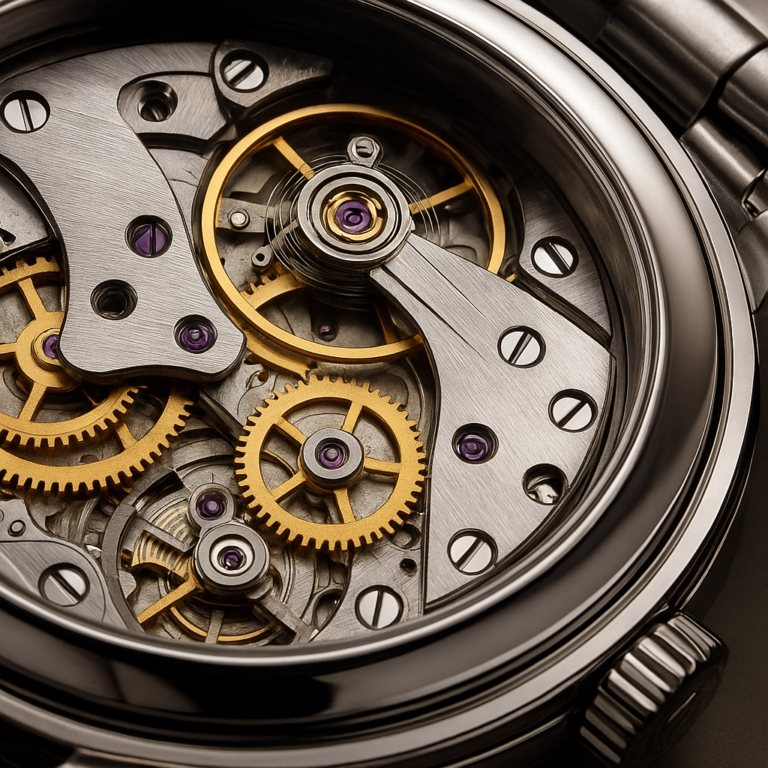
An automatic watch uses a rotor that turns as your wrist moves. That motion winds the mainspring, which stores energy and releases it through the movement to power the hands. Many automatics can also be wound by turning the crown, though the exact procedure varies.
An automatic does not mean “never needs winding.” If it sits unworn until its power reserve runs down, it will stop. You can reset it and wind it according to the manufacturer’s instructions, or use a watch winder if appropriate. A winder is optional, not a requirement for every automatic.
Accuracy, Power Reserve, and Everyday Convenience
Quartz watches are generally the simplest choice if accurate timekeeping and low maintenance come first. Mechanical watches vary by caliber, regulation, wear, temperature, position, and condition. Power reserve tells you how long a fully wound watch can run off the wrist, but it is not a quality score by itself.
Keep in mind:
- A longer power reserve can be useful if you rotate watches.
- Hacking is helpful when setting an automatic precisely.
- Solar quartz reduces battery-related upkeep but needs suitable light exposure.
- Mechanical watches can be accurate enough for everyday life, but their behavior differs from quartz.
For exact accuracy claims, rely on the manufacturer’s documented tolerance for the specific model—not forum folklore or one owner’s timegrapher screenshot.
Which Watch Movement Is Best for Your Lifestyle?
- Choose quartz if you want dependable convenience and minimal fuss.
- Choose solar quartz if you like quartz accuracy but want light-powered charging.
- Choose automatic if you enjoy mechanical engineering and wear the watch regularly.
- Choose manual-wind if winding the watch sounds like a pleasure rather than a chore.
We once watched a new owner proudly wind his automatic every morning—even on days he wore a quartz watch instead. He loved the ritual. His friend called it unnecessary. Both were right: the best movement is the one whose ownership routine you enjoy.
🛒 How to Buy a Watch Safely
A great watch can become a bad purchase if it arrives in the wrong condition, with unclear warranty coverage, or from a seller who disappears when the return window closes.
Authorized Dealers, Brand Boutiques, and Online Retailers
- Brand boutique: direct brand experience and official support.
- Authorized dealer: a retailer recognized by the brand; verify with the brand’s locator.
- Reputable online retailer: convenient, but confirm warranty status and return terms.
- Pre-owned specialist: useful for discontinued models, but inspect warranty and authentication policies.
- Private seller: widest uncertainty; use extra verification and safe payment practices.
For regulated consumer guidance online purchases and returns, consult the U.S. Federal Trade Commission.
How to Check a Watch’s Authenticity and Condition
No single detail proves authenticity. Packaging and papers can be forged or separated from a watch; a genuine watch can also have replaced parts.
- Verify the reference: compare the exact model number with official brand materials.
- Inspect the seller: look for a verifiable business address, history, and clear policies.
- Compare details: dial printing, hands, case, bracelet, clasp, and movement should match the reference.
- Ask for documentation: service receipts and purchase records help establish history.
- Get an expert inspection: especially for high-value, vintage, or heavily modified watches.
- Use a secure payment method: avoid irreversible payment to an unknown seller.
If a deal seems dramatically better than comparable listings, treat that as a reason to investigate—not a reason to rush.
What to Know About Warranties, Returns, and Documentation
Before paying, confirm:
- Warranty length and who provides it.
- Whether the watch is new, unworn, pre-owned, or refurbished.
- Return window and restocking terms.
- What happens if the watch arrives damaged or differs from the listing.
- Whether international purchases trigger duties or complicate service.
- Whether the warranty requires registration or proof of purchase.
Keep the invoice, warranty card, serial information, and service records. They can help with service, insurance, and later resale.
Common Watch-Buying Mistakes to Avoid
- Buying by brand name alone.
- Choosing a case size based only on diameter.
- Assuming every diver-style watch is suitable for diving.
- Ignoring the thickness and lug-to-lug measurement.
- Paying extra for complications you won’t use.
- Treating resale value as guaranteed.
- Buying from a seller whose return and warranty terms are vague.
- Assuming a “limited edition” will necessarily be collectible.
🧰 Watch Ownership Costs, Care, and Servicing
The purchase is only the first chapter. A watch lives longer—and stays more enjoyable—when you follow its maker’s care guidance and fix problems early.
Battery Changes, Mechanical Servicing, and Repair Costs
Quartz watches may need a battery and new seals; solar watches may eventually need specialist attention to their power system; mechanical watches require service based on the manufacturer’s guidance and the watch’s condition. Costs vary significantly, so check the brand’s service information before buying.
Good habits:
- Use an authorized service center or a qualified watchmaker familiar with the movement.
- Ask for a written estimate before approving work.
- Keep service paperwork.
- Don’t force the crown or chronograph pushers.
- If a watch has been exposed to water and fog appears under the crystal, seek service promptly.
Water Resistance, Magnetism, and Everyday Wear
Water resistance is a laboratory-tested specification, not a permanent guarantee. Gaskets age, crowns can be left unsecured, and impacts can compromise sealing. Have water resistance checked when the watch is serviced, especially before swimming or diving.
Magnetism can affect some mechanical watches’ timekeeping. The Swiss Federal Institute of Metrology (METAS) provides information on measurement and certification, while brands such as OMEGA publish model-specific details about magnetic resistance.
- Rinse a suitable water-resistant watch after saltwater exposure, following the manufacturer’s instructions.
- Keep leather straps away from prolonged water exposure.
- Do not operate crowns or pushers underwater unless the maker explicitly says it is safe.
- If a mechanical watch suddenly runs unusually fast, have it checked rather than repeatedly resetting it.
How to Store and Maintain Your Watch
- Store watches dry and away from strong magnets.
- Wipe the case and bracelet with a soft cloth.
- Follow the manufacturer’s cleaning instructions; avoid harsh chemicals.
- Keep mechanical watches away from hard impacts.
- Store original links, boxes, and documents if you may sell or insure the watch.
- Don’t leave a watch in extreme heat, such as a sun-baked car.
A watch box is useful, but it does not have to be elaborate. A clean, dry drawer and a little care will do more good than an expensive display case.
❓ Frequently Asked Questions About Choosing a Watch Brand
What Are the Best Watch Brands for Every Budget?
There is no single winner for every buyer. For everyday affordability, consider Casio, Timex, Citizen, Seiko, and Orient. For Swiss mechanical watches, look at Tissot, Hamilton, Certina, and Mido. For premium or luxury choices, compare Longines, Oris, Tudor, OMEGA, Rolex, and Grand Seiko.
Start with the role you need the watch to fill, then compare models within that role. A Casio digital watch and a Rolex sports watch are not competing for the same job, even if both tell time.
How Much Should I Spend on a Reliable Watch?
Spend an amount that fits your finances and leaves room for ownership costs. Reliable watches are available across a wide range of budgets; a higher price can buy better finishing, materials, movement features, or brand prestige, but it does not guarantee a better match for you.
If you want a low-maintenance watch, a quartz or solar-powered model from Casio, Timex, or Citizen can be a sensible choice. If you want a mechanical watch, Seiko and Orient are common starting points, while Hamilton and Tissot offer Swiss alternatives.
Which Watch Brands Offer the Best Value for Money?
For practical everyday value, compare Casio, Citizen, Seiko, Orient, Timex, Tissot, and Hamilton. Teddy Baldassarre’s guide highlights affordability across these brands and includes the Orient Bambino, Seiko DressKX, Citizen Promaster, and Hamilton Khaki Field Mechanical.
“Best value” depends on what you value. For low-maintenance accuracy, solar Citizen may win. For a mechanical experience, Orient or Seiko may be more appealing. For Swiss heritage and a field-watch design, Hamilton could be the better fit.
Are Affordable Watch Brands as Durable as Luxury Brands?
Some affordable watches are extremely durable, especially quartz sport watches and G-Shock models. Luxury watches may offer more refined finishing, stronger materials, advanced engineering, or more extensive service support, but affordability alone does not mean fragility—and luxury alone does not mean indestructibility.
Judge the specific watch: case material, crystal, water-resistance rating, movement, warranty, and intended use all matter. A resin G-Shock may handle rough daily wear better than a polished luxury dress watch, because they were designed for different jobs.
Is a Swiss Watch Better Than a Japanese Watch?
Not automatically. Swiss and Japanese brands both make watches across different quality tiers and purposes. Compare the model’s movement, finishing, durability, service options, warranty, and fit. The label on the dial is only one clue.
Should I Buy a Quartz or Automatic Watch First?
Choose quartz if you want accurate, convenient timekeeping with less routine attention. Choose automatic if you’re interested in mechanical engineering and enjoy wearing or winding the watch regularly. Many first-time buyers find that trying both is the fastest way to discover which ownership style feels right.
Do Watches Hold Their Value?
Some models retain value better than others, but the secondary market changes with condition, demand, availability, and broader economic trends. Do not buy a watch assuming it will appreciate. If resale matters, keep documentation, avoid unnecessary modifications, and buy a model with a track record of demand—but still purchase it because you want to wear it.
✅ Final Recommendations: Match the Brand to Your Budget and Priorities
If you want a clear shortlist, start here:
| Your priority | Our first brands to compare | Why |
|---|---|---|
| Low-fuss daily timekeeping | Casio, Timex, Citizen | Practical quartz and solar options |
| First automatic | Seiko, Orient | Broad choice and approachable mechanical models |
| Swiss field or everyday watch | Hamilton, Tissot | Strong design options and varied collections |
| Swiss sports watch | Certina, Mido, Longines, Oris | Purposeful designs and sport-focused collections |
| Luxury sports watch | Tudor, OMEGA, Rolex | Established collections and strong enthusiast interest |
| Finishing and Japanese craft | Grand Seiko | Distinctive details and movement variety |
Our most confident advice is simple: pick your use case, set a responsible total budget, check the fit, then compare the exact references. The most compelling watch on paper may not be the one you love wearing. That’s why we keep returning to the question from the start: which watch suits your wrist and life?
Conclusion

The best watch brand for your budget is the one that gives you the right mix of comfort, reliability, design, useful features, and manageable ownership costs. Casio, Timex, Citizen, Seiko, and Orient make excellent places to start; Tissot, Hamilton, Certina, and Mido offer attractive Swiss options; Longines, Oris, Tudor, OMEGA, Rolex, and Grand Seiko bring more premium finishing, heritage, and brand presence.
Our final recommendation: don’t shop by prestige alone, and don’t let a spec sheet choose for you. Try the watch on, verify the warranty, and buy from a reputable seller. If an affordable quartz watch makes you smile every morning, it is a better choice than a luxury automatic you’re afraid to wear. And if winding an automatic feels like a small daily pleasure, that ritual is part of its value.
Recommended Links
Brand and watch collections
- Shop Casio watches | Casio Official Website
- Shop Timex watches | Timex Official Website
- Shop Citizen Eco-Drive watches | Citizen Official Website
- Shop Seiko watches | Seiko Official Website
- Shop Orient watches | Orient Official Website
- Shop Tissot watches | Tissot Official Website
- Shop Hamilton watches | Hamilton Official Website
- Shop Bulova watches | Bulova Official Website
- Shop G-Shock watches | G-Shock Official Website
- Shop Certina watches
- Shop Longines watches
- Shop Mido watches
- Shop Oris watches
- Shop Sinn watches
- Shop Nomos Glashütte watches
- Shop Tudor watches
- Shop TAG Heuer watches
- Shop OMEGA watches
- Shop Rolex watches
- Shop Grand Seiko watches
Watch-reading picks
- The Watch Book: Rolex by Gisbert L. Brunner
- A Man and His Watch by Matt Hranek
- The Wristwatch Handbook by Ryan Schmidt
Reference Links
- Casio official watches
- Citizen Eco-Drive technology
- Seiko official watches
- Orient official watches
- Tissot official watches
- Hamilton official watches
- Certina official watches
- Longines official watches
- Mido official watches
- Oris official watches
- Nomos Glashütte official watches
- Tudor official watches
- TAG Heuer official watches
- OMEGA official watches
- Rolex official watches
- Grand Seiko official watches
- ISO 6425 diving-watch standard overview
- U.S. Federal Trade Commission consumer advice
- Teddy Baldassarre: The Best Affordable Watch Brands
- Bob’s Watches: pre-owned watch information and disclosures
- Watch Brands™: What is the best brand of watch?