Support our educational content for free when you purchase through links on our site. Learn more
15 Most Accurate Watch Brands for Precision Timekeeping ⏱️

For the most accurate watch brands for precision timekeeping, start with Citizen and Grand Seiko for high-accuracy quartz, Seiko and Casio for watches that synchronize with GPS or radio signals, and Omega or Rolex for rigorously tested mechanical timepieces. The right pick depends on whether you want the smallest drift, automatic time correction, or mechanical craftsmanship with a strong accuracy standard.
Here’s the surprising bit: “most accurate” doesn’t always mean the same thing. Citizen rates its Caliber 010 at around ±1 second per year, while Rolex states a −2/+2 seconds-per-day standard for its Superlative Chronometer watches. Meanwhile, a GPS watch can correct itself from satellite signals—an entirely different trick from keeping time unaided.
We’ve compared 15 precision-focused watches and brands across quartz, mechanical, Spring Drive, GPS, and radio-controlled technology, with the real-world benefits and trade-offs spelled out. So, which kind of accuracy suits your wrist—and your routine?
Key Takeaways
- For exceptional standalone accuracy: Citizen Caliber 010 is rated to approximately ±1 second per year; Grand Seiko 9F is another standout high-accuracy quartz option.
- For automatic time correction: Seiko Astron GPS Solar and selected Casio radio-controlled watches can update from external time signals when reception allows.
- For certified mechanical precision: Consider Omega Master Chronometer models, Rolex Superlative Chronometers, and other watches with clearly stated testing standards.
- Quartz usually keeps time more accurately than conventional mechanical movements, while mechanical watches offer traditional craftsmanship and a distinct wearing experience.
- Compare exact models and calibers—not just brand names. Accuracy ratings, certifications, and features vary across a brand’s collection.
- 👉 Shop precision-focused watches: Citizen | Grand Seiko | Omega | Rolex | Seiko Astron | Casio
Table of Contents
- ⚡️ Quick Tips and Facts: Accurate Watches at a Glance
- ⌚ What Does “Most Accurate” Mean for a Watch?
- Accuracy, precision, and real-world timekeeping
- How watch accuracy is measured: seconds per day and seconds per year
- 🕰️ A Brief History of Precision Timekeeping
- From marine chronometers to quartz and atomic time
- Why mechanical watch accuracy still matters
- 🔬 How Different Watch Movements Keep Time
- Quartz watches: reliable, accurate, and low-maintenance
- High-accuracy quartz and thermocompensated movements
- Spring Drive: mechanical energy, quartz regulation
- Mechanical watches: automatic and hand-wound calibers
- Radio-controlled, GPS, and atomic-synchronized watches
- 📏 Accuracy Standards and Certifications Explained
- COSC chronometer certification
- METAS Master Chronometer certification
- Grand Seiko accuracy standards and VFA movements
- What certifications do—and don’t—tell you
- 🏆 15 Most Accurate Watch Brands and Models for Precision Timekeeping
- 1. Citizen Caliber 010: an ultra-accurate light-powered watch
- 2. Citizen Eco-Drive Photon: precision with light-powered convenience
- 3. Bulova Lunar Pilot: high-precision quartz chronograph
- 4. Grand Seiko 9F quartz: meticulous high-accuracy timekeeping
- 5. Grand Seiko Evolution 9 Spring Drive SLGB003: next-generation precision
- 6. Grand Seiko 6185-800 VFA: a vintage accuracy landmark
- 7. Omega Speedmaster Super Racing: Spirate-regulated mechanical accuracy
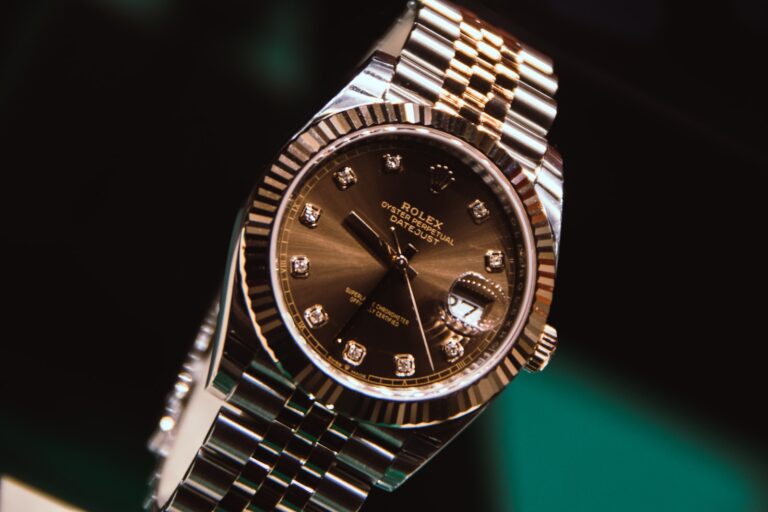
- 8. Rolex Day-Date 40 Everose: Superlative Chronometer performance
- 9. Zenith Defy Lab: experimental high-frequency precision
- 10. Breitling Endurance Pro: SuperQuartz accuracy for active wear
- 11. Longines Conquest V.H.P.: high-accuracy quartz engineering
- 12. Seiko Astron GPS Solar: globally synchronized timekeeping
- 13. Casio G-Shock Multi Band 6: radio-controlled accuracy
- 14. Casio Oceanus GPS Hybrid: solar-powered global time correction
- 15. Omega Master Chronometer watches: tested precision and magnetic resistance
- ⚖️ Quartz vs. Mechanical: Which Is More Accurate?
- Best watch movement for everyday accuracy
- Best movement for collectors who enjoy mechanical craft
- 📊 Watch Accuracy Comparison: Movements, Ratings, and Trade-Offs
- 🎯 How to Choose a Watch for Precision Timekeeping
- Choose by accuracy target and daily routine
- Consider magnetic resistance, temperature, and shock
- Battery, solar, servicing, and ownership costs
- Best accurate watches for travel, work, and sport
- 🛠️ How to Keep Your Watch Running Accurately
- Set and check your watch against a reliable time source
- Protect your watch from magnetism and temperature extremes
- When to regulate, service, or replace a battery
- ❓ Frequently Asked Questions About Accurate Watches
- What is the most accurate watch movement?
- How accurate is a COSC-certified watch?
- Are quartz watches more accurate than Rolex watches?
- Do automatic watches get less accurate over time?
- Can a watch be accurate without a chronometer certification?
- What is the best accurate watch for everyday wear?
- ✅ Conclusion: Finding Your Best Watch for Accurate Timekeeping
- 🔗 Recommended Links
- 📚 Reference Links
⚡️ Quick Tips and Facts: Accurate Watches at a Glance
Looking for a watch that barely loses a beat? First, decide what “accurate” means to you: a quartz watch that drifts only seconds per year, a mechanical chronometer tested to a daily tolerance, or a GPS watch that regularly corrects itself against time signals. Those are different kinds of precision—and the right choice depends on how you’ll wear it.
If you’re also weighing brand reputation, design, and long-term ownership, our guide to what makes the best watch brand is a useful companion.
| What you want | Best place to start | Typical accuracy approach | Main trade-off |
|---|---|---|---|
| Exceptional accuracy with minimal fuss | Citizen Caliber 010 | Light-powered, rated to ±1 second per year | Limited model availability |
| Highly accurate luxury quartz | Grand Seiko 9F | Individually selected and regulated quartz crystal | Premium finishing, but still a quartz watch |
| Mechanical precision with strong testing | Omega Master Chronometer | METAS-certified complete-watch testing | Mechanical watches still drift more than high-accuracy quartz |
| Mechanical watch with a tight brand standard | Rolex Superlative Chronometer | Rolex’s stated −2/+2 seconds per day after casing | A specification is not a guarantee that every watch runs at exactly zero |
| Time that corrects itself while you travel | Seiko Astron GPS Solar | Satellite time synchronization | Needs a suitable signal and enough light |
| Everyday accuracy at a practical price point | Bulova Precisionist or Lunar Pilot | High-frequency quartz or precision quartz | Model specifications vary; verify the exact caliber |
Our quick take: For maximum standalone accuracy, choose high-accuracy quartz. For mechanical craftsmanship backed by meaningful testing, look at Omega, Rolex, Grand Seiko, and other certified makers. For time that repeatedly syncs itself, GPS and radio-controlled watches are hard to beat.
A couple of useful guardrails:
- ✅ Compare accuracy in the same units. Seconds per year and seconds per day are not directly interchangeable without conversion.
- ✅ Read the exact caliber specification. “Quartz” alone doesn’t tell you how accurate a watch is.
- ❌ Don’t assume a chronometer is perfectly accurate. Certification means it passed a stated test under defined conditions.
- ❌ Don’t ignore service history. A neglected mechanical watch may run worse than its reputation suggests.
- ✅ Think about your daily routine: magnets, temperature swings, travel, and how often you wear a mechanical watch can all matter.
For a broader look at watches by price tier, browse our luxury watch brands, affordable watches, and guide to buying watches.
⌚ What Does “Most Accurate” Mean for a Watch?
A watch’s accuracy describes how closely it keeps time compared with a reference. A watch gaining five seconds in a day has a different performance profile from one gaining five seconds in a year—even though both numbers contain the same “five.”
The phrase most accurate watch brand can also mean several things:
- A brand making watches with the tightest stated rate tolerance.
- A model that synchronizes periodically with a time signal.
- A mechanical watch that performs consistently in real-world wear.
- A maker whose certification tests the complete watch, not just its movement.
That distinction helps resolve a common argument. A satellite-synchronized watch can show the correct time after a successful update, while a high-accuracy quartz watch can keep excellent time between updates. A mechanical chronometer, meanwhile, offers a very different feat: precise timekeeping from a miniature system of springs, wheels, and escapements.
Accuracy, precision, and real-world timekeeping
In everyday conversation, “accuracy” and “precision” often get used interchangeably. In measurement, they’re not quite the same:
- Accuracy is how close a reading is to the correct time.
- Precision is how consistently a watch repeats its rate.
- Stability is how well that rate holds up as conditions change.
A watch that gains six seconds every day with uncanny consistency is precise in rate, but it is not especially accurate unless regulated. A watch that alternates between gaining and losing time may average close to zero over several days, yet feel erratic on your wrist.
This is why manufacturers and certification bodies report performance as a range, not a promise that every watch will match an atomic clock at every moment. COSC, for example, tests mechanical movements over multiple days and positions, while METAS evaluates complete watches against additional criteria. The COSC overview and METAS Master Chronometer information explain what those tests cover.
How watch accuracy is measured: seconds per day and seconds per year
Watch accuracy is commonly stated as a deviation from reference time. Here’s a rough conversion to make the scales easier to compare:
| Stated rate | Approximate equivalent | What it suggests |
|---|---|---|
| ±1 second per year | ±0.003 seconds per day on average | Exceptional quartz accuracy |
| ±10 seconds per year | ±0.027 seconds per day on average | High-accuracy quartz |
| ±5 seconds per day | ±1,825 seconds per year if sustained | A typical mechanical-watch scale, not a direct annual guarantee |
| −4/+6 seconds per day | −1,460/+2,190 seconds per year if sustained | COSC mechanical test tolerance |
| −2/+2 seconds per day | −730/+730 seconds per year if sustained | Rolex’s stated Superlative Chronometer standard |
Important: These yearly figures are simple arithmetic projections, not predictions of how a watch will behave over an entire year. Temperature, position, wear patterns, aging, and synchronization can change the result. A radio- or GPS-controlled watch may correct its displayed time before small errors accumulate.
When comparing two watches, check:
- The unit: seconds per day, month, or year?
- The condition: tested movement, cased watch, or regularly synchronized watch?
- The method: manufacturer claim, third-party certification, or a single owner’s observation?
- The relevant caliber: specifications can vary across models within one brand.
🕰️ A Brief History of Precision Timekeeping

The pursuit of accurate timekeeping began long before wristwatches. Reliable time at sea helped sailors determine longitude, making precision a practical necessity, not merely a collector’s talking point. Over centuries, marine chronometers, improved escapements, quartz oscillators, and atomic time signals all pushed the standard forward.
For a concise history of chronometer testing, see COSC’s background and the National Institute of Standards and Technology’s explanation of atomic time.
From marine chronometers to quartz and atomic time
Mechanical watchmaking spent generations refining balance wheels, hairsprings, escapements, and lubrication. The arrival of quartz wristwatches in the late 1960s and 1970s changed the accuracy contest: a vibrating quartz crystal could regulate time far more consistently than a traditional balance wheel.
Later innovations brought further options:
- Thermocompensated quartz adjusts for temperature-related changes in a crystal’s behavior.
- Radio-controlled watches receive time signals from transmiters linked to official standards.
- GPS watches use satellite signals to correct time and often adjust time zones.
- Spring Drive combines a mechanical power source with electronic regulation.
- Modern mechanical calibers improve resistance to magnetism, shock, and positional variation.
The result is not one winner so much as a menu of engineering solutions. A GPS watch prioritizes synchronization; a high-accuracy quartz model prioritizes steady rate; a mechanical chronometer prioritizes precision without relying on a quartz oscillator.
Why mechanical watch accuracy still matters
A mechanical watch is not the top choice if your only goal is the smallest possible time deviation. Quartz generally wins that contest. But collectors value mechanical precision for more than the final number: the movement is powered by a wound spring and regulated through a complex arrangement of components that fit inside a wearable case.
The craftsmanship is part of the appeal. So are repairability, mechanical heritage, and the pleasure of watching a seconds hand sweep around the dial. As one perspective in Teddy Baldassarre’s overview of accurate watches puts it, watchmaking sits at the “crossroads between technical mastery and artistic expression.” We agree—as long as nobody mistakes romance for a tighter rate specification.
🔬 How Different Watch Movements Keep Time
Before choosing a brand, choose the technology you want on your wrist. The movement determines how the watch is regulated, how it responds to its environment, and whether it needs periodic synchronization.
| Movement type | How it regulates time | Accuracy potential | Best suited to |
|---|---|---|---|
| Standard quartz | Battery or rechargeable cell powers a quartz oscillator | Usually better than ordinary mechanical watches | Dependable everyday wear |
| High-accuracy quartz | Selected crystal, temperature compensation, or higher-frequency oscillator | Can reach seconds per year | Buyers prioritizing precision |
| Mechanical automatic | Mainspring and balance regulate time; wrist movement winds it | Varies by caliber, regulation, and condition | Mechanical-watch enthusiasts |
| Spring Drive | Mainspring-powered gear train regulated by an electronic glide wheel | Very high for a mechanical-powered watch | Buyers who want a smooth seconds hand and hybrid technology |
| Radio-controlled | Receives a terrestrial time signal | Corrects itself when signal reception succeeds | Home, office, and regional travel |
| GPS-synchronized | Uses satellite signals to set time and often time zone | Excellent after synchronization | Frequent international travelers |
Quartz watches: reliable, accurate, and low-maintenance
A quartz watch uses an electrical current to make a quartz crystal vibrate at a stable frequency. The circuit counts those vibrations and advances the display. Compared with a mechanical movement, quartz has fewer moving parts involved in time regulation, and it’s generally less sensitive to position and daily wear patterns.
Benefits
- Strong everyday accuracy.
- Simple operation and generally modest maintenance needs.
- Broad selection, from durable field watches to luxury high-accuracy models.
Drawbacks
- Standard quartz can still be affected by temperature, battery condition, and component quality.
- Many models require periodic battery replacement, though solar-powered examples reduce that chore.
- Some collectors prefer the mechanical character of an automatic or hand-wound caliber.
Don’t dismiss quartz as one uniform category. As Teddy Baldassarre’s high-accuracy quartz guide notes, specialized technologies such as thermocompensation, higher-frequency oscillators, and carefully selected crystals distinguish leading calibers from basic quartz movements.
High-accuracy quartz and thermocompensated movements
Quartz crystals can change frequency as temperature changes. A thermocompensated movement measures or accounts for temperature effects and adjusts its regulation. Other high-accuracy designs use selected crystals or higher-frequency oscillators.
Examples include:
- Citizen Caliber 010, rated by Citizen to approximately ±1 second per year.
- Grand Seiko 9F, whose stated accuracy is commonly ±10 seconds per year.
- Breitling SuperQuartz, which uses thermocompensated quartz technology in selected models.
- Bulova Precisionist, known for a high-frequency, three-pronged quartz oscillator and a smoothly sweeping seconds hand.
These figures are manufacturer specifications for particular movements, not universal promises for every watch bearing the brand name. Check the exact model and caliber before buying.
Spring Drive: mechanical energy, quartz regulation
Grand Seiko’s Spring Drive starts with a mainspring and gear train but regulates the flow of energy electronically using a quartz reference and a glide wheel. In practical terms, it’s a different route to timekeeping than either a conventional mechanical movement or a standard battery-powered quartz watch.
The visual calling card is the smooth, continuous sweep of the seconds hand. Spring Drive is also notable for combining mechanical power with highly stable electronic regulation. Grand Seiko’s explanation of the system is available through its Spring Drive technology page.
Why enthusiasts choose it: It offers a mechanical power source, distinctive movement finishing, and a seconds hand that seems to glide rather than tick.
Why some buyers pass: It is more technically involved than a simple quartz watch, and its accuracy still does not turn the watch into a GPS-synchronized timepiece.
Mechanical watches: automatic and hand-wound calibers
Mechanical watches regulate a mainspring’s energy through an escapement and balance. In automatic watches, a rotor winds the spring as you move; a hand-wound watch asks you to wind it yourself.
Accuracy depends on more than the name on the dial:
- Regulation and quality control
- Position during wear and rest
- Temperature and magnetism
- Shock or impact
- Service condition and lubrication
- How fully the mainspring is wound
A certified movement begins with a stronger testing record, but a specific watch can still require regulation or service. The contrast is especially clear in enthusiast testing: in the featured video, a presenter checks several watches on a timegrapher and finds an older Omega Seamaster performing remarkably well, while some Rolex sports models need attention. One line sums up the surprise: “The Omega is the winner… it’s been bashed about phenomenally, but it’s still kicking ass.” The broader lesson is more useful than the winner: a watch’s condition and service history can matter as much as its reputation.
Radio-controlled, GPS, and atomic-synchronized watches
These watches do not necessarily keep time more accurately between every moment than the best high-accuracy quartz calibers. Their advantage is that they can correct displayed time by receiving an external signal.
- Radio-controlled watches receive time signals from terrestrial transmiters. Reception depends on location, terrain, buildings, and the watch’s ability to reach the signal.
- GPS watches use satellite signals to update time, often making them particularly convenient for travel.
- “Atomic time” watches are not tiny atomic clocks on your wrist. They receive or derive time from signals ultimately tied to atomic standards.
The NIST time and frequency resources explain how official time standards are maintained. For everyday use, think of radio and GPS correction as regular resetting, not magic immunity to every practical limitation.
📏 Accuracy Standards and Certifications Explained
A certification is useful because it tells you a watch has been tested against a defined standard. It does not mean all certifications test the same thing—or that a watch will never need adjustment.
| Standard or claim | What it evaluates | Useful for |
|---|---|---|
| COSC Chronometer | Movement tested under specified conditions and positions | A recognized mechanical-watch rate standard |
| METAS Master Chronometer | Complete-watch testing with performance and magnetic-resistance requirements | Buyers seeking broader testing, including the cased watch |
| Rolex Superlative Chronometer | Rolex’s in-house post-casing performance standard | Buyers comparing Rolex’s stated tolerance with COSC |
| Manufacturer accuracy rating | A stated target for a particular movement or model | Comparing specialized quartz and Spring Drive calibers |
COSC chronometer certification
COSC—the Official Swiss Chronometer Testing Institute—tests movements against a defined chronometer standard. A mechanical movement’s familiar COSC tolerance is −4/+6 seconds per day under the relevant test conditions. See COSC’s certification information for details.
A few practical points:
- COSC tests the movement, rather than the complete cased watch.
- A certificate establishes that the submitted movement passed the testing criteria.
- Individual real-world performance can vary with casing, wear, position, temperature, impact, and service condition.
COSC is a meaningful benchmark, but it is not a league table that ranks every certified watch by its final real-world rate.
METAS Master Chronometer certification
METAS Master Chronometer certification assesses the complete watch and includes tests related to performance, magnetic resistance, and water resistance. Omega uses the certification for qualifying models, which are tested against a magnetic field of 15,000 gauss under the program’s requirements. The METAS explanation of Master Chronometer testing is the primary reference.
That complete-watch approach matters. The movement may be well regulated, but your watch’s case, hands, dial, and seals are also part of the finished product. METAS certification is therefore a strong signal for buyers who want both rate testing and robust magnetic resistance.
Grand Seiko accuracy standards and VFA movements
Grand Seiko publishes movement-specific accuracy figures, including the ±10 seconds per year rating commonly associated with its 9F quartz calibers. Some high-end Spring Drive calibers have their own stated ratings, so avoid treating every Grand Seiko as if it shares one specification.
The historic VFA, or “Very Fine Adjusted,” label is associated with exceptionally regulated Grand Seiko mechanical watches. Vintage VFA watches are collectible today, but age and service condition can change performance substantially. An old VFA with unknown maintenance is not automatically more accurate than a recently serviced modern watch.
For current movement details, start with Grand Seiko’s official movement information.
What certifications do—and don’t—tell you
Certifications tell you what was tested, under which rules, and whether the watch or movement passed. They do not reveal everything about your individual ownership experience.
They don’t automatically tell you:
- Whether your particular watch will run at the midpoint of its allowed range.
- Whether a pre-owned watch has been magnetized, damaged, or poorly serviced.
- How it will perform after years of wear.
- Whether a brand’s unc ertified model is inaccurate.
The last point deserves emphasis: a watch without a certification may still keep excellent time. Certification is evidence of testing, not the only route to good performance.
🏆 15 Most Accurate Watch Brands and Models for Precision Timekeeping
There is no single fairest ranking for every type of watch. A quartz movement rated in seconds per year is playing a different game from a mechanical chronometer rated in seconds per day. We’ve grouped these recommendations by the engineering behind them and highlighted where each one makes the most sense.
1. Citizen Caliber 010: an ultra-accurate light-powered watch
Citizen’s Caliber 010 is among the headline choices for standalone wristwatch accuracy, with Citizen rating it to ±1 second per year. It is also light-powered, so normal exposure to light helps keep the watch running without routine battery changes. Check Citizen’s official Caliber 010 information.
What stands out
- Exceptionally tight published accuracy for a wristwatch.
- Eco-Drive light-powered operation.
- No need for regular GPS or radio synchronization to achieve its stated rate.
Trade-offs
- The caliber appears in specific models rather than across Citizen’s entire collection.
- Its precision may exceed what most people need for everyday scheduling.
- Availability varies by market and model.
This is the sort of watch we recommend when the accuracy specification itself is part of the pleasure. It’s a quiet technical flex: no satellite reception required, just exceptionally well-controlled timekeeping.
2. Citizen Eco-Drive Photon: precision with light-powered convenience
Citizen’s Eco-Drive technology powers a broad range of watches using light. It is an appealing everyday system if you want less battery fuss, but Eco-Drive is a power technology, not one universal accuracy rating. Confirm the movement specification for the exact Photon model you’re considering on Citizen’s official watch site.
Benefits
- Light-powered convenience.
- A large range of styles and functions.
- Many models require less frequent battery-related attention than conventional quartz.
Drawbacks
- Accuracy varies by caliber.
- A light-powered watch still needs sensible exposure and storage; long periods in darkness may reduce its reserve.
- Don’t assume the Photon has Caliber 010’s ±1-second-per-year performance unless its specific caliber states that figure.
Our advice: Choose a Citizen Eco-Drive Photon for the combination of styling, light-powered practicality, and the movement specification that suits you—not on the Eco-Drive label alone.
3. Bulova Lunar Pilot: high-precision quartz chronograph
The Bulova Lunar Pilot pairs a chronograph design with Bulova’s high-precision quartz technology. It draws on Bulova’s spaceflight heritage and is a compelling option if you want a distinctive chronograph without the maintenance and rate variation of a traditional mechanical chronograph. See Bulova’s official Lunar Pilot collection.
Why it earns a spot
- Quartz convenience with chronograph functionality.
- Strong historical identity and recognizable case design.
- A satisfying choice for buyers drawn to space-themed watches.
Potential drawbacks
- It wears larger than some buyers expect; try the case on if you prefer compact watches.
- The look is sportier and less discreet than a simple three-hand watch.
- Confirm the exact movement details for the reference, as specifications can vary.
For more background, our Bulova Lunar Pilot guide can help you compare it with other chronographs.
4. Grand Seiko 9F quartz: meticulous high-accuracy timekeeping
Grand Seiko’s 9F caliber is a luxury quartz movement designed with finishing and construction worthy of the brand’s reputation. Its stated accuracy is commonly ±10 seconds per year, with individual quartz crystals selected and regulated. Learn more through Grand Seiko’s official 9F movement page.
Why enthusiasts like it
- High accuracy in a well-finished watch.
- A robust, carefully engineered quartz movement.
- A restrained design that can work as both a dress watch and an everyday watch.
Why some pass
- The movement’s accuracy can feel like an overachievement if you mainly want a basic, inexpensive quartz watch.
- The seconds hand may not land precisely on every marker on every quartz watch; examine the specific model rather than assuming.
- Servicing and ownership are still part of the equation for a luxury timepiece.
Grand Seiko is an especially strong choice for someone who wants accuracy without giving up refined casework and dial finishing. Explore the brand through our Grand Seiko collection category.
5. Grand Seiko Evolution 9 Spring Drive SLGB003: next-generation precision
The Evolution 9 Spring Drive SLGB003 is a high-end example of Grand Seiko’s Spring Drive approach. Because model specifications and releases can change, verify the current movement details directly with Grand Seiko’s official SLGB003 product information.
What makes it distinctive
- Mechanical mainspring power paired with electronic regulation.
- A smoothly gliding seconds hand.
- A technical character that sits between traditional mechanical and quartz watchmaking.
The catch: Spring Drive is not a conventional automatic movement, and it is not a satellite-synchronized quartz watch. Its appeal lies in its own engineering blend. If you want the best accuracy with the fewest complications, a high-accuracy quartz model may be more straightforward; if you want a refined hybrid with an expressive seconds hand, Spring Drive is a fascinating alternative.
6. Grand Seiko 6185-800 VFA: a vintage accuracy landmark
The Grand Seiko 6185-800 VFA is a historic mechanical watch associated with Grand Seiko’s pursuit of exceptional adjustment. “VFA” is shorthand for Very Fine Adjusted, and the reference has become a notable piece of precision-watch history.
Vintage examples demand a different kind of buying checklist:
- Ask for service records and movement photographs.
- Have the watch assessed by a watchmaker familiar with vintage Grand Seiko.
- Check originality, condition, and parts availability.
- Treat the original performance claims as historical context, not a guarantee of today’s rate.
A well-maintained vintage VFA can be an enthusiast’s treasure. A neglected one can be a beautiful reminder that even the most ambitious original specification cannot stop decades from passing.
7. Omega Speedmaster Super Racing: Spirate-regulated mechanical accuracy
The Omega Speedmaster Super Racing is notable for Omega’s Spirate system, designed to enable finer regulation of the movement. Its Master Chronometer credentials and anti-magnetic construction add to its precision story. See the official Omega Speedmaster Super Racing page.
Strengths
- A mechanical chronograph with an ambitious accuracy-focused design.
- Master Chronometer testing.
- Strong resistance to magnetic fields under the certification program.
Trade-offs
- A large, technical sports chronograph may not suit every wrist or wardrobe.
- The Spirate mechanism is a specific feature of this model family, not a standard feature across all Omega watches.
- A mechanical watch still requires service and may need regulation over time.
For buyers who want the romance of a mechanical chronograph without ignoring precision, it is one of the most interesting modern examples.
8. Rolex Day-Date 40 Everose: Superlative Chronometer performance
Rolex states that its Superlative Chronometer watches meet an accuracy tolerance of −2/+2 seconds per day after casing. That is tighter than the familiar COSC mechanical movement tolerance. The Rolex Superlative Chronometer explanation describes the brand’s standard, while the Day-Date collection provides model information.
Why it’s a precision pick
- Rolex applies in-house testing after the movement is cased.
- The Day-Date is an established flagship with strong brand recognition.
- The Superlative standard is clearly stated by the manufacturer.
Considerations
- It is a dress-oriented luxury watch, not a tool watch for every environment.
- The specification is a rate range, not a guarantee of exactly zero deviation.
- A high-end mechanical watch needs proper care and eventual service.
The Day-Date makes sense for someone who wants a luxury mechanical watch with a documented brand standard—not simply the smallest possible time deviation.
9. Zenith Defy Lab: experimental high-frequency precision
Zenith’s Defy Lab introduced a distinctive high-frequency oscillator concept designed to replace numerous conventional regulating components with an integrated silicon structure. Zenith described the technology as a major step in mechanical precision; its Defy Lab archive and technical information are the best place to check details and current availability.
What makes it interesting
- An unusual oscillator design rather than a routine tweak to a traditional hairspring.
- A bold demonstration of alternative mechanical regulation.
- A technically significant chapter in Zenith’s high-frequency watchmaking story.
Why it isn’t a simple everyday recommendation
- It is a specialized and uncommon watch.
- Availability, support, and service logistics matter as much as the concept.
- Published performance claims should be read in the context of the specific model and test conditions.
Zenith’s experimental work shows that mechanical innovation continues, even if quartz remains the easier route to the highest everyday rate accuracy.
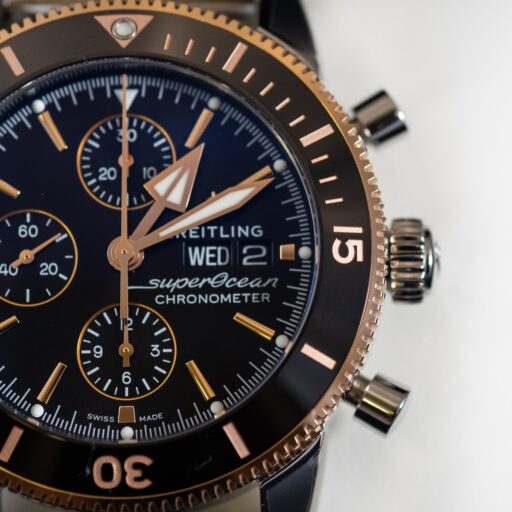
10. Breitling Endurance Pro: SuperQuartz accuracy for active wear
The Breitling Endurance Pro combines a lightweight sport-watch design with a SuperQuartz movement. Breitling describes SuperQuartz as a high-performance, thermocompensated quartz technology in applicable models. See the official Endurance Pro collection.
Benefits
- Light, sporty construction.
- Quartz practicality and chronograph utility.
- A compelling option for exercise, travel, and casual wear.
Drawbacks
- Its bold, colorful styling is not for every setting.
- SuperQuartz specifications vary by caliber; check the exact reference.
- It has a different feel from a traditional metal-case luxury watch.
Breitling is worth considering if you want an accurate watch that looks ready to leave the desk and head for the trail.
11. Longines Conquest V.H.P.: high-accuracy quartz engineering
Longines’ Conquest V.H.P. line was developed around a high-accuracy quartz movement. Longines described the technology as offering very strong annual accuracy along with features such as gear-position detection. Because individual V.H.P. models may be discontinued or difficult to find new, verify details through Longines’ official site and check the condition of any pre-owned example.
Why look for one
- A compelling blend of conventional watch styling and specialized quartz accuracy.
- Useful features designed to help maintain the correct display position.
- A less obvious alternative to mainstream high-accuracy quartz models.
Buying caution: Confirm the exact reference, battery or power system, and availability of service support before purchasing a discontinued model.
12. Seiko Astron GPS Solar: globally synchronized timekeeping
Seiko Astron GPS Solar watches use satellite signals to adjust time and time zones, with solar charging providing power. For frequent travelers, the practical advantage is obvious: a successful update can align the watch with GPS time rather than relying solely on the movement’s unaided rate. Explore Seiko’s Astron collection.
Advantages
- GPS time adjustment and convenient time-zone changes on supported models.
- Solar-powered operation.
- Useful functionality for international travel.
Limitations
- A GPS update needs suitable reception and enough power.
- The technology can add complexity and visual busyness.
- If you rarely travel, a simpler high-accuracy quartz watch may be a better fit.
Teddy Baldassarre’s guide also highlights the Astron as a solar-powered, GPS-equipped solution for global synchronization. That’s a different kind of accuracy from a watch that simply claims a very low annual deviation: the Astron can correct itself against a signal.
13. Casio G-Shock Multi Band 6: radio-controlled accuracy
Casio’s Multi Band 6 models receive time-calibration signals in supported regions. Pair that with solar power on applicable watches, and you get a practical, durable option that can automatically correct time when reception conditions allow. Browse Casio’s official radio-controlled watch information.
Good for
- Buyers who want a rugged, low-fuss watch.
- Home or travel routines that remain within signal coverage.
- People who prefer automatic correction over manually resetting a watch.
Not ideal for
- Locations with unreliable signal reception.
- Buyers seeking a slim dress watch.
- Anyone assuming radio reception works equally well everywhere.
A radio-controlled watch can be exceptionally convenient, but the word radio-controlled is not a promise that every nightly update will succeed under every roof.
14. Casio Oceanus GPS Hybrid: solar-powered global time correction
Casio’s Oceanus line includes refined solar-powered models, while certain Casio watches combine GPS and radio reception. Exact features depend on the reference, so don’t treat “Oceanus” as shorthand for one universal synchronization system. Check Casio’s Oceanus collection and the individual model specifications.
Why it appeals
- Polished styling with practical electronic timekeeping.
- Solar power on many models.
- Some references offer sophisticated time-zone correction features.
Potential drawbacks
- Feature sets vary substantially between references and markets.
- Advanced functions can take time to learn.
- A GPS or radio feature is only useful if you’ll use it and can receive the signal.
Oceanus is a good reminder that precision need not look like a chunky digital tool watch. Some of the most capable timekeeping technology comes in a surprisingly dressy package.
15. Omega Master Chronometer watches: tested precision and magnetic resistance
Omega offers a wide range of Master Chronometer watches across collections. METAS testing adds a complete-watch evaluation and magnetic-resistance requirements, making the certification relevant to modern everyday environments. Browse Omega’s Master Chronometer collection information.
Reasons to choose Omega
- Strong third-party testing through METAS for qualifying models.
- Significant magnetic resistance in certified watches.
- A broad choice of styles, from dressier models to dive watches and chronographs.
What to keep in mind
- Not every Omega model is a Master Chronometer.
- Accuracy ratings and specifications differ by caliber.
- Certification does not replace ordinary servicing or careful ownership.
For practical everyday precision, Omega is one of our most balanced luxury recommendations: you get a strong test regime, magnetic resistance, and plenty of model choice.
Shop accurate watches and precision-focused brands
- Citizen Eco-Drive and Caliber 010: Amazon | Walmart | Citizen Official Website
- Bulova Lunar Pilot: Amazon | Walmart | Bulova Official Website
- Grand Seiko 9F and Spring Drive: Amazon | Grand Seiko Official Website
- Omega Master Chronometer and Speedmaster Super Racing: Amazon | Omega Official Website
- Rolex Day-Date: Amazon | Rolex Official Website
- Breitling Endurance Pro: Amazon | Breitling Official Website
- Seiko Astron: Amazon | Walmart | Seiko Official Website
- Casio radio-controlled and Oceanus watches: Amazon | Walmart | Casio Official Website
⚖️ Quartz vs. Mechanical: Which Is More Accurate?
For ordinary standalone rate accuracy, quartz generally wins. The crystal’s stable oscillation gives it an advantage over the mechanical balance-and-escapement system. But the word “generally” matters: quartz calibers vary, mechanical watches vary, and synchronization features can change what “accurate” means in practice.
| Question | Quartz | Mechanical |
|---|---|---|
| Typical precision advantage | Strong | Lower than high-accuracy quartz |
| Regulation sensitivity | Usually lower | More affected by position, wear, and service |
| Maintenance | Battery or charging needs vary | Periodic mechanical servicing |
| Collector appeal | Technology and convenience | Craft, heritage, and movement finishing |
| Best for | Set-and-forget timekeeping | Enthusiasts who enjoy mechanical watchmaking |
Teddy Baldassarre’s article describes quartz watches as “vastly more accurate” than mechanical watches. That’s broadly right when comparing ordinary movements without external synchronization. But the comparison shifts if one watch is GPS-synchronized and another is being judged only on its free-running rate. We trust the movement specification and test method, not a category label by itself.
Best watch movement for everyday accuracy
If you want a watch that stays close to reference time with little effort, choose one of these:
- High-accuracy quartz for excellent rate performance without needing a satellite signal.
- GPS or radio-controlled quartz if automatic correction and travel convenience matter.
- Standard quartz if everyday reliability matters more than an especially tight accuracy rating.
Ask yourself:
- Do you need the watch to show the correct time after weeks in a drawer?
- Do you travel between time zones?
- Can your watch receive radio or GPS signals where you live?
- Do you want solar power, a replaceable battery, or a rechargeable system?
A Seiko Astron may be ideal for an international traveler; a Citizen Caliber 010 may better suit someone who wants exceptional accuracy without depending on signal reception.
Best movement for collectors who enjoy mechanical craft
Choose a mechanical watch if the movement itself is part of the experience. Look for:
- A clear accuracy standard or manufacturer rating.
- COSC or METAS credentials where relevant.
- Strong anti-magnetic design if you work around electronics.
- A reputable service network.
- A case size and style you’ll actually wear.
Omega and Rolex are strong choices for buyers who want recognizable standards and broad brand support. Grand Seiko and Zenith appeal to enthusiasts interested in distinctive engineering. For more brand comparisons, visit our luxury watch brands and men’s watches categories.
📊 Watch Accuracy Comparison: Movements, Ratings, and Trade-Offs
The table below compares selected examples using published or commonly cited specifications. Always confirm the exact reference and caliber with the manufacturer.
| Watch or technology | Movement type | Published or stated accuracy context | Synchronizes externally? | Best reason to consider it |
|---|---|---|---|---|
| Citizen Caliber 010 | Light-powered high-accuracy quartz | Citizen rating around ±1 second/year | No | Excellent standalone accuracy |
| Grand Seiko 9F | High-accuracy quartz | Commonly stated ±10 seconds/year | No | Precision with luxury finishing |
| Bulova Precisionist | High-frequency quartz | Model-specific specification; verify reference | No | Smooth seconds-hand motion and quartz convenience |
| Breitling SuperQuartz | Thermocompensated quartz | Brand describes qualifying movements as substantially more accurate than standard quartz | No | Sport-watch performance |
| Omega Master Chronometer | Mechanical | METAS-certified; complete-watch testing | No | Tested mechanical precision and magnetic resistance |
| Rolex Superlative Chronometer | Mechanical | Rolex states −2/+2 seconds/day after casing | No | Tight in-house mechanical standard |
| Seiko Astron GPS Solar | Solar quartz | Uses GPS time adjustment on supported models | Yes, GPS | Time-zone changes and travel |
| Casio Multi Band 6 | Quartz | Signal correction when reception succeeds | Yes, radio | Automatic time correction in supported regions |
| Grand Seiko Spring Drive | Mainspring-powered hybrid | Model-specific published accuracy | No | Mechanical power with electronic regulation |
How to read it: The Citizen and Grand Seiko quartz ratings describe a free-running rate. GPS and radio watches can correct their displayed time by receiving a signal. Mechanical standards use a different scale and test method. They all contribute to accurate timekeeping, but they are not interchangeable measurements.
🎯 How to Choose a Watch for Precision Timekeeping
The most accurate watch for you is not always the one with the smallest number on its spec sheet. A GPS watch that can’t receive a signal where you live may be less convenient than a high-accuracy quartz model. A mechanical chronometer you love wearing may serve you better than a quartz watch left in a drawer.
Choose by accuracy target and daily routine
Use this simple decision path:
- Set your tolerance. Are seconds per year important, or is a few seconds per day acceptable?
- Pick the regulation type. High-accuracy quartz, mechanical, Spring Drive, radio, or GPS.
- Consider where you wear it. Buildings and geography can affect signal reception; magnets and shocks can affect mechanical watches.
- Check the exact reference. Brands offer different movements within the same collection.
- Plan for ownership. Battery changes, charging, maintenance, and service availability all count.
For a practical shortlist, a Citizen Caliber 010 or Grand Seiko 9F suits buyers focused on standalone precision. A Seiko Astron suits travelers. Omega and Rolex offer compelling certified mechanical choices for enthusiasts who want craftsmanship as well as a meaningful accuracy standard.
Consider magnetic resistance, temperature, and shock
Everyday conditions can affect timekeeping:
- Magnetism: Strong magnetic fields may affect some mechanical movements. METAS-certified Omega watches are tested for resistance to 15,000 gauss under the program’s requirements.
- Temperature: Quartz frequency can vary with temperature; thermocompensated calibers address this behavior.
- Shock: Impacts can affect mechanical regulation or damage components.
- Position: Mechanical watches can run differently when worn, left dial-up, or stored on their side.
- Power reserve: Mechanical watches may change rate as their mainspring unwinds, depending on the caliber.
If a mechanical watch suddenly gains or loses time, don’t immediately blame the brand. A watchmaker can check magnetism, amplitude, beat error, and rate. For a reliable overview of timekeeping standards and measurement, refer to NIST’s time resources.
Battery, solar, servicing, and ownership costs
The movement’s accuracy is only one part of owning a watch. Think about how it’s powered and cared for:
- Battery quartz: Convenient, but the battery needs periodic replacement.
- Solar quartz: Reduces battery-change frequency, but needs adequate light and may eventually need a rechargeable cell serviced.
- GPS/radio-controlled: Offers correction when reception works; confirm regional coverage and operating instructions.
- Mechanical: Needs winding or regular wear and periodic servicing.
- Spring Drive: Combines mechanical power with electronic regulation, so use the manufacturer’s service guidance.
Before buying, check the brand’s authorized service options and warranty terms. Our guide to buying watches covers more of the practical ownership questions that tend to appear after the honeymoon phase.
Best accurate watches for travel, work, and sport
| Your use | Strong candidates | Why |
|---|---|---|
| International travel | Seiko Astron GPS Solar, qualifying Casio GPS models | Time-zone adjustment and satellite correction |
| Office and everyday wear | Grand Seiko 9F, Citizen Eco-Drive | Excellent accuracy with minimal daily adjustment |
| Outdoor activity | Breitling Endurance Pro, G-Shock Multi Band 6 | Sport-focused construction and practical timing |
| Luxury mechanical wear | Omega Master Chronometer, Rolex Superlative Chronometer | Testing, brand support, and mechanical appeal |
| Watch collecting | Grand Seiko Spring Drive, Zenith, vintage Grand Seiko VFA | Distinctive technical or historical character |
If appearance matters as much as specifications, our pages on fashion trends in watches and men’s watches can help narrow the style side of the decision.
🛠️ How to Keep Your Watch Running Accurately
Even a well-made watch can drift. The good news: a simple check can tell you whether it’s behaving normally or asking for attention.
Set and check your watch against a reliable time source
Follow these steps:
- Choose a reliable reference, such as an official time service or your phone’s network-synchronized clock.
- Set the watch carefully, following its manual—especially for date changes and GMT functions.
- Record the time and date.
- Check it at the same time each day for several days.
- Calculate the rate: compare the watch with your reference and note how many seconds it gains or loses.
- Repeat the check before assuming the movement has a problem.
For mechanical watches, wear it consistently during the test. A watch left dial-up for several nights may show a different rate from one worn throughout the day. Keep a short log rather than trusting the memory of “I think it was fast last Tuesday.”
Protect your watch from magnetism and temperature extremes
- Keep a mechanical watch away from strong magnets, such as powerful speakers, magnetic clasps, and some accessories.
- Avoid leaving any watch in a hot car or on a sunny windowsill for extended periods.
- Don’t use a watch’s water-resistance rating as a guarantee against every form of heat, steam, or pressure.
- If a mechanical watch suddenly starts running dramatically fast, ask a watchmaker to check for magnetism.
- For radio-controlled watches, place the watch in a suitable location and consult the manual for reception instructions.
Modern anti-magnetic designs can tolerate more than older movements, but “resistant” does not mean invulnerable. Follow the manufacturer’s care guidance.
When to regulate, service, or replace a battery
Consider a professional check if:
- Your mechanical watch’s rate changes suddenly.
- It stops unexpectedly despite being fully wound.
- The watch has been dropped or exposed to water.
- It has no known service history and you’ve bought it pre-owned.
- A quartz watch behaves erratically or its battery indicator appears.
A watchmaker may use a timegrapher to measure a mechanical movement’s rate, amplitude, beat error, and beat frequency. That test is informative, but it is not the whole story: the watch should also be assessed in context, and a rate reading on a machine is not identical to a week of real-life wrist wear.
This is where owner reports can be helpful, but they need careful interpretation. One watch’s excellent result is not proof that every example of the same model performs identically. The featured video illustrates the point: the vintage Rolex and modern watches don’t behave as stereotypes might predict, and the unserviced Omega still impresses.
❓ Frequently Asked Questions About Accurate Watches
Which watch brands are known for the most precise timekeeping?
Brands associated with notable precision include Citizen, Grand Seiko, Bulova, Breitling, Seiko, Casio, Omega, Rolex, and Zenith. The reason differs by brand: Citizen and Grand Seiko offer high-accuracy quartz; Seiko and Casio offer GPS or radio synchronization in selected models; Omega uses METAS certification on qualifying watches; Rolex applies its Superlative Chronometer standard; and Zenith has explored high-frequency mechanical regulation.
The model matters more than the logo. Look up the exact caliber, its stated tolerance, and the way that figure was established. A brand may produce both ordinary quartz watches and specialized high-accuracy watches.
Are quartz watches more accurate than mechanical watches?
Usually, yes. High-accuracy quartz movements generally keep time more consistently than conventional mechanical movements. Mechanical calibers can still achieve impressive results, especially when certified and well maintained, but their rate is more affected by position, temperature, magnetism, wear, and service condition.
The comparison gets more nuanced with GPS and radio-controlled watches. These can periodically reset their displayed time, so they may remain aligned with an official time source even if their free-running rate is not as tight as a high-accuracy quartz caliber.
What certifications indicate a watch’s accuracy?
The best-known standards include COSC, METAS Master Chronometer, and Rolex Superlative Chronometer. COSC is a recognized chronometer test for movements. METAS evaluates qualifying complete watches and includes magnetic-resistance requirements. Rolex applies its own post-casing accuracy standard to Superlative Chronometer watches.
When comparing certificates, ask:
- Does the test cover the movement or the complete watch?
- What accuracy range is required?
- Are magnetic resistance and other durability factors included?
- Is the certification relevant to the exact model you’re considering?
A certification is useful evidence, but it is not a substitute for service records or a real-world check of a pre-owned watch.
Which luxury watch brands offer the best precision for everyday wear?
For luxury mechanical watches, Omega and Rolex offer strong everyday propositions through their respective testing standards and broad service networks. Grand Seiko is an excellent choice if you want high-accuracy quartz, Spring Drive, or carefully finished mechanical watches. Breitling offers COSC-certified mechanical models and high-performance quartz options in selected lines.
Our recommendation depends on your priorities:
- Choose Omega if magnetic resistance and METAS testing matter.
- Choose Rolex if you want its stated Superlative Chronometer performance and classic design.
- Choose Grand Seiko if dial finishing and high-accuracy quartz or Spring Drive are priorities.
- Choose Breitling if you want a robust sports-watch identity and varied movement choices.
Does COSC certification guarantee that a watch runs perfectly?
No. COSC certification means the movement passed the applicable test criteria. It does not promise zero deviation in every position, temperature, or wearing pattern. Once cased, worn, magnetized, shocked, or left unserviced, a watch may behave differently.
Are GPS and radio-controlled watches more accurate than high-accuracy quartz?
They offer a different advantage. A high-accuracy quartz watch aims to keep an exceptionally stable rate on its own. A GPS or radio-controlled watch can update time from an external signal, correcting accumulated drift when reception succeeds. For travel or convenience, synchronization can be more useful; for dependable operation without signal access, high-accuracy quartz may be the better fit.
Can a watch’s accuracy change after servicing or magnetization?
Yes. A mechanical watch can gain or lose time because of magnetism, impact, worn components, dried lubricants, or changes introduced during regulation and service. A watchmaker can diagnose the cause and advise whether it needs demagnetization, adjustment, repair, or a full service. A sudden change is a reason to investigate rather than assume it is normal aging.
Is Spring Drive more accurate than a traditional mechanical watch?
Spring Drive uses a quartz reference to regulate energy from a mainspring, so it can achieve greater accuracy than many conventional mechanical movements. Its exact rating depends on the caliber. It is not the same as a GPS watch, because it does not need to receive an external time signal to regulate its rate.
How can I tell whether a pre-owned watch keeps good time?
Ask for recent service documentation, inspect the watch for damage, and compare its timekeeping against a reliable reference over several days. For a mechanical model, a watchmaker can assess the movement on a timegrapher and inspect its condition. Don’t rely on a single seller’s claim or one quick reading: a good service history is part of a good accuracy story.