⏳ Did People Have Watches in the 180s? (Yes, But Not on Wrists!)

Yes, people absolutely had watches in the 180s, but you likely won’t find a single man wearing one on his wrist until the very end of the century. While the keyword “Did people have watches in the 180s?” might conjure images of modern timepieces, the reality was a world dominated by the pocket watch, a device that required daily winding and a separate key for the first half of the era.

Imagine a bustling 1850s train station where the conductor checks his key-wound pocket watch to ensure the 4:0 PM departure is on schedule. This wasn’t just a fashion statement; it was a lifeline in an age where time was shifting from “sunlight hours” to standardized minutes.

By 1890, the American Watch Company (Waltham) was churning out thousands of affordable timepieces, making it possible for a factory worker to own a watch for the price of a few loaves of bread. Yet, the transition from pocket to wrist was slow, driven by the practical needs of soldiers and railway workers rather than style.

Key Takeaways

  • ✅ Pocket Watches Dominated: The 19th century was the golden age of the pocket watch, with wristwatches remaining a rare novelty for women or a military experiment until the 1890s.
  • ✅ Evolution of Accuracy: Timekeeping shifted from inaccurate verge escapements (losing hours a day) to precise railroad chronometers (losing seconds a week) by the century’s end.
  • ✅ Mass Production Changed Everything: The introduction of interchangeable parts in the US made watches affordable for the working class, democratizing time.
  • ✅ The Wristwatch Revolution: The Boer War and World War I were the catalysts that finally moved timepieces from the pocket to the wrist for men.

Table of Contents


⚡️ Quick Tips and Facts

Before we dive into the dusty, gear-filled archives of the 19th century, let’s clear up some immediate misconceptions. If you’re picturing a Victorian gentleman checking a digital display on his wrist, you’re a few centuries off! Here is the lowdown on the 180s timekeeping scene:

  • ✅ Yes, they had watches: But they were almost exclusively pocket watches. Wristwatches were a niche novelty for women or a military experiment until the very end of the century.
  • ❌ No batteries: Forget lithium-ion cells. These were purely mechanical beasts powered by a coiled mainspring you had to wind daily (or twice daily).
  • ✅ The “Albert Chain”: This wasn’t just jewelry; it was a safety device. Men attached their watches to their waistcoat buttons with a chain to prevent theft or dropping.
  • ❌ Not everyone had one: In the early 180s, a watch was a luxury item. By 190, thanks to mass production, even factory workers could afford a “dollar watch.”
  • ✅ Accuracy varied wildly: Early 180s watches could lose hours a day. By 1890, a good railroad chronometer could keep time within seconds.

If you’re wondering how we got from the first portable timepieces to the smartwatches on our wrists today, you’ll want to check out our deep dive on When were watches invented? to see the full timeline.


🕰️ The 19th-Century Timekeeping Revolution: Did People Actually Wear Watches?


Video: How WWI Changed Wristwatches Forever (The Backstory).


The short answer? Yes. But the long answer is a fascinating tale of industrialization, social status, and a tragic train crash that changed timekeeping forever.

In the early 180s, if you owned a watch, you were likely wealthy. These were hand-crafted works of art, often encased in gold or silver, featuring intricate engravings. They were pocket watches, tucked securely into a waistcoat pocket. The idea of strapping a timepiece to your wrist was considered somewhat effeminate or impractical for the “sterner sex.”

However, as the century progressed, the Industrial Revolution kicked into high gear. Factories needed workers to punch in at specific times. Railways needed trains to run on a schedule, not just “when the sun was high.” Suddenly, time became a commodity.

“The 19th century wasn’t just about keeping time—it was about learning to live by it.” — Premier Clocks

We often think of the 180s as a static era of horse-drawn cariages, but it was actually a period of explosive technological growth. The transition from the verge escapement (ancient and inaccurate) to the lever escapement (precise and reliable) happened right under our noses.

But how did a simple pocket accessory evolve into the wristwatch we know today? And why did it take so long for men to stop using their pockets? Let’s unravel the mechanics.


🎩 From Pockets to Wrists: The Evolution of the Pocket Watch in the 180s


Video: A Brief History of Timekeeping | How Humans Began Telling Time | EXPLORE MODE.


The pocket watch was the smartphone of the 19th century. It was your connection to the world, your status symbol, and your lifeline to the railway schedule.

The Early 180s: The Age of the “Onion”

In the early decades, pocket watches were often thick, round, and resembled an onion or a turnip. They used the verge escapement, a mechanism that was notoriously inaccurate, often losing 15 to 30 minutes a day. They were wound with a key, which was a hassle. If you lost the key, your watch was useless.

The Mid-Century Shift: Keyless Winding

Around the 1860s, a game-changing innovation arrived: the crown. This allowed you to wind the watch and set the time without a separate key. This small change made watches much more user-friendly and less prone to loss.

The Late 180s: The Railroad Standard

The true turning point came in 1891. A catastrophic train collision in Kipton, Ohio, occurred because two trains had watches that were out of sync. The railroad magnate Web C. Ball was tasked with fixing this. He established strict standards for Railroad Chronometers:

  • Must have a lever escapement.
  • Must have at least 17 jewels.
  • Must be adjustable to 5 positions.
  • Must keep time within 30 seconds per week.

This demand for precision forced manufacturers to refine their craft, leading to the high-grade pocket watches we admire today. Brands like Waltham, Elgin, and Hamilton became household names because they could meet these rigorous standards.

Did you know? The Albert Chain became popular after Prince Albert, husband of Queen Victoria, popularized the style. It connected the watch to a buttonhole, ensuring the watch was always visible and secure.

If you’re looking to understand the nuances of buying a vintage piece today, our Guide to Buying Watches offers some timeless advice.


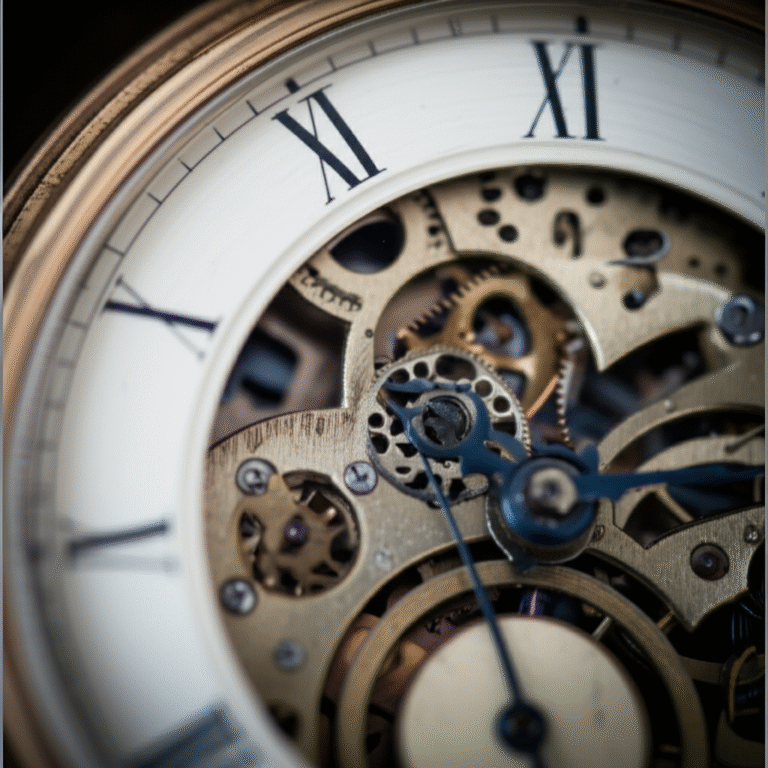
⚙️ How Pocket Watches Worked: Escapements, Balance Springs, and Temperature Compensation


Video: Timeless Evolution: The Watch’s Story.


You might be asking, “How on earth did they keep time without batteries or quartz crystals?” The secret lies in the mechanics.

The Heart of the Machine: The Escapement

The escapement is the part that controls the release of energy from the mainspring.

  • Verge Escapement: Used in the early 180s. It was simple but inaccurate.
  • Cylinder Escapement: A step up, but still prone to friction and wear.
  • Lever Escapement: Invented by Thomas Mudge in 1754 but perfected in the 180s. This is the gold standard for mechanical watches. It allows the balance wheel to swing freely, resulting in much better accuracy.

The Balance Spring (Hairspring)

Invented in the 17th century but refined in the 19th, the balance spring (or hairspring) acts like a tiny spring that pulls the balance wheel back and forth. The faster it oscillates, the more accurate the watch.

Temperature Compensation

Here’s a fun fact: metal expands when hot and contracts when cold. In the 180s, a watch could lose time in the summer and gain time in the winter.

  • The Solution: Watchmakers like Pierre Le Roy and Thomas Earnshaw developed bimetalic balance wheels. These were made of two different metals bonded together. As the temperature changed, the wheel would bend slightly, compensating for the change in the spring’s tension.

The Role of Jewels

You’ll often see “17 Jewels” stamped on a watch. These aren’t for bling! Synthetic rubies (or natural sapphires in the 180s) were used as bearings to reduce friction in the moving parts. This reduced wear and tear, keeping the watch accurate for decades.

Feature Early 180s Late 180s
Escapement Verge Lever
Winding Key Crown (Keyless)
Accuracy Hours per day Seconds per week
Jewels None or 1-2 15-21 (Railroad standard)
Case Material Silver, Gold, Brass Nickel, Gold, Silver


🚂 The Railway Standard: Why Precision Timekeeping Became a Matter of Life and Death


Video: The Invention of the Clock – Historical Curiosities – See U in History.


We mentioned the Kipton, Ohio train crash of 1891, but let’s dig deeper into why this was such a pivotal moment.

Before the 180s, time was local. Noon in New York was different from noon in Philadelphia. This didn’t matter when you traveled by horse. But when you traveled by train at 60 mph, a 10-minute error could mean a head-on collision.

Web C. Ball didn’t just set rules; he created a system. He required railroad employees to have their watches inspected regularly. If a watch failed to meet the Ball Standard, it was removed from service. This created a massive market for high-quality American watches.

Brands like Waltham and Elgin rose to prominence because they could produce thousands of watches that met these standards. The Railroad Watch became a symbol of reliability.

“Reliable timekeeping was essential for coordinating meetings, catching trains, and managing busy schedules in a world that was becoming increasingly dependent on precision.” — Premier Clocks

This era also saw the standardization of time zones. In 183, North American railroads adopted four standard time zones, a move that was eventually adopted by the rest of the world.


🏭 Mass Production and the American Watch Industry: From Handcrafted to Affordable


Video: How Humans Learned to Tell Time ⏰ | History of Clocks for Kids | From Sundials to Smartwatches!


While Switzerland was refining the art of hand-crafting luxury timepieces, the United States was revolutionizing the industry with mass production.

The American System

In 1851, Aaron Lufkin Dennison founded the Waltham Watch Company (originally the Boston Watch Company). They introduced the concept of interchangeable parts. Instead of a master watchmaker making every single gear by hand, machines cut thousands of identical parts that could be assembled by workers on an assembly line.

The “Dollar Watch”

This innovation drove costs down dramatically. By the late 180s, companies like the Waterbury Clock Company were producing the “Ingersoll” watch, often called the “Dollar Watch.” For the price of a loaf of bread, a factory worker could own a reliable timepiece.

Impact on Society

This democratization of time meant that:

  • Workers could be paid by the hour.
  • Schools could start at the same time.
  • Theater could have scheduled showtimes.

The Swiss initially scoffed at American mass production, but they soon realized they had to adapt. They focused on high-end, hand-finished watches, while the Americans dominated the mid-range and budget markets.

If you’re interested in finding affordable vintage pieces or modern homages, check out our Affordable Watches category.


👩 ⚕️ The Birth of the Wristwatch: From Military Necessity to Fashion Statement


Video: The Origins of the Perpetual Calendar : 1800s Era Pocket Watches Explained.


So, when did the pocket watch get the boot? The answer is more complex than you might think.

The Early Experiments

The very first known wristwatch was made for Caroline Murat, Queen of Naples, by Breguet in 1810. It was a repeater watch (it chimed the time) on a bracelet. But this was a one-off for royalty, not a trend.

The Boer War (189–1902)

The real shift happened during the Boer War in South Africa. British officers found that checking a pocket watch while riding a horse or firing a rifle was clumsy and dangerous. They started strapping pocket watches to their wrists with leather straps.

“The importance of coordinating troop movements and synchronizing attacks against the highly mobile Boer insurgents was paramount, and the use of wristwatches subsequently became widespread among the officer class.” — Wikipedia

The “Sartorial” Shift

Initially, wristwatches were seen as femine. Men wore them only in extreme necessity. However, by the 1890s, companies like Garstin and Dimier Frères began patenting designs specifically for wrists.

The Turning Point: World War I

It wasn’t until World War I that the wristwatch truly took over. Soldiers in the trenches needed hands-free timekeeping to coordinate artillery barrages and attacks. The trench watch (a pocket watch with a leather strap and a protective wire cage) became the standard issue.

By the end of the war, the wristwatch was no longer a novelty; it was a necessity. The pocket watch didn’t disappear overnight, but its reign as the primary timekeeper was over.


🔋 The Electric and Quartz Era: How Technology Shook Up Timekeeping After the 180s


Video: The French watchmaking legacy of Lip Watches.


While the 180s were dominated by mechanics, the seeds of the future were being sown.

The Electric Watch

In the late 19th century, inventors began experimenting with electric timekeeping. The first electric clocks appeared in the 1840s, but they were large and required external power. It wasn’t until the 1950s that the first battery-powered electric wristwatches (like the Hamilton Electric 50) hit the market. These used a tiny battery to drive a balance wheel, offering better accuracy than mechanical watches but still relying on mechanical parts.

The Quartz Revolution

The real earthquake came in 1969 when Seiko launched the Astron, the first quartz wristwatch. Quartz crystals vibrate at a precise frequency when electricity is applied. This made watches 10 times more accurate than mechanical ones and much cheaper to produce.

This event, known as the Quartz Crisis, nearly wiped out the Swiss mechanical watch industry. But, as we know, the story didn’t end there.


📡 From Radio Waves to Atoms: The Modern Evolution of Wristwatches


Video: How did they make this in the 1800’s?!


The evolution didn’t stop at quartz.

  • Radio-Controled Watches: These sync with atomic clocks via radio waves, ensuring they are always perfectly accurate.
  • Atomic Watches: Some high-end watches use atomic oscillators (like the Citizen Eco-Drive with atomic timekeeping) to maintain precision.

These technologies are the descendants of the railroad chronometers of the 180s, continuing the quest for perfect time.


🧠 Smartwatches: The Latest Chapter in a Long Story of Time


Video: Inside secrets of a pocket watch from 1680.


Today, wear smartwatches that do more than tell time. They track our heart rates, answer calls, and navigate our cities. But at their core, they are still timepieces.

The journey from the verge escapement of the 180s to the OLED screen of the 2020s is a testament to human ingenuity. We’ve gone from winding a key to tapping a screen, but the fundamental desire to know the time remains unchanged.

If you’re curious about how modern trends are shaping the industry, take a look at our Fashion Trends in Watches section.


💡 Quick Tips and Facts: 5 Surprising Truths About 19th-Century Watches

Let’s recap some of the most fascinating nugets of information we’ve uncovered:

  1. The “Onion” Watch: Early 180s pocket watches were so thick they were nicknamed “onions” or “turnips” because of their shape.
  2. Key Winding: Before the 1860s, you needed a separate key to wind your watch. Losing it meant a useless timepiece!
  3. The Railroad Standard: The 1891 train crash led to the strictest timekeeping standards in history, creating the Railroad Chronometer.
  4. Women Wore Wristwatches First: While men stuck to pockets, women were wearing bracelet watches as early as the 1810s.
  5. Mass Production: The Waltham Watch Company proved that you could make thousands of identical, accurate watches, changing the world forever.

🏁 Conclusion: The Enduring Legacy of the 180s Watch

pocket watch at 3:55

So, did people have watches in the 180s? Absolutely. But they weren’t just timekeepers; they were the engines of the Industrial Revolution.

From the thick, key-wound “onions” of the early century to the precision railroad chronometers of the 1890s, the 19th century was a period of unprecedented innovation. The transition from pocket to wrist was driven by military necessity and social change, culminating in the wristwatch we know today.

The mechanical watch of the 180s may seem primitive compared to our smartwatches, but the engineering required to keep time with seconds of accuracy without electricity is nothing short of miraculous. These watches were the smart devices of their day, connecting the world and keeping it running on schedule.

Whether you’re a collector of vintage Walthams and Elgins, or just a fan of history, the 180s offer a rich tapestry of stories. The next time you glance at your wrist, remember the pocket watch that paved the way.

Ready to start your own collection? Check out our Luxury Watch Brands or Men’s Watches for inspiration.


If you’re looking to dive deeper into the world of 19th-century timepieces or add a vintage piece to your collection, here are some great resources:


❓ FAQ: Your Burning Questions About 19th-Century Timepieces Answered


Video: Historian Answers Victorian England Questions | Tech Support | WIRED.


When was the first watch used?

The first portable timepieces, known as pocket watches or “clock watches,” appeared in the early 16th century (around 150s). They were invented by Peter Henlein in Germany. However, they were not accurate and were primarily status symbols for the wealthy.

Did people have watches in the 170s?

Yes, but they were rare and expensive. The 170s saw the introduction of the balance spring (hairspring), which significantly improved accuracy. However, they were still hand-crafted and owned mostly by the aristocracy.

Read more about “⏳ When Were Pocket Watches Invented? The 1510 Truth Revealed”

The pocket watch was the undisputed king of the 180s. Early in the century, verge escapement watches were common, but by the mid-to-late century, lever escapement watches with keyless winding became the standard. Railroad chronometers were highly prized for their precision.

Read more about “⏳ What is the History of Time Watches? A 5,0-Year Journey (2026)”

How did pocket watches evolve during the 19th century?

They evolved from thick, key-wound, inaccurate timepieces to slim, crown-wound, highly accurate instruments. The introduction of mass production in the US made them affordable for the working class. The lever escapement replaced the verge, and jeweled bearings became standard.

Read more about “⏳ Did They Have Watches in the 170s? The Shocking Truth Revealed”

When did wristwatches first appear in the 180s?

The first known wristwatch was made for Caroline Murat by Breguet in 1810. However, they were not popular among men until the Boer War (189–1902), when officers started strapping pocket watches to their wrists for practical reasons.

Read more about “🕰️ The Ultimate Pocket Watch Guide: 15 Top Brands & Buying Secrets (2026)”

What materials were used to make watches in the 180s?

  • Cases: Silver, gold, brass, and later, nickel.
  • Movements: Brass gears, steel springs, and ruby/sapphire jewels for bearings.
  • Straps: Leather (for early wristwatches) or chains (for pocket watches).

Why did men stop using pocket watches?

Men stopped using pocket watches primarily due to the practicality required in military combat (World War I) and the industrial workforce. The wristwatch offered hands-free operation, which was essential for soldiers and factory workers.


Read more about “⏳ Were Watches a Thing in the 180s? The Pocket Watch Revolution”


For a visual journey through the history of watches, check out this video summary of the first YouTube video on the topic, which covers the evolution from the 15th-century pocket watches to the modern smartwatch.

Watch the Evolution of Timekeeping

This video highlights the transition from the verge escapement to the lever escapement, the rise of mass production, and the eventual shift to wristwatches.

Review Team
Review Team

The Popular Brands Review Team is a collective of seasoned professionals boasting an extensive and varied portfolio in the field of product evaluation. Composed of experts with specialties across a myriad of industries, the team’s collective experience spans across numerous decades, allowing them a unique depth and breadth of understanding when it comes to reviewing different brands and products.

Leaders in their respective fields, the team's expertise ranges from technology and electronics to fashion, luxury goods, outdoor and sports equipment, and even food and beverages. Their years of dedication and acute understanding of their sectors have given them an uncanny ability to discern the most subtle nuances of product design, functionality, and overall quality.

Articles: 240

Leave a Reply

Your email address will not be published. Required fields are marked *