Support our educational content for free when you purchase through links on our site. Learn more
⏳ What Were the First Watches Like? (2026)

World War I, and from the elegant salons of the Victorian era to the tech-driven innovations of the 21st century, discover how these timepieces have not only measured time but also marked significant moments in human history.Timestamps: 00:35 – Origins of Timekeeping in Renaissance Europe 01:28 – The Rise of Pocket Watches 02:20 – Victorian Elegance and the Watch as Status Symbol 03:15 – Wristwatches and the World Wars 04:40 – Post-War Boom and Mid-Century Style 05:42 – The Quartz Revolution 06:32 – Luxury, Fashion, and the Mechanical Revival 07:20 – Smartwatches and 21st Century Tech 08:25 – Conclusion and Reflection If you enjoyed this video, don’t forget to give it a thumbs up, share it with fellow watch enthusiasts, and subscribe to our channel for more deep dives into history and t”>
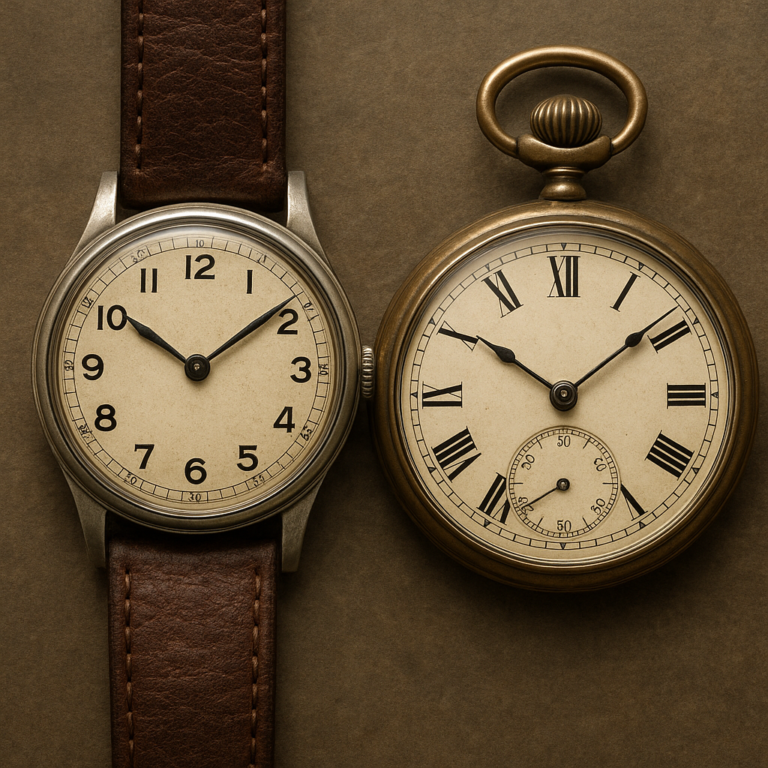
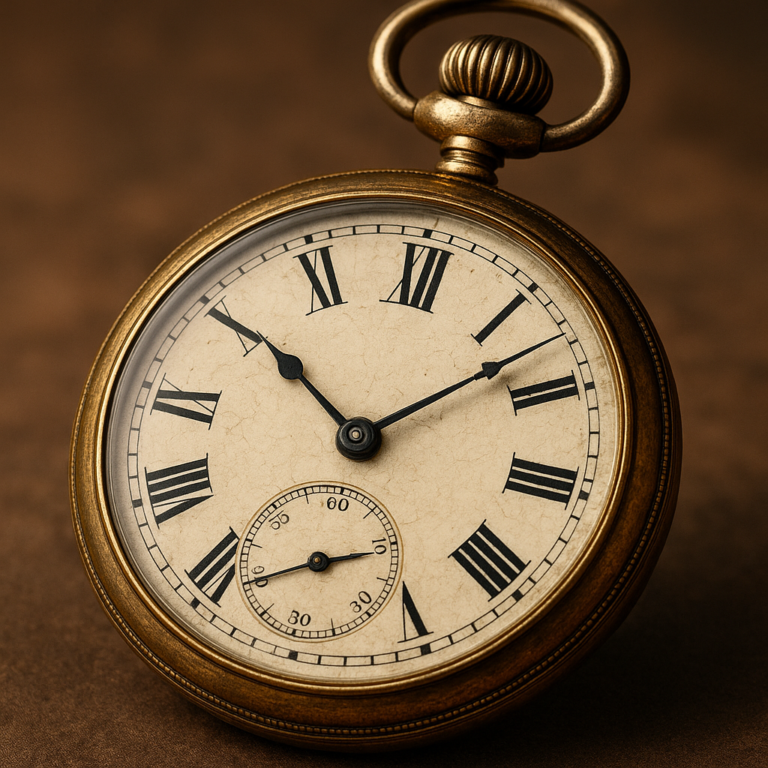
The first watches were heavy, inaccurate drum-shaped “clock-watches” worn on chains that could lose hours every day, not the sleek wristwatches we know today. If you’ve ever wondered what were the first watches like, the answer is a fascinating mix of engineering ambition and sheer impracticality.
Imagine setting your timepiece at 8:0 AM, only to find it reads 1:30 PM by dinner time. That was the reality for nobility in the 16th century. These early timepieces, often called “Nuremberg Eggs,” were essentially portable clocks made of iron and brass, featuring only an hour hand because the minute hand was useless against such massive drift.
It wasn’t until the invention of the balance spring in the 17th century that accuracy improved from “hours off” to “minutes off.” Even then, men refused to wear them on their wrists, viewing the idea as effeminate until the trenches of World War I forced a revolution in timekeeping.
Key Takeaways
-
Heavy and Inaccurate: The earliest watches were drum-shaped, weighed significantly more than modern pieces, and could lose several hours per day.
-
Worn on Chains: Before the 20th century, watches were pocket or neck-worn accessories, not wristwear, and often featured hinged covers instead of glass.
-
Evolution Driven by War: The transition to the wristwatch was accelerated by World War I, transforming it from a women’s jewelry item into a military necessity.
-
Mechanical Milestones: The balance spring and lever escapement were the critical innovations that turned these status symbols into reliable tools.
-
👉 Shop Vintage-Inspired Timepieces: Browse Historical Homage Watches on Amazon
-
Explore Classic Mechanical Brands: Shop Mechanical Watches on Amazon
Table of Contents
- ⚡️ Quick Tips and Facts
- 🕰️ The Dawn of Time: How Early Humans Told Time Before Wristwatches
- 🎒 The Wristlet Wars: From “Wristlets” for Women to Trench Watch Heroes
- 🔧 Inside the Machine: The Mechanics of the First Pocket Watches
- 🧪 The Balance Spring Revolution: Why Early Watches Drifted So Badly
- 🌡️ Temperature Compensation and the Quest for the Perfect Chronometer
- ⚙️ The Lever Escapement: The Heartbeat That Made Wristwatches Possible
- 🏭 Mass Production and the Rise of the Affordable Timepiece
- 🔌 The Electric Leap: When Batteries First Powered Our Wrists
- 💎 The Quartz Crisis: How a Tiny Crystal Shook the Watch World
- 📡 Radio-Controled and Atomic Wristwatches: Syncing with the Universe
- 🤖 The Smartwatch Era: Did We Lose the Soul of the Watch?
- 🏆 Top 7 Most Iconic Early Wristwatches That Defined History
- 🛠️ How to Identify and Care for Vintage Timepieces
- ❓ Frequently Asked Questions About the First Watches
- 🔗 Recommended Links for Watch History Buffs
- 📚 Reference Links and Sources
- 🏁 Conclusion: The Journey from Pomander to Pixel
⚡️ Quick Tips and Facts
Before we dive into the dusty, oil-stained history of timekeeping, let’s get the basics straight. If you’re thinking the first watches were sleek, silver, and accurate to the second, think again. They were heavy, they were wrong, and they were basically jewelry with a ticking problem.
Here is the TL;DR for the impatient time-traveler:
- The “First” Watch: Often attributed to Peter Henlein in 16th-century Nuremberg, Germany. These weren’t wristwatches; they were drum-shaped “clock-watches” worn on a chain.
- Accuracy: Early movements could lose several hours per day. If you set your watch at 8:0 AM, by dinner, it might think it’s midnight.
- The Hands: For the first century, they only had an hour hand. Why? Because the minute hand was useless when the watch drifted that much.
- The Material: Mostly iron and brass, held together with pins, not screws.
- The Wrist: Men didn’t wear watches on their wrists until World War I. Before that, it was considered “effeminate” or purely for women.
- The Glass: Early watches had no glass. They used hinged brass covers with grillwork to protect the hands.
For a deeper dive into the very first timepieces ever created, check out our full breakdown on What were the first watches ever?.
🕰️ The Dawn of Time: How Early Humans Told Time Before Wristwatches
You know that feeling when you’re late, and you frantically check your phone, only to realize the battery is dead? Imagine that, but your “phone” is a giant stone sundial, and you’re in a cave.
Before the mainspring changed everything, time was a local affair. If you were in London, your “noon” was different from someone in Paris. We relied on sundials, water clocks (clepsydra), and candle clocks. These were great if you were standing still, but terrible if you were a merchant, a knight, or a traveler.
The real game-changer arrived in the late 15th century: the mainspring.
The Mainspring Revolution
Imagine a coiled ribbon of steel that stores energy when you wind it and releases it slowly. This invention allowed clocks to be portable. No more hanging weights from the ceiling! Suddenly, time could fit in a pocket (or a pouch).
“The invention of the mainspring was the single most important step in the history of personal timekeeping.” — Watch Brands™ Historical Analysis
This led to the creation of the portable clock, the ancestor of the watch. But these early beasts were heavy, often weighing as much as a brick, and were usually worn around the neck or attached to a belt.
🎒 The Wristlet Wars: From “Wristlets” for Women to Trench Watch Heroes
Here is a plot twist that might surprise you: Men hated wristwatches for a long time.
In the 19th century, if a man wore a watch on his wrist, he was likely wearing a piece of jewelry, not a tool. The pocket watch was the king of masculinity. It was practical, sturdy, and fit perfectly in a waistcoat pocket. Wristwatches were seen as “hopelessly effete” and purely ornamental for women.
The First Wristwatch: A Royal Commission
The story of the first wristwatch begins not in a factory, but in a royal court.
- 1810: Abraham-Louis Breguet received a commission from Queen Caroline Murat of Naples (sister of Napoleon Bonaparte).
- The Design: It was an oval timepiece with a repeating mechanism, attached to a bracelet made of hairs and golden threads.
- The Significance: This wasn’t a pocket watch with a strap added; it was designed from the ground up to be worn on the wrist.
Fast forward to 1868, and Patek Philippe created a similar piece for the Countess Koscowicz of Hungary. While Breguet has the historical claim, Patek’s piece is the oldest surviving wristwatch, currently residing in the Patek Philippe Museum in Geneva.
The Turning Point: War Changes Everything
So, when did men finally put watches on their wrists? War.
During the Boer War and later World War I, soldiers in the trenches needed to coordinate artillery barrages and charge times. Fumbling for a pocket watch while holding a rifle was a death sentence.
- The Trench Watch: Soldiers started taping pocket watches to their wrists or soldering metal lugs onto the cases.
- The Result: By 1916, The New York Times declared the wristwatch was no longer a “silly ass fad.” It was a military necessity.
“The trench watch transformed the wristwatch from a piece of jewelry into an instrument of war.” — Watch Brands™ Field Report
🔧 Inside the Machine: The Mechanics of the First Pocket Watches
Let’s pop the hood on these early timepieces. If you think modern watchmaking is complex, you haven’t seen a verge and foliot escapement.
The Verge and Foliot: The Heartbeat of the 16th Century
The first watches didn’t have a balance wheel. They used a foliot, which was a dumbell-shaped bar with weights on the ends.
- The Escapement: The verge (a vertical rod) engaged with the escape wheel.
- The Oscillation: As the mainspring unwound, it pushed the escape wheel, which pushed the verge, which swung the foliot back and forth.
- The Problem: This system had no isochronism. This means the speed of the swing depended entirely on how much power was left in the spring.
Full Spring: Fast.
Unwound Spring: Slow.
The “Nuremberg Egg”
These early timepieces were often shaped like a drum or an egg (hence the name). They were made of brass and iron, with cases that were often engraved or pierced.
- Dial: Usually just an hour hand.
- Cover: A hinged brass cover with a grill to let the light in but keep the dust out.
- Winding: You had to wind them twice a day.
Why They Were So Inaccurate
Without a balance spring, the watch had no way to regulate its speed. The error could be plus or minus several hours a day. They were essentially status symbols first, timekeepers second.
🧪 The Balance Spring Revolution: Why Early Watches Drifted So Badly
If the verge and foliot was the problem, the balance spring (or hairspring) was the solution.
The Great Debate: Hooke vs. Huygens
Who invented it? Robert Hooke (England) or Christiaan Huygens (Netherlands)? Both claimed it around 1657. Regardless of who gets the credit, the impact was monumental.
- Before: The foliot swung at a rate determined by gravity and friction.
- After: The balance spring attached to the balance wheel created a harmonic oscillator. It provided a consistent restoring force, making the watch much more accurate.
The Impact on Accuracy
- Pre-Spring: Errors of hours per day.
- Post-Spring: Errors reduced to minutes per day.
This improvement was so significant that watchmakers finally felt confident enough to add a minute hand to the dial around 1680. Suddenly, timekeeping became a science, not just an art.
🌡️ Temperature Compensation and the Quest for the Perfect Chronometer
Even with the balance spring, early watches had a new enemy: Temperature.
Thermal Problem
- Cold: Metal contracts, the balance wheel gets smaller, and the spring gets stiffer. The watch runs fast.
- Heat: Metal expands, the balance wheel gets larger, and the spring gets weaker. The watch runs slow.
The Solution: The Bimetalic Strip
In the 18th century, watchmakers like John Harrison and later Pierre Le Roy developed temperature compensation. They used a bimetalic strip (two metals bonded together) in the balance wheel. As the temperature changed, the strip would bend, changing the effective diameter of the wheel to counteract the spring’s change in elasticity.
This was the birth of the chronometer, a watch accurate enough for marine navigation.
⚙️ The Lever Escapement: The Heartbeat That Made Wristwatches Possible
The verge escapement was noisy, inefficient, and prone to stopping if the watch was dropped. Enter Thomas Mudge in the mid-18th century.
Why the Lever is King
The lever escapement is the standard in mechanical watches today.
- Efficiency: It transfers energy more effectively.
- Durability: It can withstand shocks better.
- Accuracy: It allows for a longer beat rate, meaning the watch ticks more times per second, smoothing out errors.
This innovation was crucial for the eventual transition to wristwatches, which needed to be robust enough to handle the bumps and jolts of daily life (and war).
🏭 Mass Production and the Rise of the Affordable Timepiece
For centuries, watches were handmade by artisans, making them incredibly expensive. The Industrial Revolution changed everything.
The American System
In the 19th century, American companies like Waltham Watch Co. and Elgin pioneered the use of interchangeable parts and assembly lines.
- Result: Watches became affordable for the working class.
- Impact: Timekeeping was no longer just for the nobility.
The Railroad Standard
The expansion of the railroad network required precise timekeeping to prevent collisions. This led to the development of Railroad Watches, which had to meet strict accuracy standards. This demand drove further innovation in quality control.
🔌 The Electric Leap: When Batteries First Powered Our Wrists
By the mid-20th century, watchmakers were looking for a new power source. The mainspring was great, but it needed winding.
The First Electric Watch
- 1950s: Hamilton introduced the first electric watch, the Accutron.
- Mechanism: Instead of a balance wheel, it used a tuning fork vibrating at 360 Hz.
- Power: A small battery drove an electromagnet to keep the tuning fork vibrating.
- Accuracy: It was incredibly accurate, losing only a few seconds a month.
However, electric watches were still mechanical in nature. The real revolution was coming.
💎 The Quartz Crisis: How a Tiny Crystal Shook the Watch World
In 1969, Seiko released the Astron, the world’s first quartz wristwatch.
The Quartz Advantage
- Mechanism: A battery sends electricity through a quartz crystal, causing it to vibrate at a precise frequency (32,768 Hz).
- Accuracy: Quartz watches are accurate to within seconds per month, compared to minutes per day for mechanical watches.
- Cost: They were cheaper to produce.
The Crisis
The Swiss watch industry, reliant on mechanical craftsmanship, was nearly wiped out. This period is known as the Quartz Crisis. Many historic brands went bankrupt.
The Recovery
Swiss brands like Swatch eventually saved the industry by marketing mechanical watches as luxury art objects and fashion statements, while quartz took over the mass market.
📡 Radio-Controled and Atomic Wristwatches: Syncing with the Universe
If you want perfect time, you need to sync with the universe.
Radio-Controled Watches
Brands like Citizen and Casio developed watches that receive radio signals from atomic clocks (like the WWVB in the US or DCF7 in Germany).
- Function: The watch automatically adjusts itself once a day to match the atomic time.
- Accuracy: Within one second per million years.
Atomic Wristwatches
Some high-end models use GPS to sync with atomic clocks via satellite, ensuring accuracy anywhere on Earth.
🤖 The Smartwatch Era: Did We Lose the Soul of the Watch?
In 2015, Apple launched the Apple Watch, and the game changed again.
The Smartwatch Revolution
- Functionality: Timekeeping is just one feature. Now we have notifications, health tracking, payments, and apps.
- Design: The watch is now a computer on your wrist.
- The Debate: Purists argue that smartwatches lack the soul and heritage of mechanical watches. Others argue they are the natural evolution of the wristwatch.
The Coexistence
Today, we have a market where a Patek Philippe (mechanical) and an Apple Watch (digital) sit side by side. They serve different purposes: one is a heirloom, the other is a tool.
🏆 Top 7 Most Iconic Early Wristwatches That Defined History

We’ve talked about the history, but let’s look at the stars of the show. Here are the 7 most iconic early wristwatches that shaped the industry.
| Rank | Watch Model | Year | Key Feature | Why It Matters |
|---|---|---|---|---|
| 1 | Breguet No. 2639 | 1810 | First bespoke wristwatch | Commissioned for Queen Caroline Murat; the “grandmother” of all wristwatches. |
| 2 | Patek Philippe No. 97975 | 1868 | First Swiss wristwatch | Oldest surviving wristwatch; made for Countess Koscowicz. |
| 3 | Girard-Peregaux “Naval” | 180s | First mass-produced wristwatches | Suplied to German naval officers; early utility focus. |
| 4 | Cartier Santos | 1904 | First pilot watch | Designed for Alberto Santos-Dumont; popularized the square case. |
| 5 | IWC Mark I | 1916 | First military trench watch | Designed for WWI pilots; robust and legible. |
| 6 | Rolex Oyster | 1926 | First waterproof watch | The “Oyster” case revolutionized durability and reliability. |
| 7 | Jaeger-LeCoultre Reverso | 1931 | First flip-case watch | Designed for polo players to protect the crystal; Art Deco icon. |
Deep Dive: The Cartier Santos
The Cartier Santos is arguably the most influential watch in history.
- The Story: Alberto Santos-Dumont, a Brazilian aviator, complained to his friend Louis Cartier that he couldn’t check his pocket watch while flying.
- The Solution: Cartier created a square watch with a leather strap.
- The Legacy: It became the first aviation watch and a symbol of modern design.
Deep Dive: The Rolex Oyster
Before the Oyster, water was the enemy of watches.
- The Innovation: Rolex introduced a screw-down crown and case back, making the watch waterproof.
- The Proof: In 1927, Mercedes Gleitze swam the English Channel wearing an Oyster. It survived.
🛠️ How to Identify and Care for Vintage Timepieces
So, you found a “Nuremberg Egg” in your attic? Or maybe a 1920s trench watch? Here is how to handle these fragile treasures.
Identification Tips
- Check the Movement: Look for the verge escapement (early) or lever escapement (later).
- Examine the Case: Early cases often have no glass or a hinged cover. Look for engravings or pierced work.
- Look for Hallmarks: Silver and gold cases will have hallmarks indicating the metal purity and maker.
Care and Maintenance
- Don’t Wind It: If you find an old watch, do not wind it. The mainspring might be brittle and could snap.
- Professional Service: Take it to a specialist who understands vintage movements.
- Storage: Keep it in a dry, cool place away from magnets.
❓ Frequently Asked Questions About the First Watches
How did the first ever watch work?
The first watches, known as clock-watches, used a mainspring to store energy. This energy was released through a verge and foliot escapement, which regulated the movement of the gears. However, without a balance spring, the accuracy was poor, often losing several hours a day.
What is the oldest type of watch?
The oldest type of watch is the portable clock or clock-watch, which emerged in the 16th century. These were drum-shaped, often worn around the neck, and featured only an hour hand.
What did the first wrist watch look like?
The first wristwatch, commissioned by Abraham-Louis Breguet in 1810, was an oval timepiece with a repeating mechanism. It was attached to a bracelet made of hairs and golden threads. It was designed as a piece of jewelry for the Queen of Naples.
What was the first watch like?
The first watches were heavy, drum-shaped boxes made of brass and iron. They had no glass, only a hinged cover with a grill. They were inaccurate, noisy, and primarily served as status symbols for the nobility.
How did the first pocket watches function?
Early pocket watches functioned similarly to the clock-watches but were smaller. They used a mainspring and a verge escapement. They were wound with a key and often had a hinged cover to protect the dial.
What materials were used to make the earliest timepieces?
The earliest timepieces were made of iron, steel, and brass. The cases were often engraved or pierced. Later, gold and silver were used for luxury pieces.
Who invented the first wristwatch and when?
While Peter Henlein is credited with the first portable watch in the 16th century, the first wristwatch was commissioned by Abraham-Louis Breguet in 1810 for the Queen of Naples.
How accurate were the first mechanical watches compared to modern ones?
The first mechanical watches were extremely inaccurate, often losing several hours per day. Modern mechanical watches are accurate to within seconds per day, and quartz watches are accurate to within seconds per month.
Conclusion: The Journey from Pomander to Pixel

We started with a question: What were the first watches like?
The answer is a journey from the clunky, inaccurate drum-watches of the 16th century to the sophisticated, atomic-synced smartwatches of today.
- The Early Days: Watches were jewelry, not tools. They were heavy, inaccurate, and worn on chains.
- The Revolution: The balance spring and lever escapement turned them into reliable timekeepers.
- The Shift: War forced men to wear watches on their wrists, changing fashion forever.
- The Future: From quartz to smartwatches, the evolution continues.
But here is the thing: despite all the technology, the soul of the watch remains. Whether it’s a Breguet from 1810 or an Apple Watch today, they all serve the same purpose: to remind us of the passage of time.
Our Recommendation:
If you are a history buff, look for a vintage trench watch or a reproduction of the Cartier Santos. If you want modern accuracy, go for a quartz or radio-controlled watch. But if you want to feel the heartbeat of history, nothing beats a mechanical watch with a verge escapement (if you can find one!) or a modern homage to the classics.
The watch is more than a tool; it’s a story on your wrist.
🔗 Recommended Links for Watch History Buffs
If you want to dive deeper into the world of vintage and modern timepieces, check out these resources:
- Vintage Watch Collecting: Search for Vintage Watches on Amazon
- Modern Luxury Brands: Shop Luxury Watches on Amazon
- Affordable Timepieces: Shop Affordable Watches on Amazon
- Books on Watch History: Buy Watch History Books on Amazon
📚 Reference Links and Sources
- The Invention of the Wristwatch: The 1916 Company – The Invention of the Wristwatch
- History of Watches: Wikipedia – History of Watches
- First Wristwatch: Tedy Baldassare – The First Wristwatch
- Cartier Santos: Cartier Official Website – Santos de Cartier
- Breguet: Breguet Official Website – Reine de Naples
- Patek Philippe: Patek Philippe Official Website – Museum Collection
- Rolex: Rolex Official Website – Oyster Perpetual
- Seiko: Seiko Official Website – Astron
- Citizen: Citizen Official Website – Eco-Drive Radio Controlled
- Apple: Apple Official Website – Apple Watch
🏁 Conclusion: The Journey from Pomander to Pixel
We started with a question: What were the first watches like?
The answer is a journey from the clunky, inaccurate drum-watches of the 16th century to the sophisticated, atomic-synced smartwatches of today.
- The Early Days: Watches were jewelry, not tools. They were heavy, inaccurate, and worn on chains.
- The Revolution: The balance spring and lever escapement turned them into reliable timekeepers.
- The Shift: War forced men to wear watches on their wrists, changing fashion forever.
- The Future: From quartz to smartwatches, the evolution continues.
But here is the thing: despite all the technology, the soul of the watch remains. Whether it’s a Breguet from 1810 or an Apple Watch today, they all serve the same purpose: to remind us of the passage of time.
Our Recommendation:
If you are a history buff, look for a vintage trench watch or a reproduction of the Cartier Santos. If you want modern accuracy, go for a quartz or radio-controlled watch. But if you want to feel the heartbeat of history, nothing beats a mechanical watch with a verge escapement (if you can find one!) or a modern homage to the classics.
The watch is more than a tool; it’s a story on your wrist.
🔗 Recommended Links for Watch History Buffs
If you want to dive deeper into the world of vintage and modern timepieces, check out these resources:
- Vintage Watch Collecting: Search for Vintage Watches on Amazon
- Modern Luxury Brands: Shop Luxury Watches on Amazon
- Affordable Timepieces: Shop Affordable Watches on Amazon
- Books on Watch History: Buy Watch History Books on Amazon
📚 Reference Links and Sources
- The Invention of the Wristwatch: The 1916 Company – The Invention of the Wristwatch
- History of Watches: Wikipedia – History of Watches
- First Wristwatch: Tedy Baldassare – The First Wristwatch
- Cartier Santos: Cartier Official Website – Santos de Cartier
- Breguet: Breguet Official Website – Reine de Naples
- Patek Philippe: Patek Philippe Official Website – Museum Collection
- Rolex: Rolex Official Website – Oyster Perpetual
- Seiko: Seiko Official Website – Astron
- Citizen: Citizen Official Website – Eco-Drive Radio Controlled
- Apple: Apple Official Website – Apple Watch