Support our educational content for free when you purchase through links on our site. Learn more
⌚ When Did Wristwatches Become Popular? The Shocking Truth (2026)

For centuries, the pocket watch was the undisputed king of timekeeping, a symbol of masculine status that men refused to part with. So, when did wristwatches become popular? The answer isn’t a slow evolution; it’s a dramatic, blood-soaked revolution sparked by the trenches of World War I. Before 1914, strapping a timepiece to your wrist was considered a “silly ass fad” for women and aviators. But as soldiers realized that fumbling for a pocket watch while dodging artillery fire was a death sentence, the wristwatch went from a novelty to a military necessity overnight.
In this deep dive, we unravel the fascinating saga of how the “wristlet” conquered the world. We’ll settle the heated debate between Patek Philippe and Cartier regarding the true first wristwatch, explore the “Sapristi” moment of the Boer War, and reveal the exact year the pocket watch was officially dethroned. You might be surprised to learn that the technology saving your life in the trenches was the very same design that would later define the Roaring Twenties and the modern luxury market.
Key Takeaways
- The Turning Point: While early examples existed in the 19th century, wristwatches became massively popular during World War I (1914–1918) due to their tactical necessity in trench warfare.
- From Novelty to Standard: By 1930, the wristwatch had completely overtaken the pocket watch, with a dominance ratio of 50 to 1 in the civilian market.
- The First Contenders: The title of “first wristwatch” is contested between Patek Philippe (1868, for a Countess) and Cartier (1904, the Santos for aviators), depending on whether you prioritize the first made or the first purpose-built.
- Survival of the Fittest: The Quartz Revolution of the 1970s threatened to kill mechanical watches, but instead forced them to evolve into the luxury heirloms we cherish today.
Table of Contents
- ⚡️ Quick Tips and Facts
- ⏳ The Birth of the Wristwatch: From Bangle to Wrist
- Who Made the First Wristwatch? The Patek Philippe vs. Cartier Debate
- The “Sapristi” Moment: How the Boer War Changed Everything
- 🪖 The Great War Catalyst: Why Soldiers Ditched the Pocket Watch
- Trench Warfare and the Rise of the “Trench Watch”
- Mass Production and Wartime Innovation: The American Influence
- 🚀 The Roaring Twenties: When Wristwatches Became a Fashion Statement
- The Shift from Utility to Luxury: The Jazz Age Aesthetic
- Women’s Wristwatches: The First True Adoption Wave
- 📉 The Pocket Watch vs. Wristwatch Showdown: A Timeline of Dominance
- 190–1910: The Niche Era
- 1914–1918: The Turning Point
- 1920–1930: Total Victory
- 🛠️ Engineering Marvels: How the Wristwatch Evolved Technically
- Waterproofing and Shock Resistance: Surviving the Elements
- The Quartz Revolution: Did It Kill the Mechanical Wristwatch?
- 🌍 Global Perspectives: How Different Cultures Embraced the Wristwatch
- The Swiss Watchmaking Renaissance
- American Innovation: Timex and the Mass Market
- 🕰️ From Utility to Legacy: The Wristwatch in the 21st Century
- Smartwatches vs. Traditional Horology: The New Battle
- Why We Still Wear Mechanical Watches Today
- 🧠 Frequently Asked Questions
- 🔗 Recommended Links
- 📚 Reference Links
- 🏁 Conclusion
⚡️ Quick Tips and Facts
Hey there, fellow watch fanatics! 👋 Have you ever wondered when those handy time-telling devices on our wrists went from a quirky novelty to an absolute must-have? We certainly have! It’
s a fascinating journey, full of military necessity, fashion revolutions, and some truly ingenious engineering. Let’s dive into some rapid-fire facts to get our gears turning!
-
The First “Wristlet”: While the
concept of strapping a timepiece to the wrist dates back to the early 19th century, these were initially considered jewelry for women, not practical tools for men. Imagine that – men scoff
ing at wristwatches! Oh, how times change! -
Military Might: It wasn’t until the late 19th and early 20th centuries that military officers, particularly during the Boer War
and World War I, truly embraced the wristwatch for its sheer practicality in combat. No more fumbling in pockets while dodging bullets! 🪖 -
The 1916
Turning Point: The New York Times famously declared in 1916 that the wristwatch was “no longer a ‘silly ass fad'” but a permanent fixture. Talk about a glow-up! -
Post-War Boom: Soldiers returning from WWI, accustomed to the convenience of their “trench watches,” fueled a massive public demand, effectively replacing the venerable pocket watch in civilian life.
-
Quartz Quake: The Quartz Revolution in the 1970s, spearheaded by Seiko’s Astron, brought unprecedented accuracy and affordability, shaking the very foundations of traditional mechanical watchmaking. But did it kill the mechanical watch? Not by a long shot! More on that later. 😉
⏳ The Birth of the Wristwatch: From Bangle to Wrist
Before the wristwatch became the ubiquitous accessory we know and love, timekeeping on the go was a rather cumbersome affair. For centuries, the pocket watch reigned
supreme, a symbol of status and precision, nestled securely in waistcoats. But as the world sped up, so did the need for a more accessible way to tell time. This is where our story truly begins, not with a bang,
but with a delicate bangle.
Initially, the idea of wearing a watch on the wrist was, believe it or not, considered quite feminine and ornamental. Men, the bastions of traditional timekeeping, largely
stuck to their trusty pocket watches, viewing wrist-worn timepieces as mere “wristlets” or jewelry. It’s a stark contrast to today, where a robust diver’s watch or a sleek dress watch is a quintessential part of many
men’s wardrobes. If you’re curious about how this all unfolded, you might enjoy diving deeper into the history of watches on our site!
Who Made the First Wristwatch? The Patek Philippe vs. Cartier Debate
Ah, the
age-old question that gets watch enthusiasts debating for hours! Who truly made the first wristwatch? It’s a bit like asking who invented the wheel – many hands contributed to its evolution.
The earliest known record often points to Abraham
-Louis Breguet, who, in 1810, crafted a bracelet-style timepiece for Caroline Murat, the Queen of Naples and Napoleon’s sister. Imagine the sheer elegance
of such a piece, blending high horology with royal fashion! However, details about this specific watch are scarce, leaving some room for historical intrigue.
Then comes Patek Philippe, a name synonymous with unparalleled luxury and craftsmanship. They are credited by Guinness World Records with creating a bracelet watch in 1868 for Countess Koscowicz of Hungary. This exquisite piece was undoubtedly a jewel
first, a timekeeper second, perfectly illustrating the early perception of wristwatches as feminine adornments. If you’re fascinated by such masterpieces, our Luxury Watch Brands section is a treasure trove of information.
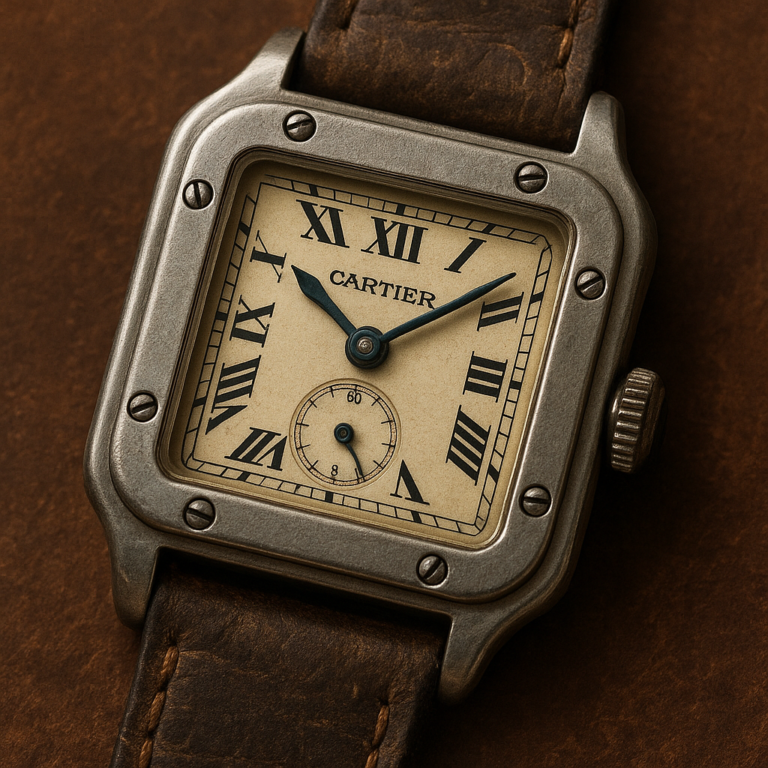
But wait, there’s another strong contender: Louis Cartier. In 1904, the legendary jeweler designed the Cartier Santos for his friend, the pioneering
Brazilian aviator Alberto Santos-Dumont. Santos-Dumont needed a practical way to check the time while flying his airship without fumbling for a pocket watch. The resulting square-c
ased Santos, with its distinctive exposed screws, was arguably the first purpose-built pilot’s wristwatch and a true game-changer in terms of functionality and design. It wasn’t just jewelry
; it was a tool!
So, who wins? It depends on your definition of “first.” If it’s the first known watch designed to be worn on the wrist, Breguet gets a strong nod. If it
‘s the first documented and surviving example, Patek Philippe has a compelling case. But if it’s the first purpose-built, commercially successful wristwatch designed for a specific practical need, then our money’s on Cartier
. They all played a crucial role in paving the way for the wristwatch’s eventual dominance.
The
“Sapristi” Moment: How the Boer War Changed Everything
While the early wristwatches were beautiful, they were still largely considered novelties or jewelry. The real shift towards practicality, especially for men, began with the harsh realities of military
conflict. Enter the Boer War (1899-1902).
Imagine being a British officer on horseback in the dusty plains of South Africa, trying to coordinate troop movements or time an attack. Reaching into your tunic
for a pocket watch was not only inconvenient but potentially dangerous, drawing attention and taking precious seconds. This is where the “sapristi” moment (an old French exclamation of surprise or exasperation) truly kicked in!
Military officers in
the British Army, recognizing the impracticality of pocket watches in the field, began strapping them to their wrists. Companies like Mappin & Webb even ramped up production of their “campaign watch” for soldiers
during this period, following earlier designs like the “Watch Wristlet” patented by the Garstin Company of London in 1893. These early military wristwatches, often adapted pocket watch movements with wire lugs soldered
on, were crude but effective. They showed that a watch on the wrist wasn’t just a pretty bauble; it was a tactical advantage. This subtle shift laid the groundwork for the massive transformation that was just around the corner.
🪖 The Great War Catalyst: Why Soldiers Ditched the Pocket Watch
If
the Boer War was the appetizer, World War I (1914-1918) was the main course, serving up the definitive turning point for the wristwatch. This global conflict wasn’t just a brutal clash of empires
; it was a crucible of innovation, forcing rapid advancements in technology and tactics – and the wristwatch was right there in the thick of it.
Before WWI, pocket watches were still the standard for men. But the demands of trench warfare
and new artillery tactics made them utterly impractical. As one compelling video explains, “The entire world was on the cusp of a new era of warfare, and wrist watches were right there with it.” Soldiers needed to synchronize attacks
, coordinate artillery barrages, and time advances with unprecedented precision. The “creeping barrage” tactic, for instance, required infantry to advance immediately behind a moving wall of artillery fire. “In order to be successful, the strategy required precise timing by
both heavy artillery and infantry.” Failure to synchronize watches could have deadly consequences.
Imagine trying to pull out a pocket watch, open its cover, and check the time while under heavy
fire, covered in mud, or with hands full of equipment. It was a recipe for disaster. This immediate, hands-free access to timekeeping became not just a convenience, but a matter of life and death. The British War Department recognized
this critical need and began issuing wristwatches to combatants as standard equipment by 1917.
This widespread military adoption quickly shattered the lingering perception of wristwatches as merely “feminine jewelry” or a “s
illy ass fad.” Their proven utility in the most extreme conditions elevated them to an essential piece of military gear. By the end of the war, almost every enlisted man wore a wristwatch. The shift was undeniable, and there was no turning back.
Trench Warfare and the Rise of
the “Trench Watch”
The harsh realities of the Western Front spurred the evolution of the wristwatch itself. Early military wristwatches were often just pocket watch movements crammed into cases with wire lugs, but the demands of trench warfare quickly led to specialized
designs. These became known as “trench watches.”
What made a trench watch distinct?
- Robustness: They needed to withstand mud, shock, and the general brutality of combat.
- Leg
ibility: Large, luminous numerals and hands were crucial for reading the time in low light or at night, without giving away a position with a flashlight. - Protection: Crystals were often protected by grilles or hinged covers, anticipating
the later flip-case design of the Jaeger-LeCoultre Reverso (more on that later!). - Fixed Lugs: Many featured fixed wire lugs, making them incredibly sturdy, though less versatile for strap changes
.
Brands like Rolex, Omega, Longines, and Elgin were among those that quickly adapted, producing wristwatches that met these new military demands. Features that we now take for granted in
modern watches, such as scratch-resistant glass and readability in low light, have direct roots in these wartime innovations. It’s truly amazing how a conflict can drive such practical and enduring design principles
!
Mass Production and Wartime Innovation: The American Influence
While European watchmakers, particularly the Swiss, were at the forefront
of horological innovation, American manufacturers played a crucial role in making watches accessible through mass production. Companies like the Waltham Watch Co. in the 19th century pioneered assembly-line methods, producing affordable, reliable watches on an
unprecedented scale.
This capacity for mass production became incredibly important during wartime. As demand for wristwatches exploded, American factories could churn out reliable timepieces to equip vast armies. This not only supplied the military but also
laid the groundwork for civilian adoption. When soldiers returned home, their preference for wristwatches, combined with the availability of mass-produced, more affordable options, cemented the wristwatch’s place in society. It was a perfect storm of military necessity,
cultural acceptance, and industrial capability.
🚀 The Roaring Twenties: When Wristwatches Became a Fashion
Statement
The Great War was over, the world was rebuilding, and a new era of exuberance and modernity was dawning: The Roaring Twenties. Soldiers returned home, not only with tales of bravery but also with a newfound appreciation
for the practicality of the wristwatch. What was once a military necessity quickly transformed into a civilian fashion staple.
The public demand for wristwatches soared. People had seen their heroes wearing them, and the convenience was undeniable. As The New York
Times had presciently noted in 1916, the wristwatch was “no longer a ‘silly ass fad’ or mere novelty.” It had achieved full cultural acceptance. This period marked a significant shift from
the wristwatch being purely a utility item to becoming a statement of style and sophistication. Suddenly, everyone wanted one!
The Shift from Utility to Luxury: The Jazz Age Aesthetic
The 1920s and 30s saw designers embrace the wristwatch with open arms, moving beyond purely functional military designs. The Jazz Age aesthetic, with its emphasis
on sleek lines, Art Deco influences, and elegant proportions, found a perfect canvas in the wristwatch.
Brands began to experiment with different case shapes – rectangular, tonneau, cushion – and intricate dials. The wristwatch became an extension of one
‘s personality and an indicator of taste. Take, for example, the iconic Jaeger-LeCoultre Reverso, first released in the 1930s. Designed for British polo players in India who needed to
protect their watch crystals during matches, its ingenious flip-case mechanism was both practical and incredibly stylish. It’s a testament to how utility could be seamlessly blended with luxury and design. These were not just tools; they were pieces of art,
and they began to attract serious collectors and investors. Our section on Luxury Watch Investments delves into how these pieces hold their value and appeal.
Women’s Wristwatches: The First True Adoption Wave
It’s crucial to remember that while men popularized the practical wristwatch, women were
the original adopters of timepieces worn on the wrist. From Breguet’s creation for the Queen of Naples to Patek Philippe’s bracelet watch for Countess Koscowicz, these early wristwatches were designed as exquisite pieces of jewelry.
In the early 20th century, before WWI, many men still viewed wristwatches as effeminate. Women, however, embraced them as elegant accessories, often adorned with precious stones
and intricate detailing. This initial wave of adoption by women paved the way, demonstrating that a timepiece could indeed be worn comfortably and stylishly on the wrist. While the war provided the catalyst for men, it was women who first showed the world the aesthetic
potential of the wristwatch.
📉 The Pocket Watch vs. Wristwatch Showdown: A
Timeline of Dominance
The battle for supremacy between the pocket watch and the wristwatch wasn’t a sudden knockout; it was a gradual, yet decisive, shift. Here’s how the scales tipped:
1900–1910: The Niche Era
In the early years of the 20th century, the wristwatch was still a niche item.
For men, it was largely confined to military officers and early aviators like Alberto Santos-Dumont, who needed hands-free timekeeping for their specialized activities. For women, it remained primarily a piece of elegant jewelry. The vast majority of men
still relied on their trusted pocket watches, which were considered the epitome of masculine timekeeping.
1914–1
918: The Turning Point
This is where the game fundamentally changed. World War I acted as an accelerant, forcing the widespread adoption of wristwatches among soldiers. The sheer practicality and tactical necessity in the trenches made the pocket watch obsolete
in combat. As the British Horological Journal noted in 1917, “…the wristlet watch was little used by the sterner sex before the war, but now is seen on the wrist of nearly every man in
uniform and of many men in civilian attire.” This period saw the wristwatch transition from a novelty to a necessity.
1920–1930: Total Victory
After the war, the preference for wristwatches among returning soldiers, combined with their newfound fashion appeal, led to an explosion in civilian demand. The pocket watch, while
still produced, rapidly faded in popularity. By 1930, the dominance was undeniable: the ratio of wristwatches to pocket watches reached an astonishing 50 to 1. The wristwatch had achieved
total victory, forever changing how we tell time.
🛠️ Engineering Marvels: How the Wristwatch Evolved Technically
The journey of the wristwatch from a delicate “wristlet” to a robust, precise instrument is a testament to incredible engineering. Early watches, like Peter Henlein’s “clock-watch” from around 1505, were heavy
, inaccurate, and only had an hour hand, with errors of “several hours per day.” Fast forward to today, and we have watches accurate to seconds per year! How did we get there?
Key
innovations continually pushed the boundaries of what a wristwatch could do:
-
Balance Spring (1657): The invention of the balance spring by Christiaan Huygens (though Robert Hooke also has a claim!) dramatically improved accuracy from
hours to about 10 minutes per day. This was a monumental leap! -
Lever Escapement (1754): Thomas Mudge’s invention became the standard by the
19th century, further enhancing precision. -
Automatic Movements (1923): One of the most significant advancements for convenience was the development of the first successful self-winding (automatic) system by John Harwood in 1923. Imagine, no more daily winding! This was a huge step in making wristwatches even more user-friendly.
-
Chronometer Certification: Brands like Rolex pushed for higher accuracy standards. In 1910, a Rolex wristwatch became the first to receive chronometer certification in Switzerland, followed by an award from the Kew Observatory in London
in 1914. These certifications became benchmarks for quality and precision.
Waterproofing
and Shock Resistance: Surviving the Elements
As watches moved from pockets to wrists, they faced a new array of challenges: water, dust, and impact. Early wristwatches were notoriously delicate. This led to another wave of innovation focused on durability.
Rolex was a pioneer in this field. In 1926, they introduced the Oyster case, the world’s first truly waterproof and dustproof wristwatch. This groundbreaking design, featuring a hermetically sealed case,
was famously demonstrated when Mercedes Gleitze swam the English Channel in 1927 with a Rolex Oyster on her wrist, and it emerged in perfect working order. Talk about a marketing coup!
Other brands quickly followed suit, developing their
own methods for protecting movements from the elements. Shock resistance mechanisms, like the Incabloc system, also became vital, ensuring that the delicate balance wheel could withstand everyday bumps and drops. These advancements were crucial for the wristwatch to truly become a reliable tool
for adventurers, professionals, and everyday wearers alike. If you’re looking for a watch that can handle anything life throws at it, our Guide to Buying Watches has some excellent tips on water resistance and durability.
The Quartz Revolution: Did It Kill the Mechanical
Wristwatch?
Then came the seismic shift that almost brought the traditional watch industry to its knees: the Quartz Revolution. On December 25, 1969, Seiko unleashed the **35 SQ Astron
**, the world’s first quartz wristwatch. This wasn’t just another incremental improvement; it was a paradigm shift.
| Product/Innovation | Year | Key Specs/Accuracy | Significance |
|---|---|---|---|
| : | |||
| Seiko 35 SQ Astron | 1969 | 8,192 Hz crystal; Battery powered | First quartz wristwatch; ended |
| mechanical dominance. | |||
| Omega Marine Chronometer | 1974 | 12 seconds/year accuracy | First wristwatch with Marine Chronometer cert. |
| Citizen Caliber 010 | 2019 | ±1 second/year; 8.4 MHz crystal | Most accurate quartz watch at time of release. |
Quartz watches used a battery-powered quartz crystal vibrating at a precise frequency (the Astron’s was 8,192 Hz), offering accuracy that mechanical watches simply couldn’t match, often within seconds per year. They were also cheaper to produce, more robust, and required less maintenance. The market was flooded with affordable, highly accurate quartz watches, leading to what’s known as the “Quartz Crisis” in the 1970s
and 80s. Many traditional Swiss watchmakers struggled, and some even went out of business.
So, did it kill the mechanical wristwatch? ❌ Absolutely not! While quartz watches dominated the mass market, mechanical watches didn
‘t disappear. Instead, they underwent a transformation. They became revered for their craftsmanship, heritage, and intricate artistry, appealing to enthusiasts who appreciated the soul of a hand-assembled movement. The Quartz Crisis, paradoxically, helped
to solidify the mechanical watch’s status as a luxury item and a testament to traditional horology, paving the way for a grand renaissance. It truly separated the wheat from the chaff, forcing the industry to innovate and elevate the mechanical watch to an art
form.
🌍 Global Perspectives: How Different Cultures Embraced the Wristwatch
The popularity of the wristwatch wasn
‘t confined to a single continent; it was a global phenomenon, though different cultures and industries contributed in unique ways.
The Swiss Watchmaking Renaissance
Even
after the Quartz Crisis, Switzerland remained the undisputed heart of high-end watchmaking. The 1980s saw a remarkable mechanical renaissance, where Swiss-made watches became the gold standard for luxury, precision, and intricate craftsmanship. Brands like Rolex, Patek Philippe, Audemars Piguet, and Vacheron Constantin didn’t just survive; they thrived by emphasizing their heritage, the artistry of their movements, and the exclusivity
of their designs.
Today, a “Swiss Made” label is a powerful indicator of quality and prestige, a testament to centuries of horological expertise. These brands continue to push the boundaries of mechanical engineering, creating complications that are as beautiful as they are
functional. If you’re dreaming of owning one of these masterpieces, our Luxury Watch Brands guide is a great place to start your research!
American Innovation: Timex and the Mass Market
While Switzerland focused on the luxury segment, American brands like Timex played a crucial
role in democratizing the wristwatch. Timex, with its “takes a licking and keeps on ticking” philosophy, became synonymous with affordable, durable, and reliable timepieces for the everyday person. They made watches accessible to millions, ensuring that everyone
, regardless of their budget, could enjoy the convenience of a wristwatch.
This mass-market approach, coupled with innovations in manufacturing, ensured that the wristwatch wasn’t just for the elite or the military; it was for everyone. Brands
like Timex proved that you didn’t need to spend a fortune to have a dependable watch on your wrist. For those seeking great value without compromising on style, our Affordable Watches section offers fantastic recommendations.
🕰️ From Utility to Legacy:
The Wristwatch in the 21st Century
So, here we are, in the 21st century. The wristwatch has come a long, long way from its humble beginnings as a “wristlet” or a military tool.
It has survived wars, technological revolutions, and fashion fads. But what’s its place today, especially with the rise of new, powerful competitors?
Smartwatches vs. Traditional Horology: The New Battle
Just as quartz watches challenged mechanical ones, the early 21st century introduced a new contender: the smartwatch. From the early Linux
Watch (1998) to the Samsung SPH-WP10 watch phone (1999), and then the game-changing Apple Watch (2015), these devices promised more than just timekeeping
. They offered notifications, fitness tracking, heart rate monitoring, ECG, fall detection, and even cellular connectivity.
The impact was immediate and significant. Global
smartwatch sales surged from 4.2 million units in 2014 to 19.4 million in 2015, with Apple alone accounting for an estimated 11.6 million of those sales. For many, a smartwatch became the ultimate utilitarian device, a mini-computer on the wrist.
So, is this the end for traditional horology? ❌ Not at all! While smartwatches excel in
functionality and connectivity, they occupy a different space. They are essentially tech gadgets with a limited lifespan, constantly updated and eventually replaced. Traditional mechanical watches, on the other hand, offer something entirely different.
Why We Still Wear Mechanical Watches Today
Despite the undeniable utility of smartwatches, the allure of the traditional mechanical wristwatch remains incredibly strong, even for the most tech-savvy among
us. Why do we, the watch enthusiasts at Watch Brands™, and millions of others, still cherish these intricate machines?
- Craftsmanship and Artistry: A mechanical watch is a miniature marvel of engineering and art. Hundreds
of tiny components, often hand-finished and assembled, work in perfect harmony to tell time. It’s a testament to human ingenuity and skill, a far cry from mass-produced electronics. - Heritage and Story: Each mechanical
watch, especially from renowned brands, carries a rich history and a story. It connects us to generations of watchmakers and wearers. Owning a classic Rolex Submariner or an Omega Speedmaster isn’t just about telling
time; it’s about owning a piece of history. For more on iconic pieces, check out our Men’s Watches section. - **
Longevity and Legacy**: Unlike a smartwatch that will be obsolete in a few years, a well-maintained mechanical watch can last for generations, becoming a treasured heirloom. It’s an investment in a tangible, enduring object. - **
No Batteries, No Updates**: There’s a certain satisfaction in wearing a watch that’s powered purely by kinetic energy or a hand-wound spring, free from charging cables, software updates, and planned obsolescence. It’s a simpler
, more elegant connection to time. - Personal Expression: A watch is a powerful form of self-expression. It reflects your style, your personality, and your appreciation for fine mechanics. It’s a subtle yet significant statement.
So, while smartwatches are fantastic tools, they haven’t replaced the deep emotional and aesthetic connection we have with traditional watches. Instead, they’ve highlighted what makes mechanical watches truly special: their enduring beauty, their intricate soul, and their timeless
appeal. It’s not a competition; it’s a coexistence, with each serving a different, yet equally valuable, purpose on our wrists.